Speed read: Complementary forces
When engaging an enemy in battle, it’s always an advantage to enlist some help, and in the case of the immune system this is no exception. To aid their vital task of specifically binding to and destroying invading bacteria and viruses, antibodies recruit a special type of protein to deliver a lethal blow. The identity and behaviour of this attack-boosting protein was revealed by Jules Bordet, for which he received the 1919 Nobel Prize in Physiology or Medicine.
Bordet built upon Richard Pfeifer’s studies, which revealed that an active agent in the abdominal cavities of guinea pigs killed cholera bacteria by bursting through their cell walls. Puzzlingly, these bacteria didn’t die when trying to replicate these conditions in the laboratory. Through a meticulous set of experiments in which he took different combinations of fresh, preserved or heated blood from animals infected with cholera and injected them into normal animals, Bordet concluded that the destruction of these bacteria relied on a team effort. Antibodies created and released into the blood stream to specifically attack bacteria required the presence of a heat-sensitive substance always present in blood, which was initially named alexin, and later given the more appropriate name of complement.
Bordet later discovered that this antibody/complement knockout punch is dished out in response to any invading foreign agent, as red blood cells from rabbits injected into guinea pigs suffered the same fate as bacteria. These observations were of enormous practical benefit to researchers examining the finer details of the immune response, as introducing foreign blood cells into animals provided a more controllable method for stimulating antibody production than injecting bacteria, which grew rapidly and unpredictably. Taking advantage of the specific way in which complement proteins bind to antibodies, Bordet also developed a medical test for detecting infectious agents in blood. This complement-fixation test became invaluable for diagnosing many diseases, most notably with the development of a modified form of the test for detecting syphilis.
This Speed read is an element of the multimedia production “Immune Responses”. “Immune Responses” is a part of the AstraZeneca Nobel Medicine Initiative.
Jules Bordet – Nobel Lecture
No Lecture was delivered by Professor J. Bordet.
Jules Bordet – Nominations
Jules Bordet – Biographical
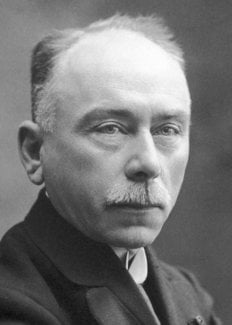 Jules Bordet was born in Soignies, Belgium, on June 13, 1870. He was educated in Brussels where he graduated as Doctor of Medicine in 1892. In 1894 he went to Paris to work at the Pasteur Institute until 1901 when he returned to Belgium to found the Pasteur Institute, Brussels. He has been Director of the Belgian Institute since its inception (honorary since 1940) and Professor of Bacteriology, University of Brussels, since 1907 (honorary since 1935).
Bordet’s early studies showed that antimicrobic sera include two active substances, one existing before immunization, known as alexine, and the other a specific antibody created by vaccination: he developed a method of diagnosing microbes by sera. In 1898, he discovered haemolytic sera and showed that the mechanism of their action on foreign blood is similar to that by which an antimicrobic serum acts on microbes and, furthermore, that the reactions of the sera are colloidal in nature. He has contributed much towards the understanding of the formation of coagulin and also anaphylactic poisons. Together with Gengou (in 1906), he cultivated B.pertussis and laid the foundations of the generally accepted opinion that this organism is the bacterial cause of whooping cough. In addition to his being an acknowledged world authority in many branches of bacteriology, Bordet was considered to be a great exponent and worker on immunology. He was the author of Traité de l’Immunité dans les Maladies Infectieuses (2nd ed., 1939) (Treatise on immunity in infectious diseases) and a great number of medical publications.
Bordet was a permanent member of the Administrative Council of Brussels University, he was President of the First International Congress of Microbiology (Paris, 1930), and Past President of the Premier Council of Hygiene of Belgium, the Scientific Council of the Pasteur Institute of Paris and the Belgian Academy of Medicine. He was Doctor, honoris causa, of the Universities of Cambridge, Paris, Strasbourg, Toulouse, Edinburgh, Nancy, Caen, Montpellier, Cairo, Athens, and Quebec. He was a member of the Belgian Royal Academy, the Royal Society (London), the Royal Society of Edinburgh, the Academy of Medicine (Paris), the National Academy of Sciences (U.S.A.), and many other academies and societies. Bordet gained many awards during his career, including the Grand Cordon de l’Ordre de la Couronne de Belgique (1930), the Grand Cordon de l’Ordre de Léopold (1937), the Grand Croix de la Légion d’Honneur (1938), and public honours of Rumania, Sweden and Luxemburg.
In 1899 Bordet married Marthe Levoz. They had one son, Paul,who succeeded his father as Chief of the Pasteur Institute in Brussels and also as Professor of Bacteriology, and two daughters. Jules Bordet died on April 6, 1961.
This autobiography/biography was written at the time of the award and first published in the book series Les Prix Nobel. It was later edited and republished in Nobel Lectures. To cite this document, always state the source as shown above.
Jules Bordet – Photo gallery

Jules Jean Baptiste Vincent Bordet. Photomechanical print.
Source: Wellcome Library, London. Public domain, CC BY 4.0, via Wikimedia Commons Photographer unknown
Jules Bordet – Other resources
Links to other sites
On Jules Bordet from Institut Jules Bordet
Jules Bordet – Facts
Award ceremony speech
Presentation Speech by Professor A. Petterson, member of the Staff of Professors of the Royal Caroline Institute, on December 10, 1920*
Your Majesty, Your Royal Highnesses, Ladies and Gentlemen.
The Staff of Professors of the Caroline Institute has decided to award the Nobel Prize for Physiology or Medicine of 1919 to the Director of the Pasteur Institute, Brussels, Doctor Jules Bordet, Professor of Brussels University, for his discoveries concerning immunity.
It has been known since remotest antiquity that certain diseases have the effect of increasing the degree of resistance among those who are cured and even of making them insensitive to further attacks. Therefore this experimental fact was turned to account from early times and it was found preferable, during epidemics, to make use of the services of those who had already suffered from the disease concerned for work which particularly exposed them to contagion, such as the care of the sick and the removal of the dead. People sometimes even came to the idea to catch the disease intentionally in order to produce this insensitivity. However, attempts of this kind were not always very successful. This insensitivity to disease was called «immunity» from the Latin noun «immunitas», which means exemption from taxation.
The nature of immunity was, however, not very clear, and there were no means of studying it experimentally. First of all, the pathogens were not known and neither did there exist a practicable way of producing an artificial immunity. The discovery of the pathogenic microbes overcame the first difficulty, but it was Pasteur’s discovery of a method of immunization against fowl cholera which opened the way to experimental study of immunity. Pasteur injected into hens bacteria which had become weakened and which originated from old cultures of fowl-cholera bacilli. The animals became ill but, in general, did not die. When the attack was past, they showed themselves to be proof, that is to say immunized, against the infection produced by virulent fowl-cholera bacilli. A great number of immunization methods have since been developed by different scientists. Immunity has been studied with great zeal, and the conquests of medicine in that field have been of immense importance. I will remind you that when, for the first time, it fell to the Staff of Professors of the Caroline Institute to award the Nobel Prize, they bestowed it on the author of a discovery concerning immunity.
Behring had ascertained, in fact, that immunity against diphtheria and against tetanus depends on the fact that there form in the body of the immunized animal substances having the property of rendering harmless – one might say, neutralizing – the toxins produced by the pathogens of those diseases. For this reason, these bodies were called antitoxins and the immunity so produced was called antitoxic immunity. Behring also showed that these antibodies when transferred to another animal, retain their power to protect against the action of the toxins or to suppress their effects. It is the serum, excessively rich in diphtheria antitoxins, taken from strongly immunized horses, which is used, under the name of antidiphtheric serum, to cure to prevent diphtheria in humans, which can be a very dangerous disease.
The body-fluids of animals immunized against other pathogens did not present those antitoxic properties, but, nevertheless, the serums did have an energetic action on the infection in question. The explanation of this curious phenomenon was given by Pfeiffer. He demonstrated that cholera vibrios in the peritoneal cavity of a guinea-pig immunized against cholera, lost their locomotility, and, after certain changes, disappeared completely. The same thing happened when cholera vibrios were introduced, with immuno-serum, into the peritoneal cavity of a normal, non-immunized guinea-pig. In the absence of immuno-serum, the vibrios, on the contrary, developed and brought about the death of the animal. On the toxins produced by the cholera vibrios, on the other hand, the immuno-serum had no effect whatever. This immunity was therefore of quite another kind to that which had been obtained against diphtheria and tetanus. The strength of resistance against cholera infection depends on the fact that the immunized animal has acquired a greater capacity to destroy, to break up the cholera vibrios. For that reason, the immunity so obtained is called bacteriolytic immunity, and the antibody is designated by the name of bacteriolytic antibody. Outside the animal body, Pfeiffer was unable to observe the least bactericidal effect of that antibody, but hardly was it introduced into the animal organism, than the action became intense. Pfeiffer therefore assumed that it was transferred there into an active agent.
It is Bordet who provided the explanation of the phenomenon. He first of all showed that, provided it is fresh, the cholera immuno-serum always has a bactericidal action, even in a test-tube. Preserved or, better still, heated for a short time to 56°, it loses that property. But he also ascertained that the active property which has disappeared in that way, can be restored by the addition of a small quantity of fresh, non-heated serum taken from a normal animal. The destruction of the vibrios, the bacteriolysis, depends, according to Bordet, on the cooperation of two bodies. One is the thermostable antibody of bacteriolytic immunization formed in the immunized animal and present in its serum; the other exists already in the normal animal; it does not stand up to heating nor to preservation, and does not increase during immunization. Bordet judged the second one to be identical to the slightly bactericidal substances which are found in normal serum and which Buchner has called «alexin». It is also called by the more usual name of «complement». It is therefore definitely proved that bacteriolysis by the immuno-serum derives from the cooperation of a body formed at the time of immunization, the bacteriolytic antibody, and of a substance present in normal serum and not under the influence of immunization, the alexin or the complement.
At first, quite naturally, bacteria especially were used for treating animals, since it was desired to immunize them against pathogens and to study their immunization. It was Bordet who first examined the result of the introduction into the organism of foreign cells belonging to different species. He injected guinea-pigs with rabbit blood. In such a case, there form in the guinea-pig antibodies which, in the presence of alexin or complement, have a destructive action on the red corpuscles of the rabbit, but not on those of other animals. Immediately after the publication of that discovery, similar communications arrived from various quarters.
Bordet’s discovery, showing that the introduction of red corpuscles into an animal brings about the formation of a specific antibody, similar in kind to that which forms after the injection of cholera vibrios, was of great importance, especially as it proved that this reaction of the animal organism is a general biological phenomenon. Indeed, analogous results have been obtained since, with a great number of different cells foreign to the test animal. But this discovery of Bordet’s was of further fundamental importance as it paved the way to other research work on immunity. The use of bacteria for the study of the properties of antibodies had great drawbacks. Bacteria are living organisms which multiply with extreme rapidity. All the experiments made with living bacteria are, consequently, endangered by the fact that one does not know whether the material to be examined – the bacteria – is constant and, furthermore, to measure their quantity, a great deal of work is often necessary. Those drawbacks, on the other hand, do not exist with red blood corpuscles. The quantity of corpuscles always remains constant, even if the experiments should last many hours. The red colouring matter of the erythrocytes makes them, moreover, a very convenient reagent for research work of that kind because the action of the haemolytic antibody is directly proportional to it and can be directly estimated according to the quantity of colouring matter which, when the red corpuscles are destroyed, is dissolved in the surrounding fluid. This can easily be measured colorimetrically. A very large part of our knowledge about immunity against bacteria and the diseases they provoke is therefore due to the action of haemolytic sera on red corpuscles, and it was only later that attempts were made to find out if, and in what measure, the detected properties apply equally to bacteria and the bacteriolytic sera.
Among other discoveries made by Bordet, I will only mention one; it is, however, a discovery of very special importance. In 1900, he ascertained that, with the help of its specific antibody, the substance used to produce immunity fixes the alexin or complement in such a way that, when proportions between the three bodies are favourable, the complement disappears completely from the mixture. The following year, he proved in collaboration with Gengou, that, in all immunizations, there form specific antibodies which can absorb the complement. In diseases too specific antibodies for the pathogens appear. The fixation of the complement with known microbes can therefore be used to determine the real character of a disease. These were the facts that Wassermann and Bruck took as a basis when they began their experiments to find a specific reaction for the diagnosis of syphilis, experiments which, as we know, were crowned with success. It is true that one of the factors active in the Wassermann test is of a different nature to the analogue of the other fixations of the complement, but it is nevertheless true that this reaction is a true fixation of the complement and that it is based on the previous discoveries by Bordet. These have therefore provided a new weapon to fight syphilis, one of the most terrible plagues of the human race. Bordet’s discoveries have thus been of the greatest usefulness for humanity.
Your Excellency, the Minister for Belgium. As we do not have the great honour of seeing among us today Professor Bordet, the illustrious laureate of the Nobel Prize for Medicine, since he is at this moment lecturing in the United States, I beg Your Excellency to be good enough to receive his prize and his diploma and to convey them to him; I take the liberty of also asking you to offer to your famous countryman the respects and the sincere congratulations of the Caroline Institute.
* The Nobel Prize in Physiology or Medicine 1919 was announced on October 28, 1920.