Willem Einthoven – Photo gallery
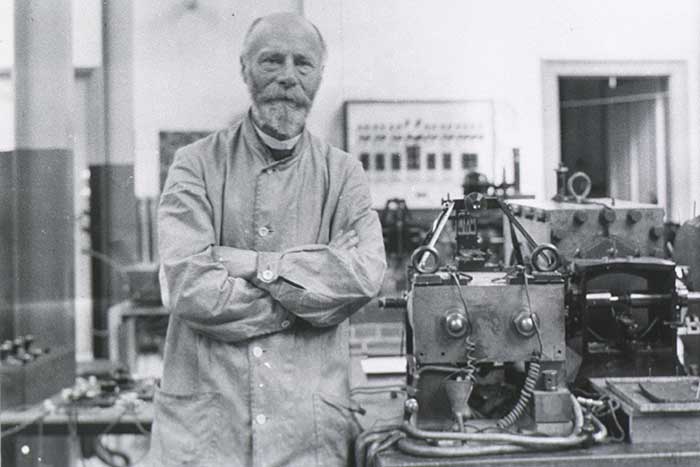
Willem Einthoven.
Photo: National Library of Medicine

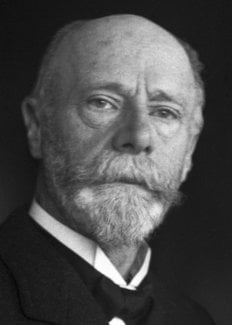
Portrait of Willem Einthoven.
CardioNetworks: Drj, CC BY-SA 3.0, via Wikimedia Commons
Willem Einthoven – Nobel Lecture
Nobel Lecture, December 11, 1925
The String Galvanometer and the Measurement of the Action Currents of the Heart
Read the Nobel Lecture
Pdf 510 kB
The Nobel Foundation's copyright has expired.
Willem Einthoven – Banquet speech
Willem Einthoven’s speech at the Nobel Banquet in Stockholm, December 10, 1925 (in German)
Es sei auch mir erlaubt, für die Auszeichnung, die mir zuteil geworden ist und auf die ich den grössten Wert lege, meinen Dank auszusprechen.
Die Nobelstiftung knüpft die Freundschaftsbande enger, die seit undenklichen Zeiten zwischen Schweden und Holland bestanden haben. 1735, also fast vor 200 Jahren, kam der grosse schwedische Naturforscher Linnæus nach Holland, wo er den Doktorgrad in der Medizin erwarb. In Leiden hat er vielfach mit unserm weltberühmten Boerhave verkehrt, mit dem er sehr befreundet wurde. Linnæus gab einige seiner wichtigsten Arbeiten in Leiden heraus, widmete das Werk “Genera plantarum” seinem Freunde Boerhave, und dieser hat alles Mögliche versucht, Linnæus für Holland zu behalten. Glücklich für Schweden – zugleich weniger glücklich für mein Vaterland – scheiterten alle Versuche Boerhave ‘s. Wir können uns in Holland aber doch freuen, dass wir einem der grössten Forscher Schwedens Gastfreundschaft haben gewähren dürfen.
Die Zeit von Boerhave ist noch nicht vorbei. Männer wie van ‘t Hoff und Lorentz, die beide zu den grössten Forschern aller Zeiten gerechnet werden dürfen, waren einmal Ihre Gäste in Stockholm.
In den 25 Jahren, die verflossen sind, hat die Nobelstiftung viel dazu beigetragen, Stockholm zu einem Zentrum der Wissenschaft zu gestalten. Da die Stiftung auch in den schwierigen Jahren des Krieges Forscher aus allen Ländern zusammenführte, hat sie eine grosse internationale Bedeutung erlangt und den allgemeinen Friedensgedanken sehr gefördert.
Wir können nur wünschen, dass sie fortfahren möge, ihre schöne Aufgabe zum Wohl der Menschheit im allgemeinen und namentlich zur Ehre und zum Ruhm dieses wunderbaren Landes selbst mit ebenso grossem Erfolg wie bis jetzt noch viele Jahrhunderte lang zu erfüllen.
The Nobel Foundation's copyright has expired.Willem Einthoven – Nominations
Willem Einthoven – Other resources
Links to other sites
On Willem Einthoven from Einthoven Laboratory for Experimental Vascular Medicine
On Willem Einthoven from National High Magnetic Field Laboratory
Willem Einthoven – Biographical
Willem Einthoven was born on May 21, 1860, in Semarang on the island of Java, in the former Dutch East Indies (now Indonesia). His father was Jacob Einthoven, born and educated in Groningen, The Netherlands, an army medical officer in the Indies, who later became parish doctor in Semarang. His mother was Louise M.M.C. de Vogel, daughter of the then Director of Finance in the Indies. Willem was the eldest son, and the third child in a family of three daughters and three sons.
At the age of six, Einthoven lost his father. Four years later his mother decided to return with her six children to Holland, where the family settled in Utrecht.
After having passed the “Hogere Burgerschool” (secondary school), he in 1878 entered the University of Utrecht as a medical student, intending to follow in his father’s footsteps. His exceptional abilities, however, began to develop in quite a different direction. After being assistant to the ophthalmologist H. Snellen Sr. in the renowned eye-hospital “Gasthuis voor Ooglidders”, he made two investigations, both of which attracted widespread interest. The first was carried out after Einthoven had gained his “candidaat” diploma (approximately equivalent to the B.Sc. degree), under the direction of the anatomist W. Koster, and was entitled “Quelques remarques sur le mécanisme de l’articulation du coude” (Some remarks on the elbow joint). Later he worked in close association with the great physiologist F.C. Donders, under whose guidance he undertook his second study, which was published in 1885 as his doctor’s thesis: “Stereoscopie door kleurverschil.” (Stereoscopy by means of colour variation) – one of Einthoven’s teachers was the physicist C.H.D. Buys Ballot, who discovered the well-known law in meteorology.
That same year, 1885, he was appointed successor to A. Heynsius, Professor of Physiology at the University of Leiden, which he took up after having qualified as general practitioner in January, 1886. His inaugural address was entitled “De leer der specifieke energieen” (The theory of specific energies). His first important research in Leiden was published in 1892: “Über die Wirkung der Bronchialmuskeln nach einer neuen Methode untersucht, und über Asthma nervosum” (On the function of the bronchial muscles investigated by a new method, and on nervous asthma), a study of great merit, mentioned as “a great work” in Nagel’s “Handbuch der Physiologie”. At that time he also began research into optics, the study of which occupied him ever since. Some publications in this field were: “Eine einfache physiologische Erklärung für verschiedene geometrisch-optische Täuschungen” (A simple physiological explanation for various geometric-optical illusions ) in 1898; “Die Accommodation des menschlichen Auges” (The accommodation of the human eye) in 1902; “The form and magnitude of the electric response of the eye to stimulation by light at various intensities”, with W.A. Jolly in 1908.
Up till now, his talents had not yet been developed to the full. This opportunity came when he began the task of registering accurately the heart sounds, using a capillary electrometer. With this in view, he investigated the theoretical principles of this instrument, and devised methods of obtaining the necessary stability, and of correcting mathematically the errors in the photographically registered results due to the inertia of the instrument. Having found these methods he decided to carry out a thorough analysis of A.D. Waller’s electrocardiogram – a study which has remained classic in its field.
This investigation led Einthoven to intensify his research. To avoid complex mathematical corrections, he finally devised the string galvanometer which did not involve these calculations. Although the principle in itself was obvious, and practical applications of it were made in other fields of study, the instrument had to be precisioned and refined to make it usable for physiologists, and this took three years of laborious work. As a result of this, a galvanometer was produced which could be used in medical science as well as in technology; an instrument which was incomparable in its adaptability and speed of adjustment.
He then, with P. Battaerd, took up the study of the heart sounds, followed by research into the retina currents with W.A. Jolly (begun earlier with H. K. de Haas). The electrocardiogram itself he studied in all its aspects with numerous pupils and with visiting scientists. It was this last research which earned him the Nobel Prize in Physiology or Medicine for 1924. In addition to this the string galvanometer has proved of the highest value for the study of the periphery and sympathetic nerves.
In the remaining years of his life, problems of acoustics and capacity studies came within the sphere of his interests. The construction of the string phonograph (1923) could be considered as a consequence of this.
Einthoven possessed the gift of being able to devote himself entirely to a particular field of study. (His genius was actually more orientated towards physics than physiology.) As a result he was able to make penetrating inquiries into almost any subject which came within the scope of his interests, and to carry out his work to its logical conclusion.
Einthoven was a great believer in physical education. In his student days he was a keen sportsman, repeatedly urging his comrades “not to let the body perish”. (He was President of the Gymnastics and Fencing Union, and was one of the founders of the Utrecht Student Rowing Club.) His first study on the elbow joint resulted from a broken wrist suffered while pursuing one of his favourite sports, and during the somewhat involuntary confinement his interest was awakened in the pro- and supination movements of the hand and the functions of the shoulder and elbow joints.
The string galvanometer has led countless investigators to study the functions and diseases of the heart muscle. The laboratory at Leiden became a place of pilgrimage, visited by scientists from all over the world. For this, suffering mankind has much to owe to Einthoven. In electrocardiography the string galvanometer is the most reliable tool. Although it has been superseded by portable types and by models utilizing amplification techniques used in radio communication (Einthoven has always mistrusted the use of condensers, fearing the distortion of curves), cardiograms from the string galvanometer have remained the standard of reference in numerous cases to this day.
Einthoven was a member of the Dutch Royal Academy of Sciences, the meetings of which he hardly ever missed. He frequently took part in the debates himself, and his sharp criticism frequently found weaknesses in many a lecture.
Einthoven married in 1886 Frédérique Jeanne Louise de Vogel, a cousin, and sister of Dr. W.Th. de Vogel, former Director of the Dienst der Volksgezondheid (Public Health Service) in the Dutch East Indies. There were four children: Augusta (b. 1887), who was married to R. Clevering, an engineer; Louise (b. 1889), married to J.A.R. Terlet, pastor emeritus; Willem (1893-1945) – a brilliant electro-technical engineer who was responsible for the development of the vacuum model of the string galvanometer and for its use in wireless communication, and who was Director of the Radio Laboratory in Bandung, Java; and Johanna (b. 1897), a physician.
He died on the 29th of September, 1927, after long suffering.
This autobiography/biography was written at the time of the award and first published in the book series Les Prix Nobel. It was later edited and republished in Nobel Lectures. To cite this document, always state the source as shown above.
The Nobel Foundation's copyright has expired.Award ceremony speech
In regard to Einthoven’s work, Professor J.E. Johansson, Chairman of the Nobel Committee for Physiology or Medicine of the Royal Caroline Institute, made the following statement*
The Staff of Professors of the Royal Caroline Institute has on 23rd October, 1924, decided to confer this year’s Nobel Prize in Physiology or Medicine to the Professor of Physiology at the University of Leiden, Willem Einthoven, for his discovery of the mechanism of the electrocardiogram.
Einthoven’s name is linked partly with the design of a physical instrument, the string galvanometer, partly with the so-called electrocardiogram, a record of the electrical potential fluctuations at the surface of the body, which accompany the heart beat. The heart beat, like the piston movement of a steam engine, is a cyclic process. Behind this process lies, in the first place, a similarly cyclic process in the heart muscle.
For the present this process is called the «muscular process», in analogy with «neural process» and «glandular process». All these processes, which with regard to energy must be considered as a conversion of chemical energy into forms of energy other than heat, are accompanied by a fluctuation in the electrical potential – the action current – which as a rule is extremely weak and which does not play any role in the life of the individual, but which from the viewpoint of experimental technique, however, is of the greatest interest, in so far as it allows the registration of the frequency of the functional process and its propagation through the individual organs.
The potential fluctuations concerned are measured in millivolts and in hundredths of seconds. To construct a self-registering measuring instrument which records directly and truly the potential variations of this order of magnitude was a problem which Einthoven has solved with his string galvanometer (1903). In constructing this, he started from the well-known Deprez-d’Arsonval «moving-coil galvanometer» and had herein replaced the moving parts – coil and mirror – with a fine, silver-plated quartz wire, which was stretched in the field between the poles of the magnet and at the same time between an optical illumination system, and another one for projection. The reduction in mass of the moving parts, achieved in this way, allows at the same time high sensitivity and short adjustment time.
After testing the practicability of the instrument for various purposes, and after a thorough analysis (1906) of the dependence of the string galvanometer curve on the mass and tension of the string, and on the damping of the deflection, the latter by electromagnetic means and by the effect of the air resistance, Einthoven published in 1909 the first detailed description of the instrument. Interest in the string galvanometer spread very rapidly, and string galvanometers of various types after Einthoven’s specifications were supplied by several famous instrument firms.
Using strings of ultramicroscopic size in a vacuum between the poles of a magnet, Einthoven recently succeeded in registering potential fluctuations of a frequency far beyond the limits of known physiological phenomena. In this connection it may also be mentioned that he has registered sound waves with a frequency of more than 10,000 vibrations per second, by means of strings of the dimensions previously mentioned in association with suitable optical systems.
The construction of the string galvanometer was a purely physical problem. The interest shown by physiologists and physicians in this achievement, is caused, as already mentioned, by the possibilities of analysing, by means of the registration of the so-called action currents, some phenomena in the living organism. The string galvanometer has therefore been widely used for various purposes in physiology. To give an idea of this, some phenomena may be mentioned, which by means of the string galvanometer have been investigated by Einthoven himself: the retina current (1908, 1909), the action currents in nervus vagus (1908, 1909) and in the sympathetic chain (1923), the psychogalvanic reflex (1921), the Gaskell effect (1916), the muscular tone (1918). With regard to the action current of the muscle Einthoven demonstrated (1921) in a convincing manner that this occurs exclusively as a phenomenon accompanying the mechanical effect known for a long time – a fact very important to the concept of the action current.
The achievement for which the Staff of Professors of the Royal Caroline Institute awarded Einthoven the Nobel Prize, is in the field of the heart physiology. Einthoven’s interest in the action current of the heart dated from 1891; at that time, as a result of the investigations of Burdon-Sanderson (1879) and Augustus Waller (1887, 1889) attention was focussed on this phenomenon.
Both scientists used the well-known Lippmann capillary electrometer, which registers potential variations; but the adjustment time is rather long, and the capillary electrometer curve, therefore, does not reflect in a direct manner the actual time process of the potential changes in the heart muscle during heart beat. Einthoven developed a rather simple method of correction (1894) and could with this derive the actual electrocardiogram from the capillary electrometer curve (1895). The details herein he denoted as P, Q, R, S, T: terms which are preserved to this day. This method, however, would never have any practical significance in reproducing the electrocardiogram of man. It is much too laborious for this. Einthoven saw the importance of an instrument which directly renders the potential variations with time during these processes, and the result was the string galvanometer described above (1903). The curve recorded by this instrument during the registration of the action current of the heart showed perfect agreement with the electrocardiogram derived from the capillary electrometer curve, and this agreement between the results of the two registration methods, fundamentally so different from one another, proved beyond all doubt that the actual time process of the potential variation accompanying the heart beat had been obtained. Einthoven can thus with full justification be named the discoverer of the real electrocardiogram.
One of the first results of this discovery was the demonstration that each individual has his own characteristic electrocardiogram, but that the electrocardiogram of all individuals in the main conform to a general type. In a publication «Le télécardiogramme» (1906) Einthoven returns to the same subject, revealing, however, at the same time a fact which has acquired the greatest clinical significance: that different forms of heart disease reveal themselves characteristically in the electrocardiogram. He gives examples of the electrocardiograms of patients with hypertrophia of the right ventricle during mitral insufficiency, hypertrophia of the left ventricle during aorta insufficiency, hypertrophia of the left auricle during mitral stenosis, of patients with degeneration of the heart muscle, also of electrocardiograms during various degrees of heart block, during extrasystoles, true «atypical heart systoles» of two different types, as well as during what is now called «ataxia cordis». In a subsequent work «Weiteres über das Elektrokardiogramm» (More about the electrocardiogram) in 1908, he communicates other cases. Einthoven’s interest for the electrocardiogram from clinical point of view is also evident from a proposal, put forward by himself (1906), namely, to establish so-called telecardiograms, i.e. to have electrocardiograms produced by a string galvanometer in a physiological laboratory from patients lying in a hospital several kilometers away. Nowadays, since a string galvanometer is available in almost any large hospital, this detail is only of historical importance.
It can be said that this new method of investigation fulfilled a need in clinical medicine. One needs only to remember the curves of venous and arterial pulses, and cardiograms at disposal up till then – all of them difficult to interpret – whenever a case of arrhythmia had to be cleared up. Moreover, some «stroke of luck» was indispensable, even if one is a well-trained experimentator, to obtain a «mechanical» cardiogram from a person, which entirely corresponds with one taken some hours before. The string galvanometer, on the other hand, once set up and adjusted, operates ideally, «accident»-free.
What did the electrocardiogram mean at that time? Einthoven said in his work in 1895 that the efforts to fully interpret the electrocardiogram should be abandoned for the moment, and in a survey of the relevant literature up to the first half of 1912, the author** put emphasis on the uncertainty of the efforts to interpret the cardiogram. It can therefore be said that Einthoven had in 1895 discovered some sort of writing the contents of which for many years after remained in virtual obscurity.
However, in his work in 1908 Einthoven gave an interpretation of the electrocardiogram. He starts from the fact that the stimulus (of the contraction process, the «negativity») is propagated as a wave in the muscular system of the heart. The string of the galvanometer, connected with the heart in a closed circuit in one of the usual ways, remains in the original position not only when the heart is at rest, but also when the «negativity» of the assemblage of points of the heart wall show the same value. A deflection is therefore in the first place to be expected at the beginning and at the end of a systole, and it presupposes that the condition of activity does not occur, respectively cease, simultaneously in all elements of the muscle. Further: if the contraction process (the stimulus) is propagated symmetrically in relation to the points connected to the galvanometer, then no deflection would take place either. Under such circumstances the electrocardiogram must be determined partly by the starting-point of the stimulus to the heart beat, partly by the conduction system within the heart. The point of departure for the normal heart beat has been sufficiently well known since the middle of the 1890’s, the bundle of His also since that time, and Tawara’s description of the ramification of the conduction system inside the ventricles known since 1906. According to Einthoven the P-peak is an expression of the propagation of the stimulus wave in the muscular system of the auricle. The negativity wave, corresponding to the stimulus wave in the His-Tawara system, is considered too weak by Einthoven to cause any deflection in the galvanometer. The QRS-complex is determined by the propagation of the stimulus wave in the muscular system of the two ventricles, proceeding in unsymmetrical fashion to the points of lead, starting at different moments at the transition of the tree-like ramified Purkinje’s fibres into the various parts of the proper muscular system of the heart. When the contraction process has reached its maximum in all the points of the ventricular wall, the string returns to its original position. When the contraction ceases in the various parts at different moments, a T-peak is obtained.
It is unnecessary in this connection to consider the interpretations proposed by other investigators, as Einthoven’s concept is the only one which has proved to be tenable. The interpretation that the P-peak belongs to the auricular systole is mainly based on his observation of electrocardiograms in cases of heart block in patients or during vagus stimulation in dogs. With regard to the interpretation of the QRS-complex Einthoven was evidently the first who has clearly recognized the significance of the conduction system in this connection. The train of thought in the interpretation of the T-peak can already be detected in Burdon-Sanderson’s previously mentioned work.
Already Waller (1887) had observed that the deflections of the capillary electrometer vary accordingly as the lead is taken from both hands or from one hand and one foot, etc., and based hereupon his well-known scheme of the potential distribution in the body in relation with the heart’s action current – a scheme later adopted in textbooks and handbooks. The scheme has principally been used to demonstrate that the amount of deflection, i.e. the «peaks» in the electrocardiogram, must vary in accordance with the manner in which the electrodes have been applied in relation to the heart axis. Einthoven pointed out, however, that not only the amount of the deflection but also the shape of the entire electrocardiogram is changed when one manner of leading is replaced by another (1908). One of the spikes may be accentuated while another may be suppressed, etc. One and the same spike resulting from different leads does not always correspond with the same phase of the heart period. Einthoven therefore found it essential to always indicate the manner of leading, and in connection with this he proposed (1908) the now generally accepted standardization: Lead I, II, and III.
In a publication (1913) Einthoven has shown how the direction and definite amount of the resulting potential difference at corresponding moments can be calculated from the simultaneous deflections at the three leads indicated. The direction of the resulting potential variation corresponds in a certain way to the electrical axis in Waller’s scheme, and several authors use the term «electric axis» instead of Einthoven’s designation. Waller made this axis to coincide with the anatomical axis of the heart, an obvious procedure, since at that time it was generally believed that the heart – as to the propagation of the stimulus wave – could be identified with a muscle with fibres running parallel, stimulated at one end. In fact, the resultant potential variation (the «electric axis»), as shown by Einthoven, changes its direction from one moment to the other during the heart period. The rotation of the electric axis during the heart period is nothing else than an expression of the course of the stimulus wave through the heart muscle, as is evident from the electrocardiogram at the three leads indicated. Already in his papers in 1906 and 1909 Einthoven pointed out on the basis of the shape of the electrocardiogram that the starting-point for the so-called atypical ventricular systoles must be other than for the normal, and showed that a combination of electrocardiograms at different leads supplies a possibility of deciding where this starting-point is located. The calculation of this direction of the resultant potential variation is a refinement of this method which can be used when an evaluation of the electrocardiogram by visual inspection is not sufficient.
Such a calculation is very simple. The difficulty consists in establishing the corresponding phases in the combination of electrocardiograms at the three leads. Hereby, as pointed out by Einthoven, we can make use of the electrophonocardiogram. However, the safest way is to register simultaneously the electrocardiogram at the three leads, or at least at two of them. Einthoven has given a particularly elegant design for such an instrument (1915, 1916) – two galvanometers one after the other, each transferring its string registration on the same plate. The firm of Carl Zeiss has carried out such a detailed construction.
Thus Einthoven has added the discovery of the mechanism of the electrocardiogram to the discovery of the true, individual electrocardiogram. Sir Thomas Lewis was the first who realized the importance of Einthoven’s discovery and who followed his line of thought. His elegant demonstration (1916) of the QRS-complex in the electrocardiogram by means of an algebraic summation of dextro- and laevogram confirmed the correctness of Einthoven’s interpretation, just as his demonstration of the «circus movements» of the stimulation wave (1921) in cases of auricular fibrillation proved conclusively the practical importance of Einthoven’s calculation of the «direction and definite magnitude of the resultant potential variation». The examination of literature in this field fully justifies the statement that the importance of Einthoven’s discovery of the mechanism of the electrocardiogram has only been conclusively proved by Sir Thomas Lewis’s works previously mentioned.
Since Einthoven first described the details of the electrocardiogram and more so after the publication in 1906 of its appearance during the various heart diseases, a vast literature in this field has accumulated over the years. All these researches aim fundamentally to reveal the mechanism which underlies the electrocardiogram. The question then arises: Which facets of this mechanism have been brought to light? Let us imagine that a heart model made from fresh heart muscles is placed in a homogeneously conducting medium with leads connected with a string galvanometer, and let us ask ourselves the question: What should be put into this model so that it will give the customary electrocardiogram? The answer now would be: (1) the conduction system; (2) a conduction velocity in this system which is several times greater than that in the heart muscle. Einthoven was the first to point out the importance of the conduction system. The importance of the conduction velocity has been shown by Lewis.
The same mechanism governing the characteristics of the electrocardiogram, also governs the characteristics of the mechanical process during the heart beat. We should remember in this connection that the mechanical process not only consists of the succession of the stimulation of the separate parts of the heart compartments, but also of the cooperation of the individual parts of the heart wall which form the essential condition for the mechanical effect in the individual ventricle or in the individual auricle. A deficiency in this cooperation can, with regard to the mechanical effect, be as fatal as a valvular insufficiency. Today, the importance of the mechanism discovered by Einthoven can easily be realized.
* Professor Einthoven being on a lecture tour in the United states, and the other laureate of the year also being unable to come to Stockholm, the usual ceremony on December 10 was cancelled.
** P.H. Kahn, «Das Elektrokardiogramm», Ergeb. Physiol., 14 (1914) 1.