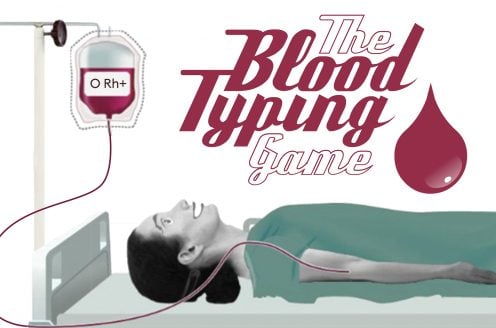
What happens if you get a blood transfusion with the wrong blood type? Learn more about blood groups in the blood typing game! The game helps you understand how blood groups work.

Nobel Prize award ceremony 1930: Sir Chandrasekhara Venkata Raman (physics laureate), Hans Fischer (chemistry laureate), Karl Landsteiner (medicine laureate) and Sinclair Lewis (literature laureate).
Photographer unknown (TT Nyhetsbyrån). Public domain, via Wikimedia Commons

Karl Landsteiner celebrating the Swedish festival of Lucia in December 1930 when he visited Stockholm to attend the Nobel Prize award ceremony.
Photo by Atelier Balassa/ullstein bild via Getty Images
On Karl Landsteiner from the American Association of Immunologists
On Karl Landsteiner from Rockefeller University
What happens if you get a blood transfusion with the wrong blood type? Learn more about blood groups in the blood typing game! The game helps you understand how blood groups work.
Nobel Lecture, December 11, 1930
Read the Nobel Lecture
Pdf 48 kB
What happens if you get a blood transfusion with the wrong blood type? Learn more about blood groups in the blood typing game! The game helps you understand how blood groups work.
At first glance, one person’s blood looks no different from another’s, but appearances can be dangerously deceptive. Early attempts at carrying out blood transfusions in humans were highly unpredictable, often triggering a hazardous and potentially fatal reaction. Examining the underlying cause of such bad blood between people led Karl Landsteiner to discover the existence of human blood groups, for which he was awarded the 1930 Nobel Prize in Physiology or Medicine.
Extracting blood samples from his research staff, and seeing whether one person’s red blood cells clumped together when mixed with blood serum from another’s, Landsteiner discovered that reactions occurred when a recipient possessed natural antibodies against a donor’s blood cells. On this basis, Landsteiner found that people could be classified into three groups, now known as A, B and O, with a fourth group AB discovered soon after. A more detailed investigation revealed that each group was distinguishable by the presence or absence of a particular set of molecules, or antigens, lying on the surface of red blood cells. Tying all the pieces of evidence together, Landsteiner showed that adverse reactions occurred when anyone carrying antibodies to unique antigens found in other blood groups received these blood types from donors.
These discoveries removed a great deal of the risk from blood transfusions. Establishing and matching patients’ blood groups in advance could prevent a donor from receiving incompatible blood. Crime scene investigations were also handed a helpful new tool, as dried blood samples could now be typed. Once researchers realized that blood groups are inherited across generations, Landsteiner’s discoveries also helped to uncover previously unseen paths through human life. These newly revealed pathways found application both in an anthropological sense, by analyzing the way in which the distribution of blood groups varies across geographic populations, and in a legal sense, by establishing parental association through paternity tests.
This Speed read is an element of the multimedia production “Immune Responses”. “Immune Responses” is a part of the AstraZeneca Nobel Medicine Initiative.
What happens if you get a blood transfusion with the wrong blood type? Learn more about blood groups in the blood typing game! The game helps you understand how blood groups work.
Close up of A positive blood in bag.
Credit: ER Productions Limited/Getty Images
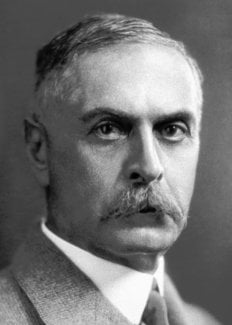
Karl Landsteiner was born in Vienna on June 14, 1868. His father, Leopold Landsteiner, a doctor of law, was a well-known journalist and newspaper publisher, who died when Karl was six years old. Karl was brought up by his mother, Fanny Hess, to whom he was so devoted that a death mask of her hung on his wall until he died. After leaving school, Landsteiner studied medicine at the University of Vienna, graduating in 1891. Even while he was a student he had begun to do biochemical research and in 1891 he published a paper on the influence of diet on the composition of blood ash. To gain further knowledge of chemistry he spent the next five years in the laboratories of Hantzsch at Zurich, Emil Fischer at Wurzburg, and E. Bamberger at Munich.
Returning to Vienna, Landsteiner resumed his medical studies at the Vienna General Hospital. In 1896 he became an assistant under Max von Gruber in the Hygiene Institute at Vienna. Even at this time he was interested in the mechanisms of immunity and in the nature of antibodies. From 1898 till 1908 he held the post of assistant in the University Department of Pathological Anatomy in Vienna, the Head of which was Professor A. Weichselbaum, who had discovered the bacterial cause of meningitis, and with Fraenckel had discovered the pneumococcus. Here Landsteiner worked on morbid physiology rather than on morbid anatomy. In this he was encouraged by Weichselbaum, in spite of the criticism of others in this Institute. In 1908 Weichselbaum secured his appointment as Prosector in the Wilhelminaspital in Vienna, where he remained until 1919. In 1911 he became Professor of Pathological Anatomy in the University of Vienna, but without the corresponding salary.
Up to the year 1919, after twenty years of work on pathological anatomy, Landsteiner with a number of collaborators had published many papers on his findings in morbid anatomy and on immunology. He discovered new facts about the immunology of syphilis, added to the knowledge of the Wassermann reaction, and discovered the immunological factors which he named haptens (it then became clear that the active substances in the extracts of normal organs used in this reaction were, in fact, haptens). He made fundamental contributions to our knowledge of paroxysmal haemoglobinuria.
He also showed that the cause of poliomyelitis could be transmitted to monkeys by injecting into them material prepared by grinding up the spinal cords of children who had died from this disease, and, lacking in Vienna monkeys for further experiments, he went to the Pasteur Institute in Paris, where monkeys were available. His work there, together with that independently done by Flexner and Lewis, laid the foundations of our knowledge of the cause and immunology of poliomyelitis.
Landsteiner made numerous contributions to both pathological anatomy, histology and immunology, all of which showed, not only his meticulous care in observation and description, but also his biological understanding. But his name will no doubt always be honoured for his discovery in 1901 of, and outstanding work on, the blood groups, for which he was given the Nobel Prize for Physiology or Medicine in 1930.
In 1875 Landois had reported that, when man is given transfusions of the blood of other animals, these foreign blood corpuscles are clumped and broken up in the blood vessels of man with the liberation of haemoglobin. In 1901-1903 Landsteiner pointed out that a similar reaction may occur when the blood of one human individual is transfused, not with the blood of another animal, but with that of another human being, and that this might be the cause of shock, jaundice, and haemoglobinuria that had followed some earlier attempts at blood transfusions.
His suggestions, however, received little attention until, in 1909, he classified the bloods of human beings into the now well-known A, B, AB, and O groups and showed that transfusions between individuals of groups A or B do not result in the destruction of new blood cells and that this catastrophe occurs only when a person is transfused with the blood of a person belonging to a different group. Earlier, in 1901-1903, Landsteiner had suggested that, because the characteristics which determine the blood groups are inherited, the blood groups may be used to decide instances of doubtful paternity. Much of the subsequent work that Landsteiner and his pupils did on blood groups and the immunological uses they made of them was done, not in Vienna, but in New York. For in 1919 conditions in Vienna were such that laboratory work was very difficult and, seeing no future for Austria, Landsteiner obtained the appointment of Prosector to a small Roman Catholic Hospital at The Hague. Here he published, from 1919-1922, twelve papers on new haptens that he had discovered, on conjugates with proteins which were capable of inducing anaphylaxis and on related problems, and also on the serological specificity of the haemoglobins of different species of animals. His work in Holland came to an end when he was offered a post in the Rockefeller Institute for Medical Research in New York and he moved there together with his family. It was here that he did, in collaboration with Levine and Wiener, the further work on the blood groups which greatly extended the number of these groups, and here in collaboration with Wiener studied bleeding in the new-born, leading to the discovery of the Rh-factor in blood, which relates the human blood to the blood of the rhesus monkey.
To the end of his life, Landsteiner continued to investigate blood groups and the chemistry of antigens, antibodies and other immunological factors that occur in the blood. It was one of his great merits that he introduced chemistry into the service of serology.
Rigorously exacting in the demands he made upon himself, Landsteiner possessed untiring energy. Throughout his life he was always making observations in many fields other than those in which his main work was done (he was, for instance, responsible for having introduced dark-field illumination in the study of spirochaetes). By nature somewhat pessimistic, he preferred to live away from people.
Landsteiner married Helen Wlasto in 1916. Dr. E. Landsteiner is a son by this marriage.
In 1939 he became Emeritus Professor at the Rockefeller Institute, but continued to work as energetically as before, keeping eagerly in touch with the progress of science. It is characteristic of him that he died pipette in hand. On June 24, 1943, he had a heart attack in his laboratory and died two days later in the hospital of the Institute in which he had done such distinguished work.
This autobiography/biography was written at the time of the award and first published in the book series Les Prix Nobel. It was later edited and republished in Nobel Lectures. To cite this document, always state the source as shown above.
Karl Landsteiner died on June 26, 1943.
The Nobel Foundation's copyright has expired.
What happens if you get a blood transfusion with the wrong blood type? Learn more about blood groups in the blood typing game! The game helps you understand how blood groups work.
Play a game
Presentation Speech by Professor G. Hedrén, Chairman of the Nobel Committee for Physiology or Medicine of the Royal Caroline Institute, on December 10, 1930
Your Majesty, Your Royal Highnesses, Ladies and Gentlemen.
Thirty years ago, in 1900, in the course of his serological studies Landsteiner observed that when, under normal physiological conditions, blood serum of a human was added to normal blood of another human the red corpuscles in some cases coalesced into larger or smaller clusters. This observation of Landsteiner was the starting-point of his discovery of the human blood groups. In the following year, i.e. 1901, Landsteiner published his discovery that in man, blood types could be classified into three groups according to their different agglutinating properties. These agglutinating properties were identified more closely by two specific blood-cell structures, which can occur either singly or simultaneously in the same individual. A year later von Decastello and Sturli showed that there was yet another blood group. The number of blood groups in man is therefore four.
Landsteiner’s discovery of the blood groups was immediately confirmed but it was a long time before anyone began to realize the great importance of the discovery. The first incentive to pay greater attention to this discovery was provided by von Dungern and Hirszfeld when in 1910 they published their investigations into the hereditary transmission of blood groups. Thereafter the blood groups became the subject of exhaustive studies, on a scale increasing year by year, in more or less all civilized countries. In order to avoid, in the publication of research on this subject, detailed descriptions which would otherwise be necessary – of the four blood groups and their appropriate cell structures, certain short designations for the blood groups and corresponding specific cell structures have been introduced. Thus, one of the two specific cell structures, characterizing the agglutinating properties of human blood is designated by the letter A and another by B, and accordingly we speak of «blood group A» and «blood group B». These two cell structures can also occur simultaneously in the same individual, and this structure as well as the corresponding blood group is described as AB. The fourth blood-cell structure and the corresponding blood group is known as O, which is intended to indicate that people belonging to this group lack the specific blood characteristics typical of each of the other blood groups. Landsteiner had shown that under normal physiological conditions the blood serum will not agglutinate the erythrocytes of the same individual or those of other individuals with the same structure. Thus, the blood serum of people whose erythrocytes have group structure A will not agglutinate erythrocytes of this structure but it will agglutinate those of group structure B, and where the erythrocytes have group structure B the corresponding serum does not agglutinate these erythrocytes but it does agglutinate those with group structure A. Blood serum of persons whose erythrocytes have structures A as well as B, i.e. who have structure AB, does not agglutinate erythrocytes having structures A, B, or AB. Blood serum of persons belonging to blood group O agglutinates erythrocytes of persons belonging to any of the groups A, B, or AB, but erythrocytes of persons belonging to blood group O are not agglutinated by normal human blood serum. These facts constitute the actual basic principles of Landsteiner’s discovery of the blood groups of mankind.
When the scientific importance of the discovery of the blood groups had been recognized – thanks to the investigations by von Dungern end Hirszfeld – research in connection with the blood groups was directed first to studies of the hereditary transmission of blood groups and also of the relative occurrence of the individual blood group in different countries and among different peoples and races. The group characteristics are handed down in accordance with Mendel’s laws. The characteristics of blood groups A, B, and AB are dominant, and opposing these dominant characteristics are the recessive ones which characterize blood group O. An individual cannot belong to blood group A, B, or AB, unless the specific characteristics of these groups are present in the parents, whereas the recessive characteristics of blood group O can occur if the parents belong to any one of the four groups. If both parents belong to group O, then the children never have the characteristics of A, B, or AB. The children must then likewise belong to blood group O. If one of the parents belongs to group A and the other to group B, then the child may belong to group A or B or it may possess both characteristics and therefore belong to group AB. If one of the parents belongs to group AB and the other to group O, then in accordance with Mendel’s law of segregation the AB characteristic can be segregated and the components can occur as separate characteristics in the children. If a child has the A-group structure (either A or AB), then the A-group characteristic must be present in at least one of the parents, i.e. one of them must belong to group A or AB. If the child belongs to group AB, then one of the parents must belong to group A and the other to group B, or one of the parents must belong to group AB and the other to group A or B, or else both parents must belong to group AB. Application of the discovery of blood groups in questions relating to the establishing of paternity is based on these principles governing the hereditary transmission of blood groups.
The four blood groups have been demonstrated in the populations of all countries where tests have been made. These cover the greater part of the world. It is clearly a constant physiological characteristic of man that every individual belongs to a particular blood group. However, the percentage distribution of the four blood groups varies within different populations and races. In the population of Europe, for instance, a larger proportion of individuals belongs to group A than in other parts of the Old World, and in the northern and western parts of Europe a larger proportion of individuals belongs to blood group A than in the southern and eastern parts. The varying frequency of the individual blood groups in different races points to essential constitutional differences. Here Landsteiner’s discovery opened up new fields for research on the determination of the racial purity of a people. Blood group determinations have shown that if an alien race is present within a population this race retains its specific blood group characteristics, even if it has lived away from its main and original homeland for centuries. In the field of genetics the discovery of the blood groups has also proved to be of importance from the point of view of methodology in the study of the hereditary transmission of other characteristics. Landsteiner’s discovery of the blood groups also prompted research on the question – important for the study of constitution – whether other body cells in addition to erythrocytes, and in particular the germinal cells, can be differentiated according to specific groups.
However, the discovery of the blood groups has also brought with it important scientific advances in the purely practical field – first and foremost in connection with blood-transfusion therapy, identification of blood, and establishing of paternity.
The transfer of blood from one person to another for therapeutic purposes began to be practised on a considerable scale during the 17th century. It was found, however, that such blood transfusion involved serious risks and not infrequently resulted in the death of the patient. Therapeutic application of the blood transfusion had therefore been almost entirely given up by the time of Landsteiner’s discovery. As a result of the discovery of the blood groups it was now possible, at least in the majority of cases, to explain the cause of the dangers linked with this therapeutic measure as previous experience had shown, and at the same time to avoid them. A person from whom blood is taken must in fact belong to the same blood group as the patient. Thanks to Landsteiner’s discovery of the blood groups, blood transfusions have come back into use and have saved a great many lives.
Already at the time of publishing his discovery of the blood groups in 1901, Landsteiner pointed out that the blood-group reaction could be used for investigating the origin of a blood sample, for instance of a blood stain. However, it is not possible to prove by determining the blood group that a blood sample comes from a particular individual, but it is possible to prove that it is not from a particular individual. If, for instance, the blood of a blood stain is from an individual belonging to blood group A, then it cannot be from an individual who is found to belong to group B, but a blood-group determination will not tell us from which person of blood group A the blood came.
The establishing of paternity for legal purposes has in all ages presented the legislator with insurmountable difficulties owing to the fact that paternity cannot be proved objectively. In this sphere, therefore, the legislator has had to content himself with possibilities or, at best, greater or lesser probabilities. In view of this situation with regard to proof in cases of disputed paternity it is only natural that the possibility of using the determination of blood group in such cases should have aroused general interest, from both the theoretical and the practical point of view. The use of blood-group determination in paternity actions also constitutes a significant advance in this field, even though the proof is of a negative character. A blood-group determination can, in fact, never establish paternity, but can exclude the possibility of it. However, a blood-group determination does not give results suitable for use as evidence under all circumstances. If the child in question belongs to blood group O, then a determination of the group gives no proof, because the recessive blood group in the child provides no basis for any conclusions regarding the parents, who in this case can belong to any one of the four blood groups. Only in those cases where the child belongs to a dominant blood group, i.e. A, B, or AB, and the specific blood structure of the group is not present in the mother, are the results of any value. A group structure which is present in the child but absent in the mother must have been inherited by the child from its father. If the man who is claimed to be the father belongs to a blood group different from that of the child in question, then the child cannot have inherited its blood-group characteristic from this man, and the possibility of his paternity must therefore be ruled out.
Landsteiner’s discovery of the blood groups – as will be clear from what has been said – has opened up new avenues for research in several branches of science and has brought with it important advances in the purely practical field. However, it is only recently that the scientific importance of Landsteiner’s discovery has been fully realized. In view of all the circumstances outlined above, the Staff of Professors of the Caroline Institute has decided to award the Nobel Prize for Physiology or Medicine, 1930, to Professor Karl Landsteiner for his discovery of the human blood groups.
Professor Karl Landsteiner. Proffering you its felicitations to the discovery of the human blood groups, which discovery has been of such great importance for many branches of medical science, the Royal Caroline Medical Institute now invites you to receive from the hands of His Majesty the King the Nobel Prize in Physiology or Medicine.