Speed read: Creating supply on demand
The 1984 Nobel Prize in Physiology or Medicine celebrated the important contribution of theory and practice in shaping our understanding of the body’s immune system. The hypotheses formulated by Nils Jerne presented a clearer image of the way in which a diverse range of antibodies can be engaged to fight an invader. Georges Köhler and César Milstein constructed perpetual antibody-production lines that have become an essential laboratory tool for researchers worldwide.
Jerne’s first major theory, published in 1955, refuted the general opinion that the immune system custom designs new antibodies when it encounters unfamiliar molecules, or antigens, on an intruder. The body has already created its full repertoire of antibodies, proposed Jerne, and it selects the correct one for the task – a hypothesis later refined by MacFarlane Burnet, which stated that each individual white blood cell produces only one specific antibody. Jerne’s network theory in 1975 described how the immune response is exquisitely controlled, and was built on his premise that antibodies can themselves act as antigens. With the various sets of antibodies stimulating or suppressing the production of each other, he visualized the immune system as a self-regulating network that can switch itself on and off in response to a foreign invasion.
Köhler and Milstein were independently trying to test theories about antibody production in the laboratory, and to do so they both sought ways of creating long-living cell lines that could generate large amounts of a particular antibody. Milstein had developed cancerous forms of antibody-producing cells that grew and multiplied forever, but which churned out antibodies of unknown specificity; while Köhler had tweaked normal antibody-producing cells to produce specific antibodies, but they survived for a few days only in culture. Combining forces, the neat trick they came up with was to fuse a normal antibody-producing cell with a tumour cell, forming a hybrid that was both immortal and could create a specific antibody. Köhler and Milstein’s technique for creating any single predetermined type of so-called monoclonal antibody on demand has led to many medicine and biomedical applications, from creating more reliable probes for blood and tissue typing tests, to designing completely new therapeutic strategies for diseases such as cancer.
This Speed read is an element of the multimedia production “Immune Responses”. “Immune Responses” is a part of the AstraZeneca Nobel Medicine Initiative.
Niels K. Jerne – Other resources
Links to other sites
Interview with Niels Jerne from BBC Archive: Discovering how our immune systems protect us
The Nobel Prize in Physiology or Medicine 1984
Niels K. Jerne – Biographical
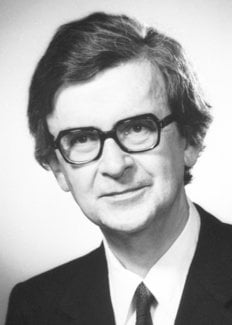
Niels K. Jerne, born 23rd December 1911, London
My parents, Hans Jessen Jerne and Else Marie Lindberg, and their ancestors (back to the seventeenth century and earlier) all lived on the island Fanø and in a small adjacent area of western Jutland in Denmark. My family moved to London in 1910, and then to Holland during the first world war. I received my Baccalaureate in Rotterdam in 1928.
After two years of studying physics at the University of Leiden, I switched to medicine at the University of Copenhagen where I presented my thesis on the avidity of antibodies in 1951.
My wife Alexandra and I married in 1964, and now live in our house near Avignon. Further details of my curriculum vitae:
| Research worker at the Danish State Serum Institute (1943-1956) |
| Research fellow at the California Institute of Technology, Pasadena (1954-1955) |
| Head of the Sections of Biological Standards and of Immunology at the World Health Organization, Geneva (1956-1962) |
| Professor of Biophysics at the University of Geneva (1960 – 1962) |
| Professor of Microbiology and Chairman of the Department, University of Pittsburgh (1962-1966) |
| Professor of Experimental Therapy at the Johann-Wolfgang-Goethe-Universität, Frankfurt, and Director of the Paul-Ehrlich-Institut, Frankfurt (1966-1969) |
| Director of the Basel Institute for Immunology, Basel (1969-1980) |
| Special Immunology Adviser to the Director of the Institut Pasteur, Paris (1981-1982) |
| Member emeritus and Honorary Chairman of the Advisory Board of the Basel Institute for Immunology (from 1981) |
| Member of the WHO Advisory Committee on Medical Research (1949-1968) |
| Member of the Advisory Committee on Medical Research of the Panamerican Health Organization (1963-1966) |
| Member of the Expert Advisory Panel of Immunology of the WHO since 1962 |
| Honorary Member of the Robert-Koch-Institut, Berlin (1966) |
| Foreign Honorary Member of the American Academy of Arts and Sciences (1967) |
| Member of the Royal Danish Academy of Sciences (1969) |
| Chairman, Council of the European Molecular Biology Organization (1971-1975) |
| Gairdner Foundation International Award, Toronto (1970) |
| Doctor of Science, h.c., University of Chicago (1972) |
| Honorary Member of the American Association of Immunologists (1973) |
| Foreign Associate of the National Academy of Sciences (USA) (1975) |
| Waterford Bio-Medical Science Award, La Jolla (1978) |
| Doctor of Science, h.c., Columbia University, New York (1978) |
| Foreign Member of the American Philosophical Society (1979) |
| Doctor of Science, h.c., University of Copenhagen (1979) |
| Marcel Benoist Prize, Bern (1979) |
| Fellow of the Royal Society (1980) |
| Doctor of Science, h.c., University of Basel (1981) |
| Member of the Académie des Sciences de l’Institut de France (1981) |
| Paul Ehrlich Prize, Frankfurt (1982) |
| Honorary Member of the British Society for Immunology (1983) |
| Doctor of Medicine, h.c., Erasmus University, Rotterdam (1983) |
| The work referred to in the citation for the award of the Nobel Prize is mainly included in the following papers: |
| “The natural selection theory of antibody formation” Proc. Nat. Acad. Sci. USA 41, 849-857, 1955 |
| “Immunological speculations” Ann. Rev. Microbiol. 14, 341-358, 1960 |
| “Plaque formation in agar by single antibody-producing cells” (with Albert A. Nordin), Science 140, 405, 1963 |
| “The natural selection theory of antibody formation: ten years later” in “Phage and the origins of molecular biology” Cold Spring Harbor Lab. of Quant. Biology 301-312, 1966 |
| “Antibodies and learning” in “The Nerurosciences”, The Rockefeller University Press 200-205, 1967 |
| “Waiting for the End” Cold Spring Harbor Symp. on Quant. Biology 32, 591-603, 1967 |
| “The somatic generation of immune recognition” Eur. J. Immunol. 1, 1-9, 1971 |
| “What precedes clonal selection?” in “The ontogeny of Acquired Immunity”, Ciba Foundation Symposium, Elsevier, Amsterdam 1-15, 1972 |
| “Towards a network theory of the immune system” Ann. Immunol. (Inst. Pasteur) 125C, 373-389, 1974 |
| “The immune system: a web of v-domains” Academic Press, New York, Harvey Lectures 70, 93-110, 1976 |
| “Idiotypic networks and other preconceived ideas”, Immunological Reviews 79, 5-24, 1984 |
This autobiography/biography was written at the time of the award and later published in the book series Les Prix Nobel/ Nobel Lectures/The Nobel Prizes. The information is sometimes updated with an addendum submitted by the Laureate.
Niels K. Jerne died on October 7, 1994.
César Milstein – Biographical
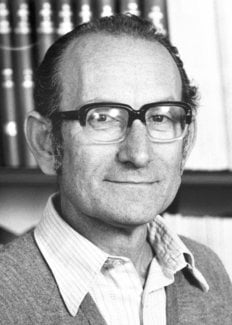
My father was a Jewish immigrant who settled in Argentina, and was left to his own devices at the age of 15. My mother was a teacher, herself the daughter of a poor immigrant family. For both my mother and my father, no sacrifice was too hard to make sure that their three sons (I was the middle one) would go to university. I wasn’t a particularly brilliant student, but on the other hand I was very active in Student Union affairs and in student politics. It was in this way that I met my wife, Celia. After graduation, we married, and took a full year off in a most unusual and romantic honeymoon, hitch-hiking our way through most countries in Europe, including a couple of months working in Israel kibbutzim. As we returned to Argentina, I started seriously to work towards a doctoral degree under the direction of Professor Stoppani, the Professor of Biochemistry at the Medical School. My PhD thesis work was done with no economic support. Both Celia and I worked part-time doing clinical biochemistry, between us earning just enough to keep us going. My thesis was on kinetics studies with the enzyme aldehyde dehydrogenase. When that was finished, I was granted a British Council Fellowship to work under the supervision of Malcolm Dixon. There, in the Department of Biochemistry at the University of Cambridge, I started a project on the mechanism of metal activation of the enzyme phosphoglucomutase. It was through that enzyme that I started to collaborate with Fred Sanger. I have described this collaboration in some detail previously (Lynen Lecture; Miami Winter Symp. Proc., In: “From gene to protein: translation into biotechnology”; Ed. W. Whelan, Academic Press, 1982). It was after completing my PhD thesis that I took a short-term appointment with the Medical Research Council in Sanger’s group, and then returned to Argentina for a period of two years. During that period I extended my studies of mechanisms of enzyme action to the enzymes phosphoglyceromutase and alkaline phosphatase. It was then that I had my first experience at directing other people’s work, including my first research student. The political persecution of liberal intellectuals and scientists manifested itself as a vendetta against the director of the institute where I was working. This forced my resignation and return to Cambridge to rejoin Fred Sanger, who by then had been appointed Head of the Division of Protein Chemistry in the newly-formed Laboratory of Molecular Biology of the Medical Research Council. Following his suggestion, I shifted my interests from enzymology to immunology. The evolution of my research in this area is described in the Lynen Lecture as mentioned above and in the Nobel Lecture.
Born 8 October 1927, in Bahía Blanca, Argentina. Married in 1953, to Celia (née Prilleltensky). No children.
| 1939-1944 | Colegio Nacional, Bahía Blanca (Bachiller) |
| 1945-1952 | Facultad de Ciencias, Universidad de Buenos Aires (Licenciado en Ciencias Químicas) |
| 1950-1956 | Part-time clinical analyst at Laboratorios Liebeschutz |
| 1952-1957 | Research Student at the Instituto de Química Biológica, Facultad de Ciencias Médicas, Universidad de Buenos Aires |
| 1957 | Doctor en Química (Universidad de Buenos Aires) |
| 1957-1963 | Staff of Instituto Nacional de Microbiología, Buenos Aires (Leave of absence 1958-1961) |
| 1958-1960 | British Council Fellowship at the Department of Biochemistry, University of Cambridge |
| 1960 | Ph.D. degree (University of Cambridge) |
| 1960-1961 | Scientific staff of Medical Research Council at the Department of Biochemistry, University of Cambridge |
| 1961-1963 | Head of División de Biología Molecular, Instituto Nacional de Microbiología, Buenos Aires |
| 1963- | Scientific Staff of Medical Research Council Laboratory of Molecular Biology, Cambridge |
| 1983 | Head, Protein and Nucleic Acid Chemistry Division, Cambridge |
Honorary member, Scandinavian Immunological Societies (1970); Member, European Molecular Biology Organization (1974); Fellow of the Royal Society (1975); Honorary member, American Association of Immunologists (1979); Fellow of Darwin College, Cambridge (1980); Honorary Fellow of Fitzwilliam College, Cambridge (1982); Foreign Associate, National Academy of Sciences, USA (1981); Honorary Fellow, Royal College of Physicians (1983); Foreign Honorary Member, American Academy of Art and Sciences (1983); Member of the Deutsche Akademie der Naturforscher Leopoldina (1983); Académico Correspondiente Extranjero of the Real Academia de Ciencias Exactas, Fisicas y Naturales, Madrid (1984).
Prizes and Awards
Prize Herrero Doucloux of the Asociación Química Argentina (1957); CIBA Medal and Prize (1978); Lewis S. Rosenstiel Award, Brandeis University (1979); Avery-Landsteiner Prize, Society for Immunology (1979); V. D. Mattia Lectureship Award, Roche Institute (1979); Adolph Rosenberg Award, University of Miami (1980); Wolf Prize in Medicine, Wolf Foundation, Israel (1980); Louisa Gross Horwitz Prize, Columbia University (1980); Robert Koch Prize and Medal, Germany (1980); Royal Society Wellcome Foundation Prize (1980); Madonnina Award, Fondazione Carlo Erba, Milano (1981); William Bate Hardy Prize, Cambridge Philosophical Society (1981); Jimenéz Díaz Memorial Award, Fundación Conchita Rabago de Jimenéz Díaz, Spain (1981); General Motors Cancer Research Foundation Sloan Prize, USA (1981); The Gairdner Foundation Annual Award, Canada (1981); Krebs Medal, Federation of European Biochemical Societies (1981); Brown-Hazen Memorial Award, Albany, New York (1982); Lynen Medal, Miami Winter Symposium (1982); Gerónimo Forteza Medal, Valencia, Spain (1982); David Pressman Memorial Award, U.S.A. (1982); Biochemical Analysis Prize 1982, German Society for Clinical Chemistry (1982); Karl Landsteiner Award, American Association of Blood Banks (1982); Royal Medal, Royal Society (1982); XI International Congress of Allergology and Clinical Immunology Award (1982); Rabbi Shai Shacknai Memorial Prize, Hebrew University, Jerusalem (1982); Philip Levine Award, American Society of Clinical Pathologists (1983); Franklin Medal, Franklin Institute, U.S.A. (1983); Mallinkrodt Award for Investigative Research, Clinical Ligand Assay Society, U.S.A. (1983); Carlos J. Finlay Prize for Meritorious Work in Microbiology, UNESCO (1983); Common Wealth Award in Science, Sigma XI Scientific Research Society, U.S.A. (1983); Dale Medal, Society for Endocrinology (1984); Albert Lasker Basic Medical Research Award, Albert and Mary Lasker Foundation (1984); John Scott Award, Board of Directors of City Trusts, Philadelphia, U.S.A. (1984).
This autobiography/biography was written at the time of the award and later published in the book series Les Prix Nobel/ Nobel Lectures/The Nobel Prizes. The information is sometimes updated with an addendum submitted by the Laureate.
César Milstein died on March 24, 2002.
Georges J.F. Köhler – Biographical
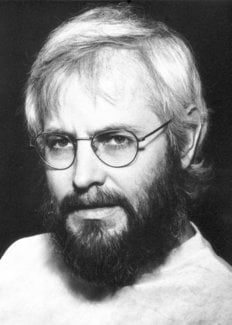
Name: Georges Jean Franz Köhler
Born: 17.4.1946 in München. German Nationality
Education and research experience
| April 1965 | Abitur in Kehl, beginning of studies in Biology at the University of Freiburg. |
| January 1971 | Diploma in Biology, work on repair-deficient strains of Escherichia coli and computer assisted instruction. |
| April 1974 | Ph.D., University of Freiburg. Thesis work on immunological studies of the enzyme ß-galactosidase, carried out at the Institute for Immunology, Basel, Switzerland, under the supervision of Professor Fritz Melchers. |
| April 1974 to March 1976 | Postdoctoral work in cell biology (lymphocyte fusion) in Dr. C. Milstein’s laboratorium at the Medical Research Council, Laboratory of Molecular Biology. Work supported by an EMBO long-term fellowship. Publication: G. Köhler and C. Milstein (1975) “Continuous cultures of fused cells secreting antibody of predefined specificity”. Nature 256:495-497. |
| April 1976 to present | Member of the Basel Institute for Immunology; Molecular and cellular work on lymphocyte hybrids. |
Member of the European Organization of Molecular Biology (EMBO), Honory Lecturer at the University of Basel, Switzerland, Doctor honoris causa of the University of Centre Limburg, Belgium, numerous awards, becoming director of the Max-Planck-Institut für Immunbiologie in Freiburg,
Georges J.F. Köhler died on 1 March 1995.
Niels K. Jerne – Nobel Lecture
Niels K. Jerne held his Nobel Lecture on 8 December 1984, at Karolinska Institutet, Stockholm. He was presented by Professor Hans Wigzell of the Karolinska Institutet.
Read the Nobel Lecture
Pdf 220 kB
Georges J.F. Köhler – Nobel Lecture
Georges J.F. Köhler held his Nobel Lecture on 8 December 1984, at Karolinska Institutet, Stockholm. He was presented by Professor Hans Wigzell of the Karolinska Institutet.
Georges J.F. Köhler held his Nobel Lecture on 8 December 1984, at Karolinska Institutet, Stockholm. He was presented by Professor Hans Wigzell of the Karolinska Institutet.
Editor’s note: The first seconds of the Nobel Lecture is missing. Our apologies.
Read the Nobel Lecture
Pdf 253 kB
César Milstein – Nobel Lecture
César Milstein held his Nobel Lecture on 8 December 1984, at Karolinska Institutet, Stockholm. He was presented by Professor Hans Wigzell of the Karolinska Institutet.
César Milstein held his Nobel Lecture on 8 December 1984, at Karolinska Institutet, Stockholm. He was presented by Professor Hans Wigzell of the Karolinska Institutet.
Editor’s note: The first seconds of the Nobel Lecture is missing. Our apologies.
Read the Nobel Lecture
Pdf 293 kB