E. Donnall Thomas – Photo gallery

E. Donnall Thomas receiving his Nobel Prize from H.M. King Carl XVI Gustaf of Sweden at the Stockholm Concert Hall, on 10 December 1990.
Nobel Foundation. Photo: Lars Åström

All 1990 Nobel Prize laureates assembled on stage at the Nobel Prize award ceremony in Stockholm, Sweden on 10 December 1990: physics laureates Jerome I. Friedman, Henry W. Kendall and Richard E. Taylor, Chemistry laureate Elias James Corey, medicine laureates Joseph E. Murray and E. Donnall Thomas, literature laureate Octavio Paz and economic sciences laureates Harry M. Markowitz, Merton H. Miller and William F. Sharpe.
Nobel Foundation. Photo: Lars Åström

E. Donnall Thomas at the Nobel Banquet at the Stockholm City Hall, 10 December 1990.
Nobel Foundation. Photo: Lars Åström

E. Donnall Thomas with his wife Dottie during Nobel Week in Stockholm, Sweden, December 1990.
Nobel Foundation. Photo: Lars Åström

E. Donnall Thomas photographed during Nobel Week in Stockholm, December 1990.
Nobel Foundation. Photo: Lars Åström
Joseph E. Murray – Nobel Lecture
Joseph E. Murray held his Nobel Lecture on 8 December 1990, at Karolinska Institutet, Stockholm. He was presented by Professor Hans Wigzell of the Karolinska Institutet.
Nobel Lecture, December 8, 1990
The First Successful Organ Transplants in Man
Preface
“If gold medals and prizes were awarded to institutions instead of individuals, the Peter Bent Brigham Hospital of 30 years ago would have qualified. The ruling board and administrative structure of that hospital did not falter in their support of the quixotic objective of treating end-stage renal disease despite a long list of tragic failures that resulted from these early efforts – leavened only by occasional encouraging notations such as those in the identical twin case. Those who were there at the time have credited Dr. George Thorn, chairman of medicine and Dr. Francis D. Moore, chairman of surgery, with the qualities of leadership, creativity, courage, and unselfishness made the Peter Bent Brigham Hospital a unique world resource for that moment of history.” (1)
Introduction
Although renal transplantation had been performed sporadically during the first half of this century (2) (3), planned programs for human organ transplantation started only in the late 1940’s. At that time clinicians in Paris, London, Edinburgh and Boston began renal transplantation in unmodified human recipients in spite of the warnings and pessimistic predictions of many scientists and experienced clinicians.
Many bio-scientists had difficulty understanding the determined optimism of clinicians who were willing to evaluate any type of treatment which might possibly help these terminally-ill uremic patients, most of whom were young and otherwise healthy. Tantalizing reports of functioning human renal transplants had surfaced from time to time (4) (5) (6); these hints of success were further encouragement.
In this lecture I will focus on the renal transplant program of The Peter Bent Brigham Hospital (now The Brigham & Women’s Hospital) in Boston and explain how this small hospital became involved in transplantation. The medical and surgical services, along with the Department of Pathology under Dr. Gustave J. Dammin, led the way and ultimately renal transplantation involved most of the hospital in some way or other.
The full story of successful organ transplantation in man weaves together three separate pathways: the study of renal disease, skin grafting in twins, and surgical determination. A leitmotif permeates each of these pathways, i.e. a single event or report was critical for medical progress.
Renal Disease
The first two Physicians-in-Chief, the Hersey Professor at Harvard in their day, Dr. Henry Christian and Dr. Soma Weiss, had a major interest in renal disease. When Dr. Thorn succeeded Dr. Weiss in 1943 he and his associate Dr. James O’Hare continued this interest, especially the relationship of renal disease to hypertension. After World War II Dr. Thorn invited Dr. Willelm Kolff from The Netherlands to Boston to demonstrate a dialysis machine which he had developed during his forced confinement by the Germans. Dr. Carl W. Walter helped to improve the design and thus the Kolff-Brigham “artificial kidney” was devised. It was first used in patients in 1948 and set the stage for extensive new innovative approaches to both acute reversible renal disease and end-stage failure.
Because renal dialysis provided only temporary improvement for the patient, it was logical to seek a more permanent therapy.*
Skin Grafting in Twins
This thread in the story involves the biological phenomena of monozygotic and dizygotic twinning. The monozygotic (MZ), “identical”, twin experience starts with the treatment of bums, the dizygotic (DZ), “non-identical”, twin story begins with freemartin cattle.**
In 1932, Dr. E. Padgett of Kansas City reported the use of skin allografts from family and unrelated donors to cover severely burned patients who had insufficient unburned donor sites for the harvesting of autografts. Although none of these skin allografts survived permanently, many would remain long enough to control infection and fluid loss and thus gain time for the donor sites to re-epithelialize. It was difficult to determine accurately the duration of survival of any one allograft; some seemed to melt away slowly and be replaced by adjacent skin, others seemed to be rejected rapidly (7).
Skin grafts from family members seemed to survive longer than those from unrelated donors. But even after observing hundreds of skin allografts, one could not be certain about their survival time. One certainty was established when Dr. J.B. Brown of St. Louis in 1937 achieved permanent survival of skin grafts exchanged between MZ twins (8).
This single observation, although restricted in application, was the only ray of light in the problem of tissue and organ replacement until Gibson and Medawar demonstrated that a second allograft from the same donor was rejected more rapidly than the first (9). This clear description of the “second set” phenomenon established that the rejection process was not immutable; instead it implied an allergic or immunological process which potentially might be manipulated.
The dizygotic twin story starts with John Hunter’s description of freemartin cattle in 1779 (10). Freemartins are twin cattle in which the male is normal and the female sterile. Hunter cites Roman descriptions of the phenomenon and then described the physical characteristics of several pairs he had collected in England.
The trail does not appear again until 1917 when Lillie, not content with mere descriptions, dissected the placentae of several pairs of freemartin cattle and noted the placental intermingling of blood between these differently sexed twins (11). Thirty years elapsed before Owen published on the tolerogenic consequences of this placental intermingling of circulation (12). Following this Anderson in 1949 reported successful skin allografts between the freemartin and the normal male (13).
The freemartin story culminates in the report of Billingham, Brent and Medawar describing an acquired immunological tolerance produced by neonatal injection of donor cells into a future allograft recipient (14). They indicate that it was the experimental counterpart to Owen’s naturally occurring model. Although not applicable to the clinical situation, their experimental breeching of the immunological barrier was another impetus for optimism in the problem so many considered hopeless.
Sir Michael Woodruff, the pioneer transplant surgeon in Edinburgh, confirmed the freemartin concept in man when he found a pair of twins, one male the other female, who shared elements of different red cell types. Postulating a shared placental circulation between the two, he cross skin grafted them successfully (15).
Surgical Determination
In 1912, Dr. A. Carrel received a Nobel Prize “in recognition of his work on vascular suture and the transplantation of blood-vessels and organs”. He clearly recognized the difference in the survival times between autografts and allografts in experimental animals, but he did not conceptualize rejection as distinct from other graft-destroying processes.
Quinby in 1916 used the canine renal autograft model to study the effect of denervation on renal function (16). Mann and Williamson a decade later noted the different survival times between canine renal autografts and allografts (17) (18), but like Carrel, they did not pursue the long-term fate of the autografts. After World War II, Dempster (19) and Simonsen (20) published extensively on canine renal transplantation concentrating on the biology and biochemistry of allograft rejection. They demonstrated that skin and kidney allografts possess a common antigen which could sensitize a recipient to a subsequent allograft of either tissue from the same donor. In these reports, there was the tacit assumption that renal autograft function would deteriorate ultimately, possibly because of lack of nerve supply and/or lymphatics.
From a physiological view, if human renal transplantation were to be successful, we needed to establish that renal transplants in the absence of an immunological barrier could function permanently. In the course of many laboratory experiments on canine renal transplantation, I had developed a reproducible operation using intra-abdominal vascular anastomoses and a uretero-cystostomy for urinary drainage, placing the kidney in the lower abdomen. This has become the universal renal transplant procedure since that time. Complete functional studies of some of these autografted kidneys two years after transplantation proved them to be completely normal (21).
The Three Trails Merge
These three trails merged at the Peter Bent Brigham in the late 1940’s. All the elements for a sound renal transplant program were in order: experienced knowledge in renal disease, availability of dialysis, and skilled imaginative surgeons. To minimize morbidity, the first allografts in these unmodified human recipients were added as a third kidney in the thigh under local anesthesia. Dr. David Hume was the surgeon for these patients and he anastomosed the renal vessels of the graft to the femoral vessels of the recipient. Urine was collected in a bag from a skin ureterostomy (22).
Several of these unmodified human allografts functioned better than experimental canine allografts would have predicted. Possible explanations were an immunosuppressive effect of uremia or a beneficial effect of acute tubular necrosis (ATN) which occurred regularly in these inadequately preserved donor kidneys. One thigh transplant functioned for almost six months with return of the patient’s biochemical profile and blood pressure to normal, demonstrating that transplants could rectify the pathophysiologic disorder of renal insufficiency.
The very first renal transplant in 1945 at the Brigham deserves special comment. The patient was a young woman in renal failure following obstetrical complications. The purpose of the transplant was to provide temporary renal function until her own kidneys recovered from acute tubular necrosis. Dr. Thorn recalls his inability to obtain permission to have the patient transferred to a regular operating room (this was prior to Dr. Moore’s tenure) so the operation was performed on the old E-Second Ward by Dr. Charles Hufnagel, then a Research Fellow working on vascular grafts, Dr. Ernest Landsteiner, then Chief Resident in Urology, and Dr. David Hume, then Assistant Resident in Surgery. The donor kidney was anastomosed in the antecubital space under local anesthesia using a cutaneous ureterostomy.
According to Dr. Robert J. Glaser, who was assistant resident on the medical service at that time, “secretion of urine was minimal, and certainly did not, ‘rescue the woman from her crisis’. The kidney functioned poorly and only transiently, and the patient continued to have a stormy course, although fortunately, despite our lack of understanding at the time of how best to treat renal shutdown, she ultimately did respond and she left the hospital with normal renal function and in good health.”
Dr. Glaser further reports that her happy state was short-lived because she died a few months later of fulminating hepatitis secondary to pooled plasma infusions which she had received in the course of her treatment. Interestingly, Dr. Glaser still recalls taking care of the patient whose kidney was ultimately used as the donor transplant. “The patient had disseminated lupus erythematosis and had been in the Brigham many times. Although in patients with advanced lupus the kidney is usually badly damaged, in this particular case renal manifestations were relatively limited, and when her kidney became available it was therefore used” (23).
The Identical Twin Patient
In the fall of 1954, Dr. Donald Miller of the U.S. Public Health Service telephoned Dr. Merrill in order to refer a patient with severe renal disease. Moreover, Dr. Miller suggested there might be the opportunity for transplantation of a kidney because the patient had a healthy twin brother. Needless to say, the transplant team was interested in the possibility of transplanting a genetically compatible kidney. Cross skin grafting established genetic identity, renal disease was brought under control with medications and dialysis, and we were ready to apply our laboratory-tested surgical technique to man.
The only remaining problem was the ethical decision concerning the removal of a healthy organ from a normal person for the benefit of someone else. For the first time in medical history a normal healthy person was to be subjected to a major surgical operation not for his own benefit. After many consultations with experienced physicians within and outside the Brigham and with clergy of all denominations, we felt it reasonable to offer the operations to the recipient, the donor and their family. We discussed in detail the preparations, anesthesia, operations, possible complications and anticipated result.
At the conclusion of our last pre-operative discussion, the donor asked whether the hospital would be responsible for his health care for the rest of his life if he decided to donate his kidney. Dr. Harrison***, the surgeon for the donor, said, “Of course not.” But he immediately followed with the question, “Ronald, do you think anyone in this room would ever refuse to take care of you if you needed help?” Ronald paused, and then understood that his future depended upon our sense of professional responsibility rather than on legal assurances.
Once the patients and the team decided to proceed with the transplant, an extra professional burden falls on the surgeon performing the donor nephrectomy because his patient is expected to survive normally. In contrast, the surgeon performing the transplant is operating on a patient otherwise doomed to die, and the nephrologist caring for these critically ill patients cannot be faulted for failure to cure.
Post-operatively the transplanted kidney functioned immediately with a dramatic improvement in the patient’s renal and cardiopulmonary status. This spectacular success was a clear demonstration that organ transplantation could be life saving. In a way, it was spying into the future because we had achieved our long-term goal by bypassing, but not solving, the issue of biological incompatibility (24) (25).
Subsequent Laboratory and Clinical Study
The impact was worldwide and stimulated widespread laboratory attempts to breech the immunological barrier. Experimental protocols included total body X-ray treatment followed by marrow infusion, immunoparalysis by consecutive graftings, immunological enhancement or adaptation by prior exposure of the host or graft to antigen, matching of donor and recipient by red or white cell typing, and the use of drugs such as toluene and nitrogen mustard.
We continued with both clinical and laboratory studies. In a series of volunteer uremic patients, we noted a prolonged but not permanent survival of skin allografts, suggesting the uremic state itself was immunosuppressive (26). In several series of dogs we tried without success to establish a state of renal insuffiency by partial removal of renal mass, infusion of toxins directly into the renal artery, temporary ischemia, and/or thermal insult. Attempts to prolong graft survival by treating the host with steroids and/or anticoagulants also failed (27).
To study the “X-ray marrow” protocol, which seemed to have the best potential for human application, we used mice and rabbits. Using sublethal or lethal doses of total body X-ray, followed by marrow infusions from single or multiple donors, we were able to obtain a limited number of long surviving skin allografts (28).
Simultaneously during the 1950’s we transplanted several more sets of identical twins. One twin transplanted in 1956 completed a pregnancy two years later (29). She is now a grandmother and the longest living renal transplant recipient. Her donor, also a grandmother, likewise is in perfect health. Initially regarded as a unique occurrence, the identical twin situation has continued to reappear worldwide. It is estimated that at least fifty patients have now received transplants from their identical twins.
Several patients were referred during these years suffering from accidental loss of a solitary kidney. Because we had obtained limited encouraging laboratory results, it seemed reasonable to treat some of these patients with an “X-ray-marrow” protocol, i.e. total body X-ray followed by marrow infusion and a renal allograft. In most of the patients, the transplanted kidneys functioned immediately and continued to do so for several weeks, but in only one of twelve patients did function persist beyond three months.
The one success was our third patient, a dizygotic twin who received a sublethal, non-marrow requiring, dose of total body X-ray, given by Dr. James B. Dealy, followed by a kidney graft from his twin brother in 1959. He recovered after a difficult complicated post-operative course; he subsequently led a full active normal life until he died of cardiac problems 25 years later. He was the world’s first successful renal allograft and was the enticement and stimulus for us to continue this method of procedure until ugs became available (30) (31) (32). The Hamburger group in Paris subsequently ad a similar success with a dizygotic twin recipient following sublethal X-ray treatment.
The First Successful Cadaveric Transplant in Man
Although we began our first experiments in rabbits using ThioTEPA as a substitute for total body X-ray treatment in 1958 (33), the real breakthrough came with the introduction of immunosuppressive drugs by Schwartz and Dameshek in 1959 (34). They prevented rabbits from producing antibody against human serum albumin by treating them for two weeks with the antimetabolite, 6-Mercaptopurine. This “drug-induced tolerance” remained after drug treatment was stopped, even though the animals could react normally against another protein antigen, bovine gamma globulin. Thus, the tolerance seemed to be specific for an antigen introduced at the time of drug administration. Roy Calne in London (35) and Charles Zukoski in Virginia (36) tested this drug in the canine renal transplant model and had encouraging results.
On the advice of Sir Peter Medawar, in 1960 Calne came to Boston to’ work with me in Dr. Francis D. Moore’s Department at the Harvard Medical School and the Peter Bent Brigham Hospital. Calne introduced us to Dr. Hitchings and Dr. Elion of the Burroughs-Wellcome Laboratories who became enthusiastic collaborators. Following Calme’s arrival and with the use of drugs supplied by Dr. Hitchings the improvement in allograft survival was rapid and dramatic. Soon we had many bilaterally nephrectomized dogs in our laboratory living on solitary renal allografts. Some survived for months, eventually for years. One produced a normal litter sired by a drug treated allografted male. One dog recovered from a severe osteomyelitis of the mandible, indicating he was not an immunological cripple, a state we feared might result from prolonged use of the drugs (37). During this time we were testing other drugs from Hitchings and Elion, who were frequent visitors and knew most of our dogs by name. The experimental drug, BW- 322, the imidazole derivative of 6-MP, seemed to have the best therapeutic index. This drug is now known as azathioprine, or Imuran, and was used throughout the world to support organ transplantation for 20 years. Now newer drugs are available and under study to extend their usefulness and diminish toxicity.
Reassured by these results, we decided to use these drugs in humans for immunosuppression. The first renal transplant recipient to receive azathioprine was an adult transplanted with an unrelated kidney in March 1961. The transplant functioned well for over one month, but the patient died of drug toxicity because the dosage required in dogs was toxic for man.
Our second patient also died of drug toxicity even though we halved the dose used for our first patient. For the first time in our experience we were able to reverse the rejection process. When we discontinued the drug because of leucopenia, rejection started to occur. As his leucopenia improved, we re-started the drug which reversed the rejection process and his renal function improved. Nevertheless he did succumb to sepsis after a month (38).
Our third patient, transplanted in April 1962, was treated with azathioprine following a cadaveric renal allograft. He survived over one year and was the world’s first successful unrelated renal allograft. We reported these results in the New England Journal of Medicine (39) and a case report in the Journal of the American Medical Association followed (40). Dr. Willard Goodwin, at the University of California in Los Angeles, almost immediately introduced the use of corticosteroids as a further adjunct to the treatment (41). Subsequently, several transplantation groups worldwide began their own productive transplantation programs.
By 1965, one year survival rates of allografted kidneys from living related donors were approaching 80% and from cadavers 65%. Regional and national donor procurement programs were established along with an International Renal Transplant Registry (42). Optimism and enthusiasm were high as new drugs and other methods of immune suppression were tested along with refinements in tissue typing and improved organ preservation. Anti-lymphocyte serum and globulin prepared in horse, sheep and rabbit along with thoracic duct drainage of lymphocytes were among the more promising regimens tested. Currently it is estimated that more than 200,000 human renal transplants have been performed worldwide.
Other Organs
The success with renal allografts naturally led to attempts to transplant other organs. Moore developed the surgical technique for orthotopic canine liver transplantation (43), the model procedure used by Starzl for first successful human liver allografts (44). Calne, returning to Cambridge, England, also developed an extensive human liver transplantation experience. For almost 15 years Starzl and Calne performed the vast majority of the world’s human liver transplants (45). Today, the operation is second only to kidney in frequency and is performed universally.
The next organ to be transplanted was the heart. Lower and Shumway had developed the surgical technique in dogs in 1961 and were planning a careful program for cardiac transplantation in humans. After Barnard’s first human cardiac transplant in 1967, many other cardiac surgeons with little or no immunological background rapidly accumulated large numbers of heart-transplanted patients, only to witness them all die of rejection within a few months. This period between 1968-1970 was undoubtedly transplantation’s darkest hour. The sole redeeming feature in heart transplantation was the continuation of Shumway’s program in Stanford which achieved permanent success in 1970 (46). Today, with the development of newer drugs, cardiac transplantation is a recognized and accepted form of treatment.
Single and double lung transplantation have followed, as well as combined heart-lung transplants. Transplantation of the pancreas, with or without an accompanying renal graft, is commonly done. Multiple organ transplants in combination with liver and parts of the intestinal tract have also been successful. In 1989, there were 8,890 kidney, 2,160 liver, 1,673 heart, 413 pancreas, and 67 heart-lung transplants performed in the United States alone (47).
Ironically, allografts of skin, the tissue used classically in most of the early studies of transplantation, have proven to be the most difficult to transplant. Skin is the ultimate protection of the individual against the environment and therefore over the ages has evolved into our strongest barrier against foreign proteins. The earlier conventional wisdom was that the fate of skin allografts predicted the results of other transplants. Commenting on the contrasting survival rates of skin and kidney allografts in immunosuppressed dogs, Medawar proclaimed with his customary flair that the success of organ transplantation has “overthrown the doctrinal tyranny of skin grafts” (48).
The Future
Although thousands of young lives have already been saved by the use of various immunosuppressive regimens, serious complications still occur as a result of the treatment. The ultimate aim is to achieve an immunological tolerance between donor and recipient, eliminating entirely the need for drugs. There are hints both in the laboratory (49) and in man (50) that the liver itself can produce tolerogenic factors which may reduce or eliminate the need for immunosuppressive drugs. Discovering or uncovering naturally occurring immunosuppressive substances seems likely. It surely is as probable as the prospect of obtaining successful organ transplants was 45 years ago.
* (Chronic dialysis was not developed until ten years later by Schribner in Seattle). In the late 1940’s during a Grand Rounds at the Brigham, I was astounded to hear Dr. Thorn say, “The best way to treat hypertension is to remove both kidneys!” The entire audience gasped. The seed for the Brigham renal transplant program had been planted.
** (The spelling varies: one word, two words or hyphenated.)
*** J. Hartwell Harrison, Elliott Carr Cutler Prof. of Surgery at Harvard Medical School and co-author of Campbell’s Urology (4th ed.). – Ed.
References
1. Starzl, T.E.: The Landmark Identical Twin Case. JAMA. 251: 2572, 1984
2. Moore, F.D.: Transplant, The Give and Take of Tissue Transplantation. Simon and Schuster New York, 1972, p. 66
3. Groth, C.E.: Collective Review. Landmarks in Clinical Renal Transplantation. S.G. & O. 134: 323, 1972
4. Lawlor, R.H., West, J.W., McNulty, P.H., Clancy, E.J. and Murphy, P.P.: Homotransplantation of the Kidney in the Human: Supplemental Report of a Case. JAMA. 147: 45, 1951
5. Kuss, R. Teinturier, J., and Milliez, P.: Quelques Essais de Greffe du Rein chez L’Homme. Mem. Acad. Chir. 77: 755, 1951
6. Michon, L., Hamburger, J., Economos, N., Delinotte, P., Richet, G., Vaysse, J. Antoine, B.: Une Tentative de Transplantation Renale chez L’Homme: Aspects Medicolaux et Biologiques. La Presse Medicale: 61: 1419, 1953
7. Padgett, E.C.: Is Iso-skin Grafting Practicable? Southern Med. J. 25: 895, 1932
8. Brown, J.B.: Homografting of Skin: With Report of Success in Identical Twins. Surgery. 1: 558, 1937
9. Gibson, T. and Medawar, P.B.: Fate of Skin Homografts in Man. J. Anat. 77: 299, 1942-43
10. Hunter, J.: On the Free Martin. Royal Coll. Surg. XX, Feb. 25, 1779
11. Lillie, F.R.: The Theory of the Free-Martin Science. 43: 611, 1916
12. Owen, R.D.: Immunogenetic Consequences of Vascular Anastomoses Between Bovine Twins. Science. 102: 400, 1945
13. Anderson, D., Billingham, R.E., Lamkin G.H., and Medawar,PB: Use of Skin Grafting to Distinguish between Monzygotic and Dizygotic Twins in Cattle: Heredity. 5: 379, 1951
14. Billingham, R.E., Brent, L. and Medawar, P.B.: Actively Acquired Tolerance of Foreign Cells. Nature. 172: 603, 1953
15. Woodruff, M.F.A. and Lennox, B.: Reciprocal Skin Grafts in a Pair of Twins Showing Blood Chimerism. Lancet. 2: 476, 1959
16. Quinby, W.C.: The Function of the Kidney When Deprived of Its Nerves. J. Exper. Med. 23: 535, 1916
17. Williamson, C.S.: Further Studies on the Transplantation of the Kidney. J. Urology. 16:231, 1926
18. Sterioff, S., Rucker-Johnson, N.: Frank C. Mann and Transplantation at the Mayo Clinic. Mayo Clinic Proceedings. 62: 1051, 1987
19. Dempster, W.J.: The Homotransplantation of Kidneys in Dogs. Brit. J. Surg. 40: 477, 1953
20. Simonsen, M., Buemann, J., Gammeltoft, A., Jensen, F. and Jorgensen, K.: Biological Incompatibilty in Kidney Transplantation in Dogs. Acta. Path. Microbiol. Scand. 32: 1, 1953
21. Murray, J.E., Lang, S., Miller, B.J. and Dammin, G.J.: Prolonged Functional Survival of Renal Autografts in the Dog. SGO. 103: 15, 1956
22. Hume, D.M., Merrill, J.P., Miller, B.F. and Thorn, G.W.: Experiences with Renal Homotransplantation in the Human: Report of Nine Cases. J. Clin. Inv. 34: 327, 1955
23. Glaser, R.J. Footnotes to Kidney Transplant History. Focus: March 31, 1988, page 8. Published by Harvard University News Office for the Medical Area, 25 Shattuck Street, Boston, MA, 02115
24. Murray, J.E., Merrill, J.P. and Harrison, J.H.: Renal Homotransplantation in Identical Twins. Surg. Forum. 6: 432, 1955
25. Merrill, J.P., Murray, J.E., Harrison, J.H. and Guild, W.R.: Successful Homotransplantation of the Human Kidney Between Identical Twins. JAMA. 160:277, 1956
26. Dammin, G.J., Couch, N.P. and Murray, J.E.: Prolonged Survival of Skin Homografts in Uremic Patients. Ann. NY Acad. Sci. 64: 967, 1957
27. Lang, S., Murray, J.E. and Miller, B.F.: Homotransplantation of Ischemic Kidneys into Dogs with Experimentally Produced Impairment of Renal Function. Plas. Rec. Surg. 17: 211, 1956
28. Wilson, R.E., Dealy, J.B., Sadowsky, N., Corson, J.M., and Murray, J.E.: Transplantation of Homologous Bone Marrow and Skin From Common Multiple Donors Following Total Body Irradiation. Surgery. 46: 261, 1959
29. Murray, J.E., Merrill, J.P., and Harrison, J.H.:Kidney Transplantation Between Seven Pairs of Identical Twins. Ann. Surg. 148: 343, 1958
30. Murray, J.E., Merrill, J.P., Dammin, G.J., Dealy, J.B., Walter, C.W., Brooke, M.S. and Wilson, R.E.: Study of Transplantation Immunity After Total Body Irradiation: Clinical and Experimental Investigation. Surgery. 48: 272, 1960
31. Merrill, J.P., Murray, J.E., Harrison, J.H., Friedman, E.A., Dealy, J.B. and Dammin, G.J.: Successful Homotransplantation of the Kidney Between Nonidentical Twins. New Eng. J. Med. 262: 1251, 1960
32. Murray, J.E., Merrill, J.P., Dammin, G.J., Dealy, J.B., Alexandre, G.P.J. and Harrison, J.H.: Kidney Transplantation in Modified Recipients. Ann. Surg. 156:337, 1962 568 Physiology or Medicine 1990
33. Porter, K.A., and Murray, J.E.: Homologous Marrow Transplantatiom in Rabbits After Triethylenethiophosphoramide (Thio-TEPA). AMA Archives of Surgery. 76: 908, 1958
34. Schwartz, R. and Dameshek, W.: Drug-Induced Immunological Tolerance. Nature. 183: 1682, 1959
35. Calne, R.Y.: The Inhibition of Renal Homograft Rejection in Dogs by 6 Mercaptopurine. Lancet. 1: 417 1960
36. Zukoski, C., Lee, H.M., and Hume, D.M.: The Prolongation of Functional Survival of Canine Renal Homografts by 6 Mercaptopurine. Surgical Forum. 11:470, 1960
37. Calne, R.Y., Alexandre, G.P.J., and Murray, J.E.: A Study of the Effects of Drugs in Prolonging Survival of Homologous Renal Transplants in Dogs. Ann. NY Acad. Sci. 99: 743, 1962
38. Murray, J.E., Balankura, O., Greenburg, J.B. and Dammin, G.J.: Reversibility of the Kidney Homograft Reactgion by Retransplantaion and Drug Therapy. Ann. NY Acad. Sci. 99: 768, 1962
39. Murray, J.E., Merrill, J.P., Harrison, J.H., Wilson, R.E. and Dammin, G.J.: Prolonged Survival of Human-Kidney Homografts by Immunosuppresive Drug Therapy. N.E.J. Med. 268: 1315, 1963
40. Merrill, J.P., Murray, J.E., Takacs, F., Hager, E.B., Wilson, R.E. and Dammin, G.J.: Successful Transplantation of Kidney from a Human Cadaver. JAMA., 185: 347, 1963
41, Goodwin, W.E., Kaufman, J.J., Mims, M.M., Turner, R.D., Glassock, R., Goldman, R. and Maxwell, M.M.: Human And Renal Transplantation I. Clinical Experiences with Six cases of Renal Transplantation. J. Urol. 89: 13,1963
42. Murray, J.E., Barnes, B.A. and Atkinson, J.C.: Fifth Report of the Human Kidney Transplant Registry. Transplantation. 5: 752, 1967
43. Moore, F.D., Smith, L.L., Burnap, T.K., Dallenbeck, F.D., Dammin, G.J.,Gruber, U.F., Shoemaker, W.C., Steenburg, R.W., Ball, M.R., & Belko, J.S.: One Stage Homotransplantation of the Liver following Total Hepatectomy in Dogs. Transplantation Bulletin. 6: 103, 1959
44. Starzl, T.E., Groth, C.G., Brettschneider,L., Penn,I., Fulginiti, V.A., Moon, J.B., Blanchard, H., Martin, A.J., Porter, K.A.: Orthotopic Transplantation of the Human Liver Ann. Surgery 168: 392,1968
45. Caine, R.C. & Williams, R. Liver Transplantation in Man. 1. Observations on Technique and Organization in Five Cases. Brit. Med. J. 4: 535, 1968
46. Dong,E., Griepp,R.B., Stinson,E.B., Shumway,N.E. Clinical Transplantation of the Heart. Ann. Surg. 176: 503, 1972
47. U.S. Dept. of Health and Human Services, Division of Organ Transplantation, 5600 Fishers Lane, Rockville, MD 20857
48. Medawar, P.B.: Transplantation of Tissues & Organs: Introduction. Brit. Med. Journal. 21: 97, 1965
49. Calne, R.Y., Sells, R.A., Pena, J.R., Davis, D.R., Millard, P.R., Herbertson, B.M., Binns, R.M., Davies, D.A.L.: Induction of Immunological Tolerance by Porcine Liver Grafts. Nature. 223: 472, 1969
50. Davies, D.R., Pollard, S.G., and Calne, R.Y.: Forum on Immune Suppression: Hellenic Transplantation Society. Athens, Greece, Nov. 6-8, 1990
E. Donnall Thomas – Nobel Lecture
E. Donnall Thomas held his Nobel Lecture on 8 December 1990, at Karolinska Institutet, Stockholm. He was presented by Professor Hans Wigzell of the Karolinska Institutet.
E. Donnall Thomas held his Nobel Lecture on 8 December 1990, at Karolinska Institutet, Stockholm. He was presented by Professor Hans Wigzell of the Karolinska Institutet.
Read the Nobel Lecture
Pdf 60 kB
Joseph E. Murray – Interview
Interview with Joseph E. Murray by Sten Orrenius at the meeting of Nobel Laureates in Lindau, Germany, June 2000.
Joseph Murray talks about what led him into research; developing transplantation medicine (2:38); and whether breakthroughs in clinical research are often ignored by the Nobel Prize Committee (13:10).
Interview transcript
I have the pleasure of sitting here with professor Joseph Murray, who won the Nobel Prize in 1990 for his work on organ transplantation. If I can start this little talk and say that from studying and from learning to know you it is quite clear that medicine was always a primary choice and that it was clear that you would become a physician from very early on. My first question is really when was it clear that you would be a researcher as well, what stimulated the early interest in research in you?
Joseph E. Murray: I think at Medical School the professors were doing interesting work. I remember one professor of pathology, he was really an instructor in pathology, was studying inflammation. I would look in the microscope with him and see different cells under different circumstances. I remember the trichina had ear centrefolds around it and an infection would have polymorphs. I wondered how the body attracted one, rather than another, and of course this is caused by xylocaine. We know now but this was back in 1941 and there was no knowledge of intercellular reactions. That interested me and then it was reinforced in my World War II experiences when we used skin from dead persons to cover burns in patients. We knew that the skin would last, survive, for maybe three weeks or four weeks but eventually it would melt away, whereas if his own skin had been used, the skin would have grown and then permanently survived and actually grown. I wondered how the body could be so smart as to distinguish between a piece of skin which to you and me would look the same, would treat one differently from another. Those were the two biological observations that were in the back of my mind.
You came to the Valley Forge [Valley Forge General Hospital] shortly after you graduated from Harvard, I suppose, and got a lot of clinical experience I would say immediately.
Joseph E. Murray: Yes, we had battle casualties from all theatres, the European, African and the Pacific. We also cared for German prisoners of war, Italian and Italian prisoners of war as well in the same hospital and they received the exact same treatment.
Problems associated with transplantation, the first one of those that you saw was the burns treatment and the difficulty in transplanting skin from unrelated individuals. I suppose a few years earlier there had been skin transplantation between identical twins.
Joseph E. Murray: Yes. that was 1934 or -35. A plastic surgeon in St Louis treating burns found that if skin came from relatives, it would survive longer than if it came from an unrelated person. He quite reasonably felt that if a related person has better survival, maybe an identical twin would have better survival and he found a pair of identical twins and cross skin grafted them and he got permanent survival. That was the only type of survival that we knew in the 1930s.
What was the process between the burns treatment in the Valley Forge and the kidney transplantation? How did you focus on kidney and kidney transplantation?
Joseph E. Murray: It was quite logical. When I finally got out of the army and I finished my residency in the late 1940s I joined the kidney transplant team at the Brigham. It was already in operation. I joined them and rather than transplanting skin, it was more fun to transplant kidneys because you had the vascular anastomosis to do the ureter plantation and you could tell when the kidneys start functioning. It was a natural transition to use a kidney as a biological indicator rather than a piece of skin, but our research used both skin and kidneys throughout.
Was the animal experimentation, the transplantation in dogs, was that going on already when you arrived?
Joseph E. Murray: No, but I started a large series of dog transplants, also with mice, rabbits, all sorts of animals.
Based on that you performed the first transplantation between the identical twins.
Joseph E. Murray: Yes, in the course of operating on dogs, I figured if we didn’t have a good operation that would work in genetically similar persons, it would be no use and so I developed a surgical technique in dogs that was reproducible and could function normally. I had a whole group of dogs surviving on one transplanted kidney back to himself. It was an isogenic transplant but there was no genetic barrier.
Then of course a big jump or the major development was going from the identical twins to genetically unrelated people.
Joseph E. Murray: Yes, but before that we had to show that in man, the identical twin transplant would work.
Right.
Joseph E. Murray: We happened to get a set of identical twins, one of whom was dying of kidney disease, the other healthy. That took about two years to work it out against the ethics and the morals and the acceptance of the community. We went to doctors at other hospitals, we consulted clergymen of all denominations, we went to corporate executives to try to get a feeling for what the general public would feel about it because we were weak. We knew we were doing something experimental and we just wanted to inform as wide a variety of society as possible.
During these early days you investigated various methods of immune suppression including ionising radiation.
Joseph E. Murray: Absolute, yes.
When was the breakthrough coming, would you say, with immune suppression that would …
Joseph E. Murray: The real break came with the development of drug immunosuppression. However, we had had some success both in animals and in humans with total body radiation and we had one set of brothers with a permanent kidney survival with an allogeneic kidney, treated with x-ray therapy. We started to do a series of 12 humans and one did very well, several did well for a while but then they would, after five or six weeks, would reject the kidney. We needed something more predictable and fortunately at that time the drug 6-mercaptopurine and it’s derivative as the azathioprine came along. That was synthesised, as you know, by doctors Hitchings and Elion from Burroughs Wellcome and they were very helpful to us. They sat in with us, educated us about biochemistry, they saw our patients, they knew our dogs by names, and soon we had long term surviving dog kidneys /- – -/.
It’s very interesting to hear because I’ve learned from you that you had regular visits, I think, by Medawar early and then you were long standing collaboration with Hitchings and Elion. My question is did you have to stimulate our colleagues, our immunology colleagues to come or was it obvious, did you have to recruit them so to say?
Joseph E. Murray: That’s a wonderful question because our local immunologists were not interested. They tolerated our interest they’d say: Joe you can’t do it, why don’t you wait until we solve the problem, but they did not attempt to discourage me, they just said, It won’t work. It wasn’t until Peter Medawar, who visited frequently, come to our lab, he would see some of our patients in the hospital and he was /- – -/ that a group of clinicians especially surgeons were interested in the biological problem. I think that he came to Harvard Medical School to give a series of lectures and he spent quite a bit of time in our lab and the immunologist wondered why.
I see.
Joseph E. Murray: A prophet is without honour in his own country. Once we got going and showed some good laboratory results our own immunology department became supportive. But an important thing was, we had the support of our chiefs of the clinical service. The chief of medicine was really behind it, Dr Thorn and Dr Moore achieved the surgery, supported us in every way including finances and so we developed a nice fine team.
Coming back to the theme of today’s panel discussion which was extremely interesting, I would like to ask you, as we know that some people objected to the development of medicine and surgery at the time, did you experience much opposition, like people came up and told you that one shouldn’t do such things as transplant organs between different individuals?
Joseph E. Murray: Both yes and no. Some of my closest friends at the medical school faculty – I was young then just got out of the army – advised me not to get involved because they said it would ruin my career, but others were supportive and the ones that gave some warning didn’t forcefully stop me, they warned me in a friendly way.
I guess, as you have said, it was very important that the first operation was successful.
Joseph E. Murray: Absolutely. We had done the operation in dogs many times successfully, but when the twins came, it had to work. We didn’t know whether the exact anatomy of the human was going to be receptive to a transplant kidney, so we went to the pathology department during a post mortem exam about a week or so before the operation and transplanted a kidney in the anatomy lab. All the way through from the beginning to the end, we wanted to be sure the blood vessels would work well, the ureter would fit into the bladder and so we prepared as well as we could.
Your own career shows the importance very clearly in terms of the collaboration between clinical research and pre-clinical research and the fact that we can work together. I know that you have been a prophet for that ever since. I think a problem that exists in many medical universities and medical schools is to get enough collaboration between the pre-clinical scientists and the clinical scientists.
Joseph E. Murray: For today’s panel we had a breakfast meeting a few days ago and one of the persons in the panel, I won’t mention who, very fine person, said that a physician can never be a scientist. I didn’t say anything, but I don’t know how they define scientist unless it’s somebody who doesn’t work with patients. I hear that all the time and I have been a prophet of clinical investigation because people ask me why did we keep on when there were so many failures. It was the patients who were dying and most of them were young in their early twenties. The families knew that we were experimenting and even though they didn’t expect success, they said, It may not help us but it may help someone in the future. It gave me an indication of the wonderful generosity of human nature.
That is really wonderful. Staying for a moment with pre-clinical and clinical medicine I would ask you something that relates to the Nobel Prize and some discussion which comes out now and then and which was obvious in some of the journeys last year. That is a question of pre-clinical prizes or prizes to basic science vs prizes to clinical science and to clinical medicine. I think that many of us have a feeling that it would be very nice to be able to give more prizes to clinical medicine. Do you think that clinical medicine is sometimes neglected in this respect?
Joseph E. Murray: Yes, I definitely do. I think Pasteur has a wonderful quotation that there is only one science, basic science and clinical, and they are locked together like the trunk of a tree to the branches. All forms of seeking knowledge, and I think that when a person feels that he or she must be in the laboratory to make scientific progress is stultifying their vision. I feel very strongly that we in the clinical side have certain advantages because we see patients, who have problems that need solving, that the bench scientist is never going to see. I feel very strongly that it would be a great loss to society if clinicians were not also research minded.
Thank you very much. I think that is a very nice conclusion of our talk, unless there is something that you feel that I have missed or not remembered or which you would like to add.
Joseph E. Murray: Yes, you asked a question about are there subjects that might have been missed by the Nobel Committee. I feel very strongly that cardiac surgery has developed tremendously in the past 30 or 40 years. It has saved hundreds of thousands of lives and I think that the pioneers in cardiac surgery, mostly surgeons, are physiologically oriented and I have nominated several of them and obviously there are good reasons why they were not selected, but I think that the Nobel Committee should at least search out for clinical investigators whether it’s respiratory, physiology, gastro-intestinal or endrocin – there are many areas that could be recognised.
Thank you. I think with this advice, we conclude this interview. Thank you very much.
Joseph E. Murray: Thank you for the opportunity.
Did you find any typos in this text? We would appreciate your assistance in identifying any errors and to let us know. Thank you for taking the time to report the errors by sending us an e-mail.
Joseph E. Murray – Banquet speech
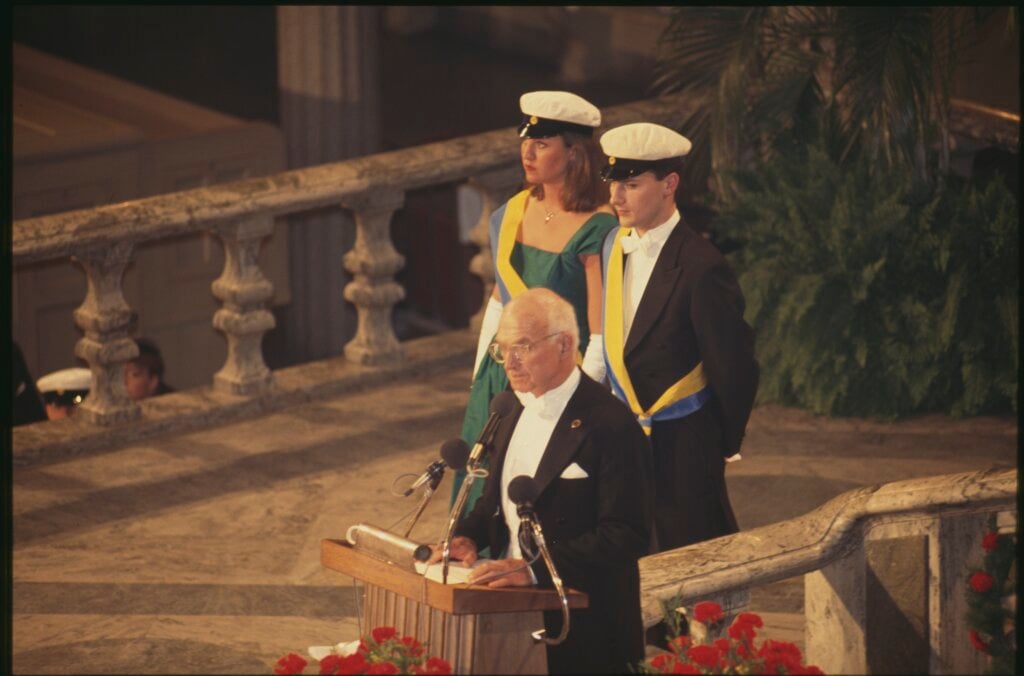
Joseph E. Murray’s speech at the Nobel Banquet, December 10, 1990
Your Majesties, Your Royal Highnesses, Ladies and Gentlemen,
On behalf of Dr. Thomas and myself I thank you for this honor. Your recognition of our work on terminally ill patients sends a world-wide message to clinical scientists that their research is just as significant as that of fundamental scientists whose work forms the background of all advances. Let us continue to shorten the distance from the laboratory to the bedside.
This year’s award also pays tribute to the hundreds of thousands of patients now living healthy meaningful lives as a result of successful transplantation of solid organs and dissociated marrow cells. We are indebted to many of those patients for their unselfishly joining in the research effort.
There are two other areas of transplantation in which The Nobel Foundation has been involved. By establishing and maintaining consistent high standards of excellence in all of your awards over the past 90 years, you have been a unique vital force in the transplantation of ideas which has created what a naturalist theologian has termed a “noosphere”, that broad stream of knowledge encircling and enveloping the world, analogous to earth’s lifegiving atmosphere.
Finally, on a more personal note The Nobel Foundation has successfully transplanted some 28 members of our respective families across the Atlantic Ocean and allowed all of us, from ages of 75 years to four months, to be part of this unforgettable, elegant week of friendship, hospitality, kindness and good-will. This transplant operation has been, I assure you, completely successful.
Again, on behalf of our families, the medical institutions which have nurtured us, and especially in behalf of our patients, we thank you.
E. Donnall Thomas – Other resources
Links to other sites
Obituary from Fred Hutchinson Cancer Research Center
“After the Prize”. An interview with E. Donnall Thomas from University of Washington
Joseph E. Murray – Other resources
Links to other sites
On Dr Joseph E. Murray from NCBI
Joseph E. Murray – Photo gallery
Joseph E. Murray receiving his Nobel Prize from H.M. King Carl XVI Gustaf of Sweden at the Stockholm Concert Hall, on 10 December 1990. Nobel Foundation. Photo: Lars Åström
All 1990 Nobel Prize laureates assembled on stage at the Nobel Prize award ceremony in Stockholm, Sweden on 10 December 1990: physics laureates Jerome I. Friedman, Henry W. Kendall and Richard E. Taylor, Chemistry laureate Elias James Corey, medicine laureates Joseph E. Murray and E. Donnall Thomas, literature laureate Octavio Paz and economic sciences laureates Harry M. Markowitz, Merton H. Miller and William F. Sharpe. Nobel Foundation. Photo: Lars Åström
Sweden's Princess Lilian and Joseph E. Murray at the Nobel Prize banquet at the Stockholm City Hall, 10 December 1990. Nobel Foundation. Photo: Lars Åström
Joseph E. Murray delivering his banquet speech at the Nobel Prize banquet at the Stockholm City Hall, 10 December 1990. Nobel Foundation. Photo: Lars Åström
Joseph E. Murray and his wife, Bobby, with Their Majesties King Carl XVI Gustaf (right) and Queen Silvia of Sweden (second from right) at the Nobel Banquet in the Stockholm City Hall, Sweden, on 10 December 1990.
Copyright © Svensk Reportagetjänst 1990
Photo: Boo Jonsson
Joseph E. Murray photographed during Nobel Week in Stockholm, December 1990. Nobel Foundation. Photo: Lars Åström
Medicine laureates Joseph E. Murray and E. Donnall Thomas photographed during Nobel Week in Stockholm, December 1990. Nobel Foundation. Photo: Lars Åström


The Nobel Prize in Physiology or Medicine 1990
Joseph E. Murray – Biographical
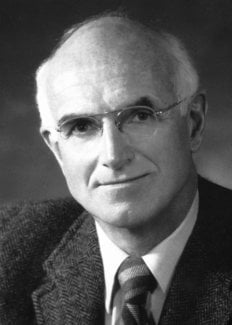
I was born, as were my father and his parents, in Milford, Massachusetts, a town 30 miles southwest of Boston. My father’s parents were of Southern Irish and English extraction. My mother was born in Providence, Rhode Island, soon after her parents had emigrated to the United States from Italy. Father was a lawyer and a District Court Judge, mother a school teacher. Both parents had benefited from and stressed the value of the educational opportunities this country offered. By example and precept they emphasized the need for service to others.
From earliest memory I wanted to be a surgeon, possibly influenced by the qualities of our family doctor who cared for our childhood ailments. As a second year high school chemistry student, I still have a vivid memory of my excitement when I first saw a chart of the periodic table of elements. The order in the universe seemed miraculous, and I wanted to study and learn as much as possible about the natural sciences.
I chose to attend a small liberal arts college, College of the Holy Cross, and concentrated on Latin, Greek, Philosophy and English. Assuming I’d receive ample science in medical school, I took the minimum of chemistry, physics and biology.
My four years at Harvard Medical School were all that I had dreamed they would be. The classmates and faculty were stimulating and friendly. The hospitals were filled with all varieties of patients. Although the hours of study and hospital duty were long, life was rich and full. Symphony Hall and the Gardner Museum were within walking distance, squash courts were available for daily exercise, our singing group met weekly, bicycle trips and club dances added to the variety. It was heaven.
During the final few months of medical school, while attending a Boston Symphony Orchestra concert with several classmates and their dates, I noticed a lovely young lady “far too nice” for the fellow she was with. At intermission I manipulated her towards the corridor and learned that she was Bobby Link, a music student concentrating on voice and piano. By the time the intermission had ended I realized that I had met the girl I would marry.
After intermittent dates during my internship and brief meetings during hectic wartime weekends while I was on active duty, Bobby and I were married in June 1945. We have six children, three boys and three girls. Each has contributed to society in her/his own way, in education, medicine, nursing, business and science. Bobby’s music, pursued professionally for 15 years after marriage, continually adds to the richness and beauty of our family and social life.
My only medical school activity bearing any resemblance to research was a study of the then new Papanicolau smear of epithelial cells. I presented a report before the student Boyleston Society with Dr. Arthur Hertig as my faculty sponsor. Later, while a surgical intern at the Peter Bent Brigham Hospital, I introduced this technique clinically.
My interest in the biology of tissue and organ transplantation arose from my military experience at Valley Forge General Hospital in Pennsylvania. As a First Lieutenant with only a nine-month surgical internship behind me, I was randomly assigned to VFGH to await overseas duty. World War II was still raging, the Rhine River had not been crossed, the Battle of the Bulge was ahead.
VFGH was a major plastic surgical center. While there, I spent all my available spare time on the plastic surgical wards which were jammed with hundreds of battle casualties. I enjoyed talking to the patients, helping with dressings, and observing the results of the imaginative reconstructive surgical operations.
I learned only years later that Colonel James Barrett Brown, the Chief of Plastic Surgery, had noticed my day and night presence on the wards and requested that Lt. Murray be kept at VFGH and not sent overseas like the rest of the “nine-month wonders.” Three years later, two years after the war ended, I finally was discharged in November 1947.
During my army service, we always had many burned patients to care for. Some were so extensively burned that donor sites for skin autografts were not available. As a life-saving measure for these patients, skin grafts were taken from other persons and used as a temporary surface cover.
The slow rejection of the foreign skin grafts fascinated me. How could the host distinguish another person’s skin from his own? Colonel Brown and I often discussed this while scrubbing. In civilian life Brown had treated many severely burned patients with temporary skin allografts and observed and written about the differential dissolution of skin allografts from various donors. He tentatively postulated that the closer the genetic relationship between the skin donor and the recipient, the slower the dissolution of the graft. In 1937, he had experimentally cross skin grafted a pair of identical twins and documented permanent graft survival in both twins. This was the impetus to my study of organ transplantation, which is the subject of my Nobel Lecture.
My life as a surgeon-scientist, combining humanity and science, has been fantastically rewarding. In our daily patients we witness human nature in the raw-fear, despair, courage, understanding, hope, resignation, heroism. If alert, we can detect new problems to solve, new paths to investigate.
Our laboratory work involved close contact with many non-clinical scientists. Sir Peter Medawar, 1960 Nobel Laureate, was a frequent visitor to our lab and to the hospital. He once commented, after visiting an early renal transplant patient, that it was the first time he had been in a hospital ward. Dr. George Hitchings and Dr. Trudy Elion, 1988 Nobel Laureates, were completely at home in our lab and knew many of the dogs by name. Sir Roy Calne, who worked in our laboratory at Harvard Medical School and Peter Bent Brigham in 1960-61 as a Surgical Research Fellow, and I frequently visited them in Tuckahoe, New York, to discuss prospective trial drugs. Billingham, Eichwald, Amos, van Rood – to mention only a few other basic investigators – also enriched the tapestry of our lives.
Medawar said it best, “This whole period was a golden age of immunology, an age abounding in synthetic discoveries all over the world, a time we all thought it was good to be alive. We, who were working on these problems, all knew each other and met as often as we could to exchange ideas and hot news from the laboratory.”
For recreation, I have always been a physical enthusiast. As a family we have camped, hiked, trekked, or backpacked over portions of five continents. Competitive tennis remains fun. Our extended family, with 11 grandchildren, gets together frequently during the year, and always every summer on Martha’s Vineyard Island in Massachusetts.
We have been blessed in our lives beyond my wildest dreams. My only wish would be to have ten more lives to live on this planet. If that were possible, I’d spend one lifetime each in embryology, genetics, physics, astronomy and geology. The other lifetimes would be as a pianist, backwoodsman, tennis player, or writer for the National Geographic. If anyone has bothered to read this far, you would note that I still have one future lifetime unaccounted for. That is because I’d like to keep open the option for another lifetime as a surgeon-scientist.
This autobiography/biography was written at the time of the award and later published in the book series Les Prix Nobel/ Nobel Lectures/The Nobel Prizes. The information is sometimes updated with an addendum submitted by the Laureate.
For more updated biographical information, see:
Murray, Joseph E., Surgery of the Soul: Reflections on a Curious Career. Science History Publications, Watson Publishing International, Sagamore, MA, 2001.
Joseph E. Murray died on 26 November 2012.