Michael W. Young – Biographical

I
remember reading this big book, The Wonders of Life on Earth, when I was eleven or twelve. It said bird migration was controlled by some kind of internal timer, some kind of clock. Some birds, it explained, use the position of the sun to orient their migration, and the clocks in their heads are able to track time in order to assume the same direction of flight even as the position of the sun moves throughout the day. I thought that was both mysterious and fascinating. It was my first exposure to the notion of biological clocks.
I was born in Miami, Florida on March 28, 1949, into an environment where biology was all around. The neighborhood kids spent a lot of time running around each other’s backyards together. Many of the families had greenhouses with an array of exotic plants that always interested me. We were close to tourist attractions: the Parrot Jungle, the Monkey Jungle, the Serpentarium, the Orchid Jungle. The Parrot Jungle was especially close and a lot of the birds weren’t caged, so toucans and parrots would sometimes arrive in our yard. You’d see native wildlife, too. One time, my sister, Denise, and I caught a small alligator in the creek behind our grandmother’s house. The local newspaper published a photograph. But my favorite place was the “Rockpit”. This covered an area of about 50 acres and was the source of the landfill under our elementary school, David Fairchild. The excavations left scattered hills of coral rock that we would climb to survey the ponds below. The place had plenty of reptiles and the ponds were full of tadpoles. There was a “No Trespassing” sign next to the narrow gravel road into the Rockpit that said “Violators will be Prosecuted”, which to my eight year old mind meant electrocuted.
At the local hobby shop they sold models of all sorts of things. You could build model airplanes or cars, but you could also build model biological systems, like of the brain or something called the Visible Man. These were a mix of colored and transparent plastic that came in boxes just like those for model cars and airplanes and with similar price tags. You’d get these things and put them together, and they were a pretty reasonable representation of real anatomy. The other kids, especially my sister’s friends, thought I was really weird for putting people together, taking them apart, and have them sitting on the desk. But for me, although inert representations, the models were ways I could explore biology a bit more formally, beyond just observing nature as it was around me.
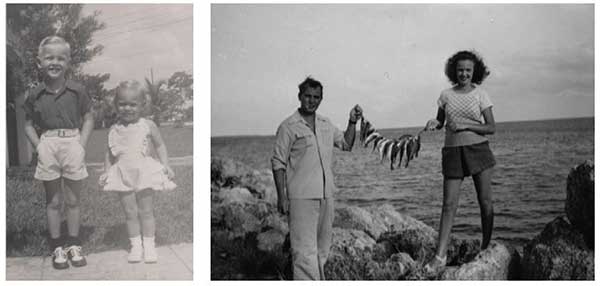
Figure 1. Michael and his sister Denise (1954). Figure 2. Michael’s parents, Lloyd and Mickey, vacationing in the Florida Keys (~1947).
I was interested in chemistry, too. I got a chemistry set at one point and set up a lab in the back room of our house. We had this beautiful terracotta tile floor. You’d do things like use potassium chlorate to generate some oxygen and hold a match to it and get it to explode. But I also would just mix and match things kind of carelessly. I never blew myself up, but I did create something that bubbled over and shot small droplets onto the floor that left lots of little white stains. After that, my parents confined my chemistry lab to the garage.
There was a kid down the street whose father worked at Porsche, and he was always bringing home these sports cars and dissecting them while the neighborhood kids watched. Mechanics interested me and we started building our own vehicles – the most typical starting point was a lawnmower engine – for running around in the neighborhood. I built a go-kart. It’s amazing that I survived that, but it taught me a lot about the way things can be put together to work. Biology and motorized machinery are obviously not equivalent, but it was useful to think about what makes something work and to see what vehicles look like on the inside.
When I was in the fourth or fifth grade, I remember putting my books together in my desk with the science book on top and thinking somehow, I’m going to do something that involves the sciences. That evolved over the next couple of years into medicine. I had no idea how you could become a scientist. That was something else completely. But if you had an interest in the sciences, then becoming a doctor seemed like a reasonable path.
No one in my family shared my interest in science, but my parents, each with a high school education, were very supportive of my interests. My father was a bomber pilot in World War II. His plane was shot down in 1944 (he crash-landed in a potato field in Holland) and he was in a prisoner-of-war camp for the rest of the war. I have a copy of a letter a woman in the mid-west sent to my grandmother, saying that she had heard my father on a short-wave radio, asking that someone contact his mother to say he was alive and ok.
My parents met when my father came home to Knoxville, Tennessee. I think because of his war experience, he was not averse to taking risks, so when they went to Miami for their honeymoon in 1946, they just decided to stay. We went to church until I was about 10, but it was a very soft touch. And I don’t remember a particular political bent to any of the discussions in our family. I think an advantage of this was that I didn’t come out of a mold with a set of ideas that I’d eventually have to undo, because I became very irreligious in high school. I was much more enchanted by what you could prove to yourself than by having to put your faith into something.
In 1966 my father’s job changed and we moved to Euless, Texas, a small town near Dallas. I went to LD Bell, the local public high school, and later to the University of Texas at Austin, where the tuition was $50 a semester, still expecting to study medicine eventually. Having grown up in the Great Depression, my father was always concerned that I needed to work at developing a career, by which he meant something tangible, a well-established profession. Medical doctor was something he understood.

Figure 3. My little league base-ball team. I’m kneeling on the lower right. We made it to the Miami-wide playoffs, but lost when I struck out (~1962).
But my path quickly took a lasting turn, first with my father’s sudden death (he had a heart attack on a business trip during my first year of college) and then when I took a course in genetics with Burke Judd in my senior year. Burke was very contemporary in the way he thought about genetics – his course looked ahead to the questions on the horizon – and I went to speak with him on several occasions because I really liked the class. I learned from him that I could sign up to do a summer research project in his lab and see how I liked research. I hadn’t even known that this kind of thing was possible. That’s when I first began to realize how you could train to be a scientist.
It’s also how I ended up with my first mentor. Until then, the notion of having an advisor was foreign to me. Neither of my parents had gone to college, so although I took a lot of interesting courses, I didn’t have a way of thinking about how to make decisions about the future. Burke’s support and positive feedback very early on were very important in showing me this whole new world.
And I met my wife, Laurel Eckhardt, in Burke’s course. I had tried to introduce myself to her, but she paid no attention to me at all. Later, when we met again in Burke’s office I guess she realized maybe I was legitimate. I later learned that Burke and his course had also introduced her to the idea of a scientific research career. Like me, she was clueless about where scientific discoveries were made.
So I did spend that summer in the lab and it was a great time. The lab was a classical genetics lab and was focused on cytogenetics, that is, looking at chromosomes. There were two postdocs in the lab, Lenny Robbins and Ron Woodruff, who took me under their wings and seemed to think that I was serious enough to invest some time in. Lenny, especially, helped me learn more about biology, particularly molecular biology.
This was the early 1970s, and everybody was thinking about the new molecular biology. Burke’s lab was very interested in understanding the genetic complexity of eukaryotes using Drosophila, the fruit fly, as a model. Fruit flies have these enormous chromosomes in their salivary glands and it’s very easy to tell one chromosome from the other and even to tell specific regions apart. They have these striations that were thought at the time to be visible markings of the genes. You could count off the striations and you were just counting genes. But the tools were still too dull to go much further, to bring that down to a real understanding of the organization of these genes or other information in the chromosomes.
That summer, my project was to use genetic screens to look for sterile mutations in the X chromosome region on which Burke’s lab was focusing. But I could do other things. If I wanted to use the microscope to look at my own chromosome preparations, I could do that. It was like stepping all the way back to my chemistry and biology sets, but here was a real laboratory at my disposal. I’d spend hours talking with the postdocs in the lab and those in adjoining laboratories, just dreaming up experiments that we might want to do. I began pushing to introduce molecular biology into Burke’s lab so we could do some of the experiments that might get us to a better understanding of how eukaryotic genes and chromosomes are put together. By the end of the summer of 1971, I had made a career choice – to pursue genetics – and I had decided to stay on as a graduate student in Burke’s lab.
The lab was focused on a short part of the X chromosome and how many genes there were in that region, which included enough DNA to include about 400–500 genes the size of those in a bacterium like E. coli. The first sweep through had given us something like twenty genes, so what’s all the rest of that DNA doing? If knocking a gene out resulted in lethality, you wouldn’t miss that gene. But how do you know what you’ve missed? We knew that knocking some genes out led to a much more subtle phenotype, so that was a real question.
I was in the process of mapping mutations I had found that affected female fertility when Burke came in waving around a paper from Ron Konopka and Seymour Benzer, published in Proceedings of the National Academy of Sciences (PNAS) in September 1971, describing Drosophila circadian clock mutants that they had discovered. The gene they had found, which they named period, was in an area that seemed to be within, or very close to, the region we were studying in Burke’s lab. I thought these were pretty interesting mutations: in addition to their relevance to the general question Burke’s lab had about how many genes there were in the region, they affected wake-sleep behavior, a behavior with very solid properties.
So, I wrote to Ron and Seymour to ask for the mutations. One of the things about the Drosophila community is the unspoken agreement that if you discover something, once you publish it, you should give any mutations, any materials that you’ve produced, freely to anyone who asks for them. Ron sent the mutants right away.
I did experiments that proved that period was, in fact, a new gene and that it lived between two genes we already knew about. Missing period raised big questions about how we were counting genes, but there was only so far anyone could push with the tools we had. We needed to be able to really look at a gene, to actually have the DNA corresponding to a gene and map the mutations affecting that gene so we could understand how those mutations affected the gene’s activity and/or the gene’s protein product.
We weren’t in a position to do that work yet, but it was thinking ahead – where will this field be in five or ten years – that was exciting to me. That’s what you want to be thinking about, those are the questions you want to have in mind.

Figure 4. I had just arrived at Stanford in the fall of 1975. My two fellow postdocs, Gerry Rubin and David Finnegan, chained me to a microscope until I mapped the chromosomal locations of their backlog of in situ hybridizations.
While I was working on locating period, I found two deficiencies that seemed to overlap, each of which eliminated the period gene and appeared to be missing only the period gene. That was a lucky find. But an even luckier find was a translocation – an inter-chromosomal exchange – that occurred right in the period gene, knocking out some of the gene’s activity. Because deleting period eliminated circadian rhythmicity without producing any other visible consequences, I began to think period was central to whatever larger process was involved in biological timekeeping. It could be a mainspring or a gear, by analogy, to a mechanical clock.
The question of the relationship between genes and behavior was completely unresolved at the time, and I saw that Drosophila’s clock and the period gene would be in many ways an ideal starting point to study that relationship. I saw that a periodic, quantifiable behavior like the circadian wake-sleep cycle would be a great starting point to begin digging into the genetic mechanisms that make a behavior work.
As I was finishing my graduate work in 1975 and thinking about where to do my postdoc, I learned from Burke that David Hogness at Stanford was going to use Drosophila to isolate pieces of cloned DNA and study single genes from all over the genome, in detail, at the molecular level. I realized that if I ever wanted to come back to the circadian problem, the translocation I had found would be a very powerful entry point to find the period gene within cloned DNA. But no matter what my questions were going to be, I knew I was going to have unsatisfying answers without the ability to isolate a gene and map mutations along that gene. With that, you could define everything: phenotype and genotype, chromosomes and DNA. This was only going on at Stanford and only in Dave’s lab. The big questions, as far as I was concerned, could only be answered by going there. Dave was a little bit like Benzer in the sense that he wanted to ask new questions and set off on a new frontier that presented risks, but also opportunities for some real excitement. I thought his taste in problems was fantastic.
Laurel was ready for graduate school at the same time that I was ready to begin my postdoc. She had been accepted into a Ph.D. program at Stanford and was looking forward to studying with Len Herzenberg in the Genetics Department. This meant I would be right around the corner from her in the Biochemistry Department. We packed up her car and a U-Haul truck and drove to California. We remember coming into San Francisco at night and all of a sudden seeing these lights up on the hills. We both thought it is like going to Mars or something. It was so different from anyplace we’d been before.
The big breakthrough that had happened at Stanford was the development of a method for cloning DNA – what we call recombinant DNA – in order to isolate large amounts of a single gene, or even a single segment of a gene. They had protocols for assembling these DNAs, for propagating them in bacteria or viruses, and for making maps of these isolated DNAs once they were present. And all of these things were very new at the time. Dave’s project was really the first genome project, although it wasn’t called that. It was an attempt to use Drosophila to fully define what the flies’ chromosomes carried. There was a chromosome map outside Dave’s office with tacks pressed into place everywhere a cloned piece of DNA had been located. Eventually these landmark DNAs would begin connecting with their neighbors. We all were enchanted by the tools and by the possibilities they represented. My first project was to isolate breaks in the DNA, using a method that I’d come up with at Texas, so I would have the complete picture of what a gene was doing and what phenotypes it was affecting.
I never lost my love for the outdoors and got pretty deeply invested in technical rock-climbing with a group of biologists at Stanford. We used to set up our experiments on a Friday night, knowing that they would have to incubate through the weekend, and we’d then take off for Yosemite with ropes and pitons and carabiners and all this equipment to climb rocks. We’d talk about work when we were out together, things that we wanted to find out, but there also was this excitement and terror of being on a big rock face. While I don’t climb rocks anymore, I remember those times as great fun that rounded out our experience in California.
When it came time to look for a faculty position, Laurel and I realized that I had to go to a metropolitan area with more than one academic institution, so she would not be limited when looking for post-doctoral positions once she finished her Ph.D. We settled pretty quickly on Rockefeller. It had tremendous advantages and was just very different from all the other institutions I had considered. I remember my first visit and talking with Norton Zinder. He was in Smith Hall – where I would soon have my first lab next to his. It was a dusty, dark, cavernous building, but there was a charm to the classical laboratories because of the deep history they held.
When I came to Rockefeller in 1978, I had a series of things I thought I could accomplish in five or six years. I was still asking, what’s odd or interesting and new about a gene from a multicellular animal? My thought was to isolate one or more genes from a genetically well-defined region and to see if we could hammer at them at the genetic and the physical levels to bring the functional and physical maps together and produce a complete picture of a piece of a chromosome. We had the new technology, recombinant DNA. We had libraries of cloned DNAs. That should mean that every gene in the fly was somewhere in that library; it was just a matter of fishing the right ones out.
And pretty quickly, we isolated two genes – period and Notch, a developmental gene – that we worked on in parallel for several years.
With period, the goal was to try to understand why or how it was making a contribution to behavior, to the flies’ sleep-wake rhythm. Laboratories had been studying circadian biology for decades, but they were really just guessing, hypothesizing, about what the underlying mechanisms might be.
But what Drosophila had were mutations in these genes, like those that Ron Konopka and Seymour Benzer had found, that suggested you didn’t have to rely on hypotheses and you didn’t have to guess about the basis for the biology. You could use the fly and find out answers. You could create mutants that have an interesting change in behavior and then ask what the underlying gene looked like. By exploring the genes that were critical to behavior, you could go in without the baggage of a model. You could simply let the fly and its genetics tell you what path to take. Before molecular approaches were in place, naming the period gene and having mutations that could be mapped by classical genetics to a given location on a chromosome provided no clear path for learning more about circadian biology.
So, we thought we had a great problem to work on and that we could attack it on our own. Initially, it was just a postdoc, Ted Bargiello, and I who started a “chromosomal walk” to get to the period gene. From my graduate school days in Texas, I had the translocation that broke the gene and told us where in this chromosomal walk it could be found. So, we were able to take a series of cloned DNAs to make a map, to put them together, and then to see where this break was. Then we asked which parts of the chromosomal walk were transcribed to make an RNA. When we discovered an RNA that was broken by this translocation, we knew this must be the period gene.
It was an interesting and stressful time because we started this work in the early 1980s without knowing anyone else was interested enough to invest time and energy in it. Ron and Seymour’s paper was not heavily cited. But as we were somewhere approaching this level of analysis, we learned that Jeff Hall and Michael Rosbash were on a similar mission to try to isolate the period gene and that they also had made some pretty good progress.
When we finished the first round of work, we had very good genetic and molecular evidence that we had found a single transcription unit that was period. We didn’t know any more about it. We didn’t have a gene sequence, but we could say that it was about 7,000 base pairs long. We published that in PNAS in April of 1984. It was the first publication to come out on the isolation of period, and the first molecular study to address circadian rhythms in any organism.
The next step, we realized, was to see if we could confirm that everything was limited to that one transcription unit. We needed a device that could record the sleep-wake activity of individual flies, so the in-house shop at Rockefeller made it for us. It was a combination of old microscope slide boxes, some sheet metal, and some primitive electronics. We generated DNA composed of just the wild type version of our transcription unit and we microinjected it back into embryos that were period null mutants, that is, they were arrhythmic. Then we put the flies in the machine, five flies at a time. The event recorder wiggled when a fly moved up or down. Ted, Rob Jackson (another postdoc who had joined the lab), and I camped out most of the time in the lab just to see what would happen. A few feet of chart paper would come out every day and after a few days, we could see that putting the transgene back into the null mutants had restored the flies’ rhythms!
That was exciting because it confirmed that we had the gene. It also had another level of import because this was the first time anyone had transplanted a gene to generate behavior. We had a simple animal and an easily measured, ubiquitous behavior that was well-understood but only at the level of phenomenology. The fly went from having none of that behavior to having the full range of that behavior just because this one gene was put back into it.
We published the report, which confirmed that the gene was the only thing that was necessary to restore the behavior, in the 1984 year-end issue of Nature. Hall and Rosbash published in 1984, too, and we could all see that period was the gene to move in on. A couple of years later we reported the sequence of the gene and the changes associated with Konopka and Benzer’s long-period, short-period and arrhythmic mutations. All three were single nucleotide changes, and the two that adjusted period length each changed a single amino acid.
Because we had competition, we thought carefully about how we might carry the project in a new direction, and give ourselves more room to operate independently. We wanted to avoid having two groups just doing the same things. And that’s when we decided to initiate a big screening effort to find additional genes involved in the clock. We thought we could learn more about the sleep-wake rhythm by looking for other genes that affected it. Meanwhile, Hall and Rosbash continued to work exclusively on the molecular biology of period. And I think both plans worked well because it kept us from making duplicative discoveries.
Initially our genetic screen went on and on without giving us anything meaningful, until finally, in the early 1990s, after seven thousand assays, two postdocs in the lab, Amita Sehgal and Jeff Price, found a new mutation. We named the gene timeless, and it had many of the same behavioral properties as period. Most importantly, in 1995 we discovered it encoded a protein that was a physical partner for the Period protein.
What excited us most is that we’d taken an agnostic approach to how circadian rhythms worked. We weren’t asking for genes that work with period. We weren’t saying let’s collect the things with which period interacts. We just said let’s find another gene that affects circadian rhythms. Incredibly, that took us to another piece of the same molecular system that depended on period. This was our first hint that there would be a single mechanism for keeping time in the fly.
Isolating timeless and unpacking its relationship to period made us realize that following the genetics could perhaps take us to the heart of what was controlling circadian rhythms. It was a huge boost – and it convinced us that we should keep screening and get every mutation in every gene that we could to see if we could repeat our success. Would every new gene that we isolated point us back to the same system, to a single machine responsible for circadian biology? In fact, it did, and that was extremely gratifying.
When we found timeless, Jeff and Michael immediately saw the benefits of driving genetics of the fly forward – that is, searching for all genes relevant to the clock system – as rapidly as possible. Our labs began a joint screen for new mutants that was supported by the National Science Foundation. With any luck at all, we thought, there would be several new genes to work on and no one group could handle all of them. It would be more productive to have complementary assessments of different genes going on in our labs.
What we now understand is that all of the genes our labs ultimately found participate in the same mechanism: there are nine or ten key components that interact with one another to produce an oscillating molecular system that has a natural cycle time of about 24 hours. All of this was revealed by genetics. It wasn’t by anyone coming up with ideas to test; it was by admitting that we didn’t have the foggiest idea how the clock worked. We sought to collect all the mutations that are important to circadian rhythms and to understand them one by one, and then we looked at their relationships to each other. This is a story not of a single big discovery, but of the accumulation of smaller discoveries over many years that together enabled us to see the underlying biology of how cells track time.
We now know that the same clock system that applies to the fruit fly applies all the way to humans. We have also learned, by following gene expression, that flies and humans are a collection of clocks. We did not expect in the beginning that we would have cells outside the nervous system that use these clocks. And we didn’t anticipate the degree to which cells in different organs find it useful to independently determine the time of day. In retrospect, it makes sense, for example, that liver cells are regulated with a 24-hour periodicity that is synchronized with feeding times, and that tissue-autonomous clocks are involved in that regulation. There is some coordination of what happens in different organs, but it is beginning to look like there is as much signaling among organs as there is between the brain and these systems. You can produce an animal that has its head set on New York time and its liver set on Tokyo time, thereby revealing a really surprising degree of autonomy between clock systems in the body.
I came to Rockefeller with a five-year plan and am still here after 40 years. I don’t think there’s any place in the world that would have provided me with the way forward on this adventure in the way that Rockefeller did. It’s such an unusual community and the unwavering interest and encouragement from colleagues early on – particularly Norton Zinder, Jim Darnell, Torsten Wiesel, and Günter Blobel (who to my great sadness died as I was writing this) – made all the difference.
In 1998 Seymour Benzer wrote me – I have saved the letter in my copy of Jonathan Weiner’s biography of him – to congratulate me on our progress. He was thrilled, he said, to see how the work on the clock was going. Seymour had pioneered the notion that you could study genetics connected to behavior, but he met with a lot of resistance. When he started his work, many people just didn’t believe that working on single genes would reveal important things about behavior. And the work couldn’t move very rapidly before the molecular tools became available. It has been incredibly gratifying to bring molecular biology to this field and to prove, with Michael and Jeff, that a gene-based approach could solve a deep problem about behavior and reveal this beautiful circadian mechanism.
For the past several years, research in my lab has focused on both Drosophila and humans. The Drosophila work now centers on the related problem of sleep: what controls its duration and how is that driven by genes? We know sleep is fundamentally important – when we collect mutants that get 60 percent of the sleep of a typical wild-type fly, their lifespan is cut in half – yet we still don’t know what sleep is actually for, how it is regulated, or what it accomplishes. I think we can use Drosophila genetics to get at these questions in as meaningful a way as we did with the circadian work.
On the human side, we think that most clinically significant circadian disorders are probably represented in the very large genetic databases that are available now. The challenge is to figure out which genetic variations are important and why.
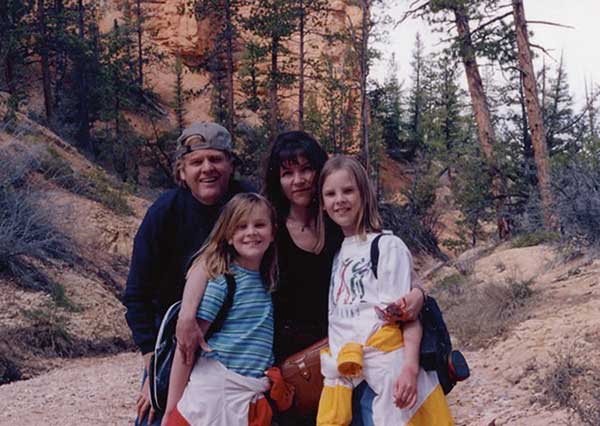
Figure 5. Hiking a desert canyon with Arissa, Laurel and Natalie in the mid-1990s.
Sleep, as I see it, has as much mystery to it as circadian biology once had – and deep progress is still ahead. And so we have a very fundamental set of questions on the Drosophila side and a more medically oriented set of questions now on the human side, and I think that’s a nice mix at this point in the lab’s history.
* * *
Life isn’t all research, of course. Laurel, who is a biology professor at Hunter College, The City University of New York and I have been navigating family life and our careers together for a lucky, long time. We had two daughters in the 1980s: Natalie in 1986 and Arissa in 1989. Today, Natalie has a Ph.D. in sociology and Arissa is a medical resident. We built a house in New Mexico, where we retreat to hike, write papers, and explore the natural mysteries that have intrigued us from the beginning.
This autobiography/biography was written at the time of the award and later published in the book series Les Prix Nobel/ Nobel Lectures/The Nobel Prizes. The information is sometimes updated with an addendum submitted by the Laureate.
Michael Rosbash – Biographical
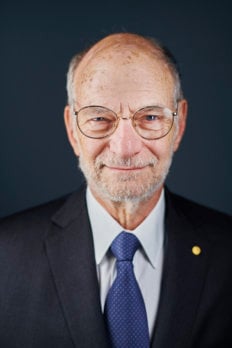
My parents and Germany: tough times
My parents were born and raised in Germany. My mother Hilda was born in 1914 and came from a secular, quite comfortable family in Berlin. Her father, my grandfather, Magnus Sonntag had a pharmacy, which still exists today with the same name and in the same location (Marien-Apotheke, Wilhelmsaue 110, 10715 Berlin). As the story was told to me, Magnus was a soldier in WWI and home on weekend leave when he discovered his wife, my biological grandmother, with another man. Magnus kicked her out, she moved to Holland, which left her 3-year-old daughter with a father at the front and no other parent in Berlin. My mother was sent to live with her grandparents for a few years and never saw her biological mother again – although there were some subsequent communications (see below). My grandfather remarried, and my mother thankfully adored her step-mother. There were two much younger children from this marriage, and all 3 siblings have now passed away.
My father Alfred was born in 1912 and raised in Baden-Baden. My grandfather Joel Rosbasch (my parents dropped the c upon arriving in the US) went to Germany as a young man sometime around 1907 to escape from difficult economic times in the Ukraine. He left his family including 3 young children behind in Kremenchuk and got a job in a cigarette factory in Stuttgart, not very far from Baden-Baden. Cigarettes were rolled by hand in those days. My grandfather was skilled in the art and so had no problem securing a job in early 20th century Germany. He sent for his family, including my father’s 3 older siblings, who were all then raised in Germany. According to my father’s one younger sibling, my Aunt Lotte (she passed away at the age of 98 in 2013), my grandfather saw the handwriting on the wall and left cigarette-making shortly before that industry was mechanized. He moved his family to Baden-Baden and ran a small grocery-dry goods store there, together with my grandmother; they lived above the store. Although the Rosbasch family was quite religious and kept kosher, the children – my father and his siblings – were educated in the secular German system. My father was a top student at Gymnasium and was asked to tutor those fellow-students who were struggling with math − again according to my Aunt Lotte.
Both of my parents were in university, my father studying law and my mother medicine, until Jews were no longer allowed to pursue these professions – in about 1933 I believe it was. They then both turned to Jewish professions. My mother studied some aspect of Jewish education, and my father – who had an excellent voice as well as a religious background – became a cantor. My parents were married in 1937 and in that same year my father got his first real job as a cantor in a synagogue in Breslau, which is now Wroclaw in Poland. According to my mother and my Aunt, my dad loved that job as well as the Germany of his youth (see below). He didn’t want to leave; like many German Jews he found it incomprehensible that the madness of the mid-late 30s would not somehow dissipate and then evaporate. My mother was more pessimistic, realistic one can say in hindsight, and insisted on going to the US – where there was some distant family who helped with visas. I vaguely recall that her biological mother sent her from Holland the money for passage. My mother was never one for negotiating or discussing something that she felt strongly about, and so just said to my father that she was going to the USA either with or without him. Being besotted about my mother (yes – story from Aunt Lotte once again), he left for the States with my mother in 1938 a few months before Kristallnacht. The next morning after this wicked night, the local Baden-Baden Gestapo came to my grandmother’s home for my father, demanding “the tall one,” to which she defiantly responded, “You’re too late; he’s gone to America.”
At the risk of a tangent, it is interesting to note that this one year as a cantor was sufficient to make my father “beamte” or tenured in the German civil service. This status entitled my father to a pension, and my mother collected a widow’s pension for decades based on this one year of service; this had nothing to do with being Jewish or restitution. Few people in the United States know that all clergy in Germany are state employees and receive their salary from the federal government. This is true for rabbis, priests, imams as well as protestant ministers, and it was true in the 30s and is still true today. What is remarkable, and a testament to German bureaucracy, that all of this continued to function like clockwork (pun intended) – even for Jews − at the same time as another wing of the German government was gearing up to efficiently carry out the final solution. As Dave Barry would say, “I am not making this up.”
Moving to the US and my childhood
My parents arrived in New York with few resources and no job. While my father searched for a job, my mother cleaned hotel rooms – a fact she bitterly recounted to me for the rest of her life as if it were my doing. (I had/ have lots of Jewish guilt but this was too much even for me.) My father joined the myriad of rabbis and cantors from Europe pounding the New York pavement and looking for work, to no avail. At this time my mother was looking through some National Jewish newspaper, the Forward perhaps, formerly the Jewish Daily Forward, and saw an advertisement for a cantor’s job in a reform congregation in Kansas City Missouri. She suggested my dad apply, who said “But we’re not Reform Jews.” (To more religious Jews, Reform Judiasm at that time was an anathema, essentially indistinguishable from Christianity.) My mother was not to be deterred. “We are now; making a living comes before some ridiculous religious division,” she replied. My dad went to Kansas City, interviewed for and was offered the job, and my parents moved there in late 1938. So my mother once again came to the rescue.
My parents loved Kansas City and had nothing but good things to say about their 8 years there. They made wonderful friends, learned lots about America including how to drive (taught by some of those friends) and had their first child; I was born there in 1944.
I have two family anecdotes about Kansas City. The first concerns a seminar that I gave perhaps 15 years ago in the Stowers Institute for Medical Research in that city. I was in the office of the Director Rob Krumlauf, when he told me that the Institute had been Menorah Hospital, a famous Kansas City hospital before the hospital building was gutted and turned into the Stowers. I vaguely recalled the name of the hospital where I was born; sure enough, the Stowers seminar room is at or very near the precise location of the Menorah Hospital maternity ward where I had been born.
The second anecdote comes from my Aunt Lotte, my father’s younger sister whom I have already introduced. She was a 29 year old single woman when I was born and came to Kansas City in 1945 to help out my mother with her young child. One day in May during that stay, Aunt Lotte went to the cinema with my father. This was before TV and the only place where one could see a recent newsreel, which happened to show that day the surrender of the German generals. My father said to his sister after watching, “I am surprised to discover how sad I am, how ambivalent I apparently am about this allied victory.” He was of course glad that the war had come to an end and with a victory for the US. Nonetheless and despite his religion and negative experiences in Germany during the 30s, he had been educated as a German patriot and to have respect for the German military; those sentiments had not entirely disappeared. The moral lesson: life is not simple.
My parents moved to Boston in the summer of 1946 when I was two and a half years old. Moving between synagogues is not unlike moving between academic institutions. A bigger, more prestigious synagogue offers a rabbi or cantor a job with better conditions and more salary, perhaps in a more interesting city. The offer was successful in moving my family.
We lived in an apartment in Brookline until 1950 at which point we moved to our own home in Newton, all part of the American dream. I was six at the time and began second grade at the Cabot School. As I have recently described in some detail (“Life is an N of 1”), I had some behavioral issues throughout school – probably throughout life. In hindsight, it is likely I had ADHD or some variant thereof, but the worlds of education and psychology were too naïve to treat these kinds of problems in the 50s. Perhaps this was a good thing, at least for the kids who were problematic but not too disruptive. Meds today may be given too liberally and too quickly, perhaps as much to help teachers and parents as to help the troubled kids. Certainly, I turned out OK without any meds or treatment.
My dad died of a heart attack in the fall of 1954 at the age of 42. He died in the synagogue on Yom Kippur eve, shortly after singing Kol Nidre, the liturgical chant which is sung by the cantor at the beginning of this most sacred holiday. It is said that only the holiest of men die on Yom Kippur; I would like to believe this is true. I should avoid any confusion at this point and state unequivocally that I am a devout atheist and quite anti-religion. Nonetheless, I do have an irrational connection to this event and to my family history, which is now obvious even to the most casual reader. Emotional issues are not easily dismissed, and my own health history is not unrelated. I had a heart attack at the age of 38 and am still here and in decent shape at the age of 74.
My father had had an initial heart attack a few weeks prior, for which he had been hospitalized. There was apparently a big family brouhaha that ensued over whether he should return to singing, which is physically quite stressful. My mother told him that he had to decide himself, and so with his physician’s OK, he went back to his normal job. If hindsight is 20:20, foresight in this case was blind.
Our small nuclear family was destroyed by my father’s death. My fragile mother, just 40 years old, never fully recovered; my brother and I – ten and six at the time – were left to fend for ourselves, at least emotionally. In this case perhaps and in contrast to my possible childhood behavioral issue mentioned above (ADHD), some professional intervention might have been a good thing, for my mother as well as for me and my brother.
My father’s death was an additional blow for my mother in an entirely different way. She had matriculated at BU Medical School and was slated to begin classes in the fall of 1954. This was when my brother began first grade, when both of us would finally be in school full-time. This was therefore the first opportunity in more than 20 years that she had to fulfill her dream of becoming a physician, the path she had been on in 1933 when the Nazis had forced her to leave university. BU had even fast tracked her path by giving her two years of credit for her time in a German university studying medicine. However, we had no financial resources and so my mother had to go to work to support her two children. She took a six-month course at the Massachusetts General Hospital (MGH) and then went to work at the Beth Israel (BI) Hospital as a cytologist. Within a few years, she became the head of this new subdivision of the BI Pathology Department. She supervised a team of cytologists and ran this well-known and profitable department for many years. After being a widow and working at the BI for 20 years, she married another German Jew, a widower from Pittsburgh. She moved there in 1974, at about the same time I came to Brandeis, and lived in Pittsburgh for the last 34 years of her life, until she died in 2008 at the age of 94.
Although painful, this history still does not do justice to the difficult life my mother had. I have already described the extent to which her education and secure world as a comfortable Berlinerin were destroyed by the Nazis. She then had to begin life anew in the United States at the age of 24. In addition, however, her own Sonntag family was divided by thousands of miles; her parents and brothers went to Brazil in the late 30s when my mother and father emigrated to the US. My mother only saw her parents once after 1938, a visit she made alone to Brazil fourteen years later in 1952. Thank goodness she made that trip, because my grandparents both died one year later in 1953, a year before the death of my father. They never managed to see their daughter’s children, and my brother and I never met our maternal grandparents. In addition to all this history, can you imagine losing both your parents and your husband within one year at the age of 40, and then having to go to work to support your two young children?
This short ode therefore serves to put into perspective some less than admirable personality features of my mother: she was emotionally distant, not very empathetic and also quite selfish. I do prefer nature (hard-wiring) over nurture (environment) as the principal explanation for personality, but the hard road my mother had to travel has made her family more forgiving about her shortcomings. Lastly, she was unbelievably proud of her children, including my academic accomplishments. She would always ask my wife, “Do you think he will win the big one?” What a shame that she died 9 years too early and did not live to see my Nobel Prize.
High school and college (Caltech)
I was a rather indifferent high school student and went to Caltech to escape the unhappy home life briefly described above. Caltech was a good school and also as far away as I could get from Boston in the early 1960s. Going to college there was a stroke of good fortune, because it was academically very challenging. My fellow undergraduates were really smart, and most of them were also hard-working – a combination of diligence and fear of failure. I in contrast had no study habits from high school, a combination of the likely ADHD I referred to above and the fact that I could succeed reasonably well without any effort. This was impossible at Caltech, and after a year or 18 months of trying to succeed without working like in high school, I finally succumbed to the old adage, “If you can’t beat ’em, join ’em.” So I buckled down, started to study and did well academically.
I remember that the Caltech Dean of Students Paul Eaton told me at graduation in 1965 that I had the very lowest projected GPA of all the students in my class. (In those days before computers, Caltech had some primitive system for projecting the academic performance of their applicants.) He told me this to emphasize how proud he was of my performance, which had dramatically exceeded expectations. In hindsight, I had been accepted to Caltech almost certainly because of “geographical distribution;” west coast schools wanted east coast students as well as west coast students. My good academic performance at Caltech is an important lesson I try to remember: statistics are important, especially for making policy, but there are always individual outliers.
Not only did I do well academically, but the course material had also become MUCH more interesting. Skating along the surface, studying only just before exams, doesn’t provide the positive feedback that comes with real learning, with thinking often about academic material. Once the old habits were broken, they were replaced by the positive feedback loops of understanding.
I was aided in this transition by a wonderful advisor and mentor, Norman Davidson. ND as he was called was a fantastic chemist, who was just transitioning in the early 60s from physical chemistry and statistical mechanics to nucleic acids. He was a no-nonsense guy, who challenged me to do well. He was also a fantastic role model with his complete joy in doing research and running a lab. I had never met a grown-up who loved his work so thoroughly. I remember the day I decided to do research for a living. ND was walking down the hall away from me and was wearing a t-shirt. On the back it said on top, “I’d rather be in the lab,” and then on the bottom, “Or maybe playing tennis.” (He really liked sports, skiing as well as tennis, and had been a basketball player as an undergraduate at the University of Chicago.). I didn’t know what it was really like to run a lab, but I said to myself, “this has to be a good thing if it can bring such unbridled joy.”
Paris
I went to Paris for year after Caltech. It was highly unusual in the 60s to take time off, to not go directly to graduate or professional school, but I had a desire to see the world. (My mother was an inveterate traveler, so perhaps my wanderlust was inherited or perhaps culturally transmitted.) I had been working and saving money during my junior and senior years of college to travel for a year, when I decided on a lark to apply for a Fulbright Scholarship. I knew some French from high school and even one semester in college, and Paris was a romantic destination. I also had learned in a Caltech class about Jacob and Monod (the lac operon, gene regulation and allostery), and so Paris even seemed like a good scientific destination. My choice was prescient, because these two gentlemen – along with their French/Pasteur colleague André Lwoff – won the 1965 Nobel Prize in Physiology or Medicine, which was awarded a month or so after I arrived in Paris.
To my surprise, I was awarded that Fulbright Scholarship and was off to Paris by boat from New York together with the rest of my fellow Scholars in the late summer of 1965. The Fulbright organization used that trip and the first two weeks of our time in Paris for group bonding and orientation. My recollection is that I was the only scientist in the group, which was great for my general education. Most of my colleagues were Ph.D. students in French literature, from prestigious US universities. They were therefore not only older but also wiser than I was, especially in matters that concerned France, French language and French culture; my fellow Scholars therefore helped me acclimate to my new circumstances.
Despite my genuine praise above for Caltech, it was at the time an institution with no female undergraduates and more generally a rather narrow cultural bandwidth. It turned out that I was desperate for a different experience and so fully embraced what Paris had to offer. This was just about everything: in addition to the obvious − women, cuisine and wine − about which I knew virtually nothing at the age of 21, there was the remarkable cultural and political heterogeneity of mid 1960s Paris. I was stunned by all the refugees and students from all over the world, which reflected the genuinely cosmopolitan nature of the city as well as the influence of colonial France and the French language in the Middle East, Africa and Asia. It also reflected the parochial nature of my life in the US in the 50s and 60s; I don’t think I had ever met an Arab before Paris, and I didn’t know where the Maghreb was or what the word meant. (It is a major region of North Africa, including Morocco, Algeria, Tunisia and Libya; I also just learned from Wikipedia that it includes Mauritania.) There were also tons of Lebanese in Paris; I did know where Beirut and Lebanon were only because − like most Jews at the time − I knew they were just north of Israel.
1965 was at the end of France’s colonial era, 9 years after Dien Bien Phu and only 3 years after the end of the Algerian war. This recent history explained many of the refugees and the left-wing politics that were thriving in the Paris streets. However, I also met charming and generous rightwing people. Most memorable were the Pieds-Noirs. (The term refers to Europeans, mostly French people like Albert Camus, who had lived in Algeria for generations and had now “returned” to France.) Their politics was understandably colored by their experience of having been uprooted from their homes and adopted land by revolution. I learned a lot from all of these people, from their politics, their languages, their experiences, their stories, their families, and even their home-made couscous.
You might be wondering: how did a young scientist have time for this cultural accretion? The short answer is that I didn’t work much that year. The longer answer is as follows: I was assigned by the Fulbright organization to the lab of Marianne Grunberg Manago at the Institut de Biologie Physico Chimique. Marianne was a very famous 44-year-old scientist in 1965. She had been a post-doc of Severo Ochoa at NYU and famous for having done the work for which he won the Nobel Prize in 1959. In fact Marianne’s enzyme, polynucleotide phosphorylase, won two Nobel Prizes as it was used to synthesize the oligonucleotides used by Marshall Nirenberg to crack the genetic code (1968 Nobel Prize).
Marianne was a very nice but somewhat imperious European professor and totally dumfounded by the assignment of a very assertive 21-year-old Caltech undergraduate to her laboratory. She put me to work with her wonderful technician Jacques Dondon to help make the stock of charged tRNAs for the lab. This preparative work took a full week and was interesting the first week, tolerable for the second but quite boring by the third. Every week I would ask Marianne to give me a proper research project, and she kept responding by saying she would do it “next week.” So after 4-5 weeks of this back and forth, I changed my tack. I said, “Marianne, I am going back to graduate school in the United States without question, but I am now having the time of my life here in Paris in other ways. I am seeing and learning things I never imagined existed. I like the lab here and will work if I have a research project but not without one. So if you still don’t give me a research project next week as I have been asking, I will stop coming to the lab except once a week to collect my paycheck and to peruse the journals.” She never gave me a project, and I stopped working in the lab as previewed. I spent the year doing all these other things in Paris, including learning to speak French well, and I also traveled all across Europe. In the decades that passed, Marianne never mentioned this conflict to me – if I can call it that. She followed my career and proudly saw me as one of her scientific progeny.
In the immortal words of Edith Piaf, “I regret nothing” about my year in Paris. I made dear friends and acquired a life-long appreciation for French culture and the French language. I even benefited professionally because I had a long string of outstanding French students and post-docs who came to Brandeis years later and had a huge, positive impact on my career; it all began I believe with that year in France at the tender age of 21 and with my subsequent quite fluent facility with French. Moreover, I was offered big director jobs 20–25 years later. The offers were flattering and I was tempted, but I was recently married with my current wife, a Chilean who adored the States and was reluctant to change countries once again. Moreover, she convinced me – correctly in hindsight – that I would never be able to navigate institutional politics in a foreign culture like France. There is too much important that is left unsaid, in conversation and negotiation, that only a native can glean, despite excellent language skills. My wife said, “Let me put it this way; if you have had trouble at Brandeis, imagine what this would be like in France.”
MIT
I went to graduate school at MIT, which was a great place for me. I decided to work on eukaryotic gene expression in the lab of Sheldon Penman. He was very smart, committed to the lab and a caring mentor. There was also a wonderful collection of students and post-docs in his lab. Notable from that period of time were Bob Weinberg, Hung Fang and Rob Singer. My work went well. I gained confidence and experience, and generated first-rate publications.
MIT was a much bigger, more cosmopolitan place than Caltech, and the late 60s was a more interesting period of time in the United States than the early 60s. Vietnam had polarized the country, MIT was a center of political activity, and marijuana had gone mainstream. I was very engaged in the anti-war movement and considered devoting more time to this political work. I spoke to Sheldon about it, and he told me I would have to change advisors if I wanted to do politics in a way that would interfere with my lab work. Moreover, he said that there were MIT faculty members who would be OK with a less than complete effort to the lab, who were themselves committing considerable time to anti-war activities. Because Sheldon was quite right-wing and in favor of the US military effort in Vietnam, I thought this might have contributed to his inflexibility. So I went to Sheldon’s younger colleague David Baltimore for advice. David was anti-war and only six years older than I was, i.e., in some ways my peer. To my surprise at the time, he endorsed Sheldon’s viewpoint by agreeing that a PI can insist on the effort that a graduate student should make in his/her lab. And he too suggested I switch labs or agree to pare down my political activities if I wanted to stay working for Sheldon. I respected and was grateful for David’s candid opinion, which had a big influence on my decision to remain in Sheldon’s lab. My scientific career has almost certainly had more influence than any political contribution I might have made, and I would not be writing this Nobel biography had I not made the decision to remain with Sheldon.
Two anecdotes stick in my mind from my 5 years at MIT; they are both illuminating I suspect. Sheldon and I had the identical old car. When he decided to upgrade and buy a new car, he generously offered me his old one for parts. He knew I had some experience fixing cars from my Caltech years and so might make use of the gift. I accepted but had another idea in mind. I spent an entire Sunday trying to remove intact his faculty parking sticker so I could affix it to my driver’s side window. Failing that, I tried removing his window to replace mine, but that too was problematic. I finally settled on removing my driver’s door and replacing it with his door. The only minor problem was that his car was blue and mine was white, so I drove for the next year a two tone car, white with a blue door. (No way was I going to pay to have my car painted to address this minor issue.) To my delight, the parking garage guards at MIT paid no attention to my new two-tone car, and so I parked in the close and prestigious faculty lot for a year. As a testament to habituation, I became more and more bold over the next year and was eventually caught by the police for parking illegally in that lot. Sheldon was ticketed because the sticker was registered to him. He read me the riot act but was secretly amused, I always thought, admiring perhaps of my chutzpa.
The second anecdote was when I – a graduate student − fired one of the technicians in Sheldon’s lab while he was out of town. I was working at the hood (fume cupboard) and jostling for space with a technician, who had admittedly been there first. I was in a rush and told her in a rude way that my work was more important. She took offense, not unreasonably, and said something like “I can’t work here any longer,” to which I responded with an even more offensive remark. She then stormed out and did not return for the rest of the day. It took an hour or two for the reality to hit me, including the fact that Sheldon was due back at MIT the next morning. I had to drive to the technician’s apartment that evening and beg forgiveness. She wouldn’t open her door for me, and it took 30 minutes of pleading and throwing pebbles against her window to get her to let me in, finally accept my apology and promise not to tell Sheldon the next morning.
A simple, polite summary of both anecdotes is that I had a difficult character. Thank goodness for the permissive, tolerant environments of Caltech and MIT.
Post-doc and Edinburgh
I had planned to go for my post-doc to the wonderful Hogness lab at Stanford, to study Drosophila chromosomes, and I wrote and received a Helen Hay Whitney Fellowship to do that. A few short months before leaving MIT however, I had a change of heart. It was catalyzed by meeting a couple of chromosome-nucleic acid researchers from Scotland, Mick Callan and John Bishop, both of whom spent some time in 1970–1971 in Boston. There was also my wanderlust; I thought this might be the last time I would be able to live in Europe, an opportunity I should not pass up. So I inquired about going to Callan’s lab in St. Andrews and planned to collaborate with Bishop in Edinburgh at the same time. I wrote the Whitney foundation, which gave me permission to switch. I then wrote to Hogness and honestly explained my decision, including my desire to live for a while in Europe. He wrote me back a handwritten note and was a complete gentleman about the situation. After I became a PI myself, I appreciated even more his graciousness. Not going to his lab had multiple layers of irony: Mike Young went there a few years later, and many of my colleagues and friends were trained in the Hogness lab at the same time as I would have been there, e.g., Ray White, Gerry Rubin and Michael Grunstein to name just a few.
I was not very happy in St. Andrews. It was a lovely town but a bit sleepy after Boston and MIT, culturally as well as scientifically. Callan was an excellent scientist but not very communicative; he did his own work and kept to himself. So, I transferred to the Bishop lab in Edinburgh, which was a more dynamic city and scientific environment. John’s lab was an excellent place, and I learned a lot from him as well as from my colleagues in his lab, for example Nick Hastie, Saveria Campo, and Stanley Perlman. There was the Birnstiel lab next door, which had Peter Ford as a post-doc and Adrian Bird and Michael Grunstein as students. I collaborated with Ford during my time in Edinburgh. A couple of hundred meters or so down the road was the Zoology Department with Ed Southern and his laboratory.
Edinburgh and the UK will always have a special place in my heart, and I have life-long friends from my time there, especially Michael Grunstein and his family. The Brits also have a special place in my head. Their educational system and general approach to science was not identical to the way things were done in the US. Simply put, the UK approach was more cerebral whereas Americans are more pragmatic. I would like to think my exposure to the UK way of doing science complemented my American education and natural instincts, which are almost pathologically pragmatic.
Recruitment to Brandeis
I was only about 15 months into my post-doc when Brandeis called me up and asked me to apply for a faculty position. I said it was too early and I wasn’t interested, but Harlyn Halvorson, the Director of the Rosenstiel Center at Brandeis persisted. “Just come give us a seminar.” Since my mother lived only a few miles from Brandeis, it was an opportunity to visit her too, so I left Edinburgh for a long weekend. I gave a seminar, met with faculty, and they ended up offering me the job I had said I didn’t want. It turned out that they had a blue ribbon committee to recommend people for the two molecular biologists they wanted to hire. The chair of that committee was Jim Darnell. He was the mentor of my MIT mentor Sheldon, had known me since the beginning of my Ph.D. there and had kept his eye on me.
The upshot was that Brandeis leaned over backwards to get me to accept the job. They let me stay in Edinburgh for more than 18 months to complete my post-doc. The space, set-up money and teaching conditions were generous. And then to top it off, they offered to pay me my Brandeis salary for the year before I would arrive on campus. Although this turned out to be complicated (I couldn’t keep my fellowship while keeping my salary), Brandeis supplemented my salary to bring my total compensation to match an assistant professor salary. This effectively doubled my 1973 salary, from about $10K to $20K. My post-doc salary of 10K was already extraordinarily generous by UK standards, especially with the then current dollar to pound exchange rate. To put my 1973 salary in perspective, it was considerably higher than that of my PI Bishop. Moreover, he was a Reader, the equivalent of an Associate Professor, with a mortgage and 3 children, and I was single. One important outcome of all this was that I banked the extra 10K, which was exactly the 25% down payment for the house I purchased in 1975–76 more than 40 years ago. We raised our children in that house and still live there. I therefore owe Brandeis the roof over my head in addition to the shirt off my back and a good fraction of my Nobel Prize.
There is of course more to say, but I am ending this brief biography to coincide with my arrival at Brandeis, when the Brandeis circadian rhythm story began.
This autobiography/biography was written at the time of the award and later published in the book series Les Prix Nobel/ Nobel Lectures/The Nobel Prizes. The information is sometimes updated with an addendum submitted by the Laureate.
Jeffrey C. Hall – Biographical
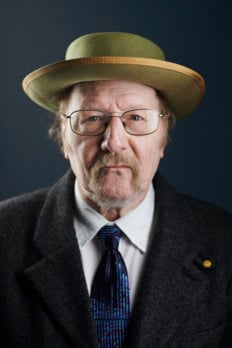
J
effrey C. Hall was born in Brooklyn, New York, near the end of World War II (in Europe). His parents, fortunately for him, were among rare young adults in the U.S. who achieved college educations during the Depression. Hall’s father used his higher education credentials to become a journalist, his mother a school teacher. These are arguably mindful vocations, and they promoted a mindful atmosphere in Hall’s home when he was growing up, without there being any indoctrination and probably without Hall himself necessarily being aware of this salutary environment.
Eventually, what Hall’s father achieved vocationally caused him to work in Washington, D.C., covering the United States Senate along with presidential campaigns. Thus his offspring were raised mostly in a Maryland suburb of Washington. The aforementioned intra-home atmosphere (enhanced by how interesting it was for Hall to absorb information from his father about politics, society, and their historical contexts) made it axiomatic that he and his two siblings would attend college. Hall did so, beginning in 1963, and became a Biology major at Amherst College (Amherst, Massachusetts). A key element of this experience stemmed from his desire to do “Senior Honors” research. This caused Hall to be assigned, as his Honors supervisor, Dr. Phillip T. Ives. The latter had, by then (mid1960s), been a longstanding Drosophila geneticist. Though Hall was unaware of the following during his college stint: Ives was a distinguished such geneticist then and later, as Hall learned during his post-undergraduate time.
In any event, Ives was an excellent mentor, who not only instructed his small number of undergrad supervisees superbly, but also imbued them with a fervent interest in basic research generally and Drosophila genetics in particular. As Hall was performing a low-level genetics project at that college, his Biology Department superiors (including Ives) recommended that he try to become a graduate student at the University of Washington in Seattle. This advice came Hall’s way in the context of an incipiently well-regarded Genetics Department having been established at “U-Dub” (W = double U). Hall took heed of those college-based recommendations and enrolled at U-Dub in 1967. Soon after joining the Genetics Department there, he joined (in turn) the laboratory of Prof. Larry Sandler. The latter was an excellent Drosophila geneticist, who like Ives happened to be a direct descendant of Thomas Hunt Morgan. Morgan, along with his students at Columbia University in New York, were pioneers who founded, sustained, and expanded the fruit-fly genetics “system,” during the 19-teens and subsequent decades.
Within U-Dub’s Genetics Department, Sandler’s – and Hall’s – leader was Professor Herschel Roman, founder and longstanding Chair of that department (1959–1980). Roman fostered departmental norms that promoted high-quality instruction, training, and mentoring. In this regard, “Hersch” was well acquainted, professionally and personally, with almost all members of his department. The interest he took accordingly caused him to pull Hall aside, albeit not by singling him out. In any case, Hersch recommend that Hall try for a postdoctoral position in the laboratory of Seymour Benzer, California Institute of Technology (CalTech, a.k.a. CIT) in Pasadena where, more than incidentally, Morgan’s lab had moved from New York in the late 1920s. For Benzer’s part, by the early 1970s, he had established a second career, after initiating his genetically-based vocation via “pure” genetic studies of microbes. Along with Seymour also moving to CalTech in the mid-1960s, he shifted his interests and activities into the nascent sub-field of behavioral-cum-neuro-genetics. Benzer chose Drosophila, possibly influenced by the famed “fly group” that had long been ensconced there. Morgan was dead – as was one of his famed students, Calvin Bridges (Columbia -> CalTech) – but the equally famed Alfred Sturtevant remained alive, as was the latter’s student (then CIT Professor) Edward Lewis.
Back to Roman’s intra-departmental office at U-Dub: That Chair’s recommendation – in person to Hall and on the telephone to Benzer – about the former doing a postdoc in the latter’s lab led to Hall joining that CIT group during the late summer of 1971.
For a few months thereafter, Hall was fortunate to overlap with one of Benzer’s senior grad students, Ronald (Ron) J. Konopka. That investigator had made himself into a “chrono-geneticist,” taking a genetic approach to study biological timing, viz. daily rhythms. Thus, as Konopka was completing his thesis project (PhD, 1972), Hall became vividly aware of what Ron had been doing and spectacularly accomplishing: Induce from scratch, via application of a chemical mutagen, novel mutants in Drosophila melanogaster that would potentially manifest abnormalities or anomalies of such rhythmicity (including that which is exhibited at the level of fruit-fly adult behavior: rest/activity cycles, normally manifested via ca. 24-hour cycle durations). Ron’s mutant hunting, followed by high-quality analysis of the rhythm-based phenotypes and mutational genotypes, was stunningly successful. This was based in large part upon Konopka inducing and identifying a magnificent trio of novel mutants: one that displayed only 19-h daily cycles (in constant darkness), a 29-h mutant, and a third (the original) that was arrhythmic, a.k.a. aperiodic. Ron named these variants period mutants, formally justified, for he demonstrated that each of the three mutations involved newly induced changes within one D. melanogaster gene (famously abbreviated per and pronounced “purr” as opposed to “peer”).
During these heady days of the early 1970s, Hall could not help become a fan of Konopka’s research, owing to the findings themselves, and against a recent background that caused him previously to become aware of daily rhythmicity in Drosophila. Exposure to the relevant phenomena – including that fly cultures maintain daily rhythms in constant darkness, in which condition they display what are known as a “circadian” rhythm” – occurred when Hall was a student in a college course; its instructor happened to include a module about circadian rhythms manifested by “emerging flies” (metamorphosis -> adulthood = “eclosion”). That Assistant Professor at Amherst College had recently completed his PhD thesis research in the laboratory of Colin Pittendrigh (Princeton University, New Jersey), whereby the latter was becoming one of the “grand old men” of rhythm-related research. However, neither Pittendrigh nor anyone else had brought any definitive Drosophila genetics to bear on studies of these eclosion rhythms. At all events Hall was fortunate, by coincidence, to be attuned to the way that Ron Konopka pioneered a genetic approach to asking “what is a circadian clock?” That quoted phrase alludes to the notion that Konopka’s novel variants seemed for all-the-world to be clock mutants, as the relevant publication, co-authored by Benzer, was entitled. Implicitly, if a mutation (actually two) can change the circadian-cycle duration in a constant environmental condition, that smacks of a “pacemaker” problem. The noun just quoted had been invoked in context of organisms of all kinds displaying daily rhythmicities of all kinds, including behavioral; and that such biological (physiological, biochemical, etc.) cycling persists in the absence of daily earth cycles, notably light:dark ones. Implication: Central pacemakers harbored within organisms underlie such rhythmicity. This kind of pacemaker can be regarded as synonymous with “the circadian clock,” as it was initially inferred to exist via a plant experiment (-> animal studies, including of invertebrates and mammals, -> microbes as well).
Aside from the rhythm-related sub-enterprise extant within Benzer’s lab, Hall’s own research there from fall 1971 to the end of 1973 did not involve time-based phenomena. Instead: neurochemical ones as well as a project involving genetic “mosaics.” The latter genotype entailed Drosophila that were each part-male (one X chromosome)//part-female (XX) and with the two kinds of chromosomal genotype marked phenotypically via “histochemical” genetic marking (one-X cells, including CNS neurons, unstained for an enzyme reaction; 2X ones stained). Hall’s mentor, trainer, and co-worker for these projects was a fellow postdoc in the laboratory of Benzer, whose supervisory actions tended toward laissez-faire, named Douglas Kankel (Brown University, Providence, Rhode Island -> CIT, -> Yale University, New Haven, Connecticut). Doug taught his labmate a whole lot about Drosophila biology, including neurobiology, against a background of Hall having previously done genetic (qua genetic) studies alone. The latter did manage to bring to his pair of Benzer-lab projects genetic expertise, involving a heavy dose of chromosome manipulations in the context of many types of such being afforded by the “lore of Drosophila,” harking back to Morgan and his students.
Shortly after Hall’s postdoc stint entered its third year, by which time his co-worker Kankel had moved to Yale as noted above, he received invitations to interview for Assistant Professorships at two U.S. universities: U. Missouri (Columbia) and Brandeis U. (Waltham, MA). These invites were promoted by none-other-than Herschel Roman, who had recently visited those two institutions and recommended that his former mentee be considered for faculty-level jobs. So Hall can never forget nor fail to appreciate how meaningful to him was Prof. Roman’s career-sponsoring support (1967–1971; then intra-1973).
After traveling for the interviews just referred to, Hall received job offers from both of the universities in question, initially from Brandeis. That offer led him to begin an Assistant Professorship there, winter 1974. Hoping to get some research going there – at this near-Boston locale – he continued the pair of projects that had been maturing at CalTech around the time when Kankel and then Hall moved across the United States from Southern California (U.S.). This collaborative association continued for a while, “Back East,” facilitated by both fledgling faculty members being located in New England. These two former Benzer lab members put forth publications presenting the neurochemical-genetic and nervous-system mosaic findings in 1976. Yet Hall and Kankel had published zero primary papers during their postdoc stints, during an era when that kind of ostensible non-productivity could nonetheless lead to faculty jobs; nowadays, applications for such must be accompanied by massive publication-ridden CVs.
One aspect of Hall’s lab studies at Brandeis University involved courtship behavior in Drosophila. The starting point was to observe and quantify courtship capacities of the aforementioned sex mosaics: Which portions of the neuro-histochemically marked CNSs had to be genetically male (or female) if a given mosaic would perform one or more elements of the sex-specific, courtship-behavioral sequence? This category of behavioro-neuro analysis proceeded to a merger of genetic-mosaic principles and practices with neurochemically disrupting mutations, stemming from the other project Hall and Kankel had performed, starting at CalTech. The rather complex “mosaic dissection” experiment in question, based at Brandeis, was initiated in Hall’s lab by him and a postdoc who joined it during the late 1970s: C.P. (Bambos) Kyriacou. A key reproductive-behavioral phenotype recorded during this study was a male-like courtship song (normally produced by a standard XY fly’s wing vibrations, put forth when he follows a female, ramping up toward eventually attempting to mate with her). Bambos’s and Hall’s question: Which types of mosaics − set up to be each all-male, but with some tissues neurochemically mutated, others normal − might sing abnormally, putatively correlated within intra-CNS locations of the neurochemical deficit? But this project ended up dying on the vine, because of the following: Kyriacou and Hall also recorded (with microphones and magnetic tape) the singing behavior of control males: siblings of the mosaics, whereby such XY controls were uniformly normal for their neurochemistry. Analyzing visually appreciable renditions of the auditory recordings led to their inability to discern supposedly canonical “song parameters,” previously but cavalierly reported by the early song recorders, who had been working mostly in the U.K.
By virtue of enhanced labor, Bambos broke down and analyzed the entirely of each several-minute recording; thus he pulled-out long series of relevant computations, concentrating on a key song parameter: rate of tone-pulse production (per series of 10-second bins). He therefore discerned that that singing element seemed to be fluctuating systematically. Further analyses revealed, indeed, that the rate in question oscillated rhythmically: speeding up, slowing down, speeding up again; with a cycle duration of about one minute for D. melanogaster free of behavioral/neural mutations. Next step, during the micro-era in question (late 1970s): Kyriacou and Hall wondered whether the only known rhythm-affecting mutations in “our” species might by-some-chance alter song rhythmicity. Hall, especially, knew that those variants were Ron Konopka’s circadian mutants (n=3, harking back to the latter’s PhD thesis project). So Hall wrote Dr. Konopka, asking for culture copies of Ron’s mutants, even though the Brandeis researchers were aware that circadian rhythmicity and song such are defined by cycle durations three orders of magnitude different from each other. Yet, Konopka’s per mutations – two of which caused altered cycle durations, the third causing arrhythmicity – were found to alter courtship-song cycling in ways paralleling effects of these genetic variants on daily rhythms.
So Hall’s admiration for Konopka’s chrono-genetic accomplishments and a coincidental matter of the former being instructed in a college course about biological rhythms in Drosophila, prompted that lab head at Brandeis, and others there, to enter an arena defined by actual chronobiological lab work. Meanwhile, a close colleague of Hall in Waltham, MA – then Associate Professor Michael Rosbash – had previously become aware of the Konopka mutants. After Hall and Rosbash met during 1974, the former could not help mention that banner study (emanating from his former postdoc lab) and speak highly of it; even though neither Hall nor Rosbash had any mid-’70s interest in doing anything about per mutants or the gene defined by them. Nonetheless, Rosbash also became well acquainted with Bambos Kyriacou, as the second half of the 1970s unfolded, enhancing the former’s appreciation for the period gene’s existence.
A few years later in the early 1980s, an experimental question suggested itself, whereby the per gene would have to be identified and isolated at the DNA level.
To make a medium-length story short as to how that question arose: We fantasized about “cloning per” from D. melanogaster (mel), using that DNA readily to do the same for per in the close interspecific relative D. simulans (sim), then transferring the latter into mel to ask whether such a single-gene infusion would bring with it regulation of sim-like singing rhythmicity. As of the early ’80s, Kyraicou and Hall had found that sim and mel males generate species-specific song-cycle durations and that the genetic etiology of this difference mapped to the same chromosome on which per is located.
Therefore, and initially not based on a specific interest in circadian rhythmicity in Drosophila, the researchers at Brandeis with material help from Kyriacou and from Konopka himself, set out to isolate period-locus DNA and identify it via behavioral bioassays: introduction of putative per DNA into per-mutant “hosts” carrying the arrhythmia-inducing mutation. This new project was rooted in an incipient, close collaboration between the laboratories of Hall and of Rosbash at Brandeis, augmented by the two sending behaviorally-pertinent strains to professional locations where the “two K” guys had ended up as of the mid-’80s.
This multi-lab effort eventually ballooned as its interests shifted mainly into the daily-rhythm arena. The researchers began to so study via multi-pronged approaches: behavioral genetics, cyto-genetics (application of chromosome aberrations), molecular genetics, and neuro-genetics. For Hall’s and Rosbash’s part, it was meaningful that they had become close not only professionally but also personally: respectively, related to co-awareness that Hall was a generic fruit-fly geneticist; and Rosbash was a generic molecular biologist, initially studying vertebrates and yeast from the mid-’70s into the ’80s. In addition, these two faculty members shared various personal interests, mostly revolving round low-culture stuff. Might their association – including separate, seemingly complementary, scientific backgrounds − promote a fruitful joining of forces: chrono-genetics deepening into the molecular-genetic area?
As this bi-lab collaboration at Brandeis got started and proceeded, the two were operating in competitive parallel with per-molecular studies performed in the lab of Mike Young (Rockefeller University, New York). Mike had become at least marginally interested in circadian rhythms affected by period mutations back when he was a graduate student in the 1970s, mainly studying other bio-genetic phenomena in Drosophila.
The tri-lab deal − a pair of collaborating groups plus one competing with the former two − began to work out. As of approximately the mid’80s, a quartet of publications (two from Massachusetts, two from New York) reported probable cloning of per, followed by nailing that matter via DNA-mediated “rescue” of the relevant per-mutational effects, as alluded to above. Hall maintains that a companion piece in this volume, based on his Nobel Prize lecture in late 2017, usefully recounts sufficient additional features of these early-days stories, along with presenting the requisite background information from the 1970s and earlier.
No doubt the lecture-based articles by Profs. Rosbash and Young will flesh out all additionally relevant aspects of this history. Meanwhile, some quasi-editorial remarks, partly coming under the header of Hall tooting his own biographical horn; as well, what follows may usefully divulge some historical stuff, referring to the post-’80s era: In this respect, and in Hall’s experience plus opinion, it is possible to get carried away with “the primacy of per”: yes, the first clock gene cloned in any organism. Gene #2 of this type was identified at that level in Neurospora five years later. Could one clock factor, the PER protein, tell the whole fruit-fly story insofar as the circadian-pacemaker mechanism was concerned? A priori, no. Realizing this, Hall and associates such as Rosbash and Young “did Konopka’s” of their own, spearheading renewed searches for rhythm-related genes in Drosophila, whose products could be gleaned to contribute materially to said mechanism. Such mutant hunting was set-up to involve chromosomes extending beyond the one where period is located.
As elaborated citationally within Hall’s “lecture article,” this tri-lab endeavor led to identification of Young’s timeless (tim) gene, which encodes a PER companion; and doubletime (dbt), whose encoded enzyme influences the dynamics of PER protein “cycling.” Now per and tim must be transcriptionally activated, of course, before their first-stage products (mRNAs) can go up and down each day. Indeed, although perhaps anti-climactically, the Hall/Rosbash crew – including several valued co-workers (grad students, post docs, and others) – induced behavior-arrhythmia-inducing mutations at loci named Clock (Clk) and cycle (cyc), which also lead to very low levels of period and timeless products. Neither Clk nor cyc mutations (loss-of-function “alleles”) kill developing Drosophila; same for per or tim “nulls,” but unlike dbt ones, the latter gene being a developmentally vital one with pleiotropic effects. Thus, Clk and cyc – whose transcrioton-factor products co-associate to turn-on both per and tim transcription – can be regarded as semi-dedicated to rhythm-regulating processes.
Discovery of all these core clock factors in Drosophila was rooted in mutant hunting. Yet, extending beyond that core, circadian clocks must also receive inputs from the environment, e.g., so that these only circa-dian pacemakers can be subjected to daily re-sets, thus underpinning 24.0-hour cycle durations in natural conditions. One conspicuously acting input factor in Drosophila came to the fore thanks to yet another hunt for mutants performed by Hall and co-workers, which resulted in identification of a light-absorbing molecule called CRY. It is encoded by the mutationally defined cry gene, whose encoded protein − when activated by photic stimuli − “touches” TIM to promote the latter’s degradation during the falling phase of tim-product cycling. Now the core clock also has to do more than spin its internal wheels, plus be sensitive to external stimuli. Therefore output pathways must project from central-pacemaking functions, ultimately to mediate revealed rhythmicity (behavior, physiology, and much more overall). Starting with performance of molecular-genetic tactics, many output-gene candidates in Drosophila were uncovered at Brandeis and Rockefeller, plus within farther-flung research groups. One such gene, which encodes a brain neuropeptide, comprised a fruit of such searching at Brandeis; contributed to gaining insights about “outputs from the clock;” then was exploited molecular-genetically, neuro-genetically, and behaviorally by Hall’s research group and several others. The latter came to be composed of an ever-expanding venture, extending well beyond investigative activities occurring originally at only a small number of institutions. This swelling phenomenon included a variety of “other-directed” investigators, referring to how their careers started, dropping much of what they had been doing in order to start studying Drosophila chronobiology and that of other-organismal rhythms.
Hall could not help summarize elements of this post-per research, although the meaning of that seminal gene continued to be elucidated well past the mid-1980s. At a minimum, successful searching for further factors – notably at Brandeis and Rockefeller during the 1990s – signifies that these (dare we say) molecularly pioneering labs were serious about their hope to flesh-out rather robust understandings of the overall rhythm-related deal.
By analogy to entering what he just did, Hall comes near the end of this biog by inserting a partly personal coda: He has long regarded the genetic side of the overall enterprise to be extremely consequential, exemplified by what was just outlined within recent passages: so many “clock players” found in Drosophila via pheno-genetic screenings. So the attack on fruitfly chronobiology has had a lot to do with variant genotypes and associated pheno-genetics (to re-invoke an arcane term, meaning rhythm-related effects of genic variants, chromosomally based ones, and molecular “clones”). Conversations between Hall and Rosbash, and among other associates, have stimulated Rosbash to say that “the molecular biology made all the difference.”
Fair enough: Truly no one could have anticipated, for example, what period-gene products are about, absent “cloning per” then empirically analyzing the encoded RNA & protein (involving way more than sequencing the gene and describing PER protein on paper, hoping forlornly that that description alone would divulge much at first-blush). In addition, genotypic and phenotypic elements of the eventual extravaganza (momentarily factoring out molecular matters as a gedanken consideration) have been rate-limiting investigatively, in Hall’s opinion. For his part, and in order potentially to “do anything” chrono-wise, he relentlessly sensed appreciation for genetically based interactions with and mentoring by his early-career associates: Ives, Sandler, Roman, Lewis, Kankel, and Konopka.
If Hall had not been fortunate enough to come straight out of the T.H. Morgan tradition of Drosophila genetics, he wonders in retrospect whether he could have contributed to the overall behavioral/neurobiological/chronobiological enterprise in some sort of meaningful manner. Prof. Young might sense something similar. Although he was not a molecular-geneticist in his early pre-postdoc days, he too is a direct descendant of Morgan, via Young’s PhD research in a laboratory headed by an academic great-grandson of a fruit-fly-genetics pioneer. Hall has noticed, for instance, that Young merged with élan his molecular-genetic expertise with Drosophila cyto-genetics (matters revolving round the latter having been absorbed by that student of the fruit-fly in advance of Young beginning to focus heavily on biological rhythms and circadian clocks). Maybe Hall, as well, was able to tap into the aforementioned “lore of Drosophila,” influencing ways that he helped sustain the chronobiological endeavor at hand, in part via some sort of genetic diligence.
This autobiography/biography was written at the time of the award and later published in the book series Les Prix Nobel/ Nobel Lectures/The Nobel Prizes. The information is sometimes updated with an addendum submitted by the Laureate.
Michael W. Young – Prize presentation
Jeffrey C. Hall – Prize presentation
Watch a video clip of the 2017 Nobel Laureate in Physiology or Medicine, Jeffrey C. Hall, receiving his Nobel Prize medal and diploma during the Nobel Prize Award Ceremony at the Concert Hall in Stockholm, Sweden, on 10 December 2017.
Michael Rosbash – Prize presentation
Watch a video clip of the 2017 Nobel Laureate in Physiology or Medicine, Michael Rosbash, receiving his Nobel Prize medal and diploma during the Nobel Prize Award Ceremony at the Concert Hall in Stockholm, Sweden, on 10 December 2017.
Michael Rosbash – Interview
Interview, December 2017
Interview with Medicine Laureate Michael Rosbash on 6 December 2017 during the Nobel Week in Stockholm, Sweden.
Michael Rosbash answers the following questions (the links below lead to clip on YouTube):
0:00 – What was the moment you decided to pursue science?
1:03 – What effect did your upbringing have on you?
2:13 – Are you more of a morning person or a night owl?
2:39 – Do you remember first meeting Jeffrey Hall?
3:57 – How did you and Jeffrey Hall complement one another?
4:54 – What drove you from competition to collaboration in your field?
6:26 – Can we control the biological clock, possibly prolonging human life?
8:19 – What are your tips for handling jet lag?
8:56 – Is our circadian rhythm like a sixth sense?
10:29 – Is it important to have a mentor?
13:33 – What’s your advice for young people?
15:33 – Where do you do your best thinking?
16:29 – How has your family supported your work?
17:20 – How do you spend your free time?
18:39 – What sports learnings also apply in science?
19:42 – What research are you pursuing right now?
21:06 – How has your research benefitted humankind?
Nobel Minds 2017
The 2017 Nobel Laureates met at the Grünewald Hall in the Stockholm Concert Hall in Stockholm for the traditional round-table discussion and TV program ‘Nobel Minds’. The discussion was hosted by the BBC’s Zeinab Badawi.
Telephone interview, October 2017
“My wife said, ‘Start breathing'”
Telephone interview with Michael Rosbash following the announcement of the 2017 Nobel Prize in Physiology or Medicine, 2 October 2017. The interviewer is Adam Smith, Chief Scientific Officer of Nobel Media. Michael Rosbash describes the moment he found out he had been awarded the 2017 Nobel Prize in Physiology or Medicine.
Interview transcript
[Michael Rosbash]: Hello
[Adam Smith]: Hello may I speak to Michael Rosbash please?
MR: You’re speaking to him.
AS: Thank you very much. My name is Adam Smith calling from Nobelprize.org, the website of the Nobel Prize. So I suppose it’s funny in a way that a prize for working out the molecular mechanisms of the circadian rhythms is announced in a way that disrupts your own sleep cycle.
MR: Indeed. [Laughs] Ironic, yes. I hadn’t thought about that, I must confess, but absolutely, yes.
AS: How did you hear the news?
MR: The phone on the night table by my bed woke me out of a deep sleep. And the gentleman Thomas Perlmann, yes, he told me the news. And I was shocked, breathless really. Literally. My wife said, “Start breathing.”
AS: In a way this is something that everyone takes for granted, their adaptation to night and day. But it’s sort of the original adaptation to environmental influence, isn’t it?
MR: It is, it is. Before the atmosphere has its current constitution and before nutrition was anything like it is today, the earth rotated on its axis and the light dark cycle impinged on the beginnings of life, yes.
AS: And I suppose it’s hard for people to imagine how different it was 30 years ago when you were starting this work, that you were real pioneers in linking genes to behaviour.
MR: Right, it’s true, it’s true. We didn’t think of ourselves as that, you know everybody … There’s an element of craft in the work, you know, we’re putting one foot in front of the other. Trying to get more experiments to work than fail but in hindsight, yes, there’s some truth in that.
AS: And the prize is also a celebration, I suppose, of your close working relationship with Jeffrey Hall.
MR: It is, it is. Yes. Long, long, long partnership.
AS: What made you such a strong team?
MR: We were very, we had very … Two things, we were very good friends personally, before in fact we started to work together. And secondly we had complimentary skillsets.
AS: I gather he’s a bit of a maverick, riding Harley-Davidsons and the like.
MR: That sort of thing yes. And the like. Yes, that’s a good way to put it. Very British and very appropriate.
AS: Will we look forward to welcoming you to Stockholm in December?
MR: Of course you will.
AS: Great, well enjoy your day and thank you for speaking to us.
MR: Thank you very much.
AS: Thank you.
MR: Bye bye.
Michael Rosbash receiving the telephone call in his kitchen in Newton, MA.
Did you find any typos in this text? We would appreciate your assistance in identifying any errors and to let us know. Thank you for taking the time to report the errors by sending us an e-mail.
Michael W. Young – Interview
Interview, December 2017
Interview with Medicine Laureate Michael W. Young on 6 December 2017 during the Nobel Week in Stockholm, Sweden.
Michael W. Young answers the following questions (the links below lead to clip on YouTube):
0:00 – What is the origin of your passion in science?
3:33 – What sparked your interest in circadian rhythm?
5:23 – Are you a night owl or an early bird?
6:26 – What are your tips for dealing with jet lag?
9:17 – Share your thoughts on competition and collaboration in science.
13:31 – Can we control the biological clock?
16:20 – Can we increase life span by controlling the biological clock?
18:48 – Do you manipulate your own biological clock?
20:21 – Can the circadian rhythm be considered a sixth sense?
21:29 – What do you enjoy about science? How do you keep your curiosity alive?
24:09 – What advice would you give to a younger version of yourself?
Nobel Minds 2017
The 2017 Nobel Laureates met at the Grünewald Hall in the Stockholm Concert Hall in Stockholm for the traditional round-table discussion and TV program ‘Nobel Minds’. The discussion was hosted by the BBC’s Zeinab Badawi.
Telephone interview, October 2017
“I just thought it was a terrific problem …”
Telephone interview with Michael W. Young following the announcement of the 2017 Nobel Prize in Physiology or Medicine, 2 October 2017. The interviewer is Adam Smith, Chief Scientific Officer of Nobel Media. In the interview, Michael W. Young explains why he decided to take on the mystery of circadian rhythms.
Interview transcript
[Michael W. Young]: Hello
[Adam Smith]: Good morning, my name’s Adam Smith calling from Nobelprize.org. Congratulations on the award of the …
MW: Well thanks, thanks. We’ve got multiple phones in the room running here, my wife’s going to get the other one.
AS: [Laughs] Yes you’re going to be bombarded from this point on.
MW: Yes, this is crazy, I’m … I just told somebody I’m not quite sure how I’m going to get through the day. [Laughs] I need to, I need to replicate myself.
AS: [Laughs] But it all must seem a little unreal having not actually heard from the committee, so you’re hearing it second hand so to speak.
MY: I don’t know. Somehow, somehow, it’s just all spinning around in my head that this has happened. You know about these things and you can see possibilities on the horizon but you never really … Has this really happened?! [Laughs.] I’m still at that stage.
AS: It’s hard to remember how things were 30 years ago and nowadays the idea of linking genes with behaviour is sort of, people expect that. But then it was a very pioneering thing to do.
MY: Oh yeah. I mean this was … You know, I had gone to Stanford to learn how to use this technology, it was brand new in the 70s. And starting up my lab at Rockefeller I had worked a little bit on this problem, circadian rhythms, thanks to these tremendous mutants that Seymour Benzer and his student Ron Konopka had found. And I just thought it was a terrific problem and maybe the toughest thing I could try to tackle because it was behaviour; you know, what could we learn about a fairly complicated behaviour that we all exhibit, which was most easily represented by sleep wake cycles. And frankly I thought we might find out maybe a little bit. I never thought we would really understand what the motor behind this was, at the time. We were very lucky, we managed to find genes that fit together like puzzle pieces to explain how this thing worked. And the techniques and the approaches kept changing and I kept … I was very lucky I kept getting students and post docs that were extremely good and just did everything right. And the other piece of this was, you know, there was sort of a race going on in the early years. My colleagues Jeff Hall and Michael Rosbash and we kind of pushed each other along because … I mean most of it was independently done but we did have to collaborate from time to time, but we worked on slightly different problems but the solutions to those problems all, as I was saying, fit together like puzzle pieces, that kind of bring the picture into view. It was, it’s been really quite satisfying. This really pushes it way, way, over the top. It’s really quite incredible. And I couldn’t … yeah, this is terribly exciting as you can imagine.
AS: You do sound wonderfully amazed, it’s very nice to hear.
MY: Oh I am, I’m just. I’m just, like I think I said I’m just wondering how I’m going to get through the day.
AS: Will we be seeing you in Stockholm in December?
MY: Oh, of course. Are you kidding? [Laughs] I’ll be there, I’ll be there.
Michael W. Young, photographed in his living room in New Jersey after receiving the telephone call.
Did you find any typos in this text? We would appreciate your assistance in identifying any errors and to let us know. Thank you for taking the time to report the errors by sending us an e-mail.
Jeffrey C. Hall – Interview
Interview, December 2017
Interview with Medicine Laureate Jeffrey C. Hall on 6 December 2017 during the Nobel Week in Stockholm, Sweden.
Jeffrey C. Hall answers the following questions (the links below lead to clip on YouTube):
0:00 – How did your upbringing influence your path to science?
4:01 – Do you think it’s important to have a mentor?
8:18 – What sparked your curiosity about our daily biological clocks?
14:10 – Is circadian rhythm a sort of sixth sense for living on earth?
16:12 – Did the universality of clock genes pave the way to the discovery?
19:06 – How would you describe your collaboration with Michael Rosbash?
Nobel Minds 2017
The 2017 Nobel Laureates met at the Grünewald Hall in the Stockholm Concert Hall in Stockholm for the traditional round-table discussion and TV program ‘Nobel Minds’. The discussion was hosted by the BBC’s Zeinab Badawi.
Telephone interview, October 2017
“The key fourth awardee here is, as some of us call them, the little fly”
Telephone interview with Jeffrey C. Hall following the announcement of the 2017 Nobel Prize in Physiology or Medicine, 2 October 2017. The interviewer is Adam Smith, Chief Scientific Officer of Nobel Media. Jeffrey C. Hall praises the role of the humble fruit fly in this year’s Nobel Prize in Physiology or Medicine.
Interview transcript
[Jeffrey C. Hall]: Hello.
[Adam Smith]: Hello, my name’s Adam Smith. I’m calling from Nobelprize.org, the website of the Nobel Prize in Stockholm. Many congratulations on the award of the Nobel Prize.
JH: Well thank you.
AS: Where am I calling you? You’re in Maine, is that …
JH: You’ve reached me where I’ve lived for many years in the middle of nowhere, Maine, rural Maine. Also known as Central Maine. In the extreme north east of this great country of ours.
AS: Sounds a beautiful place to be located.
JH: It is physically beautiful, including, I’m looking out the window, it’s a very beautiful day today, which is often is.
AS: Fall colours and the like I guess.
JH: Not quite yet but it’s still green as can be but it’s, because Maine is not like Arizona.
AS: You’re being awarded today for unravelling the mechanisms of the circadian rhythm.
JH: Yes, correct. That was about half of our work, during my time when I was employed, had to do with circadian rhythms, indeed. That became amongst our most well-known research achievements, if any. Usually, and, relentlessly co-authored with Rosbash with whom you’ve already spoken. So he and I joined forces in the early mid-eighties and imagined that we might, or we might not as the case may be, go onward and upward doing research together in that arena. Which often involved crucially, what I call AIs – actual investigators – like students, post-doctoral supervisees, from the two labs working very closely together, even day by day. So that was enjoyable, it wasn’t that either lab was way out on its own limb. We had a lot of mutual support, I think it’s fair to say.
AS: You obviously had a very special working relationship, there was something magical about the team.
JH: This was based in large part on becoming close personally at the beginning where our research interests in very general terms were in genetics, writ large. It was only after six, seven, or eight years that we started to work things together and imagine that possibly our backgrounds and our skills, if any, might be complementary. The key reason that we got into that kind of relationship was because we were personally close. We had mutual interest in low culture stuff like sports and rock and roll music and abusable substances and stuff. And so we spent a lot of time just carousing or sitting together in misery at local sports stadiums. We have also certain, many similar interests, even in the pre-rhythm research days. He as a molecular geneticist, I as a straight up fruit fly geneticist.
AS: And that brings us onto flies. We should say a word for flies on this day of all days because once again the power of the fly as a model organism has been demonstrated.
JH: That’s right, this is something I’ve always … I was taught when I was a graduate student about a phrase, it’s known as the lore of Drosophila. To know about the deep history going all the way back to the 1920s, and the 40s and the 90s and now the second decade of the current century. It’s just one of a zillion examples of how basic research on a supposedly irrelevant organism can have broader significance than, with regard to what’s going on in terms of that organism itself. And this has been true of fruit fly research, which has been a major contributor for decades. For well over a century actually.
AS: Well let’s dedicate this day to the fly.
JH: Yeah, the key fourth awardee here is, as some of us call them, the little fly. So the little flies deserve another tip of the hat, I think, in terms of what has happened today.
AS: That’s lovely. Indeed they do. And it’s been such a pleasure speaking to you. I’m very much looking forward to meeting you. Will you be coming to Stockholm in December?
JH: Yes I will, I think I almost have to. But I’m willing to.
AS: Good.
JH: I was in Sweden once in my time, back in the time when Swedish folk drove on the left-hand side of the roadway. So I’m looking forward to going back to Stockholm where I once was, in 1967.
AS: We very much look forward to meeting you, thank you. Bye.
JH: Bye.
Did you find any typos in this text? We would appreciate your assistance in identifying any errors and to let us know. Thank you for taking the time to report the errors by sending us an e-mail.
The Nobel Prize Award Ceremony 2017
Watch the Nobel Prize Award Ceremony from the Stockholm Concert Hall in Sweden, 10 December 2017.
Opening Address by Professor Carl-Henrik Heldin, Chairman of the Board of the Nobel Foundation
Presentation speech for the Physics Prize
Presentation speech for the Chemistry Prize
Presentation speech for the Medicine Prize
Presentation speech for the Literature Prize
Presentation speech for the Prize in Economic Sciences