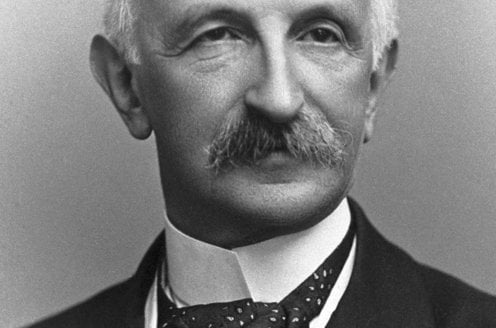
Alfred Hermann Fried (November 11, 1864-May 4, 1921) was born in Vienna, but pursued most of his active journalistic career in Germany …
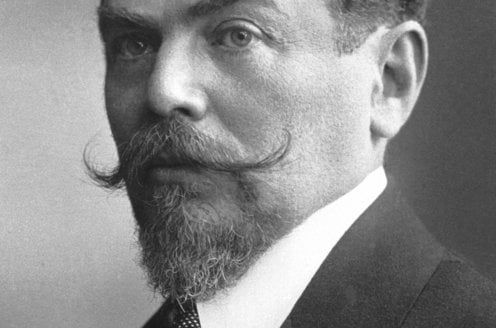
Alfred Fried was awarded the Nobel Peace Prize for his efforts to popularise the work of experts in international law and promote a new and peaceful organisation of society. He shared the prize with Tobias Asser.
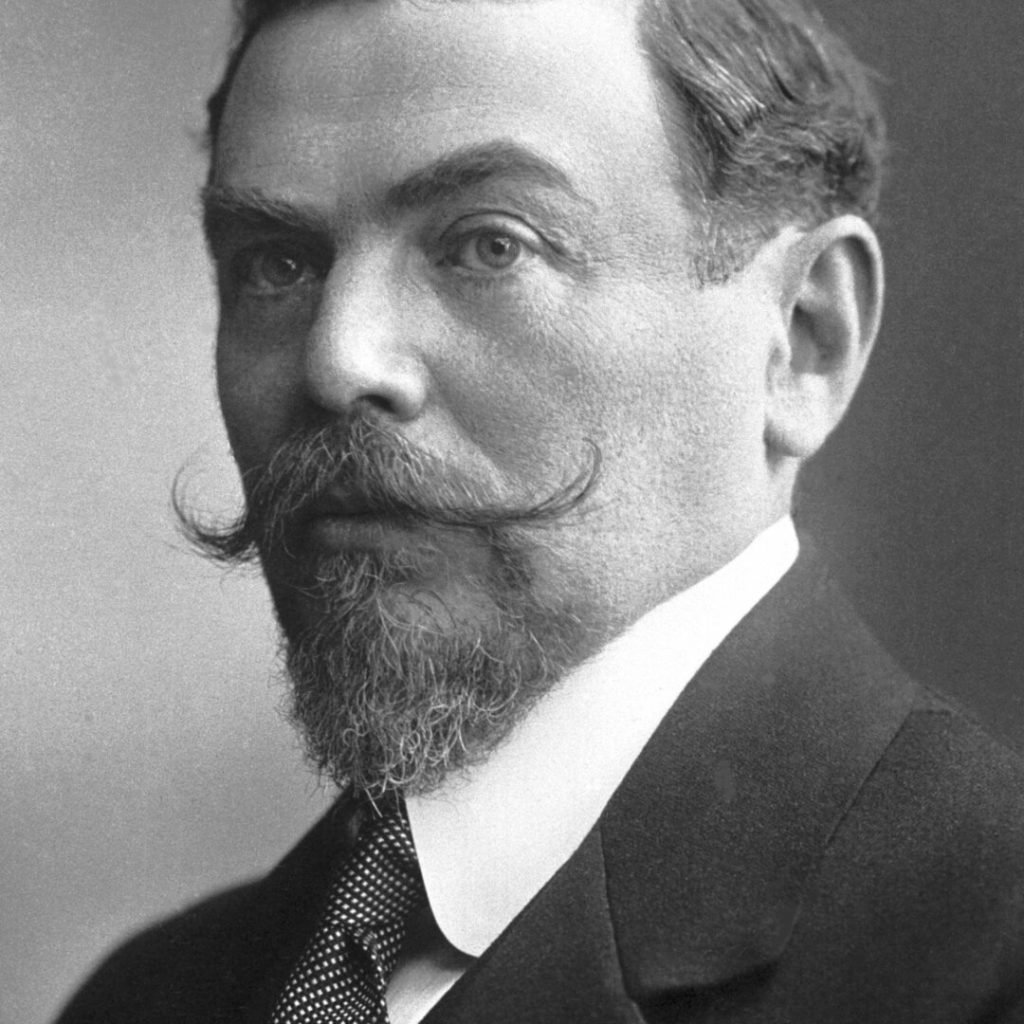
Full name: Alfred Hermann Fried
Born: 11 November 1864, Vienna, Austria
Died: 4 May 1921, Vienna, Austria
Date awarded: 10 December 1911
Alfred H. Fried advocated the philosophy of development optimism, which saw humankind on an evolutionary course toward world peace. Politicians and peace advocates needed to seek the reorganisation of the international community. He believed that arbitration would be a useful tool for promoting peace, and supported the Permanent Court of Arbitration in The Hague. Fried moved to Germany and helped to found the German Peace Society, but his true life’s work lay in his publishing and writing. For decades he collaborated with 1905 peace laureate Baroness Bertha von Suttner (Austria), who was a regular contributor to his journal Die Friedens-Warte (The Peace Watch). Fried wrote thousands of articles and published numerous books. His goal was to create a new and peaceful society by popularising the ideas and opinions of international legal scholars.
“He has probably been the most industrious literary pacifist in the past twenty years.”
Jørgen Løvland, Chairman of the Nobel Committee, 10 December 1911.
| Development optimism A belief that developments will improve the human condition. Has roots in the 18th century Age of Enlightenment when great advances were made in science and culture, such as the formulation of human rights declarations. |
At the age of 23, Fried moved to Germany and opened his own publishing house in Berlin. He took contact with his renowned compatriot Baroness Bertha von Suttner, thereby acquiring first-hand insight into the international peace movement. Starting in 1892, they published the monthly journal Die Waffen Nieder! (Lay Down Your Arms!), with Fried as publisher and von Suttner as editor. The title of the journal was the same as Bertha von Suttner’s famous book from 1889. Die Waffen Nieder! provided information from the inter-parliamentary conferences and the International Peace Bureau in Bern. It also addressed peace-related issues from all over the world.
“When assessing the work of A.H. Fried, one must also keep particularly in mind that the soil in which he has tried to sow his ideas – namely Germany, where the spirit of militarism is blossoming at its fullest – is the most uncultivable imaginable.”
Bertha von Suttner, Nomination proposal, 1911.
When the last edition of Die Waffen Neider! was published in 1899, Fried began to publish the weekly Die Friedens-Warte (Guardian of Peace). This became a powerful mouthpiece for the peace movement. However, the outbreak of WWI was a tremendous blow to Fried. He had to escape Germany because his publication was subject to military censorship. He continued to publish from Switzerland, but the publication was forbidden in Germany. Additionally, German newspapers marked Fried as a traitor. He died in Vienna in 1921, a poor man; but Die Friedens-Warte lives on today.
Disclaimer: Every effort has been made by the publisher to credit organisations and individuals with regard to the supply of photographs. Please notify the publishers regarding corrections.
Alfred Hermann Fried (November 11, 1864-May 4, 1921) was born in Vienna, but pursued most of his active journalistic career in Germany …
Tobias Asser was awarded the Nobel Peace Prize for his role as co-founder of the Institut de Droit International and pioneer in the field of international legal relations. He shared the prize with Alfred Fried.
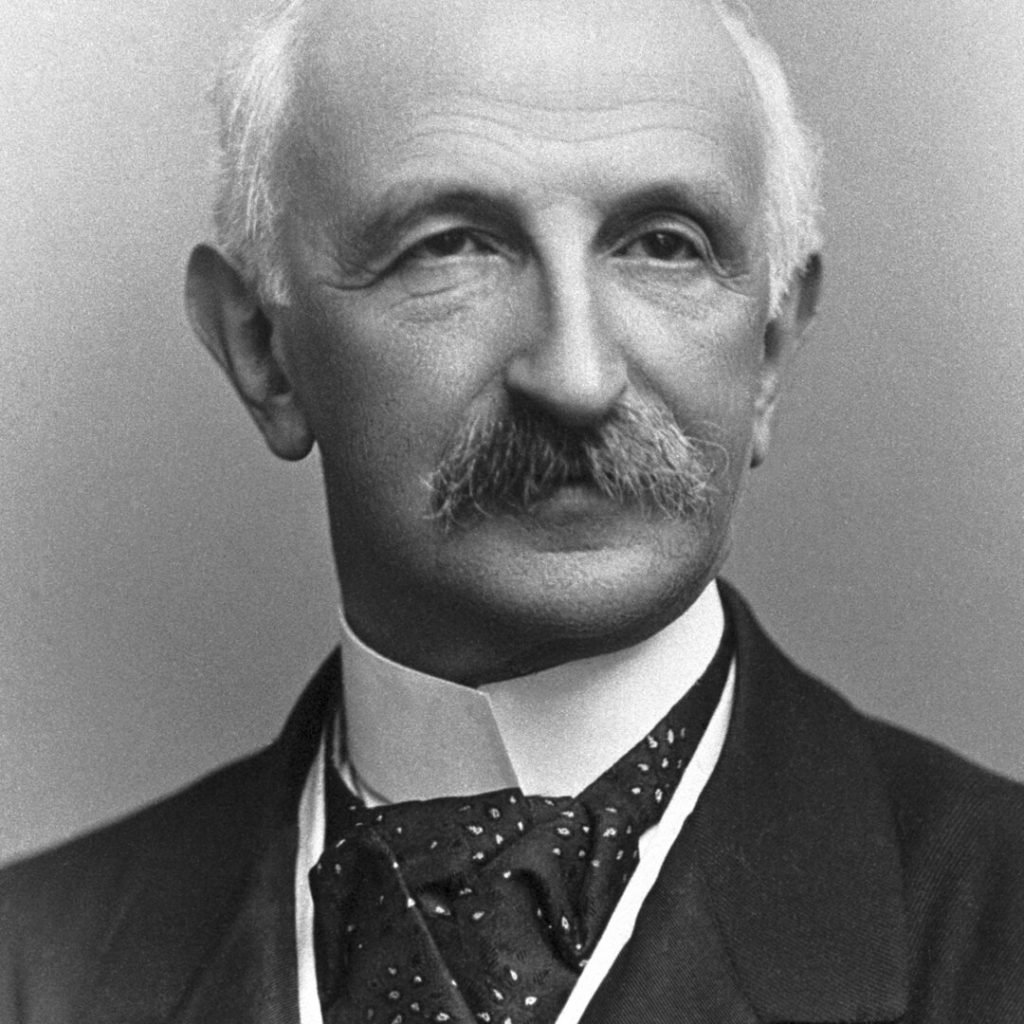
Full name: Tobias Michael Carel Asser
Born: 28 April 1838, Amsterdam, the Netherlands
Died: 29 July 1913, the Hague, the Netherlands
Date awarded: 10 December 1911
Jurist Tobias Asser helped to found the Institute of International Law in 1873, the first organisation to be awarded the Nobel Peace Prize (1904). Asser was an expert on international civil law. In the 1890s he sought consensus for the drawing up of binding international agreements on the resolution of civil disputes, including those related to marriage, separation and divorce. Asser took active part in the Hague Peace Conferences of 1899 and 1907, where he worked to expand and improve the Geneva Convention. But it was his efforts in the area of private law that were emphasised when he was awarded the Nobel Peace Prize. He maintained that knowledge of civil law across borders would promote peace. There was good reason that Tobias Asser was compared to his compatriot Hugo Grotius, founder of the field of modern international law in the 1600s.
| The Hague Peace Conferences Conferences held in 1899 and 1907 with the aim of achieving peaceful solutions to international disputes, primarily by arbitration and the establishment of an international court of justice. |
“As a pioneer in the field of international legal relations, he has earned a reputation as one of the leaders in modern jurisprudence.”
Jørgen Løvland, Chairman of the Nobel Committee, 10 December 1911.
Tobias Asser was a pragmatic lawyer. While many of his contemporaries maintained that international regulations on civil law should be made as uniform as possible, Asser disagreed. He believed that each nation should retain its distinctive legislative character. He was most concerned with the practical resolution of cases. In Asser’s view, international regulations should be in place to resolve matters such as, for instance, a conflict over inheritance arising between spouses from different countries.
“The core of Asser’s life’s work, however, is the major role he has played in ensuring that efforts to establish international conventions in the sphere of international civil law have gotten well and smoothly underway.”
M.H. Lie, Adviser to the Norwegian Nobel Committee, 1911.
Asser was nominated for the Nobel Peace Prize only once. The Nobel Committee’s consultant wrote that international private law did not have the immediate significance for peace between nations as international law did. On the other hand, it required “a greater insight and deeper understanding of one’s own country’s law than a foreign country’s law; its cultivators must have a completely different scientific grounding if their work is to provide practical results for international brotherhood”. And Asser’s work gave practical results. It was such small steps to international understanding that the Norwegian Nobel Committee emphasised in 1911.
Tobias Michael Carel Asser (April 28, 1838-July 29, 1913) was born in Amsterdam into a family with a tradition in the field of law, both his father and his grandfather having been well-established lawyers and his uncle having served as the Dutch minister of justice …
Disclaimer: Every effort has been made by the publisher to credit organisations and individuals with regard to the supply of photographs. Please notify the publishers regarding corrections.

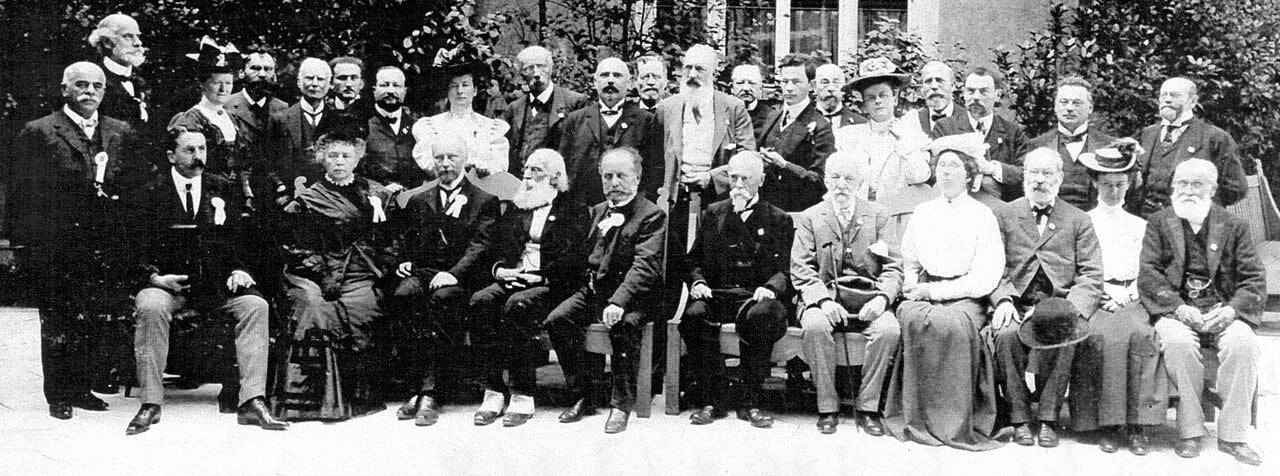
1 (of 2) World Peace Congress in Munich 1907: Bertha von Suttner (seated row, second from left), Ludwig Quidde (next to the right), Frédéric Passy (next to the right), Henri La Fontaine (to her right) and A. H. Fried (standing row, third from the right).
Photographer unknown. Public domain, via Wikimedia Commons.

2 (of 2) Esperanto World Congress, Boulogne-sur-Mer 1905, group photo of some participants. Alfred Hermann Fried is third from left in the back row.
Bildarchiv Austria, Public domain, via Wikimedia Commons.
Alfred Fried did not deliver a Nobel Lecture.
Tobias Asser did not deliver a Nobel Lecture.
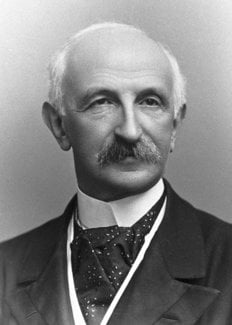
Tobias Michael Carel Asser (April 28, 1838-July 29, 1913) was born in Amsterdam into a family with a tradition in the field of law, both his father and his grandfather having been well-established lawyers and his uncle having served as the Dutch minister of justice. A brilliant student, young Asser won a competition in 1857 with his thesis On the Economic Conception of Value. Although this achievement may have confirmed an early decision to take up a career in the business world, he changed his mind and went on to study law at the Athenaeum in Amsterdam, taking a doctor’s degree in 1860 at the age of twenty-one. In that same year, the Dutch government appointed him a member of an international commission which was to negotiate the abolition of tolls on the Rhine River.
Asser practiced law for a brief period but devoted his life mainly to teaching, scholarship, and politics. In 1862 he accepted a teaching position at the Athenaeum as professor of private law; in 1876, when the institution became the University of Amsterdam, he continued as a professor of international and commercial law while continuing a reduced legal practice.
Early in his scholarly career, Asser turned to the problems of international law, dedicating himself particularly to the area of international private law in which he soon acquired a position of leadership. Believing that legal conflicts between nations could best be solved by international conferences which would agree on common solutions to be implemented by each participating nation, he persuaded the Dutch government to call several conferences of European powers to work out a codification of international private law. Attended by representatives of most of the countries of Europe, the first two of these conferences, held at The Hague in 1893 and 1894 and over which Asser presided, drew up a treaty, made effective in May, 1899, establishing a uniform international procedure for conducting civil trials. Asser also presided over the conferences of 1900 and 1904, which resulted in several important treaties governing international family law, including matters relating to marriage, divorce, legal separation, and guardianship of minors.
Asser’s interest in international law led him, along with the Belgian Gustave Rolin-Jaequemyns and the Englishman John Westlake, to found a journal of international law, Revue de droit international et de législation comparée in 1869. Four years later he was one of those invited by Rolin-Jaequemyns to take part in the small international conference at Ghent which founded the Institute of International Law, an organization which Asser later headed. Active in efforts to establish an academy of international law, Asser died before such an academy became a reality at The Hague in 1923.
Asser’s contributions to the literature of law were a vital part of his efforts. Among his more important works are Schets van het internationaal Privatrecht (1877) and Schets van het Nederlandsche Handelsrecht (1904).
Asser also participated in the practical politics of international affairs. He accepted a position as legal adviser to the Netherlands Ministry of Foreign Affairs in 1875; became a member of the Council of State, the highest administrative body in the government, in 1893; served as president of the State Commission for International Law beginning in 1898; acted as his country’s delegate to the Hague Peace Conferences of 1899 and 1907, there urging that the principle of compulsory arbitration be introduced in the economic area; held a post as minister without portfolio from 1904 until his death.
Noted as a negotiator, Asser was involved during this period from 1875 to 1913 in virtually every treaty concluded by the Dutch government. One of his triumphs was the securing of a seat for Spain and for The Netherlands beside France, England, Germany, Austria, Italy, Russia, and Turkey on the Suez Canal Commission, the body that drew up the Suez Canal Convention of 1888 guaranteeing the canal’s neutrality. Noted also as an arbiter of international disputes, he sat as a member of the Permanent Court of Arbitration that heard the first case to come before that court – the Pious Fund dispute between the United States and Mexico (1902).
Asser was an accomplished linguist, handling effectively the German, French, and English languages, as well as his native Dutch. For his scholarship and its application to the affairs of government he was awarded honorary degrees by the Universities of Edinburgh, Cambridge, Bologna, and Berlin. Housed in the Peace Palace at The Hague, a library of international law which he gathered with the help of contributions from twenty countries has been named «The Asser Collection».
| Selected Bibliography |
| Asser, Tobias M.C., La Convention de La Haye du 14 novembre 1896 relative à la procédure civile. Haarlem, Bohn, 1901. |
| Asser, Tobias M.C., Schets van het Internationaal Privantrecht. Haarlem, Bohn, 1877. |
| Asser, Tobias M.C., Schets van het Nederlandsche Handelsrecht. Haarlem, Bohn, 1904. |
| Asser, Tobias M.C., Studiën op het Gebied van Recht en Staat (1858-1888). Haarlem, Bohn, 1889. |
| Encyclopaedia Judaica. |
| «Der Nobelpreis 1911», in Die Friedens-Warte, 13 (December, 1911) 373-374. |
| «T.M.C. Asser », in American Journal of International Law, 8 (1914) 343-344. |
This autobiography/biography was written at the time of the award and first published in the book series Les Prix Nobel. It was later edited and republished in Nobel Lectures. To cite this document, always state the source as shown above.
The Nobel Foundation's copyright has expired.On Tobias Asser from T.M.C. Asser Institut