Oscar Arias Sánchez was born in 1940. After studying in the United States, he read law and economics at the University of Costa Rica in the capital, San Jose. As a student he engaged actively in the work of the National Liberation Party …
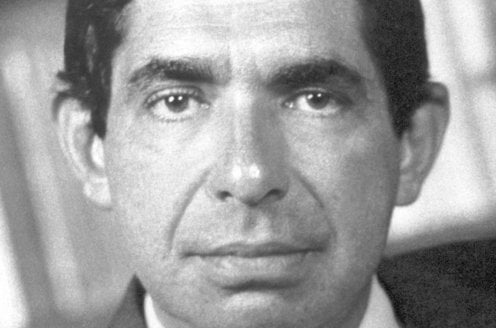
Oscar Arias Sánchez was awarded the Nobel Peace Prize for designing a peace plan and promoting lasting peace in Central America.
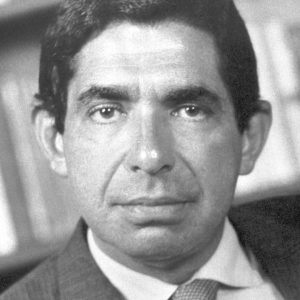
Full name: Oscar Arias Sánchez
Born: 13 September 1940, Heredia, Costa Rica
Date awarded: 13 October 1987
Costa Rica’s President Oscar Arias Sánchez received the Nobel Peace Prize for designing a plan to end the bloody civil wars devastating Central America. The peace plan was adopted by Costa Rica, El Salvador, Guatemala and Nicaragua in August 1987. It called for free elections, the safeguarding of human rights and an end to foreign intervention in Central America’s internal affairs. When Arias Sánchez became president of Costa Rica in 1986, a bitter war was raging in Nicaragua. The USA supported the Contras, a group of insurgents that opposed the Nicaraguan government. Arias Sánchez refused to allow the USA to use Costa Rican territory to support the Contras, and he opposed the US attempt to amend his peace plan. He also directed criticism at the Nicaraguan government for its lack of democracy.
”The only answer for Central America, the answer to its poverty as well as to its political challenges, is freedom from misery and freedom from fear.”
Oscar Arias Sánchez, Nobel Prize lecture, 11 December 1987.
In 1979 the revolutionary Sandinistas assumed power in Nicaragua when the US-backed dictator, Somoza, was ousted. The Sandinistas were left-wing radicals with close ties to Cuba and the Soviet Union. When Ronald Reagan became the US president, he viewed the Sandinistas as communists who threatened US interests throughout Central America. Consequently, he tried to overthrow the Sandinista government. The USA gave financial support, weapons and military training to the insurgents known as the Contras, which led to a civil war in Nicaragua in the 1980s.
Costa Rica does not have military forces, only a civilian police force. Oscar Arias Sánchez maintained that the USA should promote democracy in Central America by fighting poverty instead of wielding its military power. In his Nobel Prize lecture, he said this about his own country: “My country is a country of teachers. It is therefore a country of peace. We discuss our successes and failures in complete freedom. Because our country is a country of teachers, we closed our army camps, and our schoolchildren go with books under their arms, not with rifles on their shoulders. We believe in dialogue, in agreement, in reaching a consensus. We reject violence.”
”Arias impressed those of us who heard him speak and talked with him at Oslo as a man of genuine sincerity, indeed a man desiring peace with all his soul.”
Irwin Abrams, The Nobel Peace Prize and the Laureates, page 272, Science History Publications/USA 2001.
Oscar Arias Sánchez was born in 1940. After studying in the United States, he read law and economics at the University of Costa Rica in the capital, San Jose. As a student he engaged actively in the work of the National Liberation Party …
Disclaimer: Every effort has been made by the publisher to credit organisations and individuals with regard to the supply of photographs. Please notify the publishers regarding corrections.
Oscar Arias Sánchez’s Acceptance Speech, on the occasion of the award of the Nobel Peace Prize in Oslo, December 10, 1987
When you decided to honour me with this prize, you decided to honour a country of peace, you decided to honour Costa Rica. When in this year, 1987, you carried out the will of Alfred E. Nobel to encourage peace efforts in the world, you decided to encourage the efforts to secure peace in Central America. I am grateful for the recognition of our search for peace. We are all grateful in Central America.
Nobody knows better than the honourable members of this Committee, that this prize is a sign to let the world know that you want to foster the Central American peace initiative. With your decision you are enhancing the possibilities of success. You are declaring how well you know the search for peace can never end, and how it is a permanent cause, always in need of true support from real friends, from people with courage to promote change in favour of peace, even against all odds.
Peace is not a matter of prizes or trophies. It is not the product of a victory or command. It has no finishing line, no final deadline, no fixed definition of achievement.
Peace is a never-ending process, the work of many decisions by many people in many countries. It is an attitude, a way of life, a way of solving problems and resolving conflicts. It cannot be forced on the smallest nation or enforced by the largest. It cannot ignore our differences or overlook our common interests. It requires us to work and live together.
Peace is not only a matter of noble words and Nobel lectures. We have ample words, glorious words, inscribed in the charters of the United Nations, the World Court, the Organization of American States and a network of international treaties and laws. We need deeds that will respect those words, honour those commitments, abide by those laws. We need to strengthen our institutions of peace like the United Nations, making certain they are fully used by the weak as well as the strong.
I pay no attention to those doubters and detractors unwilling to believe that a lasting peace can be genuinely embraced by those who march under a different ideological banner or those who are more accustomed to cannons of war than to councils of peace.
We seek in Central America not peace alone, not peace to be followed some day by political progress, but peace and democracy, together, indivisible, an end to the shedding of human blood, which is inseparable from an end to the suppression of human rights. We do not judge, much less condemn, any other nation’s political or ideological system, freely chosen and never exported. We cannot require sovereign states to conform to patterns of government not of their own choosing. But we can and do insist that every government respect those universal rights of man that have meaning beyond national boundaries and ideological labels. We believe that justice and peace can only thrive together, never apart. A nation that mistreats its own citizens is more likely to mistreat its neighbours.
To receive this Nobel prize on the 10th of December is for me a marvellous coincidence. My son Oscar Felipe, here present, is eight years old today. I say to him, and through him to all the children of my country, that we shall never resort to violence, we shall never support military solutions to the problems of Central America. It is for the new generation that we must understand more than ever that peace can only be achieved through its own instruments: dialogue and understanding; tolerance and forgiveness; freedom and democracy.
I know well you share what we say to all members of the international community, and particularly to those in the East and the West, with far greater power and resources than my small nation could never hope to possess, I say to them, with the utmost urgency: let Central Americans decide the future of Central America. Leave the interpretation and implementation of our peace plan to us. Support the efforts for peace instead of the forces of war in our region. Send our people ploughshares instead of swords, pruning hooks instead of spears. If they, for their own purposes, cannot refrain from amassing the weapons of war, then, in the name of God, at least they should leave us in peace.
I say here to His Majesty and to the honourable members of the Nobel Peace Committee, to the wonderful people of Norway, that I accept this prize because I know how passionately you share our quest for peace, our eagerness for success. If, in the years to come peace prevails, and violence and war are thus avoided; a large part of that peace will be due to the faith of the people of Norway, and will be theirs forever.
Nobel Lecture, December 11, 1987
Desiring peace
Peace consists, very largely, in the fact of desiring it with all one’s soul. The inhabitants of my small country, Costa Rica, have realized those words by Erasmus. Mine is an unarmed people, whose children have never seen a fighter or a tank or a warship. One of my guests at this award, here with us today, is José Figueres Ferrer, the man with the vision to abolish my country’s armed forces in 1948, and thus set our history on a new course.
I am a Latin American
I am not receiving this prize as Oscar Arias, any more than I am receiving it as the president of my country. While I have not the arrogance to presume to represent anyone, neither do I fear the humility which identifies me with everyone, and with their great causes.
I receive it as one of the 400 million Latin Americans who, in the return to liberty, in the exercise of democracy, are seeking the way to overcome so much misery and so much injustice. I come from that Latin America whose face is deeply marked with pain, the record of the exile, torture, imprisonment and death of many of its men and its women. I come from that Latin American region where totalitarian regimes still exist which put the whole of humanity to shame.
America’s scars
The scars by which America is marked are deep. At this very time, America is seeking to return to freedom, and it is only as it approaches democracy that it can see the dreadful trail of torture, banishment and death left by dictators. The problems America has to overcome are enormous. An inheritance from an unjust past has been aggravated by the fatal deeds of tyrants to produce foreign debts, social insensitivity, economic upheavals, corruption and the many other evils of our societies. The evils are manifest, naked to the view of anyone who cares to see them.
Seeing the size of the challenge, no wonder many are prey to discouragement; or that apocalyptic prophets abound, announcing the failures of the fight against poverty, proclaiming the immediate fall of the democracies, forecasting the futility of peace-making efforts.
I do not share this defeatism. I cannot accept to be realistic means to tolerate misery, violence and hate. I do not believe that the hungry man should be treated as subversive for expressing his suffering. I shall never accept that the law can be used to justify tragedy, to keep things as they are, to make us abandon our ideas of a different world. Law is the path of liberty, and must as such open the way to progress for everyone.
Liberty performs miracles
Liberty performs miracles. To free men, everything is possible. A free and democratic America can meet the challenges confronting it. When I assumed the presidency of Costa Rica, I called for an alliance for freedom and democracy in the Americas. I said then, and I repeat today, that we should not be the allies, either politically or economically, of governments which oppress their peoples. Latin America has never known a single war between two democracies. That is sufficient reason for every man of good faith, every well-intentioned nation, to support efforts to put an end to tyranny.
America cannot wait
America’s freedom, the freedom of the whole of America, cannot wait. I come from a world with huge problems, which we shall overcome in freedom. I come from a world in a hurry, because hunger cannot wait. When hope is forgotten, violence does not delay. Dogmatism is too impatient for dialogue. I come from a world where, if we are to make sure that there will be no turning back from our progress towards liberty, if we are to frustrate every oppressive intent, we have no time to lose. I come from a world which cannot wait for the guerilla and the soldier to hold their fire: young people are dying, brothers are dying, and tomorrow who can tell why. I come from a world which cannot wait to open prison gates not, as before, for free men to go in, but for those imprisoned to come out.
America’s liberty and democracy have no time to lose, and we need the whole world’s understanding to win freedom from dictators, to win freedom from misery.
I come from Central America
I accept this prize as one of 27 million Central Americans. Behind the democratic awakening in Central America lies over a century of merciless dictatorships and general injustice and poverty. The choice before my little America is whether to suffer another century of violence, or to achieve peace by overcoming the fear of liberty. Only peace can write the new history.
We in Central America will not lose faith. We shall set history right. How sad that they would have us believe that peace is a dream, justice utopian, shared well-being impossible! How sad that there should be people in the world who cannot understand that in the former plantations of Central America, nations are asserting themselves and striving, with every right, for better destinies for their peoples! How sad that some cannot see that Central America does not want to prolong its past, but to create a new future, with hope for the young and dignity for the old!
Realising dreams
The Central American isthmus is a region of great contrasts, but also of heartening unison. Millions of men and women share dreams of freedom and progress. In some countries, the dreams are dispelled by systematic violations of human rights; they are shattered by fratricidal struggles in town and country, and come up against the realities of poverty so extreme it stops the heart. Poets who are the pride of mankind know that millions upon millions cannot read them in their own countries, because so many of the men and women there are illiterate. There are on this narrow strip of land painters and sculptors whom we shall admire for ever, but also dictators whom we have no wish to remember because they offend most cherished human values.
Central America cannot go on dreaming, nor does it want to. History demands that dreams turn into realities. Now, when there is no time to lose. Today, when we can take our destiny in our own hands. In this region, home alike to the oldest and strongest democracy in Latin America – that of Costa Rica – and to a history of the most merciless and cruel dictatorships, democratic awakening requires a special loyalty to freedom.
Seeing that the past dictatorships were only capable of creating misery and crippling hope, how absurd to pretend to cure the evils of one extreme dictatorship by means of its opposite! No one in Central America has the right to fear freedom, no one is entitled to preach absolute truths. The evils of one dogma are the evils of any dogma. They are all the enemies of human creativity. As Pascal said: “We know a great deal to make us sceptical. We know very little to make us dogmatic”.
History can only move towards liberty. History can only have justice at its heart. To march in the opposite direction to history is to be on the road to shame, poverty and oppression. Without freedom, there is no revolution. All oppression runs counter to man’s spirit.
Freedom: a shared longing
Central America is at an agonizing crossroad: faced with terrible poverty, some call, from mountains or from governments, for dictatorships with other ideologies, ignoring the cries for freedom of many generations. To the serious problems of general misery, as we know them in their North-South context, is added the conflict between East and West. Where poverty meets conflicting ideologies and the fear of liberty, one can see a cross of ill omen taking shape in Central America.
Let us make no mistake. The only answer for Central America, the answer to its poverty as well as to its political challenges, is freedom from misery and freedom from fear. Anyone who proposes to solve the ills of centuries in the name of dogma will only help to make the problems of the past grow bigger in the future.
There is a shared desire in the spirit of man which has for centuries sought liberty in Central America. No one must betray this spiritual union. To do so would be to condemn our little America to another hundred years of horrifying oppression, of meaningless death, of fighting for freedom.
I am from Costa Rica
I am receiving this prize as one of 2.7 million Costa Ricans. My people draw their sacred liberty from the two oceans which bound us to the East and West. To the South and to the North, Costa Rica has almost always been bounded by dictators and dictatorships. We are an unarmed people, and we are fighting to remain free from hunger. To America we are a symbol of peace, and we hope to be a symbol of development. We intend to show that peace is both the prerequisite and the fruit of progress.
Country of teachers
My country is a country of teachers. It is therefore a country of peace. We discuss our successes and failures in complete freedom. Because our country is a country of teachers, we closed the army camps, and our children go with books under their arms, not with rifles on their shoulders. We believe in dialogue, in agreement, in reaching a consensus. We reject violence. Because my country is a country of teachers, we believe in convincing our opponents, not defeating them. We prefer raising the fallen to crushing them, because we believe that no one possesses the absolute truth. Because mine is a country of teachers, we seek an economy in which men cooperate in a spirit of solidarity, not an economy in which they compete to their own extinction.
Education in my country has been compulsory and free for 118 years. Health care now extends to every citizen, and housing for the people is a basic aim of my Government.
A new economy
Just as we take pride in many of our achievements, we make no secret of our worries and problems. In hard times, we must be capable of establishing a new economy and restoring growth. We have said that we do not want an economy which is insensitive to domestic needs or to the demands of the most humble. We have said that we will not, merely for the sake of economic growth, give up our hope of creating a more egalitarian society. Our country has the lowest rate of unemployment in the Western hemisphere. We hope to be the first Latin American country to be rid of slums. We are convinced that a country free from slums will be a country free from hatred, where poor people, too, can enjoy the privilege of working for progress in freedom.
Stronger than a thousand armies
In these years of bitterness in Central America, many people in my country are afraid that, driven by minds diseased and blinded by fanaticism, the violence in the region may spread to Costa Rica. Some have given way to the fear that we would have to establish an army to keep violence away from our borders. What senseless weakness! Such ideas are worth less than the thirty pieces of silver handed to Judas. Costa Rica’s fortress, the strength which makes it invincible by force, which makes it stronger than a thousand armies, is the power of liberty, of its principles, of the great ideals of our civilization. When one honestly lives up to one’s ideas, when one is not afraid of liberty, one is invulnerable to totalitarian blows.
We know in Costa Rica that only freedom allows political projects to be realized which embrace a country’s entire population. Only freedom allows people to be reconciled in tolerance. The painful paths trodden aimlessly around the world by wandering Cubans, Nicaraguans, Paraguayans, Chileans, and so many others who cannot return to their own countries, testify most cruelly to the rule of dogma. Liberty bears no labels, democracy no colors. One can tell them when one meets them, as the real experience of a people.
A peace plan
Faced with the nearness of Central America’s violence, Costa Rica with all its history, and especially with its youthful idealism, obliged me to take to the region’s battlefield the peace of my people, the faith in dialogue, the need for tolerance. As the people’s servant, I proposed a peace plan for Central America. The plan was also founded on Simon Bolivar’s1 cry for freedom, manifested in the tenacious and brave work of the Contadora Group and the Support Group.
I am one of five presidents
I receive this award as one of the five presidents who have pledged to the world the will of their peoples to exchange a history of oppression for a future of freedom; a history of hunger for a destiny of progress; the cry of mothers and the violent death of youths for a hope, a path of peace which we wish to take together.
Hope is the strongest driving force for a people. Hope which brings about change, which produces new realities, is what opens man’s road to freedom. Once hope has taken hold, courage must unite with wisdom. That is the only way of avoiding violence, the only way of maintaining the calm one needs to respond peacefully to offences.
However noble a crusade, some people will desire and promote its failure. Some few appear to accept war as the normal course of events, as the solution to problems. How ironic that powerful forces are angered by interruptions in the course of war, by efforts to eliminate the sources of hatred! How ironic that any intention to stop war in its course triggers rages and attacks, as if we were disturbing the sleep of the just or halting a necessary measure, and not a heart-rending evil! How ironic for peace-making efforts to discover that hatred is stronger for many than love; that the longing to achieve power through military victories makes so many men lose their reason, forget all shame, and betray history.
Let weapons fall silent
Five presidents in Central America have signed an accord to seek a firm and lasting peace. We want arms to fall silent and men to speak. Our sons are being killed by conventional weapons. Our youths are being killed by conventional weapons.
Fear of nuclear war, the horrors of what we have heard about the nuclear end of the world, seems to have made us uncaring about conventional war. Memories of Hiroshima are stronger than memories of Vietnam! How welcome it would be if conventional weapons were treated with the same awe as the atom bomb! How welcome it would be if the killing of many little by little, everyday, was considered just as outrageous as the killing of many all at once! Do we really live in such an irrational world that we would be more reluctant to use conventional weapons if every country had the bomb, and the fate of the world depended on a single madman? Would that make universal peace more secure? Have we any right to forget the 78 million human beings killed in the wars of this twentieth century?
The world today is divided between those who live in fear of being destroyed in nuclear war, and those who are dying day by day in wars fought with conventional weapons. This terror of the final war is so great that it has spread the most frightening insensibility towards the arms race and the use of non-nuclear weapons. We need most urgently – our intelligence requires us, our pity enjoins us – to struggle with equal intensity to ensure that neither Hiroshima nor Vietnam is repeated.
Weapons do not fire on their own. Those who have lost hope fire them. Those who are controlled by dogmas fire them. We must fight for peace undismayed, and fearlessly accept these challenges from those without hope and from the threats of fanatics.
I say to the poet
The peace plan which we five presidents signed accepts all the challenges. The path to peace is difficult, very difficult. We in Central America need everyone’s help to achieve peace.
It is easier to predict the defeat of peace in Central America than its victory. That is how it was when man wanted to fly, and when he wanted to conquer space. That is how it was in the hard days of the two world wars which our century has known. That is how it was and still is as man confronts the most dreadful diseases and the task eliminating poverty and hunger in the world.
History was not written by men who predicted failure, who gave up their dreams, who abandoned their principles, who allowed their laziness to put their intelligence to sleep. If certain men at times were alone in seeking victory, they always had at their side the watchful spirit of their peoples, the faith and destiny of many generations.
Perhaps it was in difficult times for Central America, like those we are living through today, perhaps it was in premonition of the present crossroads, that Rubén Dario, our America’s greatest poet2, wrote these lines, convinced that history would take its course:
“Pray, generous, pious and proud;
pray, chaste, pure, heavenly and brave;
intercede for us, entreat for us,
for already we are almost without sap or shoot,
without soul, without life, without light, without Quixote,
without feet and without wings, without Sancho and without God”.
I assure the immortal poet that we shall not cease to dream, we shall not fear wisdom, we shall not flee from freedom. To the eternal poet I say that in Central America we shall not forget Quixote, we shall not renounce life, we shall not turn our backs on the spirit, and we shall never lose our faith in God.
I am one of those five men who signed an accord, a commitment which consists, very largely, in the fact of desiring peace with all one’s soul.
Thank you.
1. Simon Bolivar (1783-1830), the South American revolutionary who led wars of independence in the present nations of Venezuela, Colombia, Panama, Ecuador, Peru and Bolivia.
2. Ruben Dario (1867-1916) of Nicaragua has had a tremendous influence upon both Spanish and Spanish American writers.

1 (of 6) Portrait of Oscar Arias Sánchez, 2009.
Copyright © Laura Pardo Kindly provided by Laura Pardo

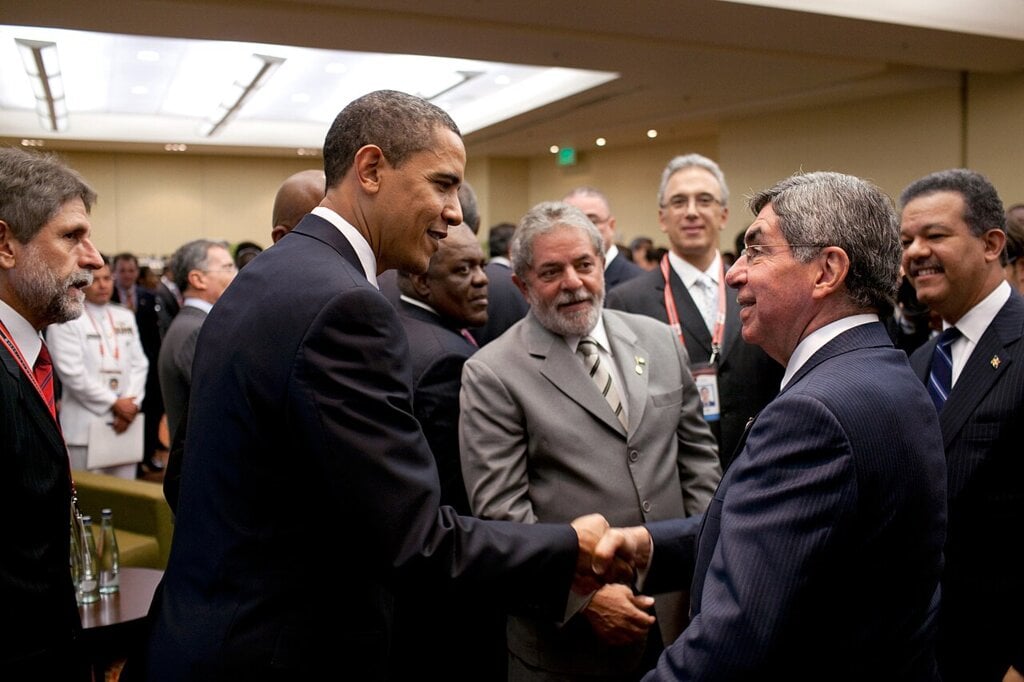
2 (of 6) United States President Barack Obama, left, greets Costa Rica President Oscar Arias Sánchez (right) during a reception at the Summit of the Americas in Port of Spain, Trinidad on 17 April 2009.
Pete Souza, Public domain, via Wikimedia Commons

3 (of 6) Portrait of Oscar Arias Sánchez, 15 September 2008.
Copyright © Luis Angel Espinoza Kindly provided by Luis Angel Espinoza
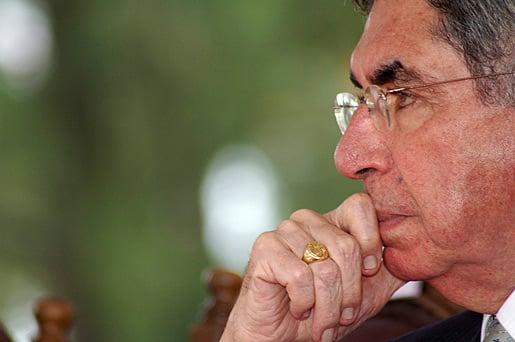
4 (of 6) Portrait of Oscar Arias Sánchez, 15 September 2008.
Copyright © Luis Angel Espinoza Kindly provided by Luis Angel Espinoza

5 (of 6) Oscar Arias Sánchez attending the Nobel Centennial 2001, a conference titled ”The Conflicts of the 20th Century and the Solutions for the 21st Century”.
© Knudsens fotosenter/Dextra Photo, Norsk Teknisk Museum.

6 (of 6) Nobel Peace Prize laureates at the Nobel Centennial 2001, a conference titled ”The Conflicts of the 20th Century and the Solutions for the 21st Century”. From left: Oscar Arias Sánchez, Norman Borlaug, Joseph Rotblat, Rigoberta Menchu, Adolfo Pérez Esquivel, (photographer Micheline Pelletier), John Hume and Mairead Corrigan.
© Knudsens fotosenter/Dextra Photo, Norsk Teknisk Museum.
Conferencia Nobel el dia 11 de diciembre de 1987
Desear la paz,
La Paz consiste, en gran parte, en el hecho de desearla con toda el alma. Estas palabras de Erasmo las viven los habitantes de mi pequeña Costa Rica. El mío es un pueblo sin armas donde nuestros niños nunca vieron un avión de combate, ni un tanque, ni un barco de guerra. Uno de mis invitados a recibir este premio, aquí con nosotros, es José Figueres Ferrer, el hombre visionario que en 1948 abolió el ejército de mi Patria y le señaló, así, un curso diferente a nuestra historia.
Soy uno de América Latina
No recibo este premio como Oscar Arias. Tampoco lo recibo como Presidente de mi país. No tengo la arrogancia de pretender que represento a alguien o a alguno, pero no le temo a la humildad que me identifica con todos y con sus grandes causas.
Lo recibo como uno de los 400 millones de latinoamericanos que buscan en el retorno a la libertad, en la práctica de la democracia, el camino para superar tanta miseria y tanta injusticia. Soy uno de esa América Latina de rostro marcado por profundas huellas de dolor, que recuerdan el destierro, la tortura, la prisión y la muerte de muchos de sus hombres y de sus mujeres. Soy uno de esa América Latina cuya geografía aún exhibe regímenes totalitarios que avergüenzan a la humanidad entera.
Las cicatrices de América
Las cicatrices que marcan a América son profundas. América busca, en estos años, retornar a la libertad y cuando se asoma a la democracia, ve primero la horrible estela de tortura, destierro y muerte que dejó tras sí el dictador. Los problemas que debe superar América son enormes. La herencia de un pasado de injusticias se agravó con la nefasta acción del tirano para producir el endeudamiento externo, la insensibilidad social, la destrucción de las economías, la corrupción y muchos otros males en nuestras sociedades. Estos males están a la vista, desnudos para quien quiera verlos.
No es extraño que, ante la magnitud del reto, muchos sean presa del desaliento; que abunden los profetas del Apocalipsis, esos que anuncian los fracasos de las luchas contra la pobreza, los que pregonan la pronta caída de las democracias, los que pronostican la inutilidad de los esfuerzos en favor de la paz.
No comparto ese derrotismo. No puedo aceptar que ser realista signifique tolerar la miseria, la violencia y los odios. No creo que el hombre con hambre, por expresar su dolor, deba ser tratado como subversivo. Nunca podré aceptar que la ley pueda usarse para justificar la tragedia, para que todo siga igual, para que renunciemos a pensar en un mundo diferente. La ley es el camino de la libertad y, como tal, debe ser oportunidad de desarrollo para todos.
La libertad hace milagros
La libertad hace milagros. Cuando los hombres son libres todo es posible. Los retos a que se enfrenta América puede superarlos una América libre, una América democrática. Cuando asumí la Presidencia de Costa Rica convoqué a una alianza para la libertad y la democracia en las Américas. Dije entonces, y lo repito ahora, que ni política ni económicamente, debemos ser aliados de gobiernos que oprimen a sus pueblos. América Latina no ha conocido una sola guerra entre dos democracias. Esta razón es suficiente para que todo hombre de buena fe, para que toda nación bien intencionada, apoye los esfuerzos para acabar con las tiranías.
Hay prisa en América
Hay prisa por que América sea libre. Toda América debe ser libre. Yo vengo de un mundo que grandes problemas, que vamos a superar en libertad. Vengo de un mundo que tiene prisa porque el hambre tiene prisa. La violencia que olvidó la esperanza tiene prisa. El dogmatismo que traicionó al diálogo tiene prisa. Vengo de un mundo donde tenemos prisa por hacer irreversibles los caminos de la libertad y por frustrar todo intento de opresión. Yo vengo de un mundo que tiene prisa por que el guerrillero y el soldado detengan el fuego: están muriendo jóvenes, están muriendo hermanos, y mañana no sabrán por qué. Yo vengo de un mundo que tiene prisa por que se abran las puertas de las cárceles y salgan los hombres presos en vez de que, como ayer, entren en ellas los hombres libres.
América tiene prisa por su libertad, prisa por su democracia, y requiere la comprensión del mundo entero para liberarse del dictador, para liberarse de la miseria.
Soy uno de Centroamérica
Recibo este premio como uno de los 27 millones de centroamericanos. Más de cien años de dictadores despiadados y de injusticias y pobreza generalizada, son el antecedente del despertar democrático de Centroamérica. Vivir la violencia durante otro siglo o alcanzar la paz superando el miedo a la libertad, es el reto de mi pequeña América. Sólo la paz puede escribir una historia nueva.
En América Central no vamos a perder la fe. Vamos a rectificar la historia. ¡Cuán triste es que quieran obligarnos a creer que la paz es un sueño, que la justicia es una utopía, que no es posible el bienestar compartido! ¡Cuán triste es que haya en el mundo quienes no entienden que en la Centroamérica donde hubo plantaciones, hoy se afirman naciones que buscan, con todo derecho, un destino mejor para sus pueblos! ¡Cuán triste es que algunos no comprendan que la América Central no quiere prolongar su pasado, sino escribir un futuro nuevo, con esperanza para los jóvenes y con dignidad para los viejos!
Convertir sueños en realidades
El istmo centroamericano es zona de grandes contrastes, pero también de alentadoras concordancias. Millones de hombres y mujeres comparten sueños de libertad y de desarrollo. Estos sueños se desvanecen en algunos países ante violaciones sistemáticas de los derechos humanos; se estrellan contra luchas fratricidas en campos y ciudades y afrontan realidades de pobreza extrema que paralizan el corazón. Poetas que son orgullo de la humanidad saben que millones y millones no pueden leerlos en sus propias tierras, porque allí miles y miles de hombres y de mujeres son analfabetos. Hay en esta angosta faja de tierra pintores y escultores que admiraremos siempre, pero también dictadores que no quisiéramos recordar porque ofendieron los más queridos valores del hombre.
América Central no quiere ni puede seguir soñando. La historia exige que los sueños se transformen en realidades. Es ahora cuando no hay tiempo que perder. Es hoy cuando podemos tomar el destino en nuestras manos. En estos territorios, que cobijan por igual a la más antigua y fuerte democracia de la América Latina – la de Costa Rica y la historia de las más despiadadas y crueles dictaduras, el despertar democrático exige una fidelidad especial a la libertad.
Si las dictaduras de ayer sólo fueron capaces de crear miseria y de mutilar la esperanza, ¡qué absurdo sería pretender curar los males de la dictadura de un extremo con una dictadura de otro extremo! En América Central nadie tiene derecho a temerle a la libertad, nadie tiene derecho a predicar verdades absolutas. Los males de un dogma son también los males de otro dogma. Todos son enemigos de la creatividad del hombre. Ya lo dijo Pascal: “Sabemos mucho para ser escépticos. Sabemos muy poco para ser dogmáticos”.
La historia sólo puede tener la dirección de la libertad. La historia sólo puede tener por alma la justicia. Cuando se marcha en sentido contrario a la historia, se transita la ruta de la vergüenza, de la pobreza, de la opresión. No hay revolución si no hay libertad. Toda opresión camina en dirección contraria al alma del hombre.
Libertad: anhelo compartido
América Central se halla ante una encrucijada terrible: frente a angustiosos problemas de pobreza, hay algunos que desde la montaña o desde el gobierno buscan dictaduras de otros signos ideológicos, ignorando el clamor libertario de muchas generaciones. Así, al lado de los graves males de miseria generalizada, de los males definidos en el contexto Norte-Sur, surge el conflicto Este-Oeste. Allí donde los problemas de pobreza se juntan con la pugna ideológica, el miedo a la libertad, perfila en Centroamérica una cruz que irradia sombrías predicciones.
No nos equivoquemos. Sólo la liberación de la miseria y del temor es respuesta para Centroamérica, respuesta para su pobreza, respuesta para sus retos políticos. Quienes, en nombre de ciertos dogmas, propician la solución de males centenarios, sólo contribuirán a hacer los problemas de ayer más grandes en el futuro. Hay un anhelo compartido en el alma de los hombres, que pide desde hace siglos la libertad en América Central. Nadie debe traicionar la alianza de las almas. Hacerlo significa condenar a nuestra pequeña América a otros cien años de horrorosa opresión, a otros cien años de muertes sin sentido, a otros cien años de lucha por la libertad.
Soy uno de Costa Rica
Recibo este premio como uno de los 2,7 millones de costarricenses. Mi pueblo respira su libertad sagrada por dos océanos, que son sus fronteras al este y al oeste. Al sur y al norte, Costa Rica ha limitado casi siempre con el dictador y la dictadura. Somos un pueblo sin armas y luchamos por seguir siendo un pueblo sin hambre. Somos para América símbolo de paz y queremos ser símbolo de desarrollo. Nos proponemos demostrar que la paz es requisito y fruto del desarrollo.
Tierra de maestros
Mi tierra es tierra de maestros. Por eso es tierra de paz. Nosotros discutimos nuestros éxitos y nuestros fracasos en completa libertad. Porque mi tierra es de maestros, cerramos los cuarteles, y nuestros niños marchan con libros bajo el brazo, y no con fusiles sobre el hombro. Creemos en el diálogo, en la transacción, en la búsqueda del consenso. Repudiamos la violencia. Porque mi tierra es de maestros, creemos en convencer y no en vencer al adversario. Preferimos levantar al caído y no aplastarlo, porque creemos que nadie posee la verdad absoluta. Porque mi tierra es de maestros, buscamos una economía en que los hombres cooperen solidariamente y no una economía en que compitan hasta anularse.
Desde hace 118 años en mi tierra la educación es obligatoria y gratuita. La atención médica protege hoy a todos los habitantes, y la vivienda popular es fundamental para mi Gobierno.
Una nueva economía
Así como estamos orgullosos de muchos de nuestros logros, no escondemos nuestras angustias y nuestros problemas. En horas difíciles debemos ser capaces de establecer una nueva economía, para volver a crecer. Hemos dicho que no queremos una economía insensible a las necesidades de los hogares, a las demandas de los más humildes. Hemos dicho que en nombre del crecimiento económico no vamos a renunciar a la aspiración de crear una sociedad más igualitaria. Hoy somos el país de más baja tasa de desocupación en el Hemisferio Occidental. Queremos ser el primer país de América Latina libre del tugurio. Estamos convencidos de que un país libre de tugurios será un país libre de odios, donde trabajar por el progreso en libertad podrá ser, también, privilegio de países pobres.
Más fuerza que mil ejércitos
En estos años amargos para América Central, muchos en mi Patria temieron que la violencia centroamericana pudiera contagiar, empujada por mentes enfermas y ciegas de fanatismo, a nuestra Costa Rica. Algunos costarricenses fueron embargados por el temor de que tuviésemos que crear un ejército, para mantener a la violencia fuera de nuestras fronteras. ¡Qué debilidad más sin sentido! Estos pensamientos valen menos que los treinta denarios entregados a Judas. La fortaleza de Costa Rica, la fuerza que la hace invencible ante la violencia, que la hace más poderosa que mil ejércitos, es la fuerza de la libertad, de sus principios, de los grandes ideales de nuestra civilización. Cuando las ideas se viven con honestidad, cuando no se le teme a la libertad, se es invulnerable ante los embalas totalitarios.
En Costa Rica sabemos que sólo la libertad permite construir proyectos políticos donde caben todos los habitantes de un país. Sólo la libertad permite que la tolerancia concilie a los hombres. Los dolorosos caminos por los que, errantes en el mundo, transitan cubanos, nicaragüenses, paraguayos, chilenos y tantos otros que deambulan sin poder retornar a sus propias tierras, son el más cruel testimonio del imperio del dogmatismo. La libertad no tiene apellidos y la democracia no tiene colores. Uno las distingue donde las encuentre, como vivencia real de un pueblo.
Un plan de paz
Ante la cercanía de la violencia de Centroamérica, Costa Rica y toda su historia, Costa Rica y en especial el idealismo de su Patria Joven me exigieron llevar al campo de batalla de la región la paz de mi pueblo, la fe en el diálogo, la necesidad de la tolerancia. Como servidor de ese pueblo, propuse un plan de paz para Centroamérica. Ese plan se fundamentó también en el grito libertario de Simón Bolívar, expresado en el trabajo tesonero y valiente del Grupo de Contadora y del Grupo de Apoyo.
Soy uno de cinco Presidentes
Recibo este premio como uno de los cinco Presidentes que han comprometido ante el mundo la voluntad de sus pueblos para cambiar una historia de opresión por un futuro de libertad; para cambiar una historia de hambre por un destino de progreso; para cambiar el llanto de las madres y la muerte violenta de los jóvenes por una esperanza, por un camino de paz que deseamos transitar juntos.
La esperanza el la fuerza más grande que impulsa a los pueblos. La esperanza que transforma, que fabrica nuevas realidades, es la que abre el camino hacia la libertad del hombre. Cuando se alienta una esperanza, es necesario unir el coraje a la sabiduría. Sólo así es posible evitar la violencia, sólo así es posible tener la serenidad requerida para responder con paz a las ofensas.
Hay ocasiones en que no importa cuan noble sea la cruzada que emprendida, algunos anhelan y propician su fracaso. Unos pocos parecen aceptar la guerra como el curso normal de los acontecimientos, como la solución a los problemas. ¡Cuan irónico es que fuerzas poderosas se molesten cuando se interrumpe el curso de la guerra, cuando se trabaja por destruir las razones que alimentan los odios! ¡Cuan irónico es que el intento por detener guerras en curso desate iras y ataques, como si estuviésemos perturbando un sueño justo, un camino necesario, y no un mal desgarrador! ¡Cuan irónico es que los esfuerzos de paz dejen al descubierto que, para muchos, los odios son más fuertes que el amor; que las ansias de alcanzar el poder por medio de victorias militares hagan perder la razón a tantos hombres, olvidar la vergüenza, traicionar la historia.
Que callen todas las armas
En Centroamérica, cinco Presidentes hemos firmado un acuerdo para buscar una paz firme y duradera. Buscamos que callen las armas y hablen los hombres. Son armas convencionales las que están matando a nuestros hijos, son armas convencionales las que matan a nuestros jóvenes.
El pavor a una guerra nuclear, los espantos que se describen en torno a cómo sería el fin atómico del mundo, parecen habernos hecho insensibles ante las guerras convencionales. ¡El recuerdo de Hiroshima es más fuerte que el recuerdo de Vietnam! ¡Con qué fuerza quisiéramos nosotros que existiera el mismo respeto, tanto para utilizar la bomba atómica como un arma convencional! ¡Con qué fuerza quisiéramos nosotros que matar a muchos poco a poco, cada día, fuese tan condenable como matar a muchos en un solo día! ¿Es que vivimos en un mundo tan irracional, que si la bomba atómica estuviese en poder de todas las naciones, y el destino del mundo dependiese tan sólo de un demente, tendríamos más respeto para el uso de las armas convencionales? ¿Estaría, así, más segura la paz del universo? ¿Tenemos derecho a olvidar los 78 millones de seres humanos caídos en las guerras de este siglo veinte?
Hoy el mundo está dividido entre los que viven el terror de ser destruidos en una guerra nuclear y los que mueren día a día en guerras con armas convencionales. Esc terror a la guerra final es tan grande, que ha hecho cundir la más pavorosa insensibilidad frente al armamentismo y a la utilización de armas no atómicas. Es urgente – y es una demanda de la inteligencia, es un mantado de la piedad – que luchemos por igual para que nunca más exista una Hiroshima, nunca más un Vietnam.
Las armas no se disparan solas. Son los que perdieron la esperanza los que disparan las armas. Son los que están dominados por los dogmatismos los que disparan las armas. Hemos de luchar sin desmayos por la paz y aceptar sin temor estos retos del mundo sin esperanza y de la amenaza del fanático.
Le digo al poeta
El plan de paz que firmamos los cinco Presidentes afronta todos los desafíos. El camino de la paz es difícil, muy difícil. En Centroamérica necesitamos la ayuda de todos para alcanzar la paz.
Es más fácil predecir la derrota que la victoria de la paz en Centroamérica. Siempre fue más fácil predecir la derrota que la victoria. Así sucedió cuando el hombre quiso volar y también cuando quiso conquistar el espacio. Así fue en los duros días de las dos guerras mundiales que conoce este siglo. Así fue y es cuando el hombre se enfrenta a las más terribles enfermedades y a la tarea de terminar con la pobreza y con el hambre en el mundo.
La historia no la han escrito hombres que predijeron el fracaso, que renunciaron a soñar, que abandonaron sus principios, que permitieron que la pereza adormeciera la inteligencia. Si en ciertas horas hubo hombres que en su soledad estuvieron buscando victorias, siempre estuvo vigilante al lado de ellos el alma de los pueblos, la fe y el destino de muchas generaciones.
Quizá fue en horas difíciles para América Central, como las que hoy vivimos, quizá fue previendo la encrucijada actual, cuando Rubén Darío, el poeta más grande de nuestra América, escribió estos versos, convencido de que la historia cambiaría su curso:
“Ruega generoso, piadoso, orgulloso;
ruega casto, puro, celeste, animoso;
por nos intercede, suplica por nos,
pues casi ya estamos sin savia, sin brote,
sin alma, sin vida, sin luz, sin Quijote,
sin pies y sin alas sin Sancho y sin Dios”.
Aseguro al poeta inmortal que no vamos a renunciar a soñar, que no vamos a temer a la sabiduría, que no vamos a huir de la libertad. Yo le digo al poeta de siempre que en Centroamérica no vamos a olvidar al Quijote, no vamos a renunciar a la vida, no vamos a dar las espaldas al alma y no vamos a perder jamás la fe en Dios.
Soy uno de esos cinco hombres que firmamos un acuerdo, un compromiso que consiste, en gran parte, en el hecho de desear la paz con toda el alma.
Muchas gracias.
Oscar Arias Sánchez official web site (in Spanish)
Fundación Arias para la Paz y el Progreso Humano (in Spanish)
On Oscar Arias Sánchez from the PeaceJam Foundation
The Norwegian Nobel Committee has decided to award the 1987 Nobel Peace Prize to President Oscar Arias Sánchez of Costa Rica, for his work for peace in Central America, efforts which led to the accord signed in Guatemala on August 7 this year.
As the main architect of the peace plan, President Arias made an outstanding contribution to the possible return of stability and peace to a region long torn by strife and civil war. He thereby carried on the constructive work begun by the Contadora group.
The Committee attaches importance to the fact that the accord is the result of responsible cooperation between the five signatory states. As such, it lays solid foundations for the further development of democracy and for open cooperation between peoples and states.
A prerequisite for lasting peace is the realization of democratic ideals, with freedom and equality for all. In the opinion of the Committee, Oscar Arias is a strong spokesman for those ideals. The importance of his work for peace will extend beyond Central America.
Oslo, October 13, 1987
Presentation Speech by Egil Aarvik, Chairman of the Norwegian Nobel Committee
Your Majesty, Your Royal Highnesses, Your Excellencies, Ladies and Gentlemen,
This year’s Peace Prize, one of the six Nobel Prizes which are to be presented today, is primarily a homage and an expression of thanks to Oscar Arias Sánchez for the praiseworthy work he has done in the cause of attaining a lasting peace in Central America.
Few regions of the world have had worse experiences of civil war and conflict during recent years. Insecurity, repression, lack of freedom and poverty have long been a part of everyday life for the majority of the 25 million people who live in the area.
For these people there is now a hope. On the 7th of August this year the presidents of Nicaragua, El Salvador, Guatemala, Honduras and Costa Rica signed a peace plan for Central America. The Norwegian Nobel Committee believes that this plan opens the way for a development which can replace bloody conflict with an open, trusting society.
The main architect behind this plan is this year’s prizewinner, the President of Costa Rica, Oscar Arias. He stands today as the strongest exponent of the longing for peace among the peoples of Central America. He is also an exponent of the democratic ideals which, if they can be realised, are a decisive precondition for a long-lasting peace. This is the reason that the plan is a signpost in the work for peace the whole world over.
Victor Hugo said that “nothing is stronger than an idea when the time is ripe”. We must believe that the time is now ripe for precisely the idea which has manifested itself in the Central American peace plan. Oscar Arias is one of those who had the vision to recognise this. The fact that the plan is the result of a cooperation between the five signatory states indicates that there is in fact a general recognition that the time is ripe. The Peace Prize to Oscar Arias is therefore to be interpreted as a recognition also of the work of the other heads of state and their work with the plan.
Oscar Arias is, at the age of 46, a relatively young Peace Prize laureate. It is probable that the bulk of his life’s work is still to be done. But what he has already achieved indicates that he is one of the most important leaders in Latin America. He has the personal and theoretical background as well as the necessary experience to continue the work for peace which has been started in the area.
He began his political career seriously in 1970 at the age of 29, when he became an assistant to former President José Figueres, who was seeking re-election. The election campaign was successful. Figueres won the election in 1970, and Oscar Arias became a member of the government – as minister for national planning and political economy. In 1978 Arias was elected to the national assembly as a representative for the National Liberty party. At that time he was the party’s international secretary, and from 1979 he was also its general secretary.
In 1985 he was nominated as his party’s candidate for the presidency, and at the election the year after he became president.
It is probably not a coincidence that it is the president of Costa Rica who has become the principal force behind the work for peace in Central America. The country is in many ways a haven of peace in an area which unfortunately has been anything but peaceful. Even during the period of Spanish colonialism there was something special about Costa Rica. The country was not, as the name would suggest, a rich country. There was nothing there which could make the place interesting for gold prospectors or other fortune seekers. The country was too small for the establishment of large, profitable land holdings – the settlers in the first colony took enough land to secure their daily bread, and they worked themselves on the land. Slavery was neither necessary nor affordable. Even the founder of the colony was an ordinary, hardworking farmer.
In this way Costa Rica avoided the formation of a rich upper class of landowners with power over a landless and poverty-stricken majority – a pattern which is often found in the Third World. The small population – in 1821 there were only 65,000 – was thus mainly composed of land-owning small farmers.
The population was also homogeneous – both culturally and economically – and since the country was also relatively isolated from the bureaucratic, centralized Spanish administration, it developed a strong and resilient attitude towards freedom and independence. In other words, the country was an ideal centre for democratic traditions.
When Costa Rica became an independent republic at the beginning of the 1830s, the transition was made without the use of weapons or the shedding of blood. Throughout its whole history the use of military power has been unnecessary, and the country can be proud of having had a stable democratic system which has lasted since the 1890s.
This has set its mark on the country until the present time. After a short armed uprising in 1948 a new constitution was decreed. It declared that Costa Rica would be a country without a military force. Whatever one might think of such a body, one has to accept that the willingness to abolish it shows an interest in peace which is relatively unusual in this world.
Even though the country has armed guards at its borders, it is still without military forces in the usual sense of the word. It has been said that Costa Rica has more school teachers than soldiers. Some have even claimed that the country’s artillery wouldn’t even be able to fire a twenty-one gun salute in the event of a state visit, though this particular detail might now have been corrected. It has also been said that the country’s two main products are good coffee and good and upright people. In truth a praiseworthy form of production.
The civil authorities in Costa Rica have traditionally given priority to investment in the education system, health and economic development. The result is that Costa Rica is exceptional in the area also with regard to economic growth and social equality. This is true even though Costa Rica has considerable economic problems as a result of the lower price of coffee and the rising price of oil in the decade from the mid-1970s.
Costa Rica’s central role in the peace process in Central America has its background in the country’s democratic traditions.
A positive turn in this work occurred in 1983 when the so-called Contadora group presented its 21-point preliminary agenda for a peace plan. The group was composed of Mexico, Venezuela, Colombia and Panama, and the plan included Nicaragua, El Salvador, Guatemala, Honduras and Costa Rica. It had also been approved by the leaders of these five countries before it was made public. For reasons too complicated to present here, the Contadora plan did not result in the planned peace treaty. But it did awaken interest and did receive support – especially from Western Europe and Canada. The Reagan administration announced that the plan was “the best foundation for a lasting solution of the problems in the area”.
But the Contadora plan became a political backwater, while the military activity in the area grew.
When Oscar Arias became President of Costa Rica, he immediately began working on the completion of the Contadora group’s intentions. Together with the presidents of Nicaragua, Guatemala, El Salvador and Honduras he worked on a new peace plan which was finally signed in August this year. In principle, this plan is based on the same ideas as the Contadora plan, but the proposals are more definite. They are based on, among other things, a concurrent ceasefire in the civil wars of Nicaragua, El Salvador and Guatemala, an amnesty for all guerilla soldiers, the abolition of the state of emergency, the release of political prisoners and the establishment of freedom of the press and a democratic form of government.
There are two things about this plan which are particularlyworth commenting on. The first is that the plan is the five signatory states’ own plan – conceived and signed without involvement or pressure from outside. This is important, not least because it expresses a particular view of the situation in Central America – the view that the conflicts are an internal problem for the region, and that they are a result of the existing social and economic injustices.
As so often in the Third World, it is a question of injustice in the relationship between the big landowners and the poor landless. In addition it is a question of a brutal use of power against any form of opposition, and of a minority government which discriminates without mercy. This is once again the sad story of the privileged minorities who resist the demands of the poor for justice with armed resistance. And as always, this results in the release of revolutionary forces. When the authorities then react with repeated repression instead of political and social reforms, the result can never be anything other than conflict – perhaps it ought never to be anything else.
The Central American Peace Plan addresses itself to a different sort of problem. The intention is clear: since the conflict is the result of problems within the five states, it is the five states themselves who have to solve the problems. It is in accordance with this principle that the plan suggests that all outside help to the opposition forces has to cease. The peace plan’s message in this connection can only be interpreted in one way: outside powers must – if they will serve the cause of peace in the area, stop any actions which can contribute to keeping the never-ending civil war alive. The combatting groups need help – help to change the underlying circumstances which are the root cause of the conflict.
It has been suggested that peace and stability have to be established before any reforms can be made. The weakness of this argument, even if it can be regarded as correct, is that efforts to create stability can be a support for the power groups who oppose reform; the process would therefore strengthen the revolutionary situation.
The solution is obviously to be found in the doctrine that the imbalances which are at the root of the conflict have to be changed. If that is successful, it will be possible to establish peace and stability based on a foundation acceptable to the people themselves. This is the reality all outside parties have to accept.
This leads us to the other remarkable aspect of the peace plan: the principle of the intimate relationship between peace and democracy.
Already in the speech he held at his inauguration as Costa Rica’s president Oscar Arias made this principle a major point. Our experience, he said, has taught us that democracy is the form of government which gives the greatest possibilities for a future anchored on justice. Government through the decisions of correctly elected organs is the only way to a liberation from poverty and dependence.
What Oscar Arias is saying is that democracy is something more than a form of government. It is in reality an important tool in the work for peace.
We have to accept, however unwillingly – and independently of how old our own democratic traditions are – that the principle of majority rule is not perfect. In a number of areas we are only on the way towards the goals we have set ourselves. But democracy has the obvious advantage that it makes possible the further development of democracy. And because this is the case, we have also achieved goals which newly established democracies around the world can only dream of. It is important to have this historical perspective before us when we evaluate the quality of the young democracies. They have their difficult path to tread, just as we had.
The present situation in Central America gives us hope because democracy has been given a chance.
Democracy is, in contrast to totalitarian regimes, dependent on support from the people. This support is in its turn dependent on the experiences of the people. As long as democracy can be identified with free elections, freedom of expression, with honest measures for social justice and with a moderate improvement in economic status, the positive development can continue with the people’s support.
The future of democracy will be dependent on the realisation of a minimum of the people’s expectations. It can be difficult to accept the overturning of a dictatorship if the system which replaces it brings with it lack of freedom, corruption and injustice.
Government by the people makes demands – both on the individuals who govern and on the people who elect their leaders. There are demands for moral qualities, and there have to be ideals which nobody can reasonably deny.
With this as a background it is easy to see why the Central American peace plan is so strongly rooted in the connection between peace and democracy. Peace will be realised if democracy is realised. In this way the peace plan is something more than a dream and a hope. It is a powerful challenge – not only to the leaders of the five countries, but also to all of us. If we have anything to contribute which can affect the development of this area let it be a contribution to social and economic liberation and to the growth of a government by the people which is, in Central America as elsewhere, one of the keys to peace.
The award of the Peace Prize usually has two goals. This is particularly true this year. The prize to Oscar Arias is a recognition of an achieved result – the peace plan. It sets its sights also on the future and is a moral support in the work for peace which is based on that plan. The Norwegian Nobel Committee wishes, after much thought, to place the prestige of the Nobel Peace Prize in the scale to the advantage of those who struggle for democracy, for justice, for development and for the natural rights of the peoples in their countries.
Oscar Arias is one of the foremost of those who strive to achieve those goals. His name is today a focal point in the work for peace which is anchored in the will of the people and in respect for human rights. It is the Nobel Committee’s hope that the Peace Prize will contribute to his success in the symbolic building dedicated to peace which is now being raised for the war-weary people of Central America.