J. Georg Bednorz – Nobel Lecture
Nobel Lecture, December 8, 1987
Perovskite-Type Oxides – The New Approach to High-Tc Superconductivity
Read the Nobel Lecture
Pdf 463 kB
K. Alex Müller – Nobel Lecture
Nobel Lecture, December 8, 1987
Perovskite-Type Oxides – The New Approach to High-Tc Superconductivity
Read the Nobel Lecture
Pdf 463 kB
K. Alex Müller – Banquet speech
K. Alex Müller’s speech at the Nobel Banquet, December 10, 1987
Your Majesties, Your Royal Highnesses, Ladies and Gentlemen
Despite the announcement in my mother language, you just heard, I choose to speak in English, with a heavy Swiss accent as a newspaper man had it.
Georg Bednorz and I work at the IBM Laboratory in Rüschlikon. Our friends Gerd Binnig and Heini Rohrer from the same Laboratory were honoured last year. From this fact, it is our opinion that strictly scientific considerations must have led the Royal Swedish Academy of Sciences to her decision. We thank very much for this decision and great honour!
This opinion on the decision of the Academy has also been expressed in many, many hundreds of congratulations to Georg and me from all branches of Physics as well as friends. Prevalent was in all the joy that we opened a door in the high-Tc superconductivity field, recognized by the Academy, and you present here share it with us as well.
The joy stems especially from the colleagues in our field who recently advanced, expanded and deepened our findings at a very fast rate. Their work is helping to understand and possibly apply the layered copper-oxide superconductors.
Of course their transition temperatures occur still at quite low temperatures, much colder than the cold temperatures we experienced last Monday and Tuesday here in Stockholm.
The superconducting transition temperatures now attained are however sufficiently high and the compounds so easy to prepare that smaller laboratories and even students can see the effect of the macroscopic quantum phenomenon which superconductivity is.
It also seems to us that our higher executives, present tonight, are really happy about our honour and achievements as well. This goes also for our universities.
What is further super about this superconductivity? Well, clearly that the testament of Alfred Nobel was followed literally by the Royal Academy of Sciences.
Georg and I regard it as a privilege that our fathers, who were both born in the same year anno Domini 1903, and that his mother, our families and friends, my wife and my daughter Sylvia could participate in this event.
You people in Sweden do these ceremonies with great style and ease, I hope I matched that a bit.
Thank you!
J. Georg Bednorz – Other resources
Links to other sites
On J. Georg Bednorz from National High Magnetic Field Laboratory
On J. Georg Bednorz from American Institute of Physics
K. Alex Müller – Other resources
Links to other sites
On K. Alex Müller from Universität Zürich
Press release
14 October 1987
The Royal Swedish Academy of Sciences has decided to award the 1987 Nobel Prize in Physics jointly to Dr Johannes Georg Bednorz and Professor Dr Karl Alexander Müller, IBM Zurich Research Laboratory, Switzerland, for their important breakthrough in the discovery of superconductivity in ceramic materials.
Summary
This year’s Nobel Prize in Physics has been awarded to Dr Georg Bednorz and Professor Dr K. Alex Müller, both researchers at the IBM Zurich Research Laboratory, for their discovery of new superconducting materials.
Superconductivity, one of the most spectacular phenomena of physics, has been known since 1911. Superconductivity arises when a superconducting material is cooled to a fairly low critical temperature. Suddenly, an electric current can then flow with no resistance whatso ever. Simultaneously, there occurs what is termed the Meissner effect. This means that a magnetic field cannot, or can only partly, penetrate the material. Hitherto, all superconducting materials have needed cooling to such low temperatures that only helium, with a boiling point of -269°C, has been practicable as a coolant. It has been the dream of many researchers to find material that remains superconducting at higher temperatures but, in spite of small advances, nothing had happened since 1973, when an alloy was produced that became superconducting at -250°C.
Last year, 1986, Bednorz and Müller reported finding superconductivity in an oxide material at a temperature 12°C higher than previously known. This was the introduction to an explosive development in which hundreds of laboratories the world over commenced work on similar material. Better superconductors have already been produced.
What Bednorz and Müller did was to abandon the “conventional” materials – alloys of different composition. Since 1983 they have concentrated on oxides which, apart from containing oxygen, include copper and one or more of the rare earth metals. The new idea was that the copper atoms in a material of this kind could be made to transport electrons, which interact more strongly with the surrounding crystal than they do in normal electrical conductors. To obtain a chemically stable material the two researchers added barium to crystals or lanthanum-copper-oxide to produce a ceramic material that became the first successful “hightemperature” superconductor.
Bednorz and Müller stand out clearly as the discoverers of this specific superconductivity. They have inspired other researchers to synthesise substances that are superconducting at temperatures more than four times higher (reckoned from absolute zero at -273°C) than the earlier ones. The development is being followed with intense interest by workers in electrotechnology and microelectronics, and by physicists who envisage exciting new applications in measurement technology.
Background Information
Superconductivity has a long history. It was discovered as far back as 1911 by the Dutch physicist Heike Kamerlingh-Onnes, who received the Nobel Prize in 1913. The associated Meissner effect was observed for the first time in 1933. Despite numerous experiments and theoretical attempts over the following years to explain how superconductivity arises, it was not until 1957 that the Americans John Bardeen , Leon Cooper and Robert Schrieffer were able to formulate a consistent theory, the BCS theory, for which a Nobel Prize was awarded in 1972. This theory is based on the idea that the electrons form so-called Cooper pairs which subsequently perform a strongly coordinated motion within the conductor. Energy is required to break up the Cooper pairs and make the material return to its normal conducting state. The more strongly the Cooper pairs are linked, the higher the temperature at which this break-up occurs.
In the 1960’s, another development in superconductivity was initiated, by the Englishman Brian Josephson (who received the Nobel Prize in 1973). This development concerned currents across points of contact between superconducting and normally conducting materials, and was to teach physicists a great deal about quantum mechanical tunnelling (hew particles can move “through” barriers) and about interference (how matter waves interact). These contact points have become important tools in high-class precision determination of magnetic fields and voltage differences.
Superconductivity has also been employed in technology. Coils of superconducting materials are found in large magnets in accelerator laboratories and other research institutions. Pilot systems have also been developed for other applications such as electrical generators and energy storage arrangements. There are also inventions based on the fact that objects can “float” on magnetic “cushions”, for example in wheel bearings. Yet other applications are envisaged in electronics, and concern switches and memory elements.
However, the technical applications have so far been greatly limited, in many cases to the drawing-board, since the available superconducting materials have required cooling co such low temperatures that, in practice, only liquid helium has been accessible as a coolant. The handling of liquid helium, with a boiling point of -269°C, is complicated and expensive.
Finding materials which remain superconducting at higher temperatures has therefore, over the past 75 years, been a dream which many researchers have tried to fulfill. The critical temperature level has slowly been raised, but nothing had happened since 1973 when an alloy with a transition temperature of 23°C above absolute zero was produced.
In April 1986 measurements were reported by Georg Bednorz and Alex Müller on an oxide where the transition to superconductivity set in at a temperature of 12°C above the highest then known. Later in the same year, the two researchers purified the material, and the magnetic properties associated with a genuine superconducting state were also demonstrated.
This was the start of an avalanche. Hundreds of laboratories all over the world were soon at work with materials similar to those of Bednorz and Müller. Transition temperatures more than 90°C above absolute zero were reached during the first few months of 1987 in the United States, China, Japan and Europe, and it seems that this development has not yet come to an end. Devices based on such “high-temperature superconductors” can be cooled with liquid nitrogen, which is a considerably cheaper, more efficient and easily-handled coolant than liquid helium.
Bednorz’ and Müller’s new approach was to abandon the “conventional” semiconducting alloys, for instance of niobium-germanium or niobium-tin type, and to direct their search among metal oxides. It was known that some of these oxides may conduct electricity, but their conductivity is normally very limited.
At first sight, therefore, it seems astonishing that such materials can ever pass to a superconducting state when cooled. Yet it was with various oxide materials (which in addition to oxygen contain copper or nickel and some of the rare earth elements) that Bednorz and Müller had worked since 1983.
When they at last broke through all existing limits for superconducting materials, it was as a result of systematic work, deep insight and experience of structural problems in the physics and chemistry of the solid state (plus, one may assume, the intuition characteristic of the true scientist). Besides this, they had had the audacity to concentrate on new paths in their research. Their reasoning was that the copper or nickel atoms in the materials they used could be made to transfer electrons, which interact more strongly with the surrounding crystal (and consequently also with the oscillations set up by the atoms in the crystal) than is the case in normal conductors. This strong interaction is, according to current theory, one of the conditions for the pairing of electrons and the maintenance of the strongly coordinated motion which they require in the superconducting state. To obtain a chemically stable material and at the same time increase the normal conductivity Bednorz and Müller added barium to crystals of lanthanum-copper-oxide to obtain the approximate composition La1.85Ba0.15CuO4, which turned out to be the first successful high-temperature superconductor.
Bednorz and Müller stand out clearly as the discoverers of this specific superconductivity. They have inspired a great number of other scientists to work with related materials. As already mentioned, this has resulted in the synthesis of substances which are superconducting at temperatures more than four times higher (above absolute zero) than before. The details of how superconductivity arises in the new materials are still unknown. Intensive work is being carried out using the full arsenal of measuring methods within solid-state physics to uncover the essential mechanisms behind this phenomenon. One main question is whether the descriptions of superconductivity employed so far (i.e. the Bardeen-Cooper-Schrieffer theory) are sufficient, or whether new concepts will be needed. Perhaps it will be necessary to reconsider certain aspects of the motion and interaction of electrons in solid substances.
It is too early to predict how extensive the technical applications will be, but it is quite evident that the development is being followed with keen interest by representatives of electrical power technology, by microelectronics researchers and by physicists who envisage new applications in measurement technology.
Award ceremony speech
Presentation Speech by Professor Gösta Ekspong of the Royal Academy of Sciences
Translation from the Swedish text
Your Majesties, Your Royal Highnesses, Ladies and Gentlemen.
The Nobel Prize for Physics has been awarded to Dr. Georg Bednorz and Professor Dr. Alex Müller by the Royal Swedish Academy of Sciences “for their important breakthrough in the discovery of superconductivity in ceramic materials”. This discovery is quite recent – less than two years old – but it has already stimulated research and development throughout the world to an unprecedented extent. The discovery made by this year’s laureates concerns the transport of electricity without any resistance whatsoever and also the expulsion of magnetic flux from superconductors.
Common experience tells us that bodies in motion meet resistance in the form of friction. Sometimes this is useful, occasionally unwanted. One could save energy, that is to say fuel, by switching off the engine of a car when it had attained the desired speed, were it not for the breaking effect of friction. An electric current amounts to a traffic of a large number of electrons in a conductor. The electrons are compelled to elbow and jostle among the atoms which usually do not make room without resistance. As a consequence some energy is converted into heat. Sometimes the heat is desirable as in a hot plate or a toaster, occasionally it is undesirable as when electric power is produced and distributed and when it is used in electromagnets, in computers and in many other devices.
The Dutch scientist Heike Kamerlingh-Onnes was awarded the Nobel Prize for Physics in 1913. Two years earlier he had discovered a new remarkable phenomenon, namely that the electric resistance of solid mercury could completely disappear. Superconductivity, as the phenomenon is called, has been shown to occur in some other metals and alloys.
Why hasn’t such an energy saving property already been extensively applied? The answer is, that this phenomenon appears only at very low temperatures; in the case of mercury at -269 degrees Celsius, which means 4 degrees above the absolute zero. Superconductivity at somewhat higher temperatures has been found in certain alloys. However, in the 1970’s progress seemed to halt at about 23 degrees above the absolute zero. It is not possible to reach this kind of temperatures without effort and expense. The dream of achieving the transport of electricity without energy losses has been realized only in special cases.
Another remarkable phenomenon appears when a material during cooling crosses the temperature boundary for superconductivity. The field of a nearby magnet is expelled from the superconductor with such force that the magnet can become levitated and remain floating in the air. However, the dream of frictionless trains based on levitated magnets has not been realisable on a large scale because of the difficulties with the necessarily low temperatures.
Dr. Bednorz and Professor Müller started some years ago a search for superconductivity in materials other than the usual alloys. Their new approach met with success early last year, when they found a sudden drop towards zero resistance in a ceramic material consisting of lanthanum-barium-copper oxide. Sensationally, the boundary temperature was 50 % higher than ever before, as measured from absolute zero. The expulsion of magnetic flux, which is a sure mark of superconductivity, was shown to occur in a following publication.
When other experts had overcome their scientifically trained sceptiscism and had carried out their own control experiments, a large number of scientists decided to enter the new line of research. New ceramic materials were synthesized with superconductivity at temperatures such that the cooling suddenly became a simple operation. New results from all over the world flooded the international scientific journals, which found difficulties in coping with the situation. Research councils, industries and politicians are busily considering means to best promote the not so easy development work in order to benefit from the promising possibilities now in sight.
Scientists strive to describe in detail how the absence of resistance to the traffic of electrons is possible and to find the traffic rules, i. e. the laws of nature, which apply. The trio of John Bardeen, Leon Cooper and Robert Schrieffer found the solution 30 years ago in the case of the older types of superconductors and were awarded the Nobel Prize for Physics in 1972. Superconductivity in the new materials has reopened and revitalized the scientific debate in this field.
Herr Dr Bednorz und Herr Professor Müller:
In Ihren bahnbrechenden Arbeiten haben Sic einen neuen, sehr erfolgreichen Weg fir die Erforschung und die Entwicklung der Supraleitung angegeben. Sehr viele Wissenschaftler hohen Ranges sind zurzeit auf dem Gebiet tätig, das Sie eröffnet haben.
Mir ist die Aufgabe zugefallen, Ihnen die herzlichsten Glückwünsche der Küniglich Schwedischen Akademie der Wissenschaften zu übermitteln. Darf ich Sie nun bitten vorzutreten um Ihren Preis aus der Hand Seiner Majestät des Königs entgegenzunehmen.
The Nobel Prize in Physics 1987
J. Georg Bednorz – Biographical
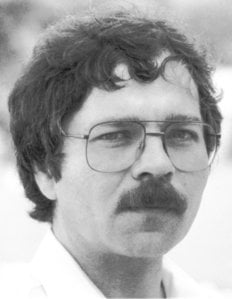
I was born in Neuenkirchen, North-Rhine Westphalia, in the Federal Republic of Germany on May 16, 1950, as the fourth child of Anton and Elisabeth Bednorz. My parents, originating from Silesia, had lost sight of each other during the turbulences of World War II, when my sister and two brothers had to leave home and were moved westwards. I was a latecomer completing our family after its joyous reunion in 1949.
During my childhood, my father, a primary school teacher and my mother, a piano teacher, had a hard time to direct my interest to classical music. I was more practical-minded and preferred to assist my brothers in fixing their motorcycles and cars, rather than performing solo piano exercises. At school it was our teacher of arts who cultivated that practical sense and helped to develop creativity and team spirit within the class community, inspiring us to theater and artistic performances even outside school hours. I even discovered my interest in classical music at the age of 13 and started playing the violin and later the trumpet in the school orchestra.
My fascination in the natural sciences was roused while learning about chemistry rather than physics. The latter was taught in a more theoretical way, whereas in chemistry, the opportunity to conduct experiments on our own, sometimes even with unexpected results, was addressing my practical sense.
In 1968, I started my studies in chemistry at the University of Münster, but somehow felt lost due to the impersonal atmosphere created by the large number of students. Thus I soon changed my major to cristallography, that field of mineralogy which is located between chemistry and physics.
In 1972, Prof. Wolfgang Hoffmann and Dr. Horst Böhm, my teachers, arranged for me to join the IBM Zürich Research Laboratory for three months as a summer student. It was a challenge for me to experience how my scientific education could be applied in reality. The decision to go to Switzerland set the course for my future. The physics department of which I became a member was headed by K. Alex Müller, whom I met with deep respect. I was working under the guidance of Hans Jörg Scheel, learning about different methods of crystal growth, materials characterization and solid state chemistry. I soon was impressed by the freedom even I as a student was given to work on my own, learning from mistakes and thus losing the fear of approaching new problems in my own way.
After my second visit in 1973, I came to Rüschlikon for six months in 1974 to do the experimental part of my diploma work on crystal growth and characterization of SrTiO3, again under the guidance of Hans Jörg Scheel. The perovskites were Alex Müller’s field of interest and, having followed my work, he encouraged me to continue my research on this class of materials.
In 1977, after an additional year in Münster, I joined the Laboratory of Solid State Physics at the Swiss Federal Institute of Technology (ETH) in Zürich and started my Ph.D. thesis under the supervision of Prof. Heini Gränicher and K. Alex Müller. I gratefully remember the time at the ETH and the family-like atmosphere in the group, where Hanns Arend provided a continuous supply of ideas. It was also the period during which I began to interact more closely with Alex and reamed about his intuitive way of thinking and his capability of combining ideas to form a new concept.
In 1978, Mechthild Wennemer followed me to Zürich to start her Ph.D. at the ETH, but more importantly to be my partner in life. I had met her in 1974 during our time together at the University of Münster. Since then she has acted as a stabilizing element in my life and is the best adviser for all decisions I make, sharing the up’s and down’s in an unselfish way.
I completed my work on the crystal growth of perovskite-type solid solutions and investigating them with respect to structural, dielectric and ferroelectric properties, and joined IBM in 1982. This was the end of a ten-year approach which had begun in 1972.
The intense collaboration with Alex started in 1983 with the search for a high-TC superconducting oxide; in my view, a long and thorny but ultimately successful path. We both realized the importance of our discovery in 1986, but were surprised by the dramatic development and changes in both the field of science and in our personal lives.
This autobiography/biography was written at the time of the award and first published in the book series Les Prix Nobel. It was later edited and republished in Nobel Lectures. To cite this document, always state the source as shown above.
Addendum, 1991
Honours
Thirteenth Fritz London Memorial Award (1987), Dannie Heineman Prize (1987), Robert Wichard Pohl Prize (1987), Hewlett-Packard Europhysics Prize (1988), The Marcel Benoist Prize (1986), Nobel Prize for Physics ( 1987), APS International Prize for Materials Research (1988), Minnie Rosen Award, the Viktor Mortiz Goldschmidt Prize and the Otto Klung Prize.
K. Alex Müller – Biographical
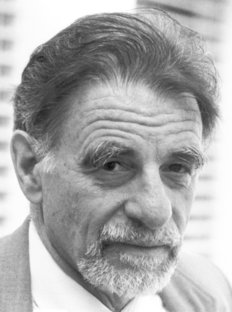
I was born in Basel, Switzerland, on 20th April 1927. The first years of my life were spent with my parents in Salzburg, Austria, where my father was studying music. Hereafter, my mother and I moved to Dornach near Basle to the home of my grandparents, and from there to Lugano in the italian-speaking part of Switzerland. Here, I attended school and thus became fluent in the Italian language.
My mother died when I was eleven years old, and I attended the Evangelical College in Schiers, situated in a mountain valley in eastern Switzerland. I remained there until I obtained my baccalaureate (Mature) seven years later. This means I arrived in Schiers just before the Second World War started, and left just after it terminated. This was indeed quite a unique situation for us youngsters. Here, in a neutral country, we followed the events of the war worldwide, even in discussion groups in the classes. These college years in Schiers were of significance for my career.
The school was liberal in the spirit of the nineteenth century, and intellectually quite demanding. We were also very active in sports, I especially so in alpine skiing. In my spare time, I became quite involved in building radios and was so fascinated that I really wanted to become an electrical engineer. However, in view of my abilities, my chemistry tutor, Dr. Saurer, eventually convinced me to study physics.
At the age of 19, I did my basic military training in the Swiss army. Upon its completion, I enrolled in the famous Physics and Mathematics Department of the Swiss Federal Institute of Technology (ETH) in Zürich. Our freshman group was more than three times the normal size. We were called the “atombomb semester”, as just prior to our enrollment nuclear weapons had been used for the first time, and many students had become interested in nuclear physics. The basic course was taught by Paul Scherrer and his vivid demonstrations had a lasting effect on my approach to physics. Other courses were in part not as illuminating, so that, despite good grades, I once seriously considered switching to electrical engineering. However, Dr. W. Kanzig, responsible for the advanced physics practicum, convinced me to continue. In the later semesters, Wolfgang Pauli, whose courses and examinations I took, formed and impressed me. He was truly a wise man with a deep understanding of nature and the human being. I did my diploma work under Prof. G. Busch on the Hall effect of grey tin, now known as a semimetal, and, prompted by his fine lectures, also became acquainted with modern solid-state physics.
After obtaining my diploma, following my interest in applications, I worked for one year in the Department of Industrial Research (AFIF) of the ETH on the Eidophor large-scale display system. Then I returned to Prof. Busch’s group as an assistant and started my thesis on paramagnetic resonance (EPR). At one point, Dr. H. Granicher suggested I look into the, at that time, newly synthesized double-oxide SrTiO3. I found and identified the EPR lines of impurity present in Fe3+.
In spring of 1956, just before starting the latter work, Ingeborg Marie Louise Winkler became my wife. She has always had a substantial influence in giving me confidence in all my undertakings, and over the past 30 years has been my mentor and good companion, always showing interest in my work. Our son Eric, now a dentist, was born in the summer of 1957, six months before I submitted my thesis.
After my graduation in 1958, I accepted the offer of the Battelle Memorial Institute in Geneva to join the staff. I soon became the manager of a magnetic resonance group. Some of the more interesting investigations were conducted on layered compounds, especially on radiation damage in graphite and alkalimetal graphites. The general manager in Geneva, Dr. H. Thiemann, had a strong personality, and his ever-repeated words “one should look for the extraordinary” made a lasting impression on me. Our stay in Geneva was most enjoyable for the family, especially for two reasons: the charm of the city and the birth of our daughter Silvia, now a kindergarten teacher.
While in Geneva, I became a Lecturer (with the title of Professor in 1970) at the University of Zürich on the recommendation of Prof. E. Brun, who was forming a strong NMR group. Owing to this lectureship, Prof. A.P. Speiser, on the suggestion of Dr. B. Luthi, offered me a position as a research staff member at the IBM Zürich Research Laboratory, Rüschlikon, in 1963. With the exception of an almost two-year assignment, which Dr. J. Armstrong invited me to spend at IBM’s Thomas J. Watson Research Center in Yorktown Heights, N.Y., I have been here ever since. For almost 15 years, research on SrTiO3 and related perovskite compounds absorbed my interest: this work, performed with Walter Berlinger, concerned the photochromic properties of various doped transition-metal ions and their chemical binding, ferroelectric and soft-mode properties, and later especially critical and multicritical phenomena of structural phase transitions. In parallel, Dr. Heinrich Rohrer was studying such effects in the antiferromagnetic system of GdAlO3. It was an intense and also, from a personal point of view, happy and satisfying time. While I was on sabbatical leave at the Research Center, he and Dr. Gerd Binnig started the Scanning Tunneling Microscope (STM) project. Just before leaving for the USA, I had been involved in the hiring of Dr. Binnig. Upon my return to Rüschlikon, I closely followed the great progress of the STM project, especially as from 1972 onwards, I was in charge of the physics groups.
The desire to devote more time to my own work prompted me to step down as manager in 1985. This was possible because in 1982 the company had honored me with the status of IBM Fellow. The ensuing work is summarized in Georg Bednorz’s part of the Lecture. As he describes there, he joined our Laboratory to pursue his diploma work, on SrTiO3 of course! Ever since making his acquaintance, I have deeply respected his fundamental insight into materials, his human kindness, his working capacity and his tenacity of purpose!
This autobiography/biography was written at the time of the award and first published in the book series Les Prix Nobel. It was later edited and republished in Nobel Lectures. To cite this document, always state the source as shown above.
Addendum, 1991
Honorary degrees
Doctor of Science, University of Geneva, Switzerland (1987), Faculty of Physics, the Technical University of Munich, Germany (1987), Universita degli Studi di Pavia, Italy (1987), University of Leuven, Belgium (1988), Boston University, USA (1988), TelAviv University, Israel (1988), the Technical University of Darmstadt, Germany (1988), University of Nice, France (1989), Universidad Politecnica, Madrid, Spain (1989), University of Bochum, Germany (1990), and Universita degli Studi di Roma, Italy (1990)
Honours
Foreign Associate Member, the Academy of Sciences, USA (1989), Special Tsukuba Award (1989), Thirteenth Fritz London Memorial Award (1987), Dannie Heineman Prize (1987), Robert Wichard Pohl Prize (1987), HewletPackard Europhysics Prize (1988), Marcel-Benoist Prize (1986), Nobel Prize in Physics (1987), APS International Prize for New Materials Research (1988), and the Minnie Rosen Award (1988)
K. Alex Müller died on 9 January 2023.
Copyright © The Nobel Foundation 1991