Russell A. Hulse – Photo gallery

Russell A. Hulse receiving his Nobel Prize from H.M. King Carl XVI Gustaf of Sweden at the Stockholm Concert Hall on 10 December 1993.
Nobel Foundation. Photo: Lars Åström

All Nobel Laureates assembled at the Nobel Prize award ceremony in the Stockholm Concert Hall on 10 December 1993. From left: Physics Laureates Russell A. Hulse and Joseph H. Taylor Jr, Chemistry Laureates Kary B. Mullis and Michael Smith, Medicine Laureates Richard J. Roberts and Phillip A. Sharp, Literature Laureate Toni Morrison and Laureates in Economic Sciences Robert W. Fogel and Douglass C. North.
Photo from the Lars Åström archive

Russell A. Hulse showing his Nobel Prize medal after the Nobel Prize award ceremony in the Stockholm Concert Hall on 10 December 1993.
Nobel Foundation. Photo: Lars Åström

Russell A. Hulse delivering his Nobel Prize lecture 'The Discovery of the Binary Pulsar' at the Royal Swedish Academy of Sciences on 8 December 1993.
Nobel Foundation. Photo: Lars Åström

All 1993 Nobel Prize laureates assembled at the Swedish Academy during Nobel Week, December 1993. From left, back row: Richard J. Roberts, Michael Smith, Phillip A. Sharp, Russell A. Hulse, Joseph H. Taylor Jr. and Douglass C. North. Front row: Kary B. Mullis, Toni Morrison and Robert W. Fogel.
Photo from the Lars Åström archive

1993 Nobel Prize laureates assembled: Kary B. Mullis, Russell A. Hulse, Joseph H. Taylor Jr., Douglass C. North, Robert W. Fogel and Michael Smith.
Nobel Foundation. Photo: Lars Åström

Group photo of the 1993 Nobel Laureates, assembled at the Nobel Foundation, December 1993. From left: Chemistry Laureate Kary B. Mullis, Medicine Laureate Phillip A. Sharp, Physics Laureate Russell A. Hulse, Medicine Laureate Michael Smith, Peace Prize Laureates Nelson Mandela and Frederik Willem de Klerk, Medicine Laureate Richard J. Roberts, Laureate in Economic Sciences Robert W. Fogel, Literature Laureate Toni Morrison, Physics Laureate Joseph H. Taylor Jr. and Laureate in Economic Sciences Douglass C. North.
© Nobel Foundation. Photo: Boo Jonsson
Joseph H. Taylor Jr. – Photo gallery

Joseph H. Taylor Jr. receiving his Nobel Prize from H.M. King Carl XVI Gustaf of Sweden at the Stockholm Concert Hall on 10 December 1993.
Nobel Foundation. Photo: Lars Åström
All Nobel Laureates assembled at the Nobel Prize award ceremony in the Stockholm Concert Hall on 10 December 1993. From left: Physics Laureates Russell A. Hulse and Joseph H. Taylor Jr, Chemistry Laureates Kary B. Mullis and Michael Smith, Medicine Laureates Richard J. Roberts and Phillip A. Sharp, Literature Laureate Toni Morrison and Laureates in Economic Sciences Robert W. Fogel and Douglass C. North.
Photo from the Lars Åström archive

Joseph H. Taylor Jr. showing his Nobel Medal after the Nobel Prize award ceremony in the Stockholm Concert Hall on 10 December 1993.
Photo from the Lars Åström archive

Joseph H. Taylor Jr. showing his medal after the Nobel Prize award ceremony.
Nobel Foundation. Photo: Lars Åström

1993 Nobel Banquet. Seated fourth from right is medicine laureate Joseph H. Taylor Jr. and sixth from right is literature Toni Morrison.
Nobel Foundation. Photo: Lars Åström

Joseph H. Taylor Jr. delivering his Nobel Prize lecture 'Binary Pulsars and Relativistic Gravity' at the Royal Swedish Academy of Sciences on 8 December 1993.
Nobel Foundation. Photo: Lars Åström
All 1993 Nobel Prize laureates assembled at the Swedish Academy during Nobel Week, December 1993. From left, back row: Richard J. Roberts, Michael Smith, Phillip A. Sharp, Russell A. Hulse, Joseph H. Taylor Jr. and Douglass C. North. Front row: Kary B. Mullis, Toni Morrison and Robert W. Fogel.
Photo from the Lars Åström archive
1993 Nobel Prize laureates assembled: Kary B. Mullis, Russell A. Hulse, Joseph H. Taylor Jr., Douglass C. North, Robert W. Fogel and Michael Smith.
Nobel Foundation. Photo: Lars Åström
Group photo of the 1993 Nobel Laureates, assembled at the Nobel Foundation, December 1993. From left: Chemistry Laureate Kary B. Mullis, Medicine Laureate Phillip A. Sharp, Physics Laureate Russell A. Hulse, Medicine Laureate Michael Smith, Peace Prize Laureates Nelson Mandela and Frederik Willem de Klerk, Medicine Laureate Richard J. Roberts, Laureate in Economic Sciences Robert W. Fogel, Literature Laureate Toni Morrison, Physics Laureate Joseph H. Taylor Jr. and Laureate in Economic Sciences Douglass C. North.
© Nobel Foundation. Photo: Boo Jonsson
The Nobel Prize in Physics 1993
Speed read: Catching gravity’s waves
For a second time, the Nobel Prize in Physics for 1993 was awarded to the discovery of a burnt-out star remnant known as a pulsar. Awarding the Prize to Russell Hulse and Joseph Taylor not only rewarded their discovery of two pulsars dancing around each other but also acknowledged their discovery of a space laboratory that could test one of Albert Einstein’s most important theories.
According to Einstein’s general theory of relativity of 1916, the Universe exists in three-dimensions plus time as a fourth dimension. This space-time, as it is commonly known, behaves much like a liquid, being distorted by the presence of massive bodies, such as stars, and forming ripples of gravitational radiation as these bodies move through the cosmos. Finding these predicted ripples in the fabric of space-time proved difficult as it required locating an object large enough and travelling fast enough through space to create gravitational waves that can reach Earth before fading away.
In the same year that Antony Hewish received the 1974 Nobel Prize in Physics for his role in the discovery of a pulsar – the collapsed and superdense corpse of a massive star, known as a neutron star, that is left behind when it dies in a supernova explosion – Joseph Taylor and his student Russell Hulse discovered a pair of pulsars that are close enough together to orbit around each other in space. Since this so-called ‘binary pulsar’ is moving fast and the two stars are close together, Einstein’s theory predicted that they should generate significant amounts of gravitational radiation, which in turn steals energy from the two pulsars, making them spiral slowly towards each other. After four years of meticulous observations Taylor showed that Einstein’s theory passed all tests: the two pulsars are not only spiralling towards each other, but they are doing so at almost exactly the rate predicted by the theory.
Hulse and Taylor’s observations, although indirect, provided the strongest proof yet for gravitational radiation. Their findings have provided the impetus to develop a series of gravity-wave detectors, which aim to catch gravitational radiation from astronomical phenomena like black holes or two merging neutron stars through more direct means, as their passing waves wash over Earth.
Joseph H. Taylor Jr. – Nobel Lecture
Nobel Lecture, December 8, 1993
Binary Pulsars and Relativistic Gravity
Read the Nobel Lecture
Pdf 284 kB
Joseph H. Taylor Jr. – Other resources
Links to other sites
On Joseph H. Taylor Jr. from Princeton university
On Joseph H. Taylor Jr. from American Institute of Physics
Joseph H. Taylor Jr. – Banquet speech
Joseph H. Taylor Jr.’s speech at the Nobel Banquet, December 10, 1993
Your Majesties, Your Royal Highnesses, Ladies and Gentlemen,
We have heard earlier today that scientific discoveries come at unpredictable times. Just as a person cannot say “I shall write poetry,” another cannot say “I shall make a scientific discovery.”
Russell Hulse and I did not set out in 1973 to detect gravitational waves, or even to conduct experiments into the fundamental nature of gravity. Instead, we set out to chart the celestial globe with a new type of star – aware only that we were sailing a route none had explored before, and that wondrous new lands might be revealed beyond the next horizon.
We were young, well-prepared, and receptive, but not yet wise. We were playing a detective game, gathering clues and solving logical puzzles as they presented themselves.
One special new island, at first only faintly visible in our telescope, later showed its bounty in full relativistic glory. When its treasures were gathered and brought home, some after many years of labor, they provided keys to long-locked gates and added new notes to the symphony of natural law.
In discovering this new island and gathering its exotic fruits, Russell Hulse and I, and other colleagues in later years, were enjoying the privilege of doing what we like best: satisfying our own curiosities, by asking and answering questions. We sought no other reward than the pleasure of an exciting journey. To be honored by being here tonight is beyond our wildest youthful dreams of nineteen years ago, and brings us joy that mere words cannot express.
Russell A. Hulse – Nobel Lecture
Nobel Lecture, December 8, 1993
The Discovery of the Binary Pulsar
Read the Nobel Lecture
Pdf 1.19 MB
Russell A. Hulse – Other resources
Links to other sites
‘Russell Hulse, the First Binary Pulsar, and Science Education’ from DOE R&D Accomplishments
Russell A. Hulse – Biographical
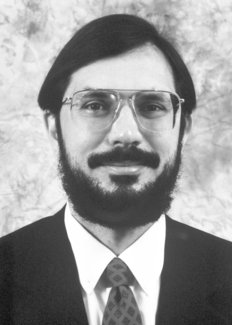
I was born November 28, 1950 in New York City, the son of Alan and Betty Joan Hulse. My parents tell me that I quickly showed an unusual level of curiosity about the world around me as a child, and that this transformed itself into an interest in science at a very early age. For my part, I certainly recall that science was a defining part of my approach to life for as far back as I can remember. My parents fostered and supported this interest, and I thank them very much for being my first and, by far, most uncritically supportive funding agency. I ran through a seemingly endless series of interests involving chemistry sets, mechanical engineering construction sets, biology dissection kits, butterfly collecting, photography, telescopes, electronics and many other things over the years.
The door to a whole range of new experiences opened for me when my father started building a summer house on land given to us by my Aunt Helen in Cuddebackville, New York, about two hours northwest of the city. Eventually, this became a year-round house for my grandparents when they retired and it is where my parents live now that they are retired. I remember spending weekends and summers helping my father put in place walls, rafters, siding and everything else that goes into a house. Among other things, it produced an early familiarity with tools and a do-it-yourself approach which has stood me in good stead over the years. My parents’ friends and relatives were apparently not too sure that I should have been given such freedom to work with power tools at an early age, but fortunately I came through the experience with all of my fingers intact. Cuddebackville was also important to me as a place where a city kid could see nature, and as a practical place to work on my bigger projects.
My parents not only supported my interests at home but also suffered along with me (and, most likely, much more than me) when some of my first experiences with school proved to be less than positive. Though I had some elementary school teachers with whom I got along well, there were some real problems with others who found me and my intense interest in science difficult to understand and deal with.
Entering the Bronx High School of Science in 1963 was thus very important to me as it was there that I found myself in a school environment which explicitly emphasized what I found most interesting in life. Yet, as in the years before and after, while schoolwork was an important job to be done my interests in science tended to be expressed most clearly by my home projects. My biggest home project while at Bronx Science was building an amateur radio telescope up at my parents’ house in Cuddebackville. I particularly enjoyed building antennas of various types, relying on an amateur radio antenna design book as a guide. The electronics were an odd mix of old television parts, military surplus power supplies, receivers and the like combined with other components I built myself. Unfortunately, the telescope never did work particularly well in terms of detecting radio sources (a little outside technical advice probably would have made a big difference in there somewhere), but I did enjoy myself and I learned a lot in the process.
At the end of high school, I had my first big career decision to make. While I had by then begun to focus more on physics and astronomy amongst the sciences, I also enjoyed designing and building electronic equipment. This lead me to consider electrical engineering as well but, in the end, I decided that a degree in physics was probably the best fit to my interests.
My college choices were limited by the fact that paying for college would have placed an inordinate financial burden on my parents. Fortunately, I was admitted to Cooper Union, a tuition-free college in lower Manhattan. From 1966 to 1970, I lived at home in the Bronx with my parents and commuted to Cooper each day on the New York subway system. Along, with the usual course work, Cooper provided me with my first experience with a new interest, computers. Cooper had an IBM 1620 available for the students to use and, while there were no courses on programming it, there were the instruction manuals. The first project that I selected by way of teaching myself FORTRAN was to use the computer to do orbit simulations, perhaps an early omen of things to come.
After receiving my bachelor’s degree in physics from Cooper Union in 1970, I started graduate school at The University of Massachusetts in Amherst. While I knew that I eventually wanted to do my thesis research in astronomy, preferably radio astronomy, I once again leaned towards a broader background and decided to get my doctorate in physics rather than astronomy. I went to UMass not only because its graduate program offered this type of flexibility, but also because it was located not too far from New York in a rather beautiful part of rural western Massachusetts.
The five years I spent in Amherst are some of those which I remember most clearly from my past. Graduate school was an entirely new environment, with new experiences and challenges. The demands were such that, for the first time, I focused almost exclusively on my academic career, with my other outside interests tempered by the demands of the moment.
After passing my Ph.D. qualifying examinations, I turned to finding a thesis project. This represented at long last a convergence of my outside and career interests, as I finally started working in radio astronomy again, now as a career rather than as a hobby. The rest of that story is told in my Nobel lecture.
After completing my Ph.D. in 1975, I had a post-doctoral appointment at the National Radio Astronomy Observatory in Charlottesville, Virginia from 1975 to 1977. While I still enjoyed doing pulsar radio astronomy, from the moment I arrived at NRAO I was increasingly preoccupied with the lack of long-term career prospects in astronomy. While I had some confidence that I could find another position of some sort after NRAO, it was not at all clear to me when, where, and how I would be able to settle down with some reasonable expectation of stability in my career. I certainly knew of astronomers who had been obliged to roam from place to place for many years and the potential for such repeated major dislocations in my personal life was more than I could quite tolerate. In particular, I had the classic problem of how a two-career couple could stay in reasonable geographical proximity, since my friend, Jeanne Kuhlman, was then doing her graduate work at the University of Pennsylvania. I therefore decided to try falling back on my broader interests and my physics Ph.D., exercising the option which I had left myself when I started at UMass.
While even with this broader view not many good career opportunities seemed available, I did discover from an advertisement in Physics Today that the Princeton University Plasma Physics Laboratory (PPPL) was hiring. Not only did controlled fusion seem an interesting and diverse field, but the lab was located in Princeton, not too far from Jeanne in Philadelphia.
After interviewing at PPPL, I was offered a position with the plasma modeling group, based on my physics and computer background. Starting at the lab in 1977, my first task was developing new computer codes modeling the behavior of impurity ions in the high temperature plasmas of the controlled thermonuclear fusion devices at PPPL. I had never really done computer modeling before and the art and science of computer modeling is one of the most valuable things which I have learned in the 16 years which I have now been at the lab.
The multi-species impurity transport code which ultimately grew out of this initial work at PPPL is still in use to this day. It models the behavior of the different charge states of an impurity element under the combined influences of atomic and transport processes in the plasma. I oriented my development of this code very much towards its practical use by spectroscopists and other experimentalists in interpreting their data and one of my greatest satisfactions has been that this code has become widely used over the years both at PPPL as well as at other fusion laboratories. My own research with this code included determining transport coefficients for impurity ions by modeling spectroscopic observations of their behavior following their injection into the plasma. In connection with modeling impurity behavior, I also worked on investigating the atomic processes themselves, for example, by helping to elucidate the importance of charge exchange reactions between neutral hydrogen and highly charged ions as an important recombination process for impurities in fusion plasmas. In a rather different sort of contribution, I more recently developed a computer data format which has been adopted by the International Atomic Energy Agency as a standard for the compilation and interchange of atomic data for fusion applications.
While I am still involved in supporting this impurity transport modeling code at PPPL, my more active area of work in the past few years has been modeling the transport of electrons in the plasma as revealed by pellet injection experiments. The pellets involved here are pellets of solid hydrogen, injected at high velocity into the plasma. The relaxation of the plasma electron density profile after a pellet has deposited its mass inside the plasma provides an important way of observing plasma transport in action. For this work, I wrote an electron particle transport code which focused on modeling the experimentally observed density profile evolutions using theoretically motivated, highly non-linear forms for the particle diffusion coefficients.
In another recent new direction, I have been working to establish a new effort at PPPL in advanced computer modeling environments. The objective of this research is the development of novel approaches to creating modular computer codes which will make it much easier to develop and apply computer models to an extended range of applications in research, industry and education. I have been pursuing this work in the context of cooperative research and development agreements with an industrial partner, taking advantage of this new type of collaborative arrangement recently made possible between government sponsored research laboratories and the private sector.
By now, it is surely clear that my interest in science has never been so much a matter of pursuing a career per se, but rather an expression of my personal fascination with knowing “How the World Works”, especially as it could be understood directly with hands-on experience. This central motivation has been expressed over the years not only in my career but also in a wide range of hobbies. Notable amongst these “hobbies” have always been interests in various areas of science beyond whatever I was professionally employed in at any given time. For example, I have most recently been considering that much of what I have found so interesting about both the natural and man-made world has involved how individual, often autonomous, elements combine to make a functioning whole, either by design or by self-organization. I have thus started to be interested in various aspects of the new so-called “sciences of complexity”, especially as they can be explored using computer modeling.
My list of more traditional hobbies and recreational activities has also changed over time. Many activities which I formerly enjoyed, such as amateur radio and woodworking, have been eventually dropped simply because I realized that I did not have enough time and energy to pursue everything I might enjoy doing. A current list of my activities would include nature photography, bird watching (and observing the beauty and drama of nature in general), target shooting, listening to music, canoeing, crosscountry skiing, and other outdoor activities.
I do not pretend to be anything like an accomplished expert in all of the many things that I have ever been or am presently involved in doing. My most fundamental urge has always been just to spend time on what I found the most interesting, trying of course to match this up somehow with the more practical demands of life and a career. In this sense I have come to realize that at times I must not have always been the easiest person to have had as a student, or as an employee, and I therefore appreciate the efforts of those who helped me to accommodate myself to these practical demands, or often, who worked to help accommodate the practical demands to me.
I would like to close on the thought that some of the most enjoyable moments of my life have always involved sharing my various interests with those others who understood them (and me) the best. Thus special thanks go to my parents, to Jeanne Kuhlman, and to all of the good friends that I have had over the years.
This autobiography/biography was written at the time of the award and later published in the book series Les Prix Nobel/ Nobel Lectures/The Nobel Prizes. The information is sometimes updated with an addendum submitted by the Laureate.