Nobel Prize in Physiology or Medicine 2009
Elizabeth Blackburn has evolved from a self-described “lab rat” to an explorer in the realms of health and public policy. She discovered the molecular structure of telomeres and co-discovered the enzyme telomerase, essential pieces in the puzzle of cellular division and DNA replication. Her research offers hope for cancer treatment, clues to the mystery of ageing and even biological links between life circumstance and lifespan. Wherever her curiosity leads her, Blackburn insists every conclusion be backed with data. “You have to get the science right.”
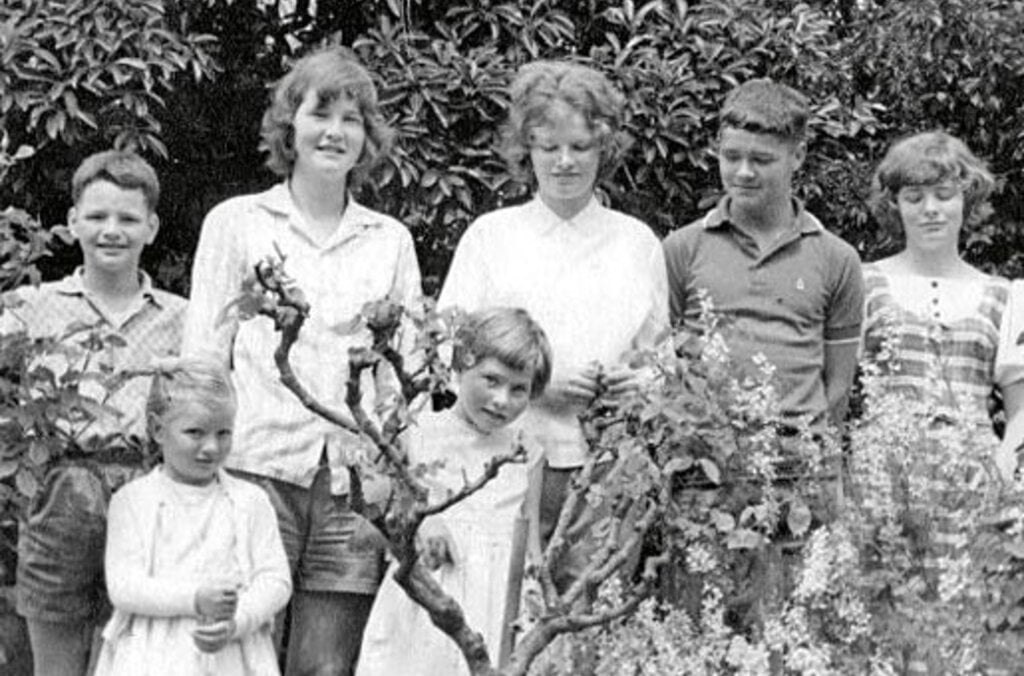
Elizabeth Blackburn was born in 1948, in Tasmania, the child of two doctors and the second of seven children. Growing up, she was fascinated by animals, from the jellyfish on the beach to the tadpoles she kept in glass jars. She was also captivated by the romance of the scientific quest, reading and rereading the biography of Marie Curie. She decorated her bedroom with drawings of amino acids.
After earning her bachelor’s and master’s degrees in biochemistry at the University of Melbourne in the early 1970s, Blackburn left Australia at age 24 for doctoral work at the Laboratory of Molecular Biology (LMB) in Cambridge, England. The LMB was the epicentre of molecular biology at the time; she describes the lab as “complete immersion” and its director, Fred Sanger, as a great mentor for her work on DNA sequencing.
The LMB was also where she fell in love, with fellow lab member John Sedat. They got married in 1975, and, since he was headed to Yale University, she looked there for postdoctoral research opportunities. “Thus it was that love brought me to a most fortunate and influential choice”: the laboratory of John Gall and the study of pond scum.
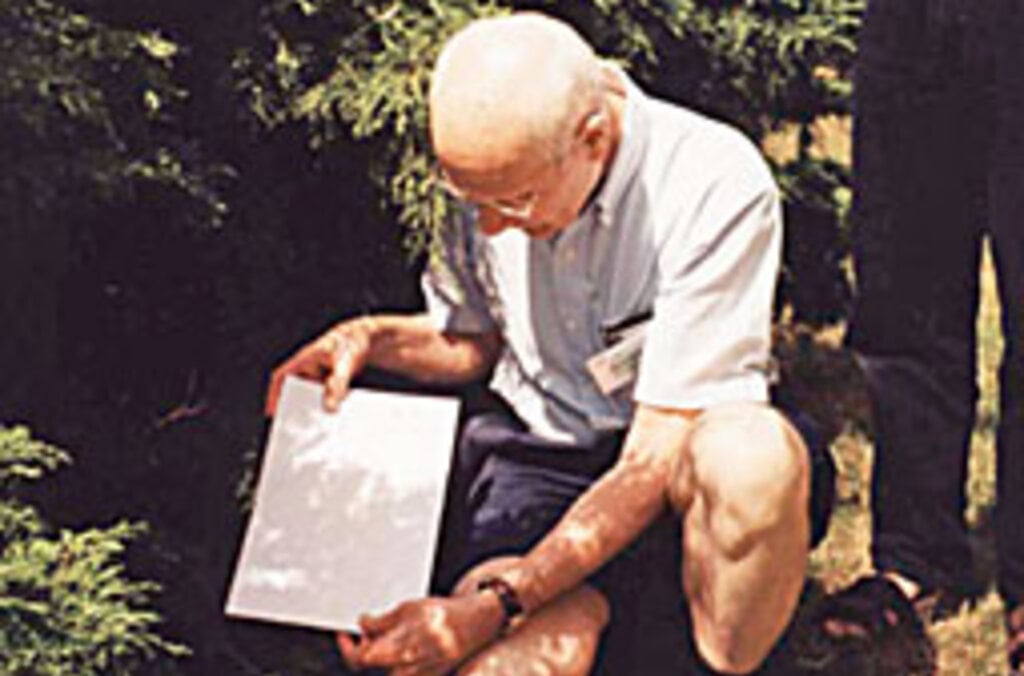
Gall encouraged Blackburn to focus her telomere research on Tetrahymena, one-celled organisms with ample linear chromosomes (and hence telomeres). In sequencing their DNA, Blackburn discovered that telomeres are composed of six short repeating segments of DNA.
As an assistant professor at Berkeley, Blackburn set out to understand how. She and biologist Jack Szostak suspected that the cause was an enzyme.
Telomeres protect the ends of chromosomes – Blackburn has likened them to caps on the ends of shoelaces – as cells divide, ensuring that all the important DNA instructions get copied. When telomeres themselves start to wear down and shorten, the cell ultimately dies. In healthy cells, however, telomeres rebuild themselves.
They were right: in 1984, with her student Carol Greider, Blackburn discovered telomerase, an enzyme that lengthens each strand of DNA before the copying stage, compensating for the shortening during cell division.
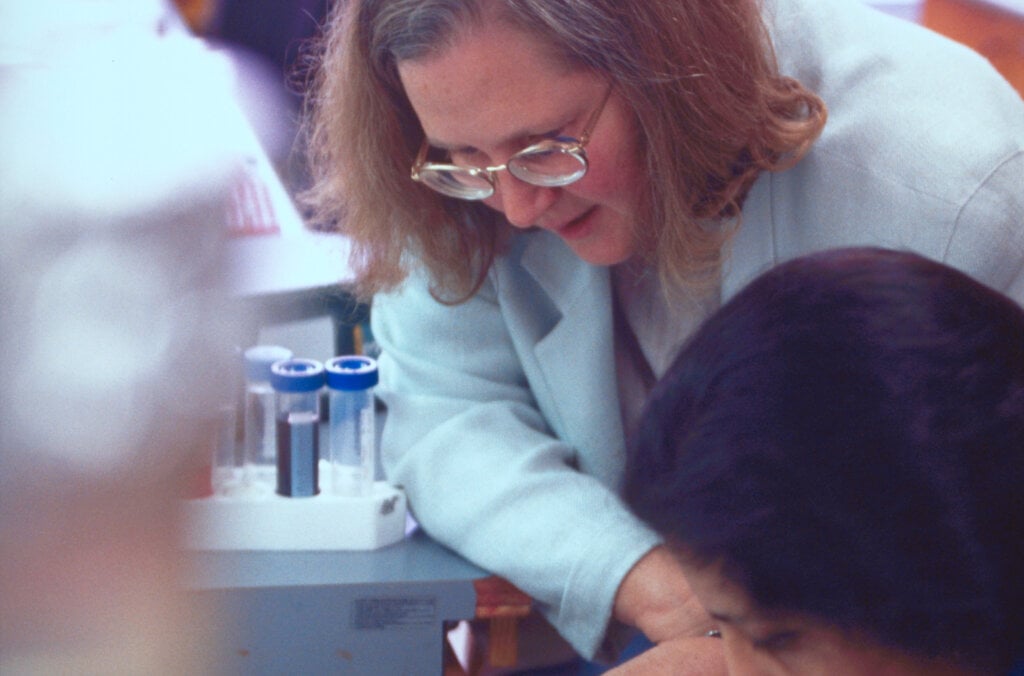
In 1990, Blackburn moved her lab to UCSF where she and her team sought to understand how the protein and genetic components of telomerase worked together. How did the cell keep the right balance between telomerase overactivity, which could lead to cancer, and underactivity, which leads to shortening chromosomes and cell death?
The link between telomere length and cell health led Blackburn to ask broader questions about health and public policy. In the early 2000s, with psychologist Elissa Epel, she studied telomere length in mothers who care for children with chronic diseases. Along with similar studies of spouses of those with chronic dementia and in people who suffered early trauma, the results were clear: the more chronic stress one suffered, the shorter one’s telomeres. Stress can prematurely age one’s cells.
“It really resonated with me as a mother. I just sort of felt for these women so much. A very nonscientific reason, if you will, but isn’t that an interesting question?”
Elizabeth Blackburn
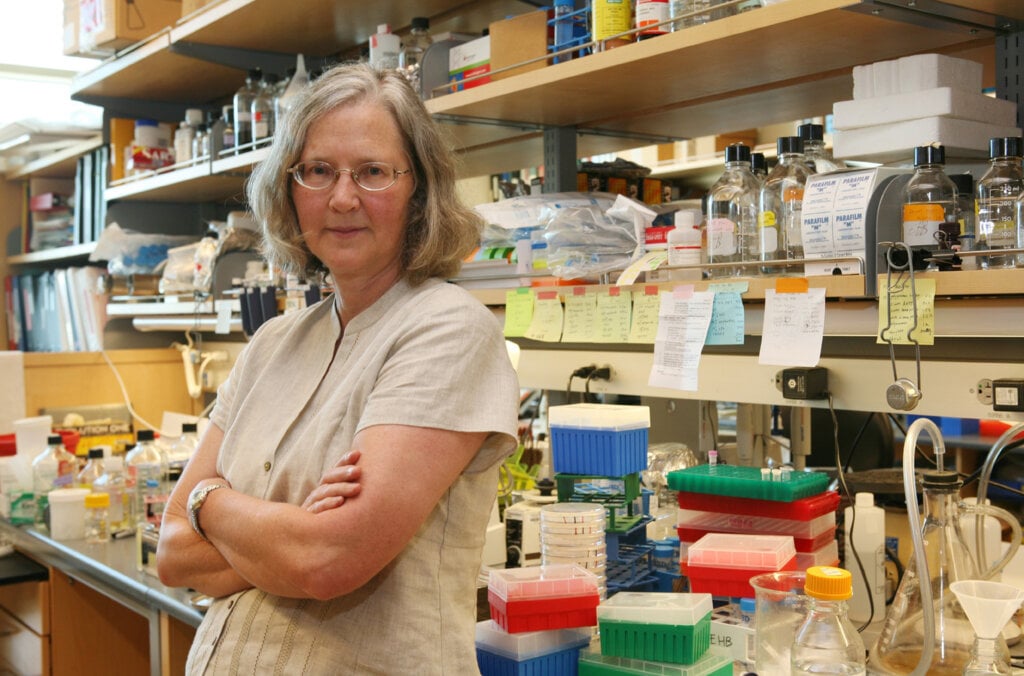
Blackburn continues to ask questions that relate to both personal and public health. Do exercise and meditation lengthen one’s telomeres and thus slow the process of cell ageing? How does growing up in a war zone, with domestic abuse or in poverty affect a person’s telomeres? Does a mother’s social disadvantage transmit to her child through the initial setting of telomere length?
Although her questions extend beyond the lab, Blackburn always returns to the lab for the answers. She remains rigorous in her methods and cautious in her assertions.
“Ageing is so many different things, and cells being able to self-renew is part of the picture but not all of it.”
Elizabeth Blackburn