In the last 200 years, we have for the first time in world history, seen sustained economic growth. The 2025 economic sciences prize goes to three researchers who explain how this development was possible and what is needed for continued growth.
What is growth?
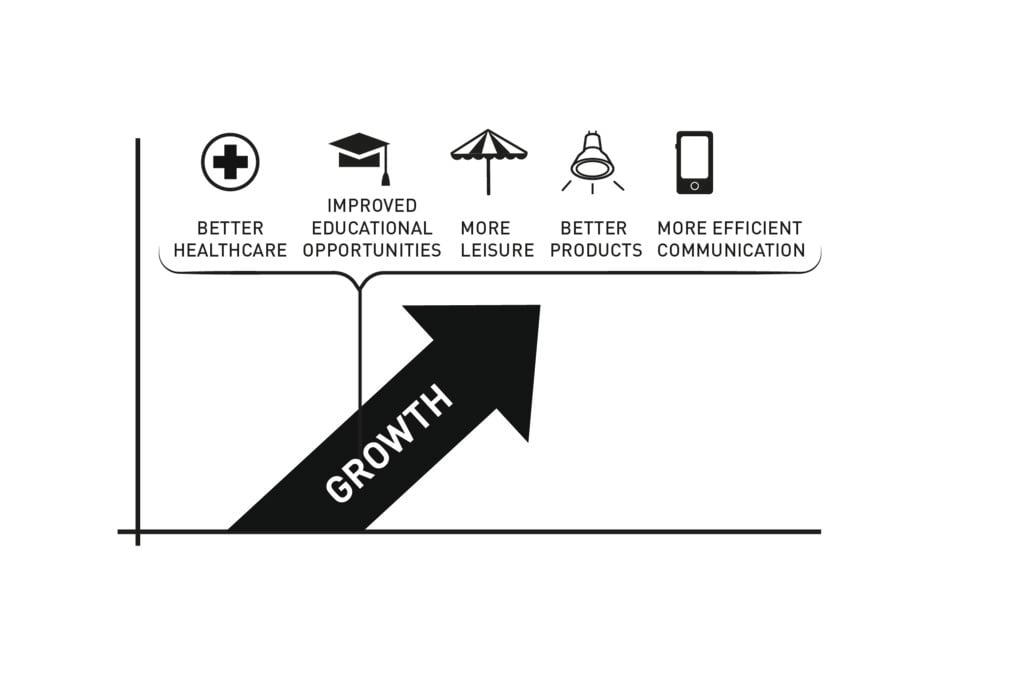
Growth is when the value of all goods and services produced in a country increases, and it is measured in the country’s gross domestic product (GDP). Simply put, it means that a country gets richer and that people’s living conditions improve.
It is important to remember that growth is about much more than money. The image shows some of the things that make up growth, such as better healthcare, more leisure and better products.
From stagnation to sustained growth
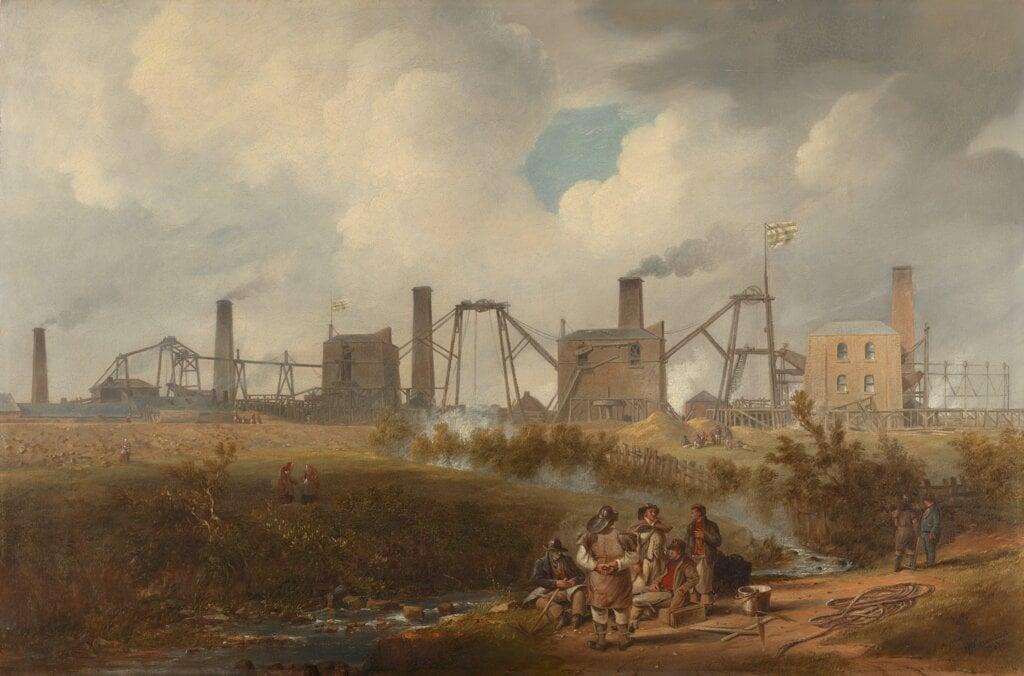
A number of technological innovations were made before the Industrial Revolution. A few important inventions were the heavy plough, windmill and printing press. Even though these sometimes led to improved living conditions, growth always stopped after a while. People’s living conditions did not change all that much. Rather than growth, stagnation was the normal condition. Stagnation refers to a state of stagnant or very slow growth.
This changed with the Industrial Revolution. Since the beginning of the 19th century, many of the industrialised countries in the world have experienced a sustained growth of just under two percent. It may not sound like all that much, but it means that an individual doubles his or her income during a working life.
What causes sustained economic growth?
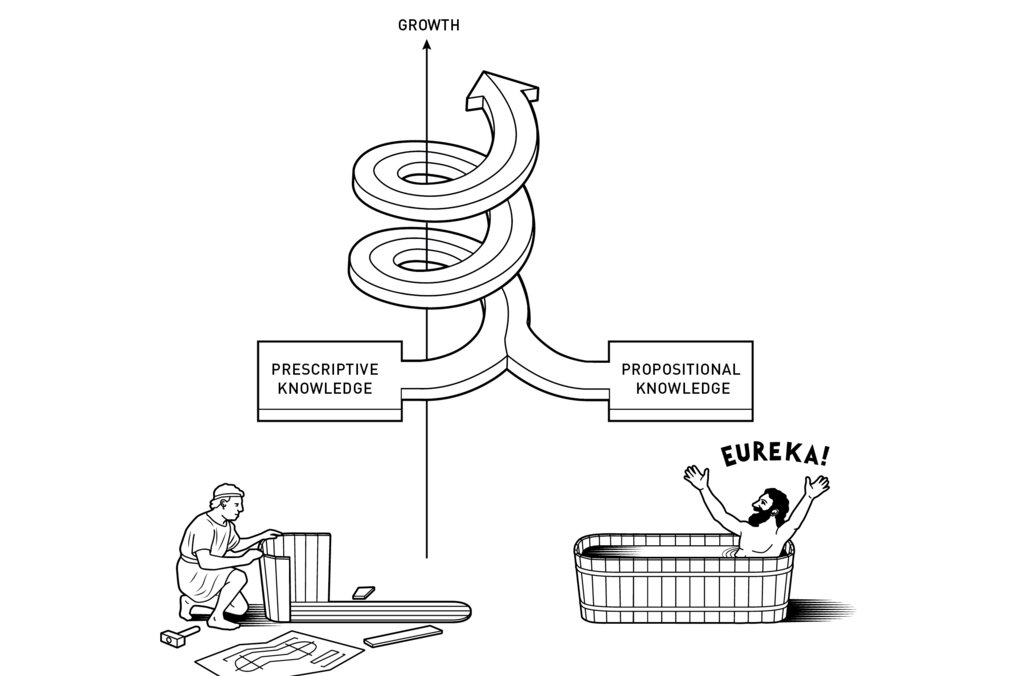
Joel Mokyr, the first of the three laureates, has used historical sources to study why sustained growth became the new normal in the industrialised world from the 19th century onwards. He has shown that technological development has gone hand in hand with the emergence of a new view on knowledge. Mokyr uses the term useful knowledge. This refers to knowledge that can explain why something works and what is required to make it work.
Before the Industrial Revolution, people often knew what was needed for something to work but rarely why. This made it difficult to build upon existing knowledge. As a result of the Scientific Revolution in the 16th and 17th centuries, scientists began using careful measurement methods and experiments. They started to understand both how something worked and why it worked. This made it easier to improve inventions and develop new ideas.
Creative destruction leads to growth
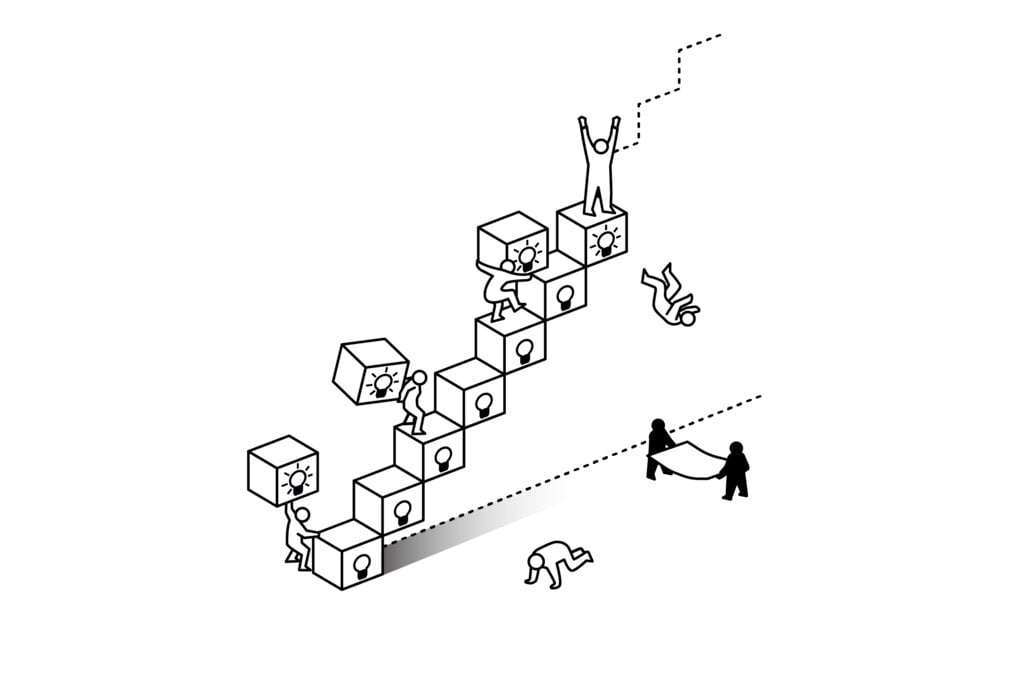
The fact that many countries have experienced sustained growth does not mean that all companies prosper all the time. Some companies go under while new ones are launched. The other two laureates, Philippe Aghion and Peter Howitt, have shown that this process, called creative destruction, also contributes to sustained growth.
Creative destruction means that when a new and better product is introduced in the market, the companies selling older products become the losers. This process is creative as it is based on new innovations, while at the same time being destructive as older innovations become obsolete.
The 2025 economic sciences laureates
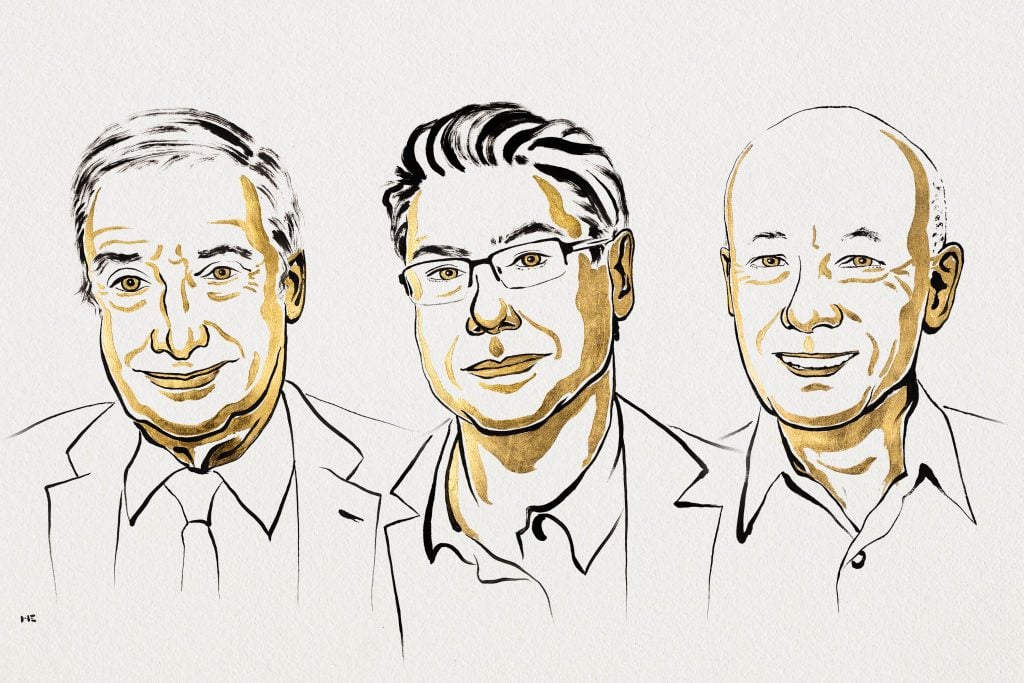
One half of the prize goes to the economist Joel Mokyr. The second half of the prize goes to the economists Philippe Aghion and Peter Howitt.
The greatest benefit to humankind
The economic sciences laureates have shown what is needed to create sustained economic growth. Their research also shows that new products create both winners and losers. For society, it is important to support people who suffer when, for example, a company goes bankrupt.
Now, let us watch a short video that tells us a little bit more about the work carried out by the laureates and why they confer the greatest benefit to humankind.