Nobel Prize in Chemistry 2009
Ever since she was a girl, Ada Yonath has set herself seemingly impossible goals, and then figured out how to reach them, step by step. As a young scientist she took on a challenge that others considered hopeless – mapping the structure of the ribosome – and persevered for decades until she succeeded. Her determination and ingenuity allowed researchers to see and understand the complex and crucial molecule. And since the ribosome is a major bacterial target for antibiotics, her work has led to new antibiotics and a better understanding of antibiotic resistance.
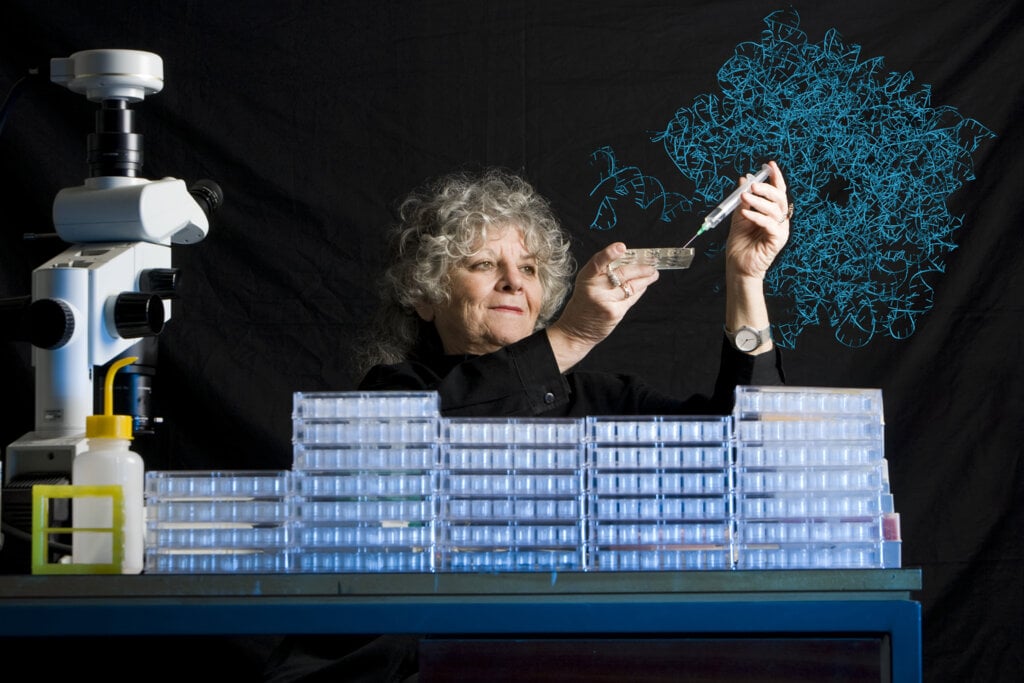
Ada Yonath was born in Jerusalem in 1939 to poor Jewish parents. Her family rented a single room in an apartment with two other families.
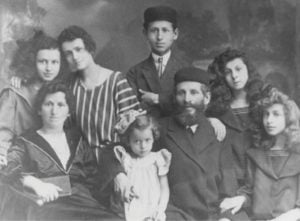
Despite her parents’ lack of resources or formal education, they supported their daughter’s evident curiosity and, with the help of an encouraging kindergarten teacher, sent her to a prestigious grammar school. At home, Yonath was always questioning.
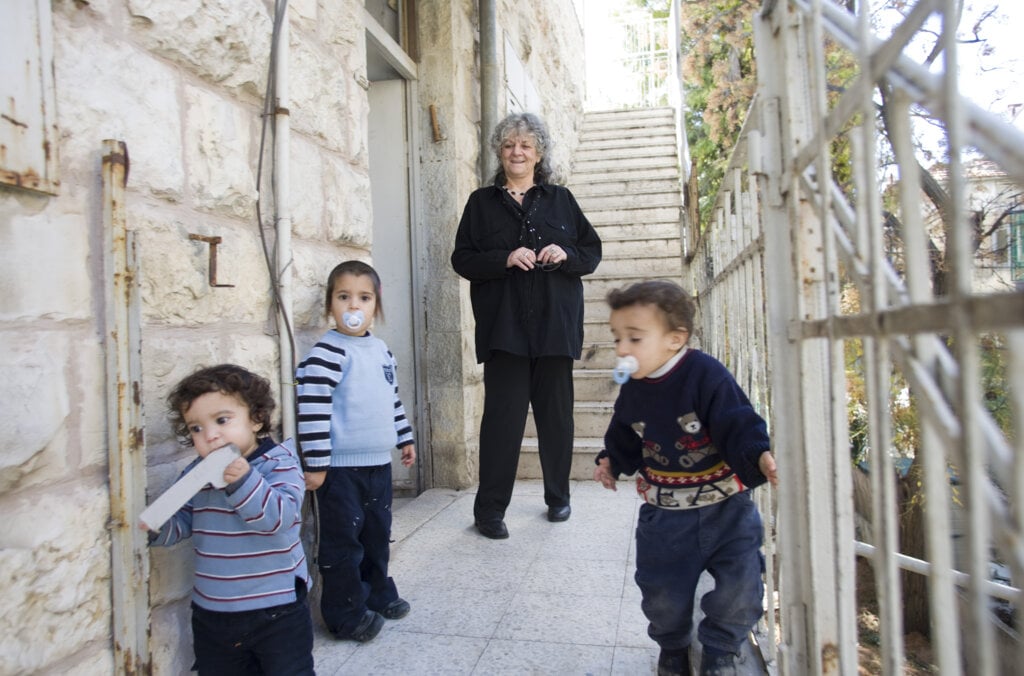
“My mother said I was always asking, 'Why is that red?' and 'Why do we have winter?' and 'Why is this liquid more viscous?'”
Ada Yonath

Aged five, Yonath undertook an ambitious effort to measure the height of her family’s balcony using two tables, a chair and stool. The experiment was suspended when she fell and broke her arm.
Life was hard, but it was about to get even harder. When Yonath was 11 years old, her father passed away after multiple hospital stays and operations. To help her ailing mother, Yonath cleaned, babysat, and tutored, while continuing to excel in school.
When the family moved to Tel Aviv a year later to be closer to her mother’s family, Yonath taught other students math and chemistry and even cleaned the chemistry lab in exchange for tuition. Her childhood in poverty made her accustomed to hard work and taught her to consider science itself a luxury.

1 (of 2) Cryo-cooling apparatus developed by Ada Yonath
Photo: Inter-University Research Institute Corporation, High Energy Accelerator Research Organization (KEK)

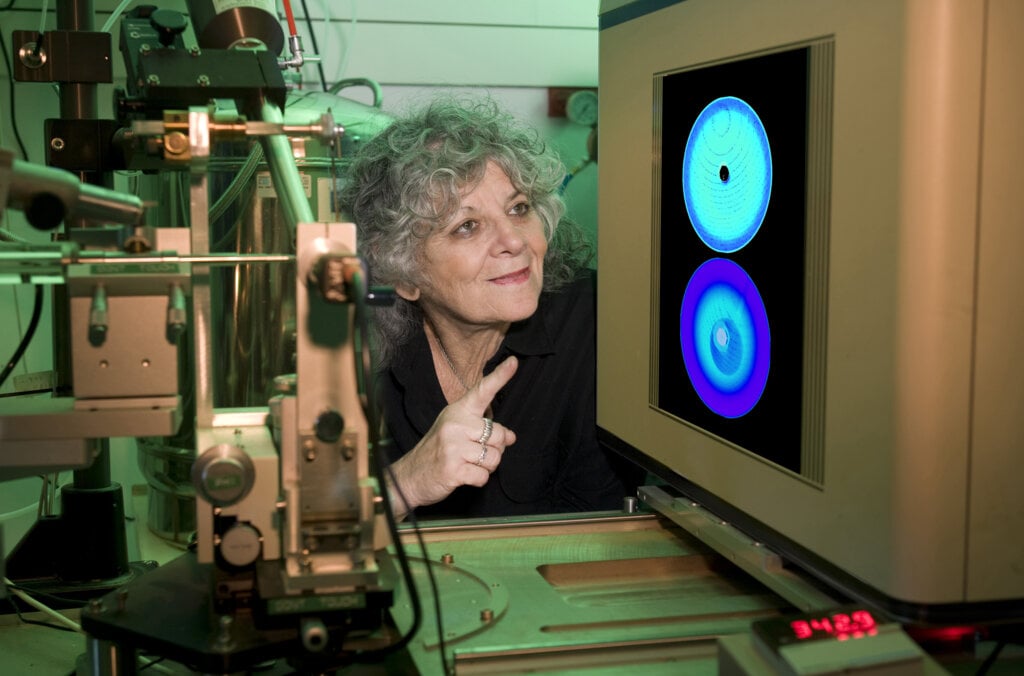
2 (of 2) Ada Yonath in the lab with Hakon Hope (left)
Photo: SSRL, Sanford University
In the late 1970s, Yonath decided to focus on one of the mysteries of living cells: protein biosynthesis. She began with ribosomes, where protein synthesis occurs. These were still a puzzle to scientists because they had yet to determine ribosomes’ molecular structure. Normally one would use X-ray crystallography to map the structure of a molecule. But given its size, lack of internal symmetry and instability, the ribosome was considered impossible to crystallise – and Yonath was considered a dreamer or a fool for trying.
“I was met with reactions of disbelief and even ridicule in the international scientific community. I can compare this journey to climbing Mount Everest only to discover that a higher Everest stood in front of us.”
Ada Yonath
It took 25,000 tries – and the revelation that ribosomes from organisms that live under harsh conditions would be hardier during crystallisation. In the early 1980s, Yonath finally managed to crystallise a thermophile bacteria known as Geobacillus stearothermophilus.
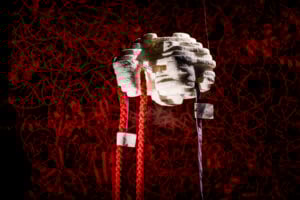
The next step was to figure out a way to pass X-rays through the crystal without damaging its structure. The answer was cryo-bio-crystallography. Yonath developed this method of blasting the crystals at –185°C before X-raying them in order to protect their crystalline structures.
“I was described as a dreamer, a fantasist, even as the village idiot. I didn't care. What I cared about was convincing people to allow me to go on with my work.”
Ada Yonath
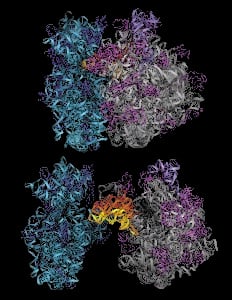
By the mid-1990s, Yonath’s success had drawn other researchers into the effort. The wider team worked closely for several years, and in 2000 and 2001 reached the summit of their climb: they successfully mapped in three dimensions both subunits of the bacterial ribosome, for the very first time. For this achievement, in the face of daunting odds and widespread derision, Yonath was awarded the Nobel Prize in Chemistry in 2009, along with crystallographers Venkatraman Ramakrishnan and Thomas A. Steitz.
Still at the Weizmann Institute, Yonath has gone on to demonstrate how more than 20 antibiotics function, paving the way for new products to be developed based on the structure of antibiotics bound to the ribosome. More recently, she has focused her efforts on the issues of antibiotic resistance. She also wants to uncover the very beginnings of life itself: how ribosomes first came into being and started creating proteins. It sounds ambitious, but for Ada Yonath, discovering the origin of life is just the next in a series of Mount Everests.