Nobel Prize in Chemistry 2018
With one ingenious idea and years of subsequent work, Frances Arnold turned bioengineering upside down. Recognising that nature was “the best bioengineer in history,” she figured out how to let evolution be her partner in the lab. She pioneered the use of directed evolution to design new enzymes, with applications as broad as they are essential, from pharmaceuticals to renewable fuels.
Born in Pittsburgh in 1956, Frances Arnold was the third of five children in a suburban family. Her mother was a homemaker. Her father, a nuclear physicist, helped Westinghouse Electric Company develop nuclear reactor plants.

Arnold excelled in school but grew bored with it, ignoring her homework and skipping class. She rebelled at home as well, hitchhiking to D.C. to protest the Vietnam War and moving out at age 17. “My parents were so frustrated with me,” she recalled. “They said, ‘Either you toe the line, or you can’t live here,’ and I said ‘Fine.’ ”
She drove a cab and waitressed in a jazz club. Though her grades were mediocre, Arnold parlayed near-perfect standardised test scores and a convincing essay into acceptance at Princeton University.
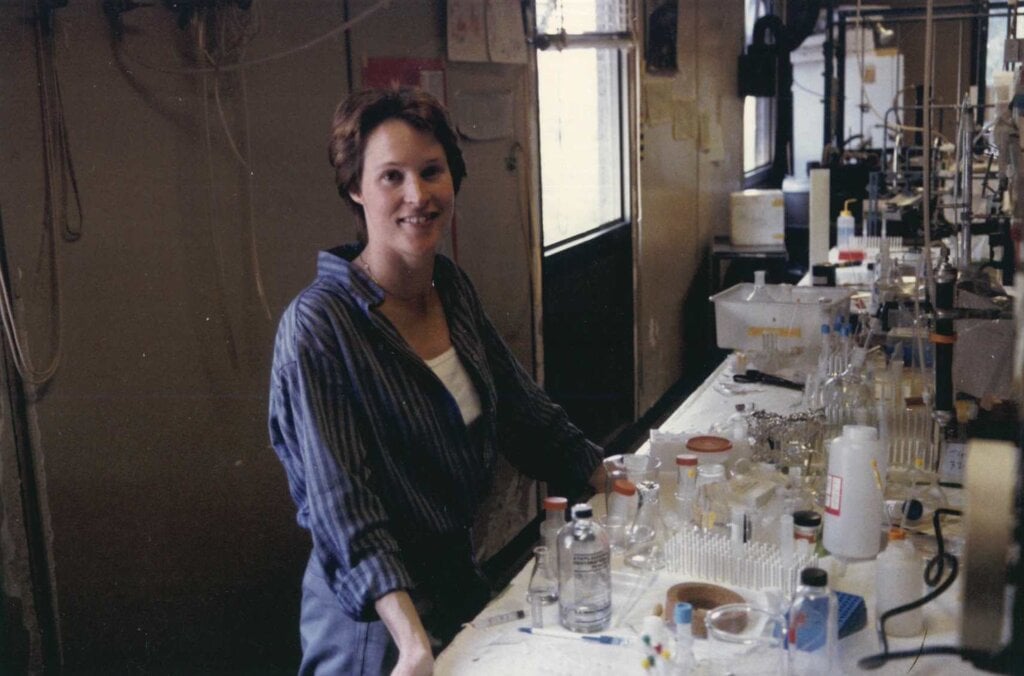
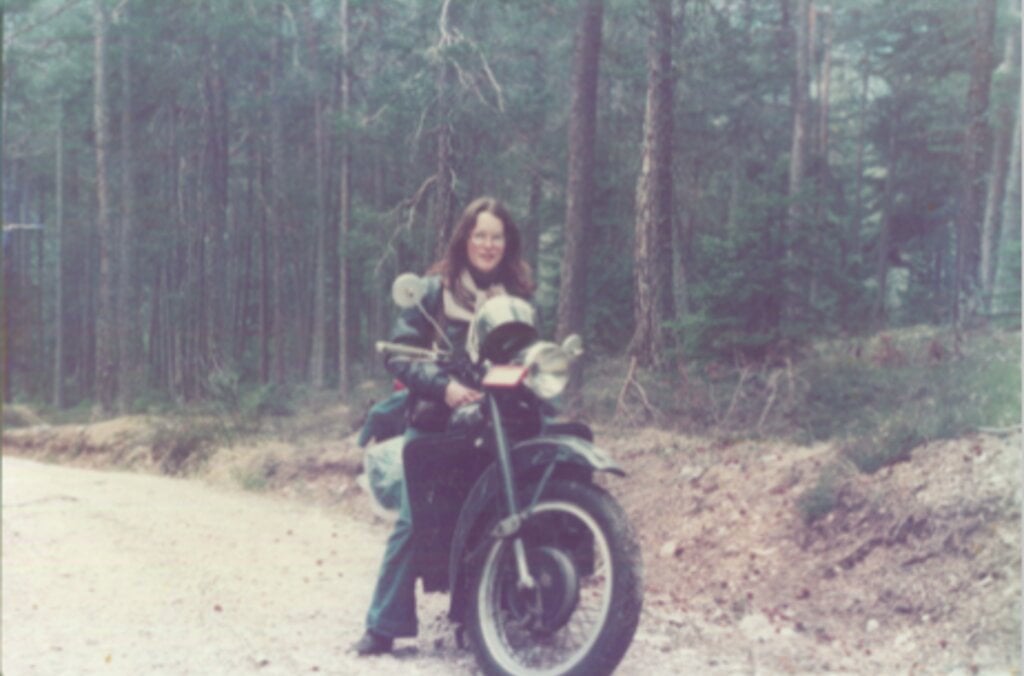
At college, Arnold was no longer bored, but she still veered from the traditional path, taking a year off to live in Italy. She graduated in 1979 with a degree in mechanical and aerospace engineering. This was during the second major oil crisis of the 1970s, and just a few months after the Three Mile Island accident. Hoping to use her engineering background to help the country shift away from both fossil fuels and nuclear power, Arnold went to work for the Solar Energy Research Group in Colorado.
“Science, like all human endeavors, is evolutionary. We build by adding to and recombining what is already there.”
Frances Arnold
The Reagan Era ended the national quest – and accompanying funding – for renewable energy. Arnold returned to school, earning a degree in chemical engineering from UC Berkeley in 1985, and staying for postdoctoral work in biophysical chemistry.
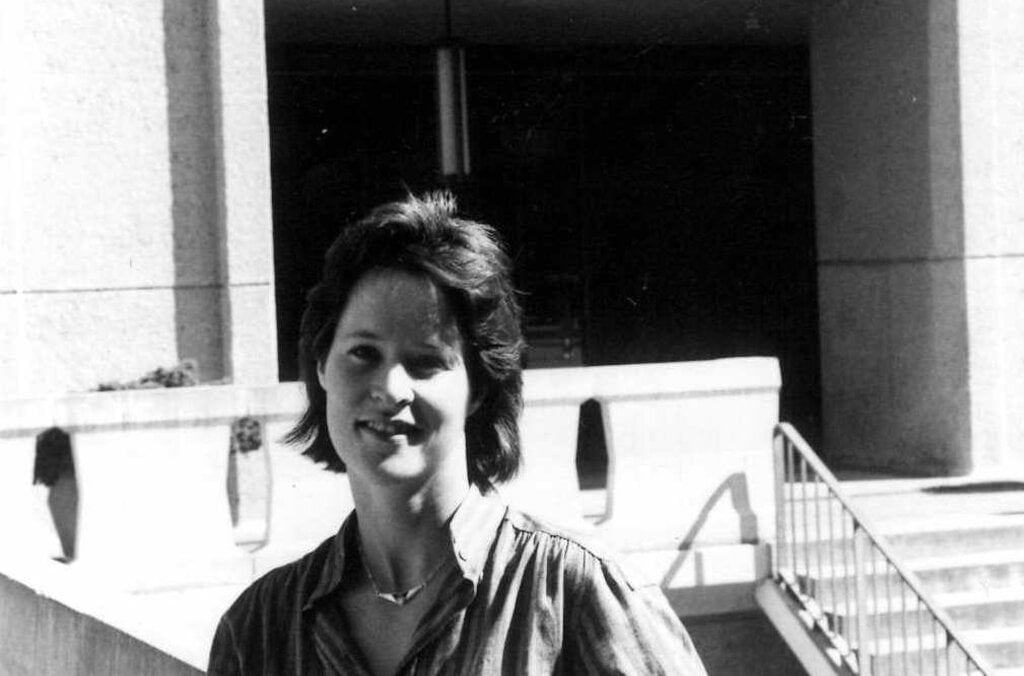
In 1986, at the age of 30, Arnold joined the faculty of chemical engineering at California Institute of Technology. There she intended to use emerging DNA technology to design new enzymes that could produce pharmaceuticals, plastics and other chemicals that would otherwise be made with toxic materials.
Arnold set out to engineer a new version of the enzyme subtilisin, one that could still function in the solvent dimethylformamide (DMF) rather than in the watery environment of a cell. Enzymes are extremely complex molecules, consisting of as many as several thousand amino acids linked together in long chains, folded up into three-dimensional structures.
How would one remodel this elaborate architecture to give an enzyme new properties? Where would one begin? “I was completely ignorant of how difficult it was,” she has said. “It was terrifying.”
“If you’re going to change the world, you’ve got to be fearless.”
Frances Arnold
In the early 1990s, Arnold changed course. She abandoned the idea of trying to figure out how to engineer the desired property and turned to nature’s own method for optimising chemistry: evolution. The technique she developed then is still used today.
Starting with the DNA in a particular protein (such as subtilisin), Arnold introduces mutations into the gene and reinserts the new variants into bacteria, which then produce new proteins. She looks through the resulting proteins to find those that exhibit the desired properties. She then extracts their DNA and repeats the process, breeding generation after generation until she gets a variant that does exactly what she wants. It’s Darwin’s survival of the fittest, except that Arnold decides what “fittest” means.
“Nature has explored only a tiny fraction of the life and life’s molecules that are possible. With evolution in our hands, with the ability to set genetic diversity and to tailor the forces of selection, we can now explore paths that Nature has left unexplored.”
Frances Arnold
In 1993, when she was 37, Arnold demonstrated the power of using chance and “directed selection” to develop new enzymes. To her, it’s “totally obvious that this is the way it should be done.” But “Some people looked down their noses at it,” she has said. “They said, ‘That’s not science.’” Scientists are supposed to use their “big brains” to figure out how to manipulate DNA. But as Arnold points out, even once she had created these beneficial mutations, scientists who studied their structures still couldn’t understand why they worked. They just did. She calls evolution “a force of nature that has led to the finest chemistry of all time.”
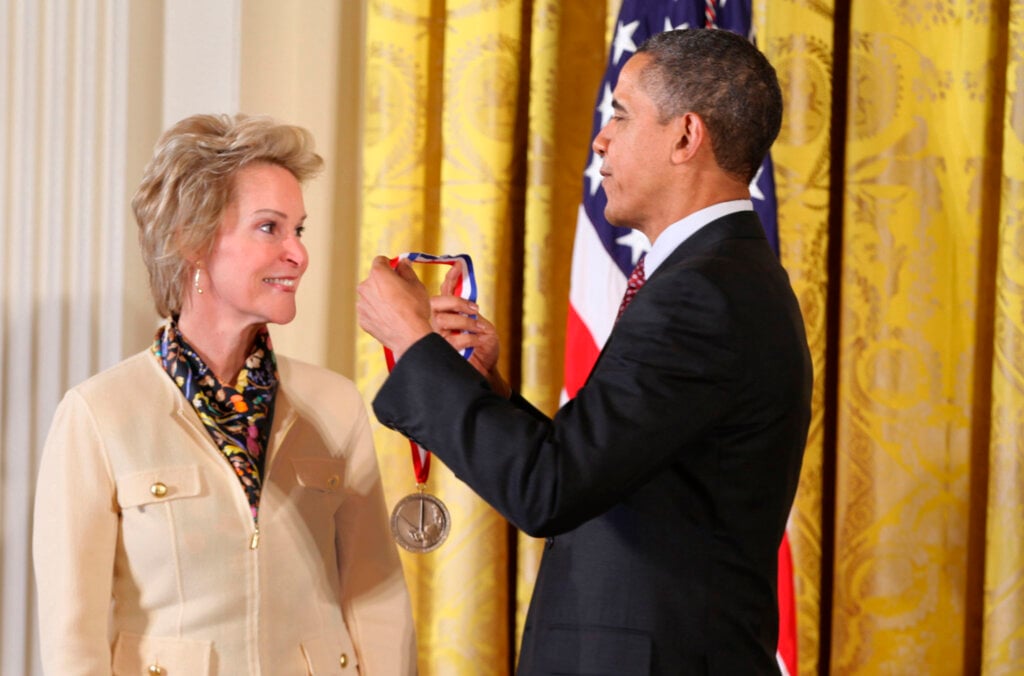
Harnessing evolution has yielded Arnold a charmed professional life: a constant flow of results, patents, inventions and honours, most recently the 2018 Nobel Prize in Chemistry at the age of 62. Her personal life has been more difficult. She has dealt with the death of both of her husbands and one of her three sons, and she herself battled breast cancer in 2005. She has said she finds respite at Caltech, where she is now director of the Donna and Benjamin Rosen Bioengineering Center, and is inspired by her students’ curiosity and love of science. She is an optimist at heart.
On being one of two women to be awarded a 2018 Nobel Prize in a scientific field, Arnold said, “I predict this is the beginning of a steady stream.”