Nobel Prize in Physiology or Medicine 1988
With the drugs that she created, Gertrude Elion fulfilled her life’s mission: to alleviate human suffering. Beyond the individual drugs she discovered, she pioneered a new, more scientific approach to drug development that forever altered – and accelerated – medical research.
Born in 1918, Gertrude Elion had a happy childhood in New York City, with her brother, her Eastern European Jewish parents, and her grandfather.

1 (of 3) Gertrude Elion, aged 5.
Photo courtesy of Gertrude B. Elion Foundation

2 (of 3) Photo of Gertrude Elion's grandfather with his daughters, including Gertrudes mother.
Photo courtesy of Gertrude B. Elion Foundation

3 (of 3) Gertrude Elion as a child on a miniature horse, ca. 1921.
Photo courtesy of Gertrude B. Elion Foundation
She was particularly close to her grandfather, who arrived from Russia when she was three. When she was 15, she witnessed his painful death from stomach cancer. The experience decided her career path.
“I was highly motivated to do something that might eventually lead to a cure for this terrible disease.”
Gertrude Elion
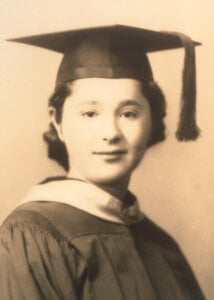
The stock market crash of 1929 bankrupted Elion’s family, casting a pall on her prospects. With her high grades, she got into Hunter College, which was free, but after college Elion simply did not have the money to go on to graduate school. She needed a fellowship, but those didn’t often go to women, especially not during the Depression.
“I think perhaps it was my mother who influenced me the most. She was a housewife. She had no higher education, but had the most common sense of anyone I knew, and she wanted me to have a career.”
Gertrude Elion

1 (of 2) Gertrude Elion as student at Hunter College, which she attended from 1933 to 1937.
Photo courtesy of Gertrude B. Elion Foundation

2 (of 2) Gertrude Elion, aged 3, next to her mother, Bertha Cohen Elion, 1922.
Photo courtesy of Gertrude B. Elion Foundation
At age 19, with a degree in chemistry, she looked for work. She took jobs as a secretary, a chemistry teacher, and an unpaid worker in a lab. Finally, when World War II diminished the ranks of male chemists, Elion got her break.
“In my day I was told women didn’t go into chemistry. I saw no reason why we couldn’t.”
Gertrude Elion
In 1944, Elion found the job of her dreams, assisting George Hitchings at Burroughs Wellcome, the American outpost of a British pharmaceutical firm operated by a charitable trust. It would ultimately become the drug giant GlaxoSmithKline.

1 (of 3) Gertrude Elion and George Hitchings in front of the Burroughs Wellcome building, ca. 1988.
Photo courtesy of GSK. Reproduced with permission.

2 (of 3) Joseph Murray (far right) with Roy Calne (second from left), Gertrude Elion and George Hitchings (third and fourth from left, respectively), and surviving transplant dogs on the Harvard Medical School Quad, 1961.
Photo courtesy of Center for the History of Medicine, Countway Library of Medicine, Harvard Medical School
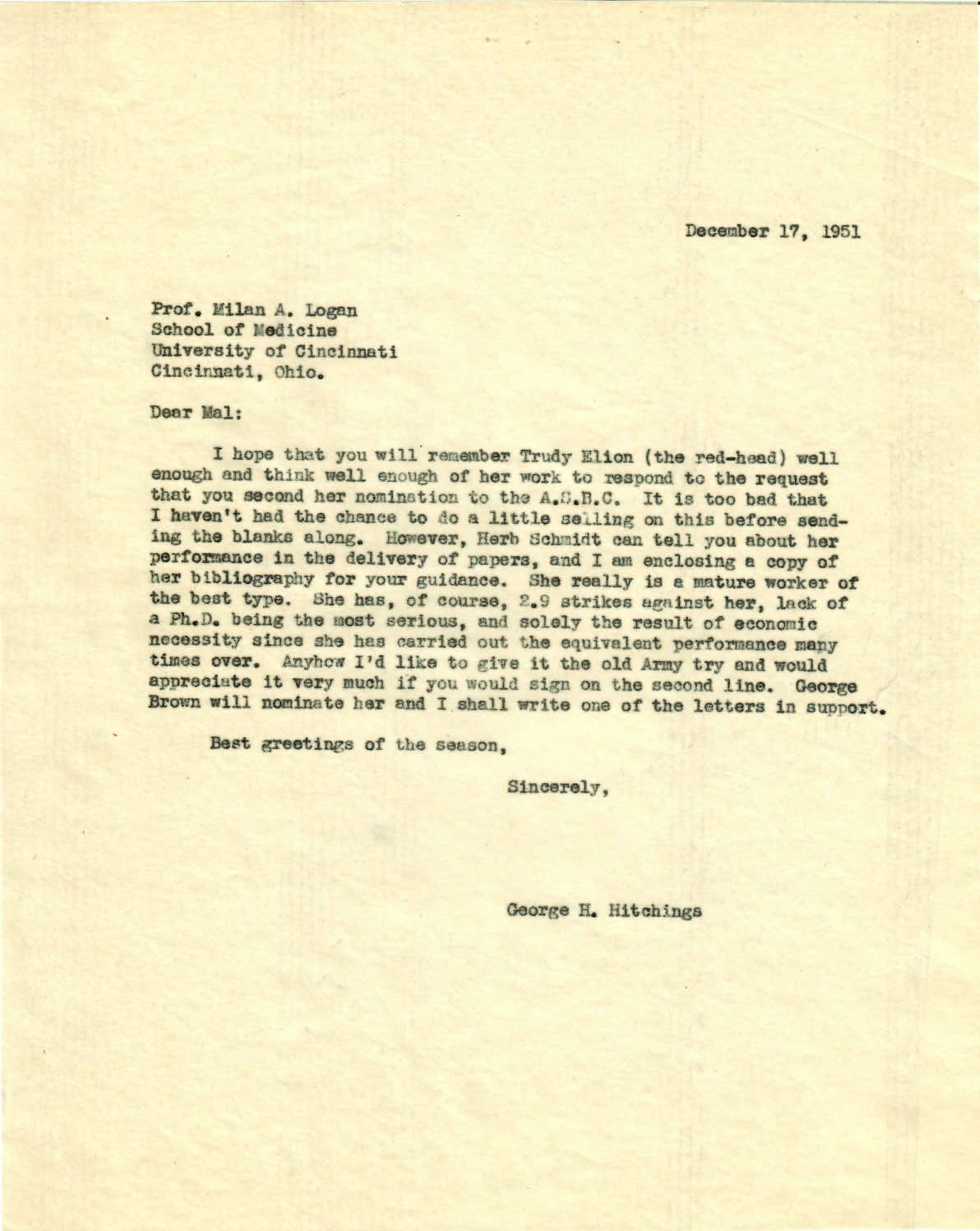
3 (of 3) Letter from George Hitchings to Professor Milan Logan of the University of Cincinnati recommending Gertrude Elion for membership in the ASBC (American Society of Biological Chemists, now the American Society for Biochemistry and Molecular Biology), 1951.
Courtesy of Gertrude B. Elion Foundation
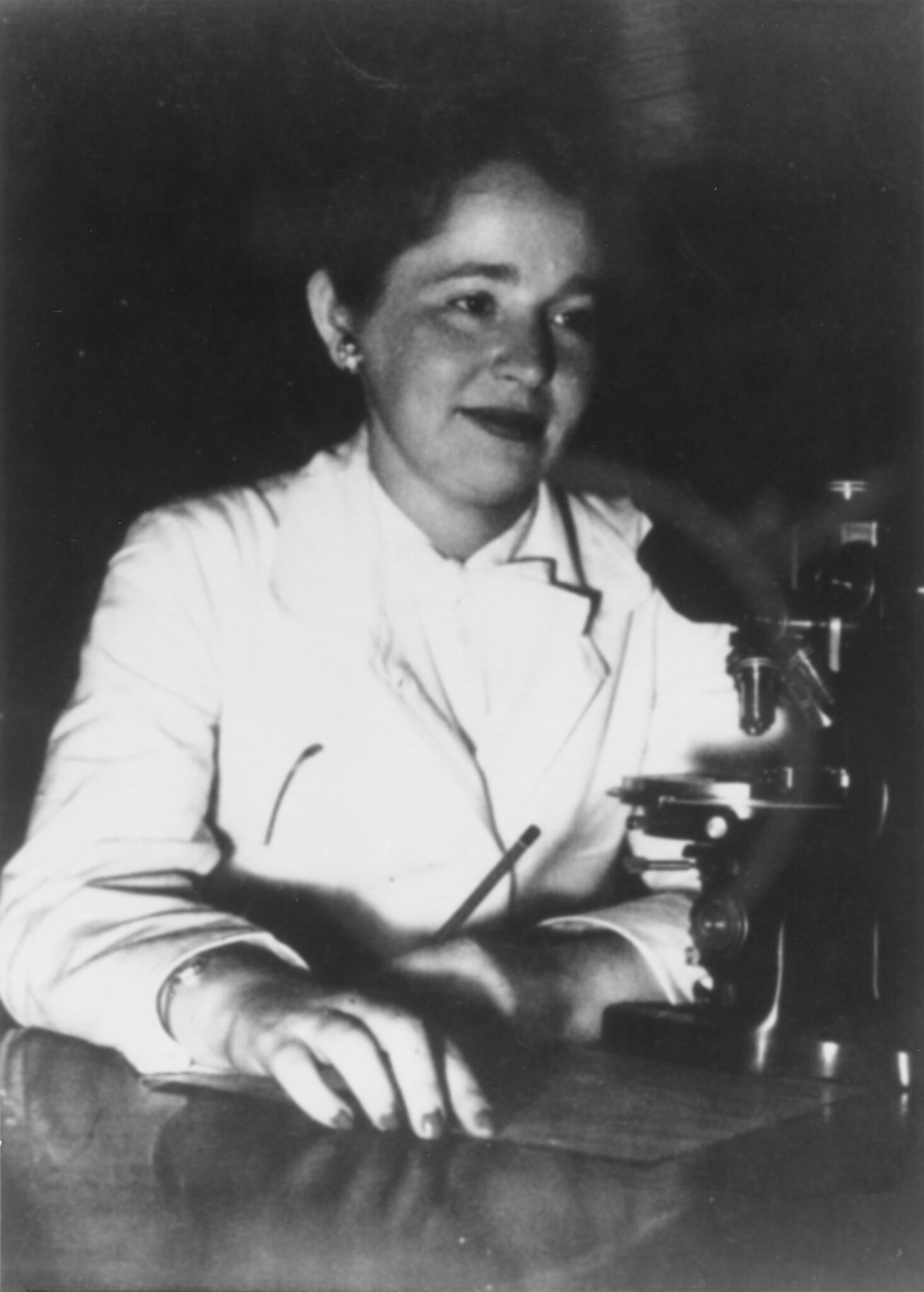
Hitchings and Elion discarded the traditional trial-and-error approach to drug development, in favour of a rational, scientific approach. Starting from the understanding that all cells require nucleic acid to reproduce, they reasoned that rapidly growing bacteria and tumours require even more to sustain the pace of growth. Find a way to disrupt their lifecycle, and you find a way to stop disease.

1 (of 4) Gertrude Elion, ca. 1960.
Photo courtesy of GSK. Reproduced with permission.

2 (of 4) Gertrude Elion, George Hitchings and Burroughs Wellcome president C. W. Creasy in a laboratory at the Tuckahoe, New York, campus in the early 1950s.
Photo courtesy of GSK. Reproduced with permission.

3 (of 4) Gertrude Elion, seated, with three colleagues at Burroughs Wellcome, 1981.
Photo courtesy of GSK. Reproduced with permission.

4 (of 4) Stan Bushby (left) and George Hitchings (right) watch as Gertrude Elion works with a pipette and test tube in a lab at the Research Triangle Park facility in North Carolina, 1972.
Photo courtesy of GSK. Reproduced with permission.
Elion’s first major discovery, in 1950, when she was 32, was a purine compound that interfered with the formation of leukaemia cells: 6-mercaptopurine, 6-MP for short. The drug was rushed to release because it put acute leukaemia patients – often, children fated to die within months of diagnosis – into complete remission. But the effect was temporary; eventually many relapsed. When children got well, Elion was elated; when they died, she was despondent, but determined to find a way to make the effects of her drug last longer.
One of the relatives of 6-MP yielded another bombshell drug for Elion: azathioprine, marketed as Imuran. Imuran suppresses immune response, making organ transplants possible for the first time. That was in 1961. In 1963, Elion, still searching for ways to make 6-MP’s effects last longer, made another discovery: allopurinol, which reduces the body’s production of uric acid. An excess of uric acid causes gout, which can be fatal for cancer patients.
Elion’s final major breakthrough was in the development of the antiviral drug acyclovir, approved in 1977. Scientists doubted that drugs could be invented to fight viruses; any substance that would kill a virus would be too toxic for the body to endure.
But Elion persisted, and the drug her team developed both attacked herpes and could be used to fight Epstein-Barr, chickenpox, and shingles. It also ushered in a new era of antiviral therapy, opening the door to the development of the first drug to treat AIDS: AZT.
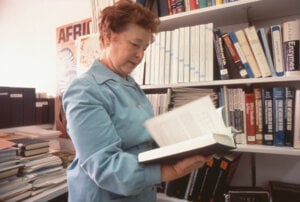
Elion’s name appears on 45 patents for life-saving and life-changing drugs. Many of the people those drugs affected took the time to express their gratitude.
She kept a file of letters from patients or relatives of patients who had benefited from her work: the recipient of a kidney transplant, a shingles sufferer whose eyesight was saved, the parents of children diagnosed with leukaemia, herpes encephalitis, and a “terminal” sarcoma. Elion said that being able to help these people was a reward greater than the Nobel Prize.

1 (of 2) Letter from kidney transplant patient Sharyn Cohn to Gertrude Elion, 3 March 1998. She writes: "My life is full of joy because of your discoveries." Elion developed Imuran, an immunosuppressant that makes such transplants possible.
Photo courtesy of Gertrude B. Elion Foundation

2 (of 2) Gertrude Elion, Research Triangle Park, North Carolina, 1983.
Photo courtesy of GSK. Reproduced with permission.
“What we were aiming at was getting people well, and the satisfaction of that is much greater than any prize you can get.”
Gertrude Elion

1 (of 3) Gertrude Elion after receiving the Nobel Prize, 1988.
Photo courtesy of GSK. Reproduced with permission

2 (of 3) Gertrude Elion receiving her Nobel Prize from King Carl XVI Gustaf of Sweden, 10 december 1988.
Photo courtesy of GSK. Reproduced with permission

3 (of 3) Gertrude Elion, surrounded by piles of publications at her desk. On the back of the photograph, she wrote: "This happens when you go on vacation."
Photo courtesy of GSK. Reproduced with permission.
Though her individual discoveries were significant, when Elion received the Nobel Prize in Physiology or Medicine in 1988 (with Hitchings and another drug researcher, James Black), it wasn’t for one particular drug, it was for a new, more rational approach to drug development. Simply put, Elion changed the way researchers develop drugs. As a result, although she died in 1999 at the age of 81, Gertrude Elion is still saving lives.