Fritz Haber
Facts
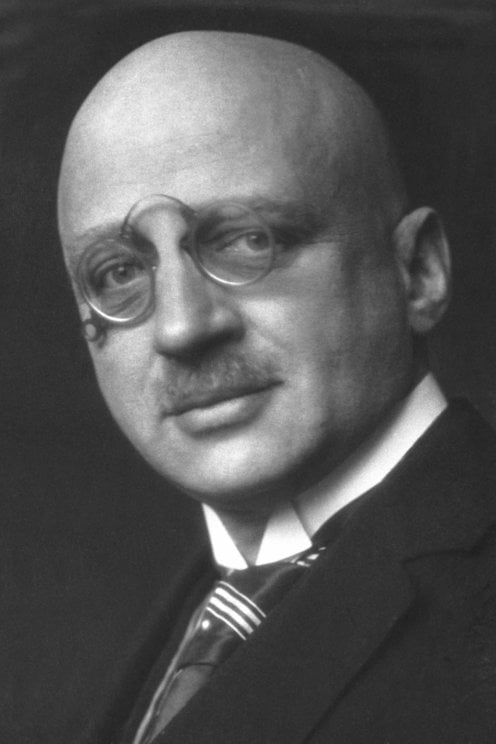
Photo from the Nobel Foundation archive.
Fritz Haber
Nobel Prize in Chemistry 1918
Born: 9 December 1868, Breslau, Prussia (now Wroclaw, Poland)
Died: 29 January 1934, Basel, Switzerland
Affiliation at the time of the award: Kaiser-Wilhelm-Institut (now Fritz-Haber-Institut) für physikalische Chemie und Electrochemie, Berlin-Dahlem, Germany
Prize motivation: “for the synthesis of ammonia from its elements”
Fritz Haber received his Nobel Prize one year later, in 1919.
Prize share: 1/1
Work
One of the most important plant fertilizers is nitrogen. Air is mostly nitrogen, but plants can only utilize nitrogen when it is part of chemical compounds. In about 1913 Fritz Haber developed a method for producing ammonia from nitrogen and hydrogen, which could be used to manufacture artificial fertilizer. When nitrogen and hydrogen gases pass through an apparatus at a controlled temperature, pressure, and flow rate, and in the presence of a catalyst, ammonia is formed in an energy-efficient process.
Nobel Prizes and laureates
Six prizes were awarded for achievements that have conferred the greatest benefit to humankind. The 14 laureates' work and discoveries range from quantum tunnelling to promoting democratic rights.
See them all presented here.