José Ramos-Horta, born December 26, 1949 in Dili, East Timor. Single with one son. Catholic. Living in Lisbon and Sydney …
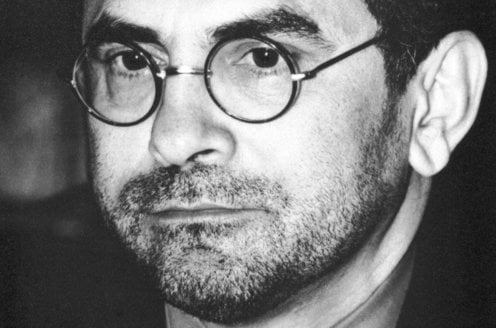
José Ramos-Horta was awarded the Nobel Peace Prize, Jointly with Carlos Filipe Ximenes Belo, for his work towards a just and peaceful solution to the conflict in East Timor.
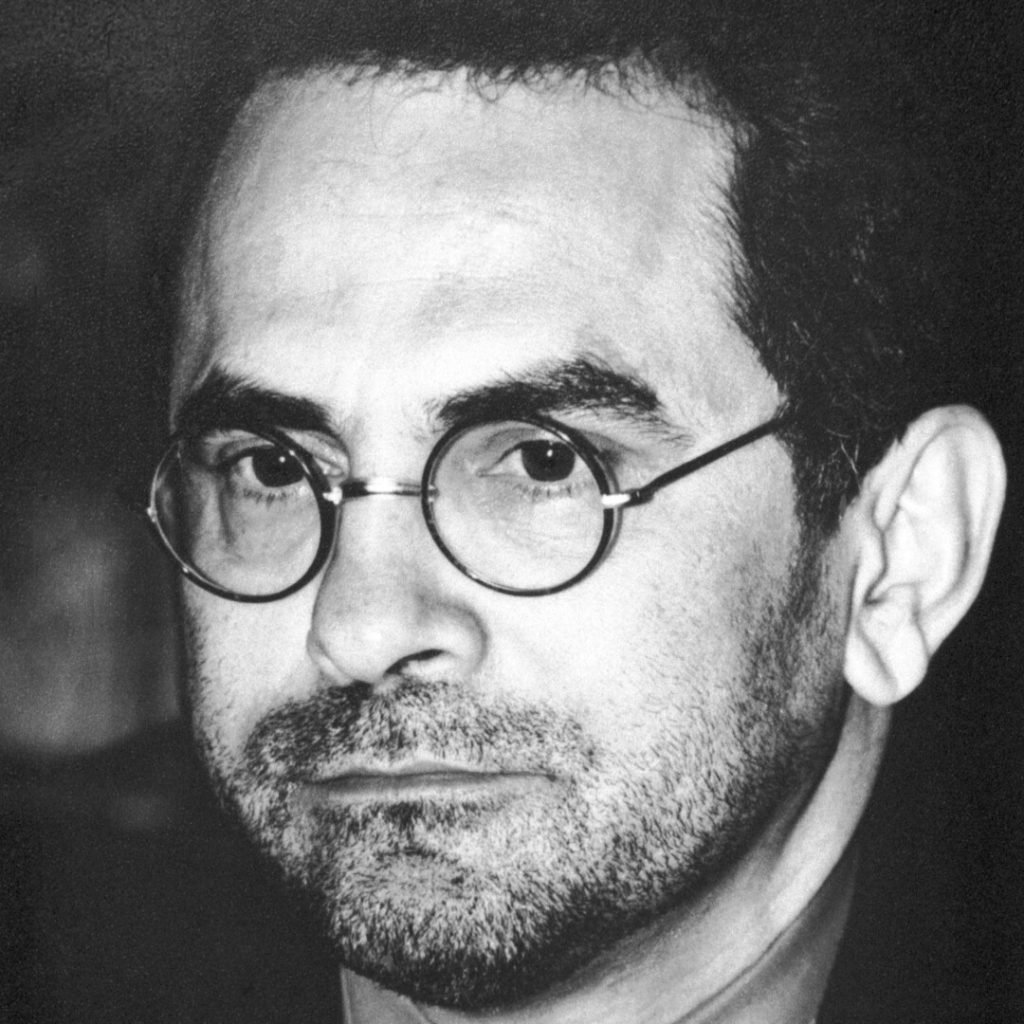
Full name: José Ramos-Horta
Born: 26 December 1949, Dili, East Timor
Date awarded: 11 October 1996
After its liberation from Indonesia, East Timor was beset by social and ethnic conflicts. In 2006, soldiers from its western region revolted and the capital of Dili was plundered by young rioters. A UN forced was used to re-establish law and order. After periods as both foreign minister and prime minister, Ramos-Horta won the presidential election in 2007. He made former president Gusmao his prime minister. The following year both were targets of attempted assassination by rebel soldiers. Ramos-Horta was seriously injured, but returned to his post after successful hospital recuperation in Australia.
“Since the invasion he has lived abroad, unceasingly and with great personal sacrifice collecting and communicating information on the repression, torture and killing in his home country, and acting as East Timor’s principal international spokesman.”
Francis Sejersted, Presentation speech, 10 December 1996.
Indonesia invaded East Timor in 1975 after Portugal withdrew. One of those who fought against the unlawful occupation was the journalist José Ramos-Horta. He did not take up arms himself, but he served as foreign minister in exile for the liberation movement, Fretilin. For the next 20 years he travelled throughout the world, speaking on behalf of the East Timorese. Ramos-Horta’s efforts were long disregarded and impeded by the West, which needed Indonesia in the fight against communism. Ramos-Horta lost three siblings in the war and received many death threats, but he refused to be broken. When the Cold War was over and the Indonesian dictator resigned, Indonesia withdrew from East Timor under UN supervision. In 2002 Ramos-Horta became the first foreign minister of an independent East Timor.
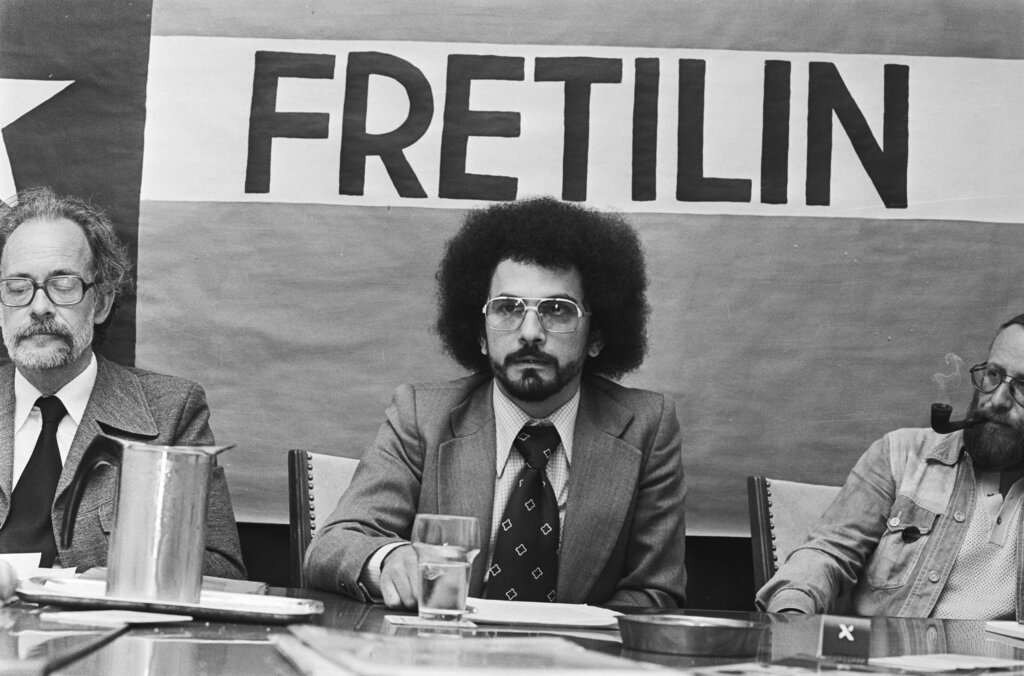
When Ramos-Horta heard that he had been awarded the Nobel Peace Prize, he said that it really should have gone to Xanana Gusmao. He was the political and military leader of the Revolutionary Front for an Independent East Timor, Fretilin, the liberation movement and political party to which the peace laureate himself belonged. Gusmao was taken prisoner by Indonesia in 1988 and later sentenced to life in prison. In the autumn of 1999, Gusmao was released, and in 2002 he was elected as the first president of an independent East Timor.
“José Ramos-Horta is a machine that seeks more work than sleep. He is like a waterfall, a volcano. Always on the go, and full of energy.”
Yannis Tavridis in the Norwegian newspaper ‘Vårt Land’, 12 October 1996.
The Indonesian government took a conciliatory tone toward Bishop Belo, while it sharply condemned the Norwegian Nobel Committee’s choice of Ramos-Horta, which it viewed as an insult. In response, Indonesia falsely accused Ramos-Horta of being responsible for atrocities during the war in 1975. The Indonesian ambassador boycotted the award ceremony in Oslo City Hall, and he warned the Nobel Peace Prize laureates not to criticise Indonesia during their stay in Norway. As a result, Belo did not take the chance of appearing at a joint press conference with Ramos-Horta.
| Fretilin Abbreviation for Frente Revolucionara do Timor Leste Independente – East Timor’s independence movement. Founded in 1974. Fretilin fought against the Indonesian occupation. Winner of the first free elections in 2001. |
José Ramos-Horta, born December 26, 1949 in Dili, East Timor. Single with one son. Catholic. Living in Lisbon and Sydney …
Disclaimer: Every effort has been made by the publisher to credit organisations and individuals with regard to the supply of photographs. Please notify the publishers regarding corrections.
Carlos Filipe Ximenes Belo was awarded the Nobel Peace Prize, jointly with José Ramos-Horta, for his work towards a just and peaceful solution to the conflict in East Timor.
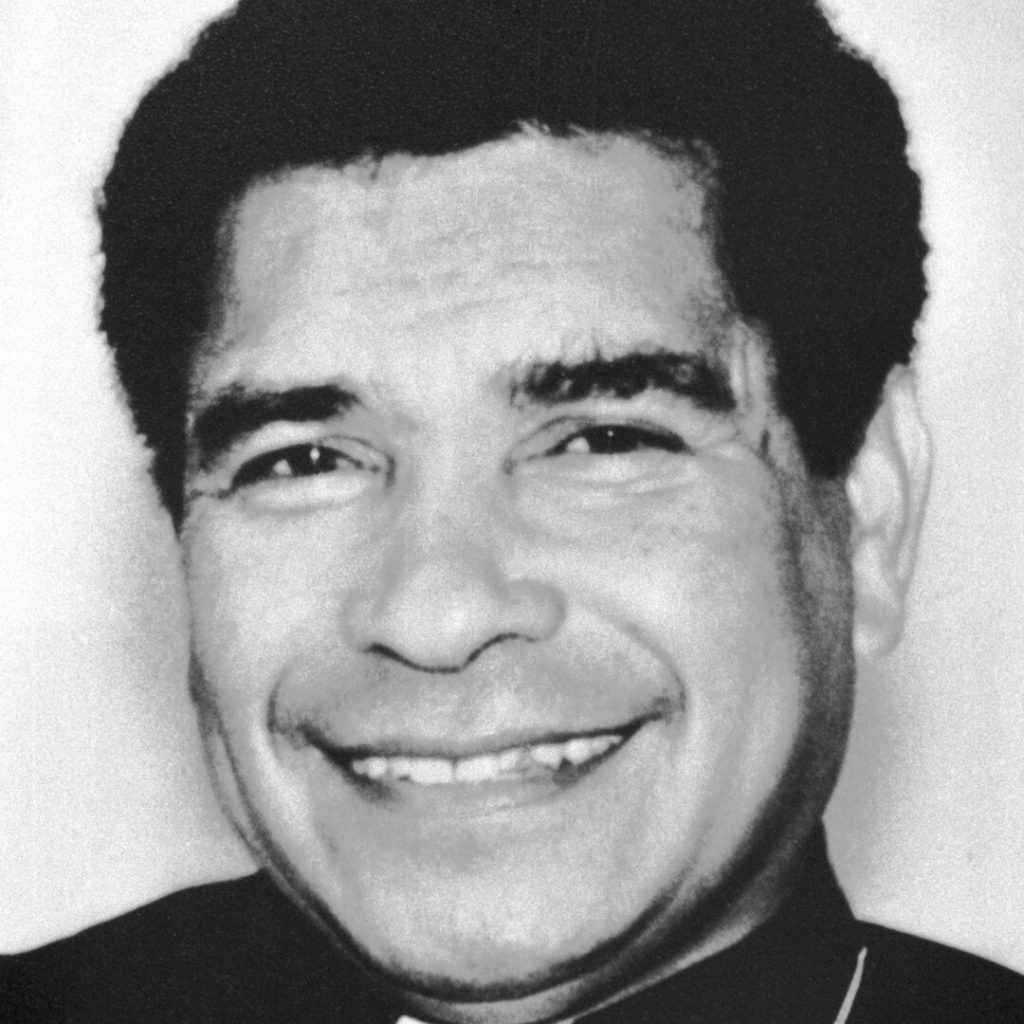
Full name: Carlos Filipe Ximenes Belo
Born: 3 February 1948, Wailacama, East Timor
Date awarded: 11 October 1996
Shortly after Carlos Belo was chosen as head of the Catholic Church in East Timor in 1983, he publicly condemned Indonesia’s brutal occupation of the province. The occupiers put Belo under strict surveillance and threatened his life several times, but the bishop refused to be silenced. He continued to promote non-violent opposition against the oppressors, and he conducted relief efforts for children orphaned by the war. Belo demanded that the UN organise a public referendum on the status of East Timor, and he helped to smuggle two witnesses to a meeting of the UN Commission on Human Rights, where they testified to human rights abuses by Indonesia. Bishop Belo viewed the Nobel Peace Prize as an acknowledgement of the Catholic Church’s fight for human rights.
| Human rights Rights that apply to all persons regardless of gender, race, ethnicity, religious affiliation or nationality. The most important are the rights enshrined in the UN Declaration of Human Rights, adopted in 1948. |
“Again and again, in the midst of everyday terror and suffering, he has intervened, trying to reconcile and mediate and lessen confrontation, and in doing so he has saved many lives.”
Francis Sejersted, Presentation speech, 10 December 1996.
“But when a people chooses the non-violent path, it is all too often the case that hardly anyone pays attention. It is tragic that people have to suffer and die and the television cameras have to deliver the pictures to people’s homes everyday before the world at large admits there is a problem.”
Carlos Belo, Nobel Prize lecture, 10 December 1996.
In the early 1970s, Belo studied theology in Lisbon. A witness to the downfall of the Portuguese dictatorship, he could not help but be influenced by it. In an interview in autumn 1996, he said, “Suddenly I discovered democracy … The human rights violations would continue in the absence of democratic thought. Democracy will also be decisive for the future of East Timor. It is the Timorese people themselves who will decide whether East Timor will remain an Indonesian province or become a sovereign nation.”
In November 2002, Carlos Belo resigned as bishop of East Timor due to illness. He did not allow his health problems to slow him down, however, seeking new challenges instead. Ever since being ordained as a priest, he had dreamed of becoming a missionary, and now he seised the opportunity. In 2004 he left his home country and began missionary work in Mozambique, Africa.
“The hope is that the Nobel Peace Prize will again help to prove that a nearly forgotten conflict doesn’t have to be a lost cause.”
Newsweek, 21 October 1996.
Disclaimer: Every effort has been made by the publisher to credit organisations and individuals with regard to the supply of photographs. Please notify the publishers regarding corrections.
The Norwegian Nobel Committee has decided to award the Nobel Peace Prize for 1996, in two equal parts, to Carlos Felipe Ximenes Belo and José Ramos-Horta for their work towards a just and peaceful solution to the conflict in East Timor.
In 1975 Indonesia took control of East Timor and began systematically oppressing the people. In the years that followed it has been estimated that one-third of the population of East Timor lost their lives due to starvation, epidemics, war and terror.
Carlos Belo, bishop of East Timor, has been the foremost representative of the people of East Timor. At the risk of his own life, he has tried to protect his people from infringements by those in power. In his efforts to create a just settlement based on his people’s right to self-determination, he has been a constant spokesman for non-violence and dialogue with the Indonesian authorities. Ramos-Horta has been the leading international spokesman for East Timor’s cause since 1975. Recently he has made a significant contribution through the “reconciliation talks” and by working out a peace plan for the region.
In awarding this year’s Nobel Peace Prize to Belo and Ramos-Horta, the Norwegian Nobel Committee wants to honour their sustained and self-sacrificing contributions for a small but oppressed people. The Nobel Committee hopes that this award will spur efforts to find a diplomatic solution to the conflict in East Timor based on the people’s right to self-determination.
Oslo, October 11, 1996

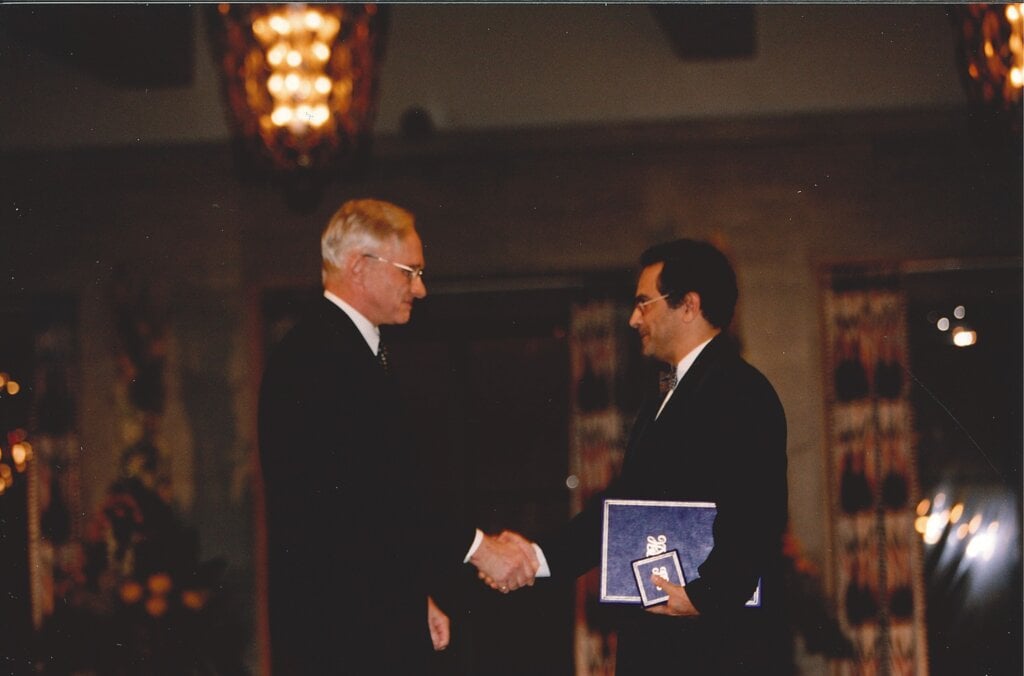
José Ramos-Horta receiving his Nobel Prize from Francis Sejersted, Chairman of the Norwegian Nobel Committee, at the Nobel Peace Prize award ceremony at the Oslo City Hall in Norway, 10 December 1996.
© Knudsens fotosenter/Dextra Photo, Norsk Teknisk Museum.

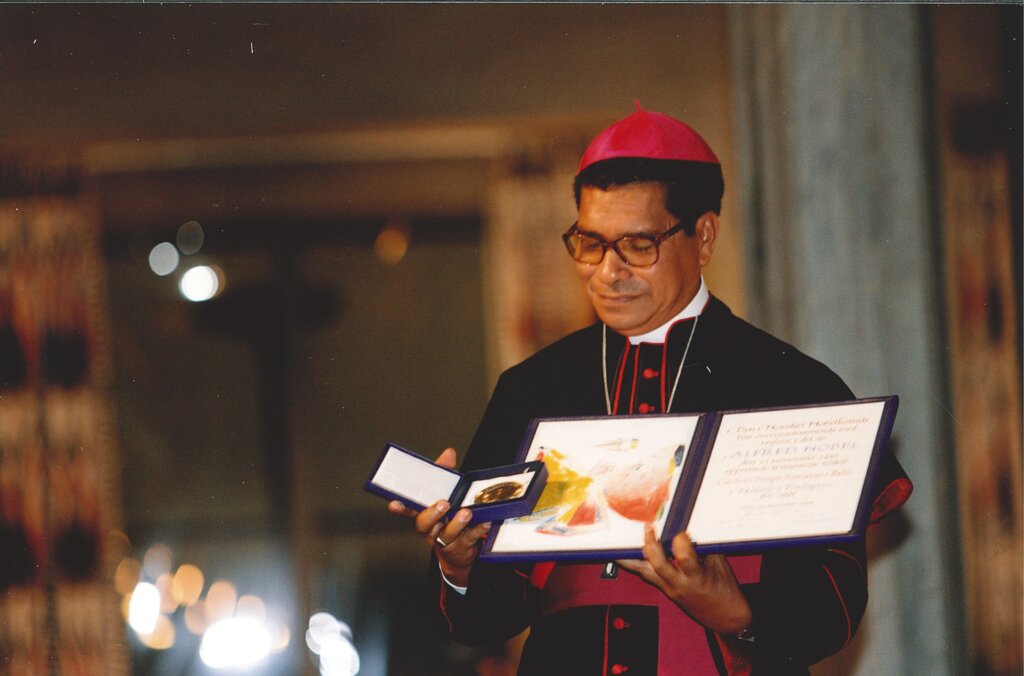
José Ramos-Horta and Carlos Filipe Ximenes Belo showing their Nobel Prize medals and diplomas at the Nobel Peace Prize award ceremony at the Oslo City Hall in Norway, 10 December 1996.
© Knudsens fotosenter/Dextra Photo, Norsk Teknisk Museum.

José Ramos-Horta delivering his Nobel Peace Prize lecture at the award ceremony at the Oslo City Hall in Norway, 10 December 1996.
© Knudsens fotosenter/Dextra Photo, Norsk Teknisk Museum.

Carlos Filipe Ximenes Belo and José Ramos-Horta visiting the Norwegian Nobel Institute, December 1996.
© Knudsens fotosenter/Dextra Photo, Norsk Teknisk Museum.

At the Nobel Peace Prize award ceremony on 10 December 2001 where Kofi Annan and the United Nations were awarded the 2001 peace prize, many previous laureates were present. From left: Joseph Rotblat, Jody Williams, José Ramos-Horta, Adolfo Pérez Esquivel, Lech Wałęsa, Desmond Tutu, John Hume, David Trimble, Elie Wiesel, Norman Borlaug, Rigoberta Menchu Tum and Mairead Corrigan. The remaining are representatives for peace prize awarded organisations.
© Knudsens fotosenter/Dextra Photo, Norsk Teknisk Museum.

Carlos Filipe Ximenes Belo receiving his Nobel Prize from Francis Sejersted, Chairman of the Norwegian Nobel Committee, at the Nobel Peace Prize award ceremony at the Oslo City Hall in Norway, 10 December 1996.
© Knudsens fotosenter/Dextra Photo, Norsk Teknisk Museum.

Carlos Filipe Ximenes Belo showing his Nobel Prize medal and diploma at the Nobel Peace Prize award ceremony at the Oslo City Hall in Norway, 10 December 1996.
© Knudsens fotosenter/Dextra Photo, Norsk Teknisk Museum.
José Ramos-Horta and Carlos Filipe Ximenes Belo showing their Nobel Prize medals and diplomas at the Nobel Peace Prize award ceremony at the Oslo City Hall in Norway, 10 December 1996.
© Knudsens fotosenter/Dextra Photo, Norsk Teknisk Museum.

Carlos Filipe Ximenes Belo delivering his Nobel Peace Prize lecture.
© Knudsens fotosenter/Dextra Photo, Norsk Teknisk Museum.
Carlos Filipe Ximenes Belo and José Ramos-Horta visiting the Norwegian Nobel Institute, December 1996.
© Knudsens fotosenter/Dextra Photo, Norsk Teknisk Museum.
A discussion forum with José Ramos-Horta from BBC News
On José Ramos-Horta from the PeaceJam Foundation
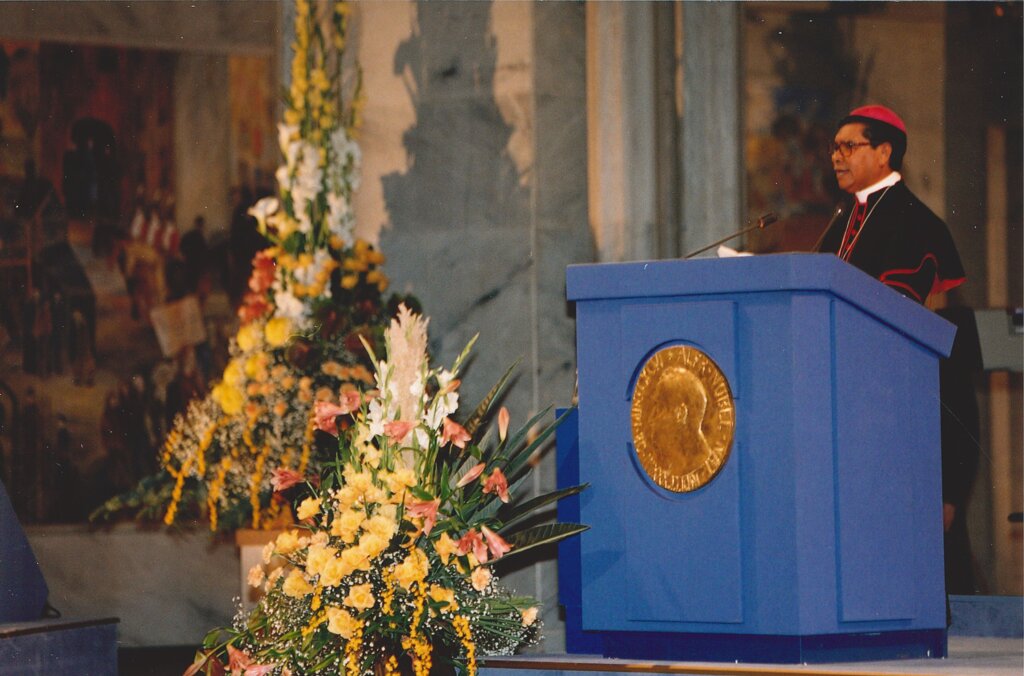
Nobel Lecture, December 10, 1996
Your Majesties, Dear Members of the Norwegian Nobel Committee, Honorable Prime Minister, Excellencies, Ministers, Members of Parliament, Members of the Diplomatic Corps, Regarded Friends, Distinguished Guests, Friends, Ladies and Gentlemen
“Nations will proclaim his wisdom, the assembly will celebrate his praises. If he lives long, his name will be more glorious than a thousand others, and if he dies, that will satisfy him rest as well” (Wisdom 39, 10-11)
Excellencies, Ladies and Gentlemen, I start with this biblical passage from the Book of Wisdom because it expresses with deep significance the memory of the man we remember this day whose esteemed Peace Prize bears his name. Today, the 10th of December, we celebrate the centennial anniversary of the death of a wise benefactor of humanity, a peace worker, Alfred Nobel.
Men of competence will never be extinguished from the memory of humanity because his wisdom, his dedication to the improvement of humanity, his tenacity for the progress of science in favor of mankind, makes people everywhere, all believers, all ideologies, feel in one way or another under an obligation to his talents and his boldness.
These men of competence are constantly disturbing the consciences of those who do not attend to the improvement of humanity. For it is a matter of fact that everyone should contribute in any way or form so that mankind become more and more humane.
What reasons, brought the Catholic Bishop of East Timor to be here in the presence of this assembly? I come from a social context that is already known to your Excellencies, where, due to circumstances, the aspirations and desires of the people are limited.
Taking the words from Terentius: “Homo sum; humani nihil a me alienum puto”. (Terentius 1, 1,25).
As man, as human being, I cannot remain indifferent in face of what concerns man.
As a member of a people, I have to share the destiny of the people, taking upon myself completely this mandate, knowing the risks that such an attitude will involve. Striving for the defense of the rights of all peoples is not only the privilege of those guiding the destiny of the people or those enjoying lofty positions in society, but it is the duty of everyone whatever rank or status.
As a member of the Church, I take upon myself the mission of enlightening and the denouncing of all human situations which are in disagreement with the Christian concept and contrary to the teaching of the Church concerning all mankind.
The Catholic Bishop is a pastor of a part of God’s people. His specific mission is spiritual. Such a mission is incumbent upon him basically as a dispenser of spiritual resources for the salvation of persons and for consolidating them in faith in Jesus Christ.
But mankind is not limited to a spiritual dimension, one should be saved as a whole, human and spiritual. In this aspect, any Catholic Bishop shall never be indifferent when a people’s possibilities for human realization, in all dimensions, are not respected.
So the Nobel Peace Prize, attributed to a Catholic Bishop, is not homage to one person but also basically the gratitude for the encouragement that the Catholic Church has developed over the centuries in defense and promotion of the rights of human beings.
The teachings of the Second Vatican Council in Gaudium et Spes, states: “The Church thinks that she will respond to the deep desires of peoples, showing its final hope, preaching freedom, dignity of conscience and rights, that is just, in God’s plan of salvation”.
The duty given to the Church is not socio-political in nature but religious. And thus it is characteristic of the Church, a wellspring of enlightenment and energy, to empower and contribute to the strengthening of human society.
It is known to your Excellencies, the efforts of the Church concerning the suffering of the people of East Timor over the last twentyone years. As Bishop of this people, I regard the Nobel Peace Prize not as something to merely esteem one person but as the rightful homage for the work done by the Catholic Church in East Timor, defending the inalienable rights of her people.
“Yet you have made him little less than a god, you have crowned him with glory and beauty” (Psalm 8,6).
For the composer of this psalm, human dignity is taking root in his divine vocation, created by God.
This is my belief and knowledge about mankind which guides me and impels me as my conscience considers how I should act.
However, addressing this distinguished Assembly with beliefs and concepts about mankind may be quite humanistic. But I do believe for sure that among us we have something in common, that is we affirm that the human being is the subject of all concept and human activities. We declare that one’s value and dignity does not depend on the individual’s belief, religion, politics, philosophy, race or color of skin.
Man is a being for freedom. It means that one’s realization is complete when capable to decide about one’s options and taking responsibility for his or her actions without any kind of intimidation.
Man is a being realized in a community. It means that the social and ethnic group one belongs to is the background for his or her fulfillment.
Man is a being realized when there is a reciprocity of respect. It means that wherever human beings are not respected in their elementary rights by those in charge or by those responsible in society, as a consequence, we have oppression, slavery, arrogance, arbitrariness, death of individuals and death of a people.
Ladies and Gentlemen, these principles are valid for everybody and they are valid for the Church who also affirms that human dignity is rooted and fulfilled in God Himself.
Persons have been placed in society by God the Creator, but over and above this, each person is called to be united with Him as children of God and participating in God’s happiness.
Moreover, the Church teaches that if this divine Foundation and the hope for eternal life are missing, human dignity is strongly damaged (GS. 21).
The Catholic Church proclaims Jesus Christ as the great deliverer for all mankind. Indeed, Jesus frees each one from every moral and social slavery, giving back his or her true dignity as a human being.
In making Christ known, the Church reveals to everyone their true situation and calling, since Christ is the head and model of that renewed humanity imbued with that fraternal love, sincerity and spirit of peace, to which everyone aspires (AG. 8).
Your Majesties, Members of the Nobel Committee, my friends from around the world, I am profoundly honored to be before you today to receive the Nobel Prize for Peace. But whatever personal compliment I may receive, I believe that I have received this high tribute not because of who I am or what I have done. I firmly believe that I am here essentially as the voice of the voiceless people of East Timor who are with me today in spirit, if not in person. And what the people want is peace, an end to violence, and respect for their human rights. It is my fervent hope that the 1996 Nobel Prize for Peace will advance these goals.
Above all, above all else, I am mindful and humble in my thoughts of Pope John Paul II, who did so much in the face of overwhelming odds in the epochal struggle to remove the yoke of communism from Poland and other nations who have been told to be realistic and accept their fate. The Holy Father has provided an example and a depth of inspiration to me that can never be equaled. My gratitude to John Paul II can not be adequately expressed.
I also think of others, especially from Asia who have never stood here. I contemplate with unending amazement the work of Mahatma Ghandi and his creed of non-violence in the movement for change. I think of China, and I pray for the well-being of Mr. Wei Jing Sheng and his colleagues, and hope that they will soon be liberated from their jail cells, just as Indonesian leaders once were freed from the infamous Boven Digul prison after long years of cruel captivity. Surely, these same Indonesian leaders had earned a place here in Oslo even before I was born in 1948, at the height of their battle for freedom and dignity. I think of the fearless Indonesian lighters and I realize that history has so much to teach us if we would only take time to contemplate its richness.
I stand humbled in the august presence of my predecessors in this place here in Oslo. I think of The Reverend Dr. Martin Luther King Jr., “standing on the mountaintop, looking out at the promised land.” These words remind me of the view of the majestic mountains in my beloved East Timor – Mount Malabean (the Mountain of the Dead), near where I was born in the east; and Mount Ramelau in the west. As I look at these mountains in my frequent journeys throughout my native land, I feel ever more strongly dial it is high time that the guns of war are silenced in East Timor, once and forever, it is high time that tranquillity is returned to the lives of the people of my homeland, it is high time that there be authentic dialogue. All people of goodwill must use every peaceful means of human ingenuity and intelligence to find ways to create a genuine peace based on mutual respect and human dignity.
East Timor is hardly alone in its search for peace and dignity, and it is of great importance to acknowledge the work of other’s. Last year I was privileged to be the guest in Belfast, Northern Ireland, of the 1976 laureate, Mrs. Mairead Corrigan Maguire, whose increasing work for peace has touched many throughout the world. Mrs. Maguire graciously gave me an informative and moving tour of the troubled areas in Belfast, the night after many vehicles had been burnt in protest over the early release of a soldier convicted of killing an 18 year old girl. I pray that the people of Northern Ireland may know genuine peace, justice and tranquillity in the near future.
Last year; I met with His Holiness, Dalai Lama, and was deeply moved by his wisdom and kindness. The people of Tibet are never far from my prayers, nor are the communities of the indigenous peoples of the world who are increasingly being overwhelmed by aggressive modernity that presumes to call itself civilization.
I pray for peace in the Middle East and Afghanistan, which cannot be forgotten, and for the continuation of the peace process in Central America. And no human being can be indifferent to the drama in the Great Lakes area, in Burundi and Rwanda, and also Zaire, where human suffering cries out for a solution.
In South Africa, the search for peace deepens. For me the work of Archbishop Desmond Tutu is a shining example of the way truth can be combined with the quest for human rights, the way humor and humility can be mixed with righteousness, and I only pray that I may be worthy of his mantle. In Burma, I salute the strength and grace of Daw Aung San Suu Kyi, and pray that a better day may soon arrive for her and all her people. May the beauty of music from her piano soften the hearts of armies and nations. In Burma and throughout the world, in places known and not well known, let us apply the words in the fifth chapter of Amos of the Old Testament: “Let Justice roll down like waters.”
And let us always think of many anonymous people throughout the world, struggling for the protection of human rights. Day by day, working to convince the international community of the justice of their cause, whether they be Moslems or Christians, Protestants or Catholics, Hindus or Buddhists whether they be followers of age-old traditional beliefs, believers or non-believers. I say: press on, take courage, remain true to your ideals, you will not be forgotten.
The world censures those who take up arms to defend their causes and calls on them to use non-violent means in voicing their grievances. But when a people chooses the non-violent path, it is all too often the case that hardly anyone pays attention. It is tragic that people have to suffer and die and the television cameras have to deliver the pictures to people’s homes everyday before the world at large admits there is a problem. Therein lies the enormous significance and the brave wisdom of the decision of the Nobel Committee to focus on East Timor this year; it represents the extraordinary recognition of East Timor’s quest for peace and the recognition of its pleas for an end to suffering.
I speak of these things as one who has the responsibility to bear witness to what I have seen and heard, to react to what I know to be true, to keep the flame of hope alive, to do what is possible to warm the earth for still another day. I speak as a spiritual leader, not as a politician, which in fact, I am not. In recent weeks, some articles have described me as “a former shepherd,” not realizing that my vocation only evolved from a boyhood job of tending water buffaloes to the grave responsibility of trying to apply my fallible self to the difficult task of providing moral leadership in a situation where almost no one is ever completely happy with my actions.
Others have written that if there had not been a war in East Timor, I would be spending all my time tending to the needs of troubled youth, which is the special calling of my religious order, The Salesians of St. John Bosco. But this is only a matter of degree: Even now, I spend an overwhelming amount of energy in listening to and counseling the youth of East Timor, who urgently need such help because of their history. This is my special obligation, and one which I welcome.
Thus I must press on, aware of all the tasks that are far from complete. St. John Bosco once said that we will have the chance to rest in the hereafter, not in this world. And my life in the past thirteen years since I took up the post in East Timor illustrates the accuracy of Don Bosco’s judgement in this regard among others. But my own hard work forms only a small part of what is necessary; the participation of others is vital. I extend the hand of friendship and goodwill to all those who provide genuine assistance or moral support in the vital struggle for peace in East Timor, throughout Asia, Africa, in the Western Hemisphere, throughout Europe, in Bosnia and elsewhere in the Balkans. Everywhere.
I must also praise the United Nations for its painstaking efforts on the question of East Timor, which have been of central importance in keeping the issue alive over many long years. In the face of great obstacles, in spite of all the difficulties, the United Nations have continued to persevere in the interest of generating dialogue that might one day create a lasting structure of peace in East Timor, and in many other places throughout the world.
There is no institution that can take the place of the United Nations, especially in the light of the history and credibility of the world organization. We can not overlook the fact that the United Nations played an important role from its earliest days in the I940’s in assisting the struggle of Indonesia’s nationalist movement. The young Indonesian Republic fought alone, with supreme courage, against the brute force of colonialism and its allies, ultimately receiving the indispensable moral backing that the new world association alone was able to provide. In the face of the moral weight of the United Nations, the Dutch and their allies could not carry on military operations with impunity, as other colonial powers did before the UN was formed in 1945. This must never be forgotten. Thus, the world must do whatever possible to strengthen the United Nations in the months and years ahead, in the deepest interests of all the peoples of the world.
Let it be stated clearly that to make peace a reality, we must be flexible as well as wise. We must truly recognize our own faults and move to change ourselves in the interest of making peace. I am no exception to this rule! Let us banish anger and hostility, vengeance and other dark emotions, and transform ourselves into humble instruments of peace.
People in East Timor are not uncompromising. They are not unwilling to forgive and overcome their bitterness. On the contrary, they yearn for peace, peace within their community and peace in their region. They wish to build bridges with their Indonesian brothers and sisters to find ways of creating harmony and tolerance.
Mutual respect is the basis of compromise. Let us start by making a sincere effort to change the very serious human rights situation in East Timor. The Church has played its pail. We have formed a Justice and Peace Commission that is always ready to cooperate with the authorities to address problems.
Independent human rights officials have repeatedly visited East Timor and have recommended what needs to be done. As a first step, the release of East Timor political prisoners has to be given urgent attention, in accordance with the section on Humanitarianism in the Panca Sila, The Five Principles of Indonesia’s State Ideology. Such a step would help create an important opening on the road to peace.
Ladies and Gentlemen, taking the liberty to remind you, in this Assembly, of my predecessor’s appeal, Israel’s former Prime Minister, the late Mr. Itzaak Rabin, speaking in New York, when the first historical meeting with President Arafat took place, he said: “Stop bloodshed.”
Making mine this same appeal, I say: “Stop bloodshed.” And I add: Stop oppression. Stop violence. Stop conflict. Let us sit down around a table and understand each other, because we can not tolerate extending for a long time the suffering of the people of East Timor. I think this is the fundamental intention of the Nobel Committee in awarding to us the prize, expressed on behalf of its president, Mr. Francis Sejersted.
Ladies and Gentlemen, East Timor was given the possibility to be heard through the voice of her two sons resounding throughout the world through this solemn assembly; but I would like that this attention shown by the world to East Timor be given the same intensity concerning the many other problems distressing other people.
There are similar situations, throughout the world, where people live under horrible conditions as Timor, but they have no possibility to be heard.
Daily, we get in our homes, news and images of suffering, pain destruction caused by war. “War, this monster,” as Father Antonio Vieira states, “what it is doing, even God is not secure in the altar.”
I appeal to all men of goodwill and particularly those holding power to find solutions to these numberless conflicts. Solutions based on justice and solidarity, in order that fundamental rights can be respected.
I appeal, as well, to all professionals of the information media, charged with this great mission, that they regulate communication between all latitudes of the globe, doing it with a sense of truth and immunity for building up a society more humane and more just, without tendentious manipulation.
I would like, before I finish, to address some words to the youth around the world, particularly to the youth of my dear Timor: “Society is a succession of interwoven rings in which each generation has the duty to contribute to the next generation in order to live in the world peacefully fraternally. On your shoulders, dear young people of the entire world, weigh the responsibility to transform tomorrow’s world into a society where peace, harmony and fraternity reign.”
Dear youth, I quote from memory the great Indian poet Rabindranath Tagore: ” Youth, as a Lotus flower, flourish just once in life. “Do not let it wither on the way.
Finally, an event is never a lonely action. The awarding of the Nobel Peace Prize to these two sons of Timor, Dr. Jose Ramos-Horta and myself has come about because many people groups and institutions have worked hard so that this event could become a reality.
At this moment I would like, in the first place, to thank the King and Queen of Norway, for being susceptible to the suffering of the people of East Timor, and for their generous presence in this solemn assembly.
My thanks goes to the Nobel Peace Prize Committee for their kind attention and courageous dedication on behalf of the plight of the East Timorese.
To the government and members of the Norwegian Parliament I thank you for the decision to honor us with the Nobel Peace Prize.
I emphasize a little to thank Portugal and other friendly nations, as well as distinguished personalities who have proposed our names as candidates for the Nobel Peace Prize.
To the Timorese, here and abroad, I convey my indescribable gratitude and my communion and silent solidarity with you.
To His Holiness, Pope John Paul II, who has been persistent and attentive in following the situation and the suffering of the people and the Church in East Timor, I submit my filial devotion and the promise of unending fidelity and unity with Christ.
To the Pontifical Commission of Justice and Peace, particularly in the person of its President, His Eminence Cardinal Roger Etchegaray, who had an opportunity to be in direct contact with the Church of Timor, I submit my deep gratitude.
I cannot forget the contribution of friends from other religions who, with discretion and fearless activity have made it possible for the Nobel Peace Prize for 1996 to be attributed to the Catholic Church in East Timor.
It would be unjust to forget, although I am aware that it is difficult to count the various Non Governmental Organizations, Humanitarian Groups, Church-related Groups and individuals who have worked hard, in silence and without much publicity, so that the Timorese can receive assistance and to ensure that the Timorese issue would not be buried under the dust of oblivion. With them, I share my happiness.
And finally, my sincere thanks to all the members of the social communication industry from all over the world. They have lent their voices in making known to the world the anguish and the suffering of the Timorese. I would like to pay my tribute to those who provide information about Timor, who risk their lives, some of them falling in East Timor’s soil.
“The Creator and Father of everything and all peoples will reward all of us and will give us strength, wisdom and courage to struggle for our fellow human beings because each one is the image and the likeness of God” (Gen. 1,26)