Paul Henri d’Estournelles de Constant – Speed read
Paul d’Estournelles de Constant was awarded the Nobel Peace Prize, jointly with Auguste Beernaert, for his prominent position in the international movement for peace and arbitration.
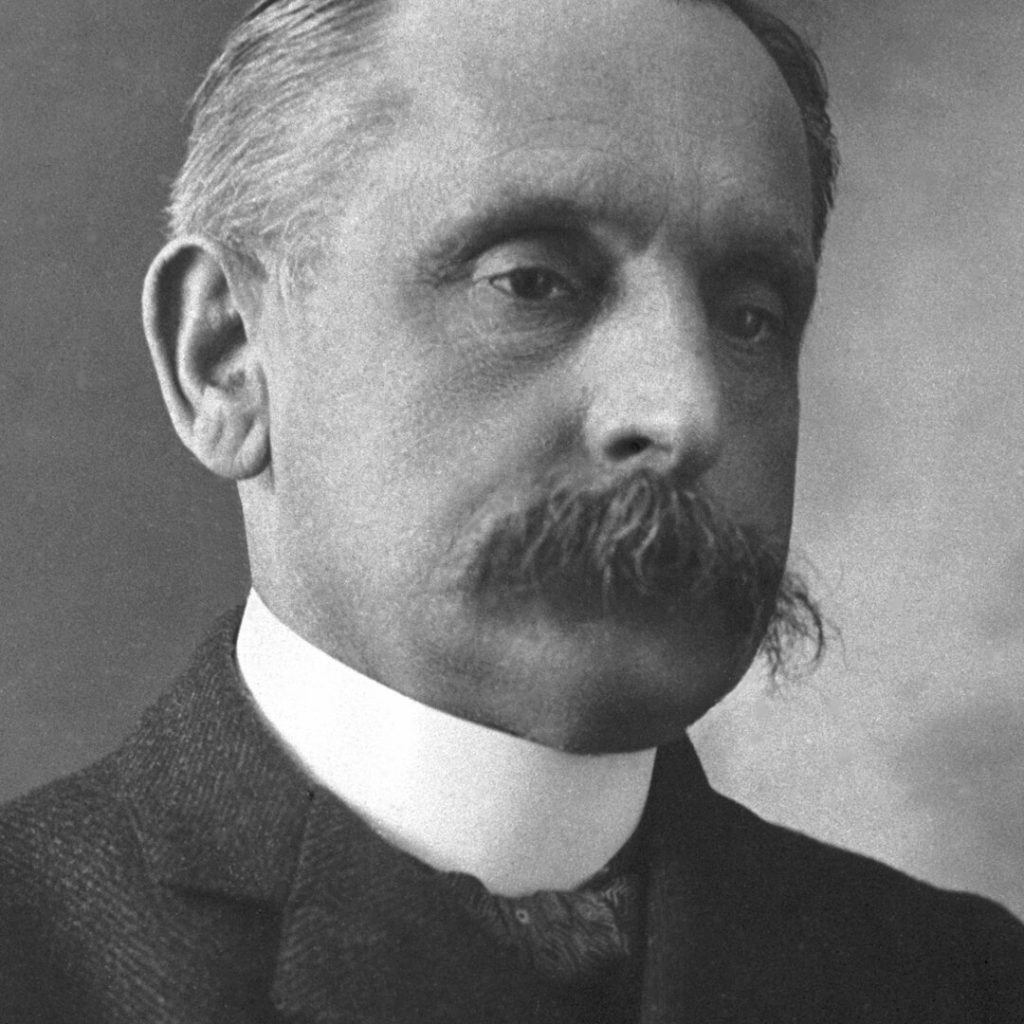
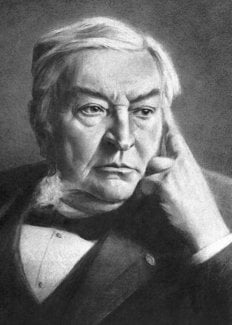
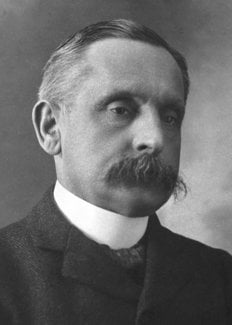
Paul Henri d’Estournelles de Constant. Photo from the Nobel Foundation archive.
Full name: Paul Henri Benjamin Balluet d’Estournelles de Constant, Baron de Constant de Rebecque Born: 22 November 1852, La Flèche, France Died: May 15, 1924, Paris, France Date awarded: 10 December 1909
Diplomat, politician and internationalist
Despite his aristocratic title, Paul Henri d’Estournelles de Constant was a republican. He believed that the cultures of Europe should unite in a European federation, maintaining that a well-organised international society was the best guarantor of peace. Baron d’Estournelles began his career as a diplomat, but in 1895 he was elected to the Chamber of Deputies. He served the last 20 years of his life as a senator. d’Estournelles advocated binding arbitration between nations. On a visit to the USA, he persuaded President Theodore Roosevelt to be the first to use the Permanent Court of Arbitration in The Hague. He also encouraged Andrew Carnegie to donate money for the Peace Palace in The Hague. Prior to WWI, he sought to achieve reconciliation between Germany and France.
“As the self-appointed chargé d’affaires of the peace effort, he seeks with no small measure of success to obtain the concessions that are possible in the moment.”
Ebbe Hertzberg, Adviser to the Nobel Committee, 1904.
Conciliation internationale
In the spring of 1905, d’Estournelles founded this elite organisation to act as the “Upper House of the peace movement.” Joining him were painter Claude Monet, lyric poet Sully Proudhomme, philosopher Henri Bergson, literary historian Georg Brandes, peace advocate Bertha von Suttner and polar explorer Fridtjof Nansen. He also succeeded in establishing cooperation with Nicholas Murray Butler (USA), president of Columbia University and director of the Carnegie Endowment for International Peace. Conciliation Internationale thus emerged as a link between the peace movements across the Atlantic.
“d’Estournelles’ long-range solution for European problems was a political one – the formation of a European union.”
During the Peace Conference at the Haag in 1899, d’Estournelles was one of the main proponents of internationally binding agreements. If war threatened, the nation states should accept neutral judges’ decisions (arbitration). The conference agreed to establish such a court at the Haag. The nation states would have a moral duty to submit conflicts here. It was a step in the right direction for d’Estournelles, but months passed and the court remained unused. Then he took hand. At a meeting with Theodore Roosevelt in 1902, he persuaded the President to allow a conflict between the USA and Mexico to be heard there. The Permanent Court of Arbitration thus had two later Nobel Peace Prize laureates to assist in its birth.
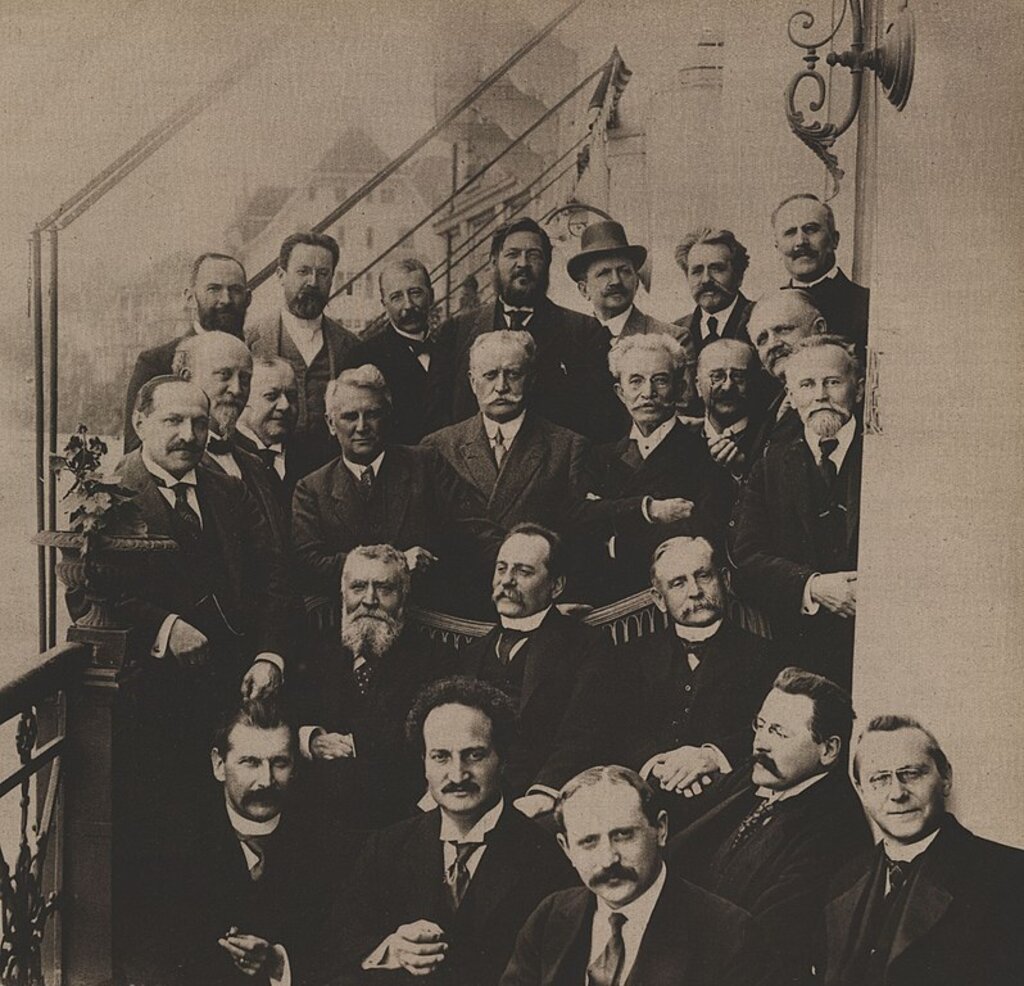
A group of French and German delegates gathered at the Hotel des Trois Rois, in Basel, 31 May/1 June 1914. Paul Henri d’Estournelles de Constant sits far right in the second row from the front. From ‘Le Miroir’, 21 juin 1914. Photo: Henri Manuel. Public domain, via Wikimedia Commons
Paul Henri Benjamin Balluet, Baron d’Estournelles de Constant de Rebecque (November 22, 1852 – May 15, 1924), the son of an aristocratic family tracing its ancestry back to the Crusaders, was born at La Flèche in the Sarthe district of the Loire valley …
Disclaimer: Every effort has been made by the publisher to credit organisations and individuals with regard to the supply of photographs. Please notify the publishers regarding corrections.
Auguste Beernaert – Speed read
Auguste Beernaert was awarded the Nobel Peace Prize, jointly with Paul d’Estournelles de Constant, for his prominent position in the international movement for peace and arbitration.
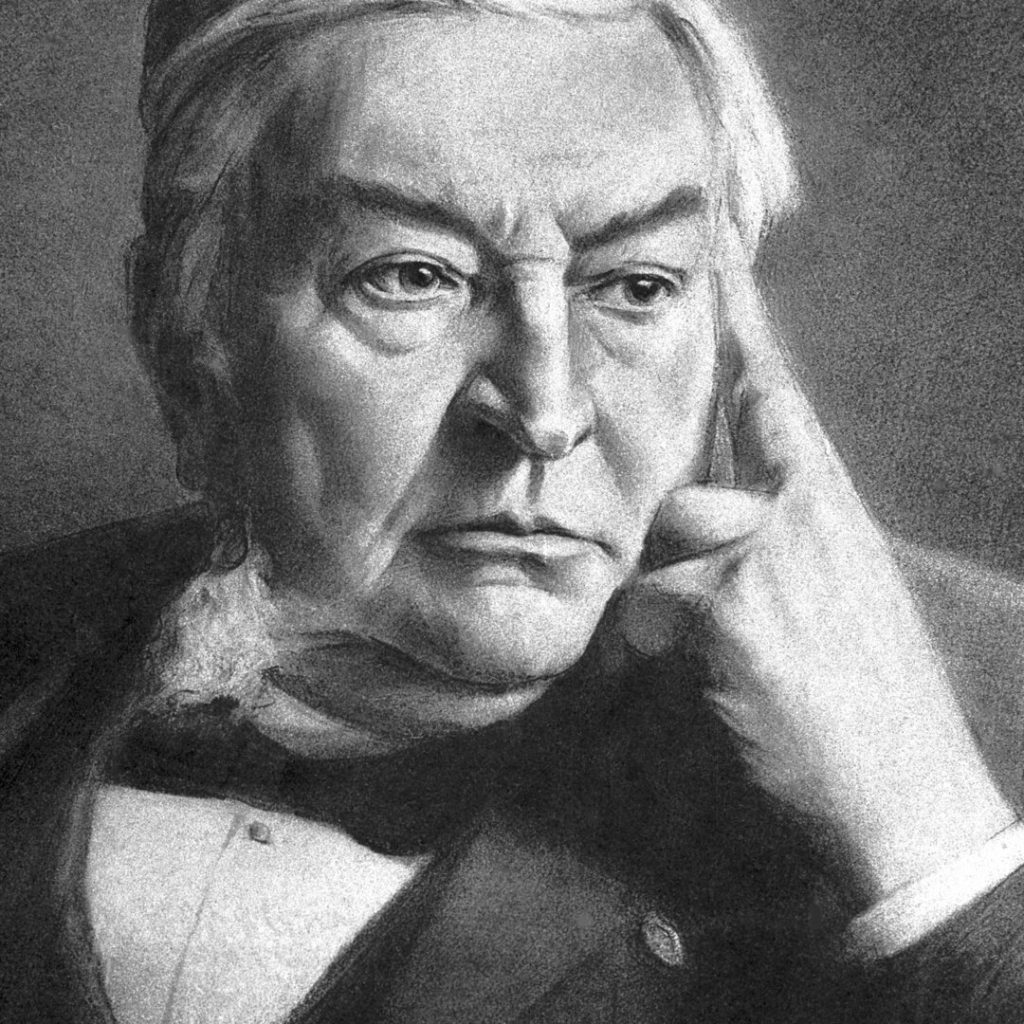
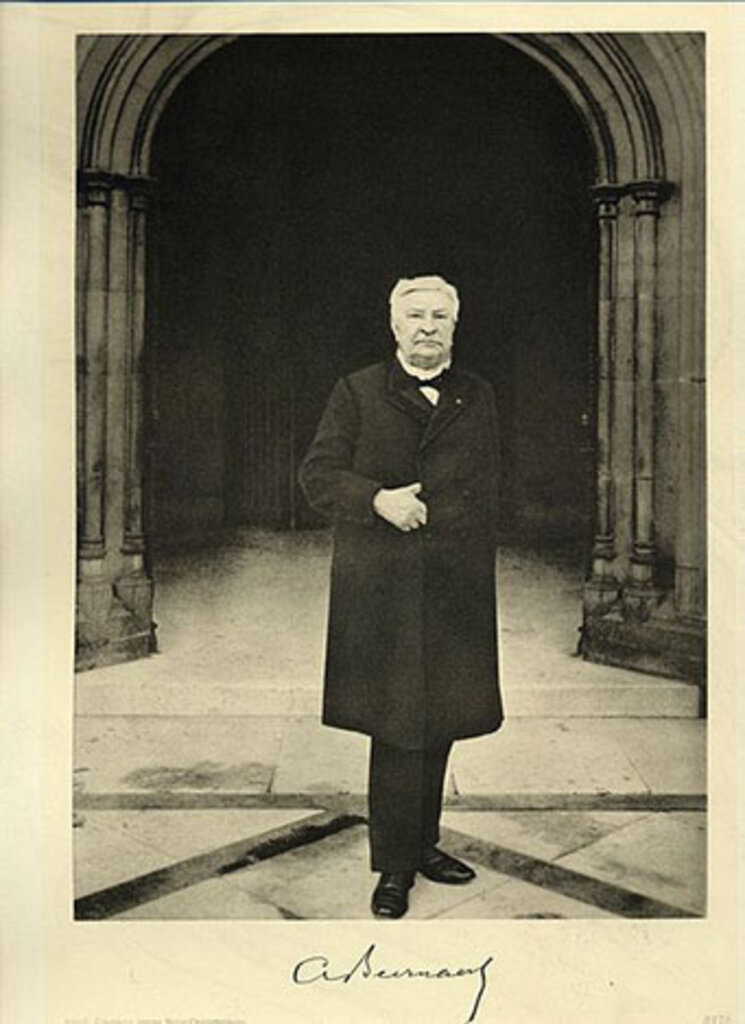
Auguste Marie François Beernaert. Photo from the Nobel Foundation archive.
Full name: Auguste Marie François Beernaert Born: 26 July 1829, Ostend, Belgium Died: 6 October 1912, Lucerne, Switzerland Date awarded: 10 December 1909
Prime minister and parliamentarian
Auguste Beernaert was one of Belgium’s most renowned lawyers, and he served as prime minister for King Leopold II from 1884 to 1894. He gained his reputation as a prominent peace advocate through his work with the Inter-Parliamentary Union and the Hague Peace Conferences of 1899 and 1907. He presided over a commission in The Hague on the codification of land war, and he spoke out in support of small nations that wished to remain neutral in conflicts between major powers. In 1902, when the border dispute between Mexico and the USA was brought as the first case before the International Court of Arbitration in The Hague, Beernaert represented Mexico. Toward the end of his life, Beernaert fought to prevent aerial warfare. Just a few days before his death, he submitted a proposal to the 1912 Inter-Parliamentary Union conference in Geneva to ban this type of warfare.
“His work for the cause of peace is widely known in Europe, and his name renowned in the International Peace Conferences.”
Jørgen Løvland, Chairman of the Nobel Committee, Presentation speech, 10 December 1909.
Auguste Beernaert around 1900. Source: ‘La Belgique d’aujourd’hui’. Photographer unknown. Public domain, via Wikimedia Commons
Inter-Parliamentary Union Founded in 1889 to bring together representatives from various national assemblies for annual debates. Headquartered in Geneva. Works for the peaceful resolution of conflict between nations. Addresses topics such as disarmament, environmental protection, gender equality and current world conflicts.
Inter-parliamentarian
Beernaert attended the meetings of the Inter-Parliamentary Union, which organised annual conferences for elected representatives from different countries. The purpose was to promote peace and understanding between nations. Beernaert presided over a number of conferences, and he supported the use of arbitration when conflicts arose. Although he believed in the value of the Permanent Court of Arbitration in The Hague, he did not agree that the court should have permanent judges. Instead he maintained that judges should be elected for each case and approved by the parties. Beernaert feared that permanent judges could be exploited by major powers to exert pressure on small nations.
“Auguste Beernaert always endeavoured to advance the adoption of compulsory arbitration, and arms limitation agreements.”
Nadine Lubelski Bernard in Holl/Kjelling: The Nobel Peace Prize, page 118.
Auguste Marie François Beernaert (July 26, 1829-October 6, 1912) was born in Ostend, Belgium, in a middle-class Catholic family of Flemish origin …
Disclaimer: Every effort has been made by the publisher to credit organisations and individuals with regard to the supply of photographs. Please notify the publishers regarding corrections.
Auguste Beernaert – Nobel Lecture
Auguste Beernaert did not deliver a Nobel Lecture.
Auguste Beernaert – Photo gallery
Swipe left and right to see more photos
1 (of 1)
Auguste Beernaert around 1900.
Source: La Belgique d'aujourd'hui. Photographer unknown.
Public domain, via Wikimedia Commons
Paul Henri d’Estournelles de Constant – Nobel Lecture
Paul Henri d’Estournelles de Constant did not deliver a Nobel Lecture.
Paul Henri d’Estournelles de Constant – Nominations
Auguste Beernaert – Nominations
Auguste Beernaert – Biographical
Auguste Marie François Beernaert (July 26, 1829-October 6, 1912) was born in Ostend, Belgium, in a middle-class Catholic family of Flemish origin. His father was a government functionary whose changing appointments took the family from Ostend to Dinant and then to Namur, where Auguste and his sister spent their childhood. Their early education was undertaken by their mother, a woman of outstanding intelligence and moral character. Admitted to the University of Louvain in 1846, Beernaert took his doctorate in law in 1851 with the highest distinction. Awarded a traveling fellowship, he spent two years at the Universities of Paris, Heidelberg, and Berlin, studying the status of legal education in France and Germany and upon his return to Belgium submitting a report of his findings – later published – to the minister of the Interior.
Admitted to the bar in 1853, he clerked for a time for Hubert Dolez, a prominent lawyer and former president of the Chamber of Representatives, then set up an independent practice, specializing in fiscal law. In the next twenty years his essays in legal journals earned him a reputation as a scholar, and his practice a comfortable fortune. Consequently, there was some surprise expressed in Belgian legal circles when he gave up his practice in 1873 to become the minister of public works in Jules Malou’s conservative Catholic cabinet. In the next five years Beernaert proved to be an able and energetic administrator. He improved the country’s rail, canal, and road systems, established new port facilities at Ostend and Anvers, and beautified the capital, but he failed in his attempt to end child labor in the mines. In June of 1874 he lost a contest for a seat in the Senate but three months later won an election in the west Flanders town of Thielt, a constituency which re-elected him until his death.
When the Catholic Party, defeated in 1878, was returned to power in 1884, Beernaert was named minister of the Department of Agriculture, Industry, and Public Works in the new cabinet. Four months later, after some resignations from the cabinet, King Leopold II entrusted Beernaert with the direction of the government.
Beernaert was prime minister of Belgium and finance minister for the next ten years. Under his administration the budget was balanced; the Flemish language was protected; the independent State of the Congo was created in 1885 and the title of sovereign of that land given to Leopold who had personally been largely responsible for its development; social and judicial reforms designed to protect the welfare of the workingman were instituted in 1887 in the wake of riots in that year; military fortifications on the Meuse were constructed in order to defend Belgian neutrality; the constitution of 1831 was revised, the right of suffrage being granted to ten times the number of citizens who had formerly enjoyed it.
On another constitutional question, that of proportional representation, the cabinet fell in 1894. Although he returned to his law practice, Beernaert continued to serve in the government. He accepted the advisory post of minister of state and from 1895 to 1900 served as the president of the Chamber of Representatives, being elected by his colleagues. A lifelong patron of the arts, he was selected to head the Commission of Museums and Arts. During this period he engaged actively in international attempts to abolish slavery and solidified into active opposition his dismay at the exploitation of the Congo that had troubled his relationship with Leopold in the last part of his tenure as prime minister.
One of Belgium’s leading pacifists, Beernaert became an active member of the Interparliamentary Union after he resigned from the prime ministry, presided over several of its conferences, and served as president of its Council after 1899 and of its Executive Committee after its creation in 1908. At the Peace Conference at The Hague in 1899 he presided over the First Commission on arms limitation; at the Conference of 1907, over the Second Commission on codification of land war. He was a member of the Permanent Court of Arbitration; he represented Mexico in 1902 in the dispute with the United States, the first case to be brought before the Court; and on many occasions he acted as arbiter of international quarrels. Beernaert was the primary force behind proposals to unify international maritime law; those resulting from the international conferences of 1885 and 1888, convened on his initiative, failed of adoption by the several nations, but the conventions dealing with collision and assistance at sea drawn up in 1910 at the conference in Brussels under his chairmanship were soon signed by many nations. He exemplified his own aphorism: «The first virtue of politics and the first element of success is perseverance».1
On his way home from the 1912 Geneva conference of the Interparliamentary Union on the prohibition of air warfare, Beernaert was hospitalized in Lucerne where he died of pneumonia. He was buried at Boitsfort with the simplest of ceremonies, as he had requested.
Selected Bibliography
Beernaert, Auguste Marie François, De l’état de l’enseignement du droit en France et en Allemagne: Rapport adressé à M. le Ministre de l’Intérieur. Bruxelles, Lesigne, 1854.
Beernaert, Auguste Marie François, Discours prononcé à l’occasion de l’inauguration des quais d’Anvers, le 26 juillet 1885. Paris, Chaix, 1885.
Carton de Wiart, Edmond, Auguste Beernaert: Sa Vie et son œuvre. Gand, 1910.
Carton de Wiart, Edmond, Léopold II: Souvenirs des dernières années, 1901-1909. Bruxelles, Goemaere, 1944.
Carton de Wiart, Henri, Beernaert et son temps. Bruxelles, La Renaissance du Livre, 1945.
Carton de Wiart, Henri, «Notice sur Auguste Beernaert», Annuaire de l’Académie Royale de Belgique, 105 (1939) 293-364. Contains a bibliography.
Collin, Paul-Victor, «Un Homme d’état: Auguste Beernaert, 1829-1912», Res Publica, 3 (1961) 251-254.
De Ridder, A., «Léopold II, M. Beernaert, et la défense rationale», La Revue Générale, 104 (juillet 1920) 30 – 48.
Jaspar, Henri, «Auguste Beernaert: Discours prononcé à Ostende a l’inauguration de monument», La Revue Belge, 4e année, Tome IV (15 octobre 1927) 181-192.
Lettenhove, H. Kervyn de, «M. Beernaert: Ami et protecteur des arts», La Revue Belge, 4e année, Tome IV (15 octobre 1927) 111-122.
Lyon-Caen, Charles, «Notice sur la vie et les travaux d’Auguste Beernaert (1829-1912)» , Séances et travaux de l’Académie des sciences morales et politiques: Compte-rendu 89e année, Paris, Alcan, 1929, pp. 33-57.
Mélot, Auguste, «Beernaert et le Congo, 1884-1894», La Revue Générale, 127 (février 1932) 147-167.
Mélot, Auguste, «Beernaert I: Le Régime bourgeois et la législation sociale», La Revue Générale, 118 (août 1927) 129-144.
Mélot, Auguste, «Beernaert II: L’Introduction du régime démocratique», La Revue Générale, 118 (septembre 1927) 299-314.
Passelecq, Ferdinand, Auguste Beernaert – sa carrière et son œuvre politique: Notes pour servir à l’histoire de l’évolution des idées dans le parti catholique belge après 1878. Bruxelles, Dewit, 1912.
Van der Smissen, Édouard, Léopold et Beernaert d’après leur correspondance inédité de 1884 à 1894. 2 Tomes. Bruxelles, 1920.
Woeste, Charles , Mémoires pour servir à l’histoire contemporaine. 3 Tomes. Bruxelles, Dewit, 1927-1937.
1. Henri Carton de Wiart, Beernaert et son temps, p. 139.
This autobiography/biography was written
at the time of the award and first
published in the book series Les Prix Nobel.
It was later edited and republished in Nobel Lectures. To cite this document, always state the source as shown above.
The Nobel Foundation's copyright has expired.
Paul Henri d’Estournelles de Constant – Biographical
Paul Henri Benjamin Balluet, Baron d’Estournelles de Constant de Rebecque (November 22, 1852 – May 15, 1924), the son of an aristocratic family tracing its ancestry back to the Crusaders, was born at La Flèche in the Sarthe district of the Loire valley. A diplomat and politician, d’Estournelles, immensely energetic, found time to engage in fencing, yachting, and painting, and to pursue a keen interest in the automobile and the airplane after those machines had made their debut.
He attended the Lycée Louis le Grand in Paris, completed his legal studies, received a diploma from the School of Oriental Languages. Entering the diplomatic corps in 1876 as an attaché in the consular department of the Ministry of Foreign Affairs, d’Estournelles represented France in the next six years in Montenegro, Turkey, The Netherlands, England, and Tunis. Recalled to Paris in 1882, he assumed the assistant directorship of the Near Eastern Bureau of the Ministry of Foreign Affairs.
D’Estournelles was named chargé d’affaires in London in 1890 and both there and back in Paris helped to avert a possible war between England and France over a conflict of interests in Siam. Reflecting later on those days, in a speech in Edinburgh in 1906, d’Estournelles said he became convinced of the general impotence of those in the diplomatic service and resolved to abandon the «gilded existence of the diplomatist in order to undertake the real struggle… against ignorance» by obtaining an elective seat in the legislature and attempting to remedy the situation in which «the silent majority allow themselves to be persuaded that they know nothing of ‹Foreign Affairs› »1. And so, on May 19, 1895, he began his political career as deputy from Sarthe, elected by the same constituency that had years earlier elected his famous great-uncle, the author Benjamin Constant de Rebecque. Elected senator from the same region in 1904, he held that seat as an active Radical-Socialist until his death.
From the time that he was chosen to serve on the French delegation to the first Hague Peace Conference in 1899, d’Estournelles devoted himself almost exclusively to working for peace and arbitration. At the Peace Conference he led the successful struggle to strengthen the language dealing with arbitration and the court in Article 27 of Convention I, and in 1902 scored a notable success for arbitration when, during a visit to the United States, he was influential in persuading President Theodore Roosevelt to submit a U.S. dispute with Mexico to the Hague Tribunal.
In 1903, d’Estournelles founded a parliamentary group composed of members of the French Chamber and Senate irrespective of party, dedicated to the advancement of international arbitration, and employing as its chief method, the exchange of visits with foreign parliamentarians. A goodwill mission to London under his chairmanship in 1903 – and a return visit to Paris by British parliamentarians – helped pave the way for the Franco-British Entente Cordiale of 1904; a visit to Munich gave birth to the Franco-German Association in 1903. In 1905 at Paris he founded the Association for International Conciliation, with branches abroad.
D’Estournelles’ long-range solution for European problems was a political one – the formation of a European union. But meanwhile he continued to pursue those of a diplomatic and juridical nature – as an active contributor to the work of the Interparliamentary Union, as a member of the French delegation to the second Hague Peace Conference of 1907, as a member of the Permanent Court of Arbitration, as president of the European Center of the Carnegie Endowment for International Peace.
During the First World War, d’Estournelles supported the French effort, interesting himself particularly in measures against German submarines and turning his home – the Chateau de Clermont-Créans on the Loire – into a hospital for the wounded. In 1918 he denounced the armistice as meaningless as long as German soldiers remained on French soil. At the same time, however, he continued his campaign for international understanding: he joined Léon Bourgeois (Nobel Peace Prizewinner for 1920) in presenting a plan for the League of Nations to Clemenceau in 1918, and in later years he never ceased trying to bring together parliamentarians of various nations, especially those of France and Germany.
Throughout his career d’Estournelles proved a gifted writer and speaker. He published translations from the classical Greek, as well as a book on Grecian times; wrote a play based on the Pygmalion myth; won the French Academy’s Prix Thérouanne in 1891 with a book on French politics in Tunisia; produced speeches, pamphlets, and articles covering topics that ranged from French politics to feminism, from arbitration to aviation. Possessed of an admirable command of English – helped, no doubt, by his marriage to an American, Daisy Sedgwick-Berend – he made a number of lecture tours in the United States and published in 1913 a comprehensive review entitled Les États-Unis d’Amérique [America and Her Problems]. He became, indeed, a leading French authority on the United States.
D’Estournelles died in Paris in 1924 at the age of seventy-two and was interred in the Père-Lachaise cemetery. Two days after his death, his final speech, commemorating the twenty-fifth anniversary of the first Peace Conference, was read by his son Paul at The Hague.
Selected Bibliography
À la Mémoire de son président-directeur, d’Estournelles de Constant, 1852-1924. Paris, Centre Européen de la Dotation Carnegie, 1924.
d’Estournelles de Constant, P.H.B., America and Her Problems, translated from the French by George A. Raper. New York, Macmillan, 1915. (Les États-Unis d’Amérique, Paris, Colin, 1913.)
d’Estournelles de Constant, P.H.B., La Conciliation internationale: Discours prononcé au Palais de Westminster, à Londres, le 22 juillet 1903. La Flèche, 1904.
d’Estournelles de Constant, P.H.B., Le Devoir et l’intérêt des États-Unis: Publications de M. d’Estournelles de Constant aux États-Unis. Paris, Delagrave, 1915.
d’Estournelles de Constant, P.H.B., La Politique extérieur de La France: Le Respeet des autres races. Paris, Delagrave, 1910.
d’Estournelles de Constant, P.H.B., La Politique française en Tunisie: Le Protectorat et ses origines, 1854-1891. Paris, Plon, 1891.
d’Estournelles de Constant, P.H.B., Pour la Société des Nations. La Flèche, Dépot des Publications de la Conciliation, 1921.
d’Estournelles de Constant, P.H.B., Pygmalion. Paris, 1907.
d’Estournelles de Constant, P.H.B., Vie de D. Coray, traduite du grec. Paris, 1887.
d’Estournelles de Constant, P.H.B., La Vie de province en Grèce. Paris, 1878.
d’Estournelles de Constant, P.H.B., Woman and the Cause of Peace, translated from the French. New York, American Association for International Conciliation, 1911. (Les Femmes et la paix. Paris, Delagrave, 1910.)
d’Estournelles de Constant, P.H.B., and David Jayne Hill, The Result of the Second Hague Conference. New York, American Branch of the Association for International Conciliation, 1907.
Schou, August, Histoire de l’internationalisme III: Du Congrès de Vienne jusqu’à la première guerre mondiale (1914), pp. 458-461. Publications de l’Institut Nobel Norvégien, Tome VIII. Oslo, Aschehoug, 1963.
1. Baron d’Estournelles de Constant and others, International Peace (Edinburgh: Edinburgh Peace and Arbitration Society, 1906), pp. 5 and 6.
This autobiography/biography was written
at the time of the award and first
published in the book series Les Prix Nobel.
It was later edited and republished in Nobel Lectures. To cite this document, always state the source as shown above.