Nicolaas Bloembergen – Banquet speech
Nicolaas Bloembergen’s speech at the Nobel Banquet, December 10, 1981
Your Majesties, Your Royal Highnesses, Ladies and Gentlemen,
It is a privilege to address you on behalf of all three recipients of the 1981 Nobel award in physics. The reason that I have been chosen as spokesman is not clear; it would not be effective to address you in my native language of Dutch, and while my English is not as good as Dr. Schawlow’s, my Swedish is far worse than Dr. Siegbahn’s. In fact, my Swedish is limited to “tack så mycket”, quite appropriate but hardly sufficient for this occasion. When I looked up the word “laser” in an English-Swedish dictionary, it turned out to be the same, and so it is in most other languages. This is indicative of the fact that science readily crosses international boundaries. This thought was much on Alfred Nobel’s mind. These illustrious Nobel celebrations that ensued from his will provide an eloquent and elegant testimony to the international contacts of science.
Lasers contribute to the improvement of communications. Optical communication and information processes will further influence the lives of people in the decades to come. Dialogue and information transfer, from person to person, from people to people, are important, nay essential, for mankind. The fate of all of us on this globe is tied much closer together now than it was a century ago. The enormous improvement in communication that has occurred may be illustrated by an anecdote about the Nobel Laureate in Physics in 1930: C. V. Raman had to make his steamer reservation from Bombay, India, well before the final decision about his Nobel award was made.
Lasers, in their two decades of existence, have found numerous other applications outside of the communications field. They are used for delicate surgery, for cutting in the manufacture of clothing, for welding and materials processing, and for alignment in the construction industry. In addition, they function as sensitive tools and spectroscopic instruments in other sciences, including chemistry, biology, metrology, geology and cosmology. Alfred Nobel would have been delighted with all these technological benefits sprouting from basic laser physics.
As was the case for Nobel’s own invention of dynamite, the uses that are made of increased knowledge can serve both beneficial and potentially harmful ends. Increased knowledge clearly implies increased responsibility. We reject the notion advocated in some quarters that man should stop eating from the tree of knowledge, as if that were humanly possible. Those who propose that we eat only from certain branches of that tree do not specify how and by whom those branches should be selected. We reaffirm that free inquiry and the search for increased knowledge is a noble human pursuit. It will enrich our lives, although at times it will also make life more complicated. In thanking the Nobel foundation for the award, we accept the honor, together with the responsibility: “Noblesse oblige”.
Nicolaas Bloembergen – Facts
Nicolaas Bloembergen – Biographical
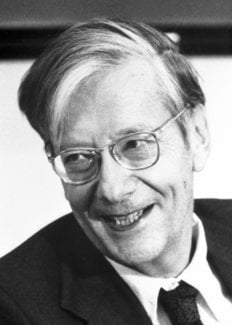
My parents, Auke Bloembergen and Sophia Maria Quint, had four sons and two daughters. I am the second child, born on March 11, 1920, in Dordrecht, the Netherlands. My father, a chemical engineer, was an executive in a chemical fertilizer company. My mother, who had an advanced degree to teach French, devoted all her energies to rearing a large family.
Before I entered grade school, the family moved to Bilthoven, a residential suburb of Utrecht. We were brought up in the protestant work ethic, characteristic of the Dutch provinces. Intellectual pursuits were definitely encouraged. The way of life, however, was much more frugal than the family income would have dictated.
At the age of twelve I entered the municipal gymnasium in Utrecht, founded as a Latin school in 1474. Nearly all teachers held Ph.D. degrees. The rigid curriculum emphasized the humanities: Latin, Greek, French, German, English, Dutch, history and mathematics. My preference for science became evident only in the last years of secondary school, where the basics of physics and chemistry were well taught. The choice of physics was probably based on the fact that I found it the most difficult and challenging subject, and I still do to this day. My maternal grandfather was a high school principal with a Ph.D. in mathematical physics. So there may be some hereditary factor as well. I am ever more intrigued by the correspondence between mathematics and physical facts. The adaptability of mathematics to the description of physical phenomena is uncanny.
My parents made a rule that my siblings should tear me away from books at certain hours. The periods of relaxation were devoted to sports: canoing, sailing, swimming, rowing and skating on the Dutch waterways, as well as the competitive team sport of field hockey. I now attempt to keep the body fit by playing tennis, by hiking and by skiing.
Professor L.S. Ornstein taught the undergraduate physics course when I entered the University of Utrecht in 1938. He permitted me and my partner in the undergraduate lab, J.C. Kluyver (now professor of physics in Amsterdam) to skip some lab routines and instead assist a graduate student, G.A. W. Rutgers, in a Ph.D. research project. We were thrilled to see our first publication, “On the straggling of Po-a-particles in solid matter”, in print (Physica 7, 669, 1940).
After the German occupation of Holland in May 1940, the Hitler regime removed Ornstein from the university in 1941. I made the best possible use of the continental academic system, which relied heavily on independent studies. I took a beautiful course on statistical mechanics by L. Rosenfeld, did experimental work on noise in photoelectric detectors, and prepared the notes for a seminar on Brownian motion given by J.M.W. Milatz. Just before the Nazis closed the university completely in 1943, I managed to obtain the degree of Phil. Drs., equivalent to a M.Sc. degree. The remaining two dark years of the war I spent hiding indoors from the Nazis, eating tulip bulbs to fill the stomach and reading Kramers’ book “Quantum Theorie des Elektrons und der Strahlung” by the light of a storm lamp. The lamp needed cleaning every twenty minutes, because the only fuel available was some left-over number two heating oil. My parents did an amazing job of securing the safety and survival of the family.
I had always harbored plans to do some research for a Ph.D. thesis outside the Netherlands, to broaden my perspective. After the devastation of Europe, the only suitable place in 1945 appeared to be the United States. Three applications netted an acceptance in the graduate school at Harvard University. My father financed the trip and the Dutch government obliged by issuing a valuta permit for the purchase of US$ 1,850. As my good fortune would have it, my arrival at Harvard occurred six weeks after Purcell, Torrey and Pound had detected nuclear magnetic resonance (NMR) in condensed matter. Since they were busy writing volumes for the M.I.T. Radiation Laboratory series on microwave techniques, I was accepted as a graduate assistant to develop the early NMR apparatus. My thorough Dutch educational background enabled me to quickly profit from lectures by J. Schwinger, J.H. Van Vleck, E.C. Kemble and others. The hitherto unexplored field of nuclear magnetic resonance in solids, liquids and gases yielded a rich harvest. The results are laid down in one of the most-cited physics papers, commonly referred to as BPP (N. Bloembergen, E.M. Purcell and R.V. Pound, Phys. Rev. 73, 679, 1948). Essentially the same material appears in my Ph.D. thesis, “Nuclear Magnetic Relaxation”, Leiden, 1948, republished by W.A. Benjamin, Inc., New York, in 1961. My thesis was submitted in Leiden because I had passed all required examinations in the Netherlands and because C.J. Gorter, who was a visiting professor at Havard during the summer of 1947, invited me to take a postdoctoral position at the Kamerlingh Onnes Laboratorium. My work in Leiden in 1947 and 1948 resulted in establishing the nuclear spin relaxation mechanism by conduction electrons in metals and by paramagnetic impurities in ionic crystals, the phenomenon of spin diffusion, and the large shifts induced by internal magnetic fields in paramagnetic crystals.
During a vacation trip of the Physics Club “Christiaan Huyghens” I met Deli (Huberta Deliana Brink) in the summer of 1948. She had spent the war years in a Japanese concentration camp in Indonesia, where she was born. She was about to start her pre-med studies. When I returned to Harvard in 1949 to join the Society of Fellows, she managed to get on a student hospitality exchange program and traveled after me to the United States on an immigrant ship. I proposed to her the day she arrived and we got married in Amsterdam in 1950. Ever since, she has been a source of light in my life. Her enduring encouragement has contributed immensely to the successes in my further career. After the difficult years as an immigrant wife, raising three children on the modest income of a struggling, albeit tenured, young faculty member, she has found the time and energy to develop her considerable talents as a pianist and artist. We became U.S. citizens in 1958.
Our children are now independent. The older daughter, Antonia, holds M.A. degrees in political science and demography, and works in the Boston area. Our son, Brink, has an M.B.A. degree and is an industrial planner in Oregon. Our younger daughter, Juliana, envisages a career in the financial world. She has interrupted her banking job to obtain an M.B.A. in Philadelphia.
In this family setting my career in teaching and research at Harvard unfolded: Junior Fellow, Society of Fellows 1949 – 1951; Associate Professor 1951- 1957; Gordon McKay Professor of Applied Physics 1957 – 1980; Rumford Professor of Physics 1974 – 1980; Gerhard Gade University Professor 1980 present. While a Junior Fellow, I broadened my experimental background to include microwave spectroscopy and some nuclear physics at the Harvard cyclotron. I preferred the smaller scale experiments of spectroscopy, where an individual, or a few researchers at most, can master all aspects of the problem. When I returned to NMR in 1951, there were still many nuggets to be unearthed. My group studied nuclear quadrupole interactions in alloys and imperfect ionic crystals, discovered the anisotropy of the Knight shift in noncubic metals, the scalar and tensor indirect nuclear spin-spin coupling in metals and insulators, the existence of different temperatures of the Zeeman, exchange and dipolar energies in ferromagnetic relaxation, and a variety of cross relaxation phenomena. All this activity culminated in the proposal for a three-level solid state maser in 1956.
Although I was well aware of the applicability of the multilevel pumping scheme to other frequency ranges, I held the opinion – even after Schawlow and Townes published their proposal for an optical maser in 1958 – that it would be impossible for a small academic laboratory, without previous expertise in optics, to compete successfully in the realization of lasers. This may have been a self-fulfilling prophesy, but it is a matter of record that nearly all types of lasers were first reduced to practice in industrial laboratories, predominantly in the U.S.A.
I recognized in 1961 that my laboratory could exploit some of the new research opportunities made accessible by laser instrumentation. Our group started a program in a field that became known as “Nonlinear Optics”. The early results are incorporated in a monograph of this title, published by W. A. Benjamin, New York, in 1965, and the program is still flourishing today. The principal support for all this work, over a period of more than thirty years, has been provided by the Joint Services Electronics Program of the U. S. Department of Defense, with a minimum amount of administrative red tape and with complete freedom to choose research topics and to publish.
My academic career at Harvard has resulted in stimulating interactions with many distinguished colleagues, and also with many talented graduate students. My coworkers have included about sixty Ph.D. candidates and a similar number of postdoctoral research fellows. The contact with the younger generations keeps the mind from aging too rapidly. The opportunities to participate in international summer schools and conferences have also enhanced my professional and social life. My contacts outside the academic towers, as a consultant to various industrial and governmental organizations, have given me an appreciation for the problems of socio-economic and political origin in the “real” world, in addition to those presented by the stubborn realities of matter and instruments in the laboratory.
Sabbatical leaves from Harvard have made it possible for us to travel farther and to live for longer periods of time in different geographical and cultural environments. Fortunately, my wife shares this taste for travel adventure. In 1957 I was a Guggenheim fellow and visiting lecturer at the École Normale Supérieure in Paris, in 1964 – 1965 visiting professor at the University of California in Berkeley, in 1973 Lorentz guest professor in Leiden and visiting scientist at the Philips Research Laboratories in the Netherlands. The fall of 1979 I spent as Raman Visiting Professor in Bangalore, India, and the first semester of 1980 as Von Humboldt Senior Scientist in the Institut für Quantum Optik, in Garching near Munich, as well as visiting professor at the College de France in Paris. I highly value my international professional and social contacts, including two exchange visits to the Soviet Union and one visit to the People’s Republic of China, each of one-month duration. My wife and I look forward to continuing our diverse activities and to enjoying our home in Five Fields, Lexington, Massachusetts, where we have lived for 26 years.
| Honors |
| Correspondent, Koninklijke Akademie van Wetenschappen, Amsterdam, 1956 |
| Fellow, American Academy of Arts and Sciences, 1956 |
| Member, National Academy of Sciences, Washington, D. C., 1959 |
| Foreign Honorary Member, Indian Academy of Sciences, Bangalore, 1978 |
| Associé Étranger, Académie des Sciences, Paris, 1980 |
| Guggenheim Fellow, 1957 |
| Oliver Buckley Prize, American Physical Society, 1958 |
| Morris E. Liebman Award, Institute of Radio Engineers, 1959 |
| Stuart Ballantine Medal, Franklin Institute, Philadelphia, 1961 |
| National Medal of Science, President of the United States of America, 1974 |
| Lorentz Medal, Koninklijke Akademie van Wetenschappen, Amsterdam, 1979 |
| Frederic Ives Medal, Optical Society of America, 1979 |
| Von Humboldt Senior Scientist, 1980 |
This autobiography/biography was written at the time of the award and first published in the book series Les Prix Nobel. It was later edited and republished in Nobel Lectures. To cite this document, always state the source as shown above.
Addendum, 1991
In June 1990 I retired from the faculty of Harvard University and became Gerhard Gade University Professor Emeritus. During the past decade I was also a visiting professor or lecturer for extended periods at the California Institute of Technology, at Fermi Scuola Nationale Superiore in Pisa, Italy, and at the University of Munich, Germany.
In 1991 I serve as President of the American Physical Society. I became an honorary professor of Fudan University, Shanghai, People’s Republic of China, and received honorary doctorates from Laval University, Quebec, the University of Connecticut and the University of Hartford. In 1983 I received the Medal of Honor from the Institute of Electrical and Electronic Engineers.
My research in nonlinear optics continued with special emphasis on interactions of picosecond and femtosecond laser pulses with condensed matter and of collision-induced optical coherences. My personal life and professional activities during the past decade have been a natural continuation of what I described in my autobiographical notes in 1981.
Nicolaas Bloembergen passed away on 5 September 2017.
Copyright © The Nobel Foundation 1991Nicolaas Bloembergen – Photo gallery
![Queen Beatrix of the Netherlands receives Nobel Laureates. [CC BY-SA 3.0 nl (http://creativecommons.org/licenses/by-sa/3.0/nl/deed.en)], via Wikimedia Commons](https://www.nobelprize.org/images/queen-beatrix-and-nobel-laureates-1983-3354-landscape-medium-gallery.jpg)
Queen Beatrix of the Netherlands receives Nobel Laureates: Nobel Laureate in Chemistry 1980 Paul Berg, Nobel Laureate in Physiology or Medicine 1974 Christian de Duve, Nobel Laureate in Physics 1979 Steven Weinberg, Queen Beatrix, Nobel Laureate in Chemistry 1967 Manfred Eigen and Nobel Laureate in Physics 1981 Nicolaas Bloembergen. Photo taken on 31 August 1983.
Source: Dutch National Archives. CC BY-SA 3.0 nl via Wikimedia Commons Photo: Rob C. Croes/Anefo
Kai M. Siegbahn – Photo gallery

Kai M. Siegbahn. Photo taken on 21 October 1981.
Source: Dutch National Archives. CC BY-SA 3.0 nl via Wikimedia Commons. Photo: Jan Collsiöö
Nicolaas Bloembergen – Nobel Lecture
Nobel Lecture, December 8, 1981
Nonlinear Optics and Spectroscopy
Read the Nobel Lecture
Pdf 187 kB
Arthur L. Schawlow – Nobel Lecture
Nobel Lecture, December 8, 1981
Spectroscopy in a New Light
Read the Nobel Lecture
Pdf 292 kB
Kai M. Siegbahn – Nobel Lecture
Nobel Lecture, December 8, 1981
Electron Spectroscopy for Atoms, Molecules and Condensed Matter
Read the Nobel Lecture
Pdf 474 kB
Arthur L. Schawlow – Other resources
Links to other sites
On Dr. Arthur Schawlow from American Institute of Physics
On Arthur Schawlow from Stanford University
‘From Maser to Laser’ from Bell Labs
Nicolaas Bloembergen – Interview
Interview transcript
Professor Bloembergen, welcome to this interview. Thank you for being here with us.
Nicolaas Bloembergen: It’s a pleasure to be here.
I have read in your autobiography that you must have been a child with a great desire to learn new things. Your siblings had to drag you away from the books. Was it so? Were you …?
Nicolaas Bloembergen: That’s correct, but I liked to read and I always liked challenges. So in fact I chose to study physics because I found it the most difficult topic in my gymnasium, the Latin school I went to in Utrecht.
In Holland where you were born.
Nicolaas Bloembergen: … in Holland, yeah, where I was born and raised.
And did that give you what you wanted, obviously, but how was it during your student’s year, did you feel it was a challenge?
Nicolaas Bloembergen: It’s still a challenge. I mean, it’s still a difficult topic, but I’m fascinated by the very curious correspondence between mathematics and physical phenomena, and that mathematics can describe so many phenomena with such accuracy. A professor Wigner, Eugene Wigner, a famous theoretician, he called that connection between mathematics and the real world uncanny.
Uncanny.
Nicolaas Bloembergen: Uncanny. And I think that’s a very good description.
I would like to come back a little bit to your youth years. You lived in Holland and grew up in Holland during the years of the Nazi occupation, and it was obviously a very difficult time. But you continued to study, yet it was very difficult to read, there was hardly any light at home and so on.
Nicolaas Bloembergen: What happened is that I passed my final qualifying exam. After that, the only thing to get a doctor’s degree you have to hand in a thesis and do independent research, but I passed all the formal examinations in early -43, two weeks before the German occupation forces closed down all Dutch universities. But I was at an enormous advantage at that time, because the older students had to decide whether to sign a declaration of loyalty to the occupation forces or else they would be transported as forced labourers to Germany, not in concentration camps but nevertheless forced labourers. And I didn’t have to make that choice, because legally, after having passed all the exams, I was not legally a student any more. So I could still live, and in fact I got on my identity papers a little stamp that I belonged to the fire brigade of the university. I had to protect the buildings. Purely a formal advantage.
You talk very nicely about your parents in your autobiography as well, the way they were trying to keep you children in good health and so on. Would you describe a little bit about that?
Nicolaas Bloembergen: My father went by bicycle and a little cart to get potatoes to feed his family, and he travelled for 50 kilometres or more. And then he exchanged objects for food, and so they did a wonderful job keeping the family alive.
After the war …
Nicolaas Bloembergen: Because young men couldn’t be in the streets. They would be picked up.
So you had to hide.
Nicolaas Bloembergen: I hid the last … we call it the hunger winter of 1944-45, when the offensive of the Allied near Arnhem, they didn’t succeed to cross the Rhine there, so we had to wait until the next spring.
After the war you eventually moved on and you came to America.
Nicolaas Bloembergen: Yes, my [INAUDIBLE] was in ruins, and it would be very hard to do significant research at a Dutch university immediately after the war, so at the suggestion of an older brother who was a lawyer, he said why don’t you write to some American universities, and that’s what I did.
You regretted that.
Nicolaas Bloembergen: Did you read that …
I saw a bit of that, yes, what happened after that?
Nicolaas Bloembergen: I chose three universities where I knew significant research was going on, but I decided those, on the basis of the Journal of Physical Review of 1939 because those were the last issues available in the Nederlands, until 45. And I picked three of them, and in retrospect they were all very good choices. I picked the University of Chicago, the University of California in Berkeley, and Harvard University. The University of Chicago never answered my letter, the University of California wrote back, it took about two weeks by airmail right after the war, to get across, and then two weeks to get an answer back, so after about a month I received a letter from the University of California in Berkeley which caught me by complete surprise.
They said they would like to admit me, but as long as the war was going on they couldn’t take non-American, people who were not American citizens. And in Europe, in Holland, the war was over, you know, had been VE Day, and we didn’t think about any further war. But actually, of course, there was this great fight in the Pacific between the United States and Japan still going on, and that just opened my eyes that the world was bigger than Europe. And then two weeks later the bomb on Hiroshima exploded, so then everybody realised that there was still a war going on. And so Harvard said just send some more letters of recommendation and copies of documents, and that’s what I did, and they admitted me, and it turns out I’ve stayed there almost ever since.
Yes. When you look at what you have achieved with your work and the way the laser, and its various application, the way it’s used today, what makes you most proud?
Nicolaas Bloembergen: I’ve been lucky that the two topics that have interested me have both lead to very important applications. In the case of nuclear magnetic resonance, the thesis data, in my thesis, concerned what is called nuclear magnetic relaxation in liquids and also some solid materials, but most importantly we measured the relaxation time of protons in water and aqueous solutions, the influence of viscosity and temperature, and those data are now the basis in which MRI pictures can be taken, because the nuclear magnetic moments of protons which are water molecules, it’s about 70% of the body, water, they measure small differences in relaxation time between healthy cells and tumorous cells and whatnot. And in blood vessels. So we are, my data was really very basic, to an application I didn’t foresee, nor did my thesis supervisor, Purcell, in fact nobody had an idea that MRI would come even as late as 1960.
And last year you received a Nobel Prize. Was it …?
Nicolaas Bloembergen: My teacher, Purcell. Yes, he shared the Nobel Prize with Felix Bloch in 1952 for the work on nuclear magnetic resonance in condensed matter, already in -52. And I feel that it was fully deserved, but I did a lot of the hard work and the data taking. And then later, when I got a Nobel Prize, I know that my students and graduate assistants did a lot of the work, to help me get the prize.
Is it often like that? It’s teamwork, when you …
Nicolaas Bloembergen: These were not big teams in the sense of high machines. They were small groups but of course there are lot of rather tedious laboratory procedures that have to be carried out, and that is often left for the graduate students, professors being too busy to spend the time on those details.
On one of your lectures that I listened in to you also told us about other uses of the laser that I was not totally aware of. Would you just mention a few that might not be so known to the public in general?
Nicolaas Bloembergen: As I said, the second item was going into optics and especially non-linear optics, which is the behaviour of light and propagation of light in media at very high light intensities. Those high intensities are only available from laser sources. So I was really interested in what one can do with lasers and I mentioned in my lecture that lasers are heavily used in surgery and in optical communications systems. Those are the two large scale applications that affect many people, everywhere in the world, because the optical fibre communications systems which, incidentally, use little lasers of … produced by [INAUDIBLE] inside the fibre, make the world very small, and we can now e-mail to anybody, anywhere in the world, we can dial up the worldwide web and all this information flows over large distances under the Pacific and Atlantic ocean, if necessary, to other points on the earth.
So those are the two big ones, and there are smaller and a little more trivial ones, like read out at supermarket checkout counters. You know, you have a code on each article, it’s read by a little laser and so even with the ambient light it doesn’t matter, the reflection on the code gives the information of what article and how much it cost. And the other, which seems rather trivial, but is very important, is to use laser beams which propagate straight lines over long distances. They are used to lay pipelines, including trivial things like sewer lines. I lived in a suburban neighbourhood and there were no sewers yet, and then in 1972 they laid out the sewer line with laser beams. That saves a lot of manpower, you need only one person with a mirror somewhere to do it. But of course, all the major oil pipelines and gas pipelines, they are all laid out by laser beams, and any big building that goes up, the verticals and horizontals are all checked with laser beams. So in the constructing industry it is a very widespread use, too.
Did you think it would have such an impact?
Nicolaas Bloembergen: No. For several years, in the early 1960s, my colleague, Art Schawlow, with whom I shared the prize in 1981, he said the laser is a solution looking for a problem. He had a sense of humour. And that was really true, and all the applications really came gradually in the next decade.
The laser technique is also used in the military industry, of course.
Nicolaas Bloembergen: That was an application that was recognised very early by people concerned with defence.
Have you had any thoughts about whether scientists have any responsibility …?
Nicolaas Bloembergen: Certainly, but what do you do? You know, science itself is basically neutral, and then you get the problem, should I refuse to help to defend my country? So I was advising government committees on the use of laser beams in trying to shoot down intercontinental missiles. And soon thereafter we realised that it would be very difficult, and then 20 years later in 1981 President Reagan instituted the strategic defence initiative and the idea was to put lasers in the upper atmosphere and just beyond in space, and try to shoot down incoming missiles, supposedly, which might be fired by the Soviet Union. And then we wrote a report because everybody felt that that would not be feasible. Neither scientifically nor technologically.
But many people were afraid to express, well, they expressed their opinion, they weren’t afraid to express their opinion, but then they got the answer you haven’t studied the problem. So the American Physics Society said we’ll go and make a scientific study of the issues involved and then we’ll come out with a public report. But they selected 14 or 15 people and I and Kumar Patel were co-chairmen of that committee and the reason these people were chosen is because they had never gone very open in public of what their political opinions were. And we were not supposed to give any political opinion, just as scientific, purely scientific evaluation.
And your opinion was that it wasn’t feasible.
Nicolaas Bloembergen: And then we studied the problem for a year and a half or two years. We all had access to top secret data, because if we didn’t critics would say well, you’ve written this report, but you don’t know the secrets. And so if you knew what I know your conclusions would be the opposite. And so, in order to avoid that, we had access to all the government installations and government workers who worked on the problem. So we could judge … You know, initially, I really thought there are certain things I don’t know because they have been kept secret, and maybe there is something that might make the strategic defence initiative possible. But we found that that was not the case.
It wasn’t.
Nicolaas Bloembergen: And we wrote a report, and the report had to be public, and of course it had to be cleared that we didn’t spill any secrets, and it was refused twice. First by the security agent of the SDI itself, but then they considered it so important that after he cleared it also the security agent of the Ministry of Defence had to evaluate it again. And that caused a delay of eight months, but it did come out, and we wrote the conclusions and even in the 20 years that have since past, almost 20 years, 15 years, everything is still valid, all we said.
So you don’t see that there will be in the near future …
Nicolaas Bloembergen: No, no strategic defence, well, we don’t need it any more because there is not a large nation that would fire a hundred missiles at a time. What we are worried about now is trying to shoot down a single intercontinental missile from a terrorist group or from a rogue nation, or whatever, and even that isn’t still very hard to do. The method they pursue now doesn’t involve lasers. They involve … So our laser report has stood the test of time. It’s still valid.
You have travelled wide and far and have had lots of contacts with universities all over the world and with other scientists all over the world. What has it given you, and why has it been important to you to be so global, so international?
Nicolaas Bloembergen: Well, a university like Harvard University attracts many foreign students and the brightest of them, and I find it interesting to see people from … you know, I myself was an immigrant, into the United States, and so I had many students from all parts of the world, and it’s nice to visit them later and see how they are doing in their respective careers. So we always enjoyed having an international community in the laboratory, involving Frenchmen, German, Norwegian, Italy, and people from the East, Japan, and especially China, different parts of China, some Taiwan, some Hong Kong, some mainland China, very interesting.
And that was done at a time when it wasn’t so much working together, I would say, as it might be today. What kind of creativity does it create when you …?
Nicolaas Bloembergen: I even had some Russian post docs.
I believe so, yes.
Nicolaas Bloembergen: Even during the time of the Cold War I was allowed to entertain Russian visitors.
That must have been fascinating.
Nicolaas Bloembergen: Yes.
What kind of creativity did it create? Is it a special community this scientific …?
Nicolaas Bloembergen: It’s an intellectual community, and these people usually got on, very interesting conversations. In fact, one was between a French student and a lady from Bulgaria, and they communicated in broken English. The Frenchman’s conversation in English was very hard to follow, for me. And the Bulgarian lady the same. But the two worked together on a science project and I don’t know, they communicated in very broken English.
They understood each other.
Nicolaas Bloembergen: Yes, that’s right.
Is it important to work with young people, I mean, to keep one’s spirit, one’s creativity, do you enjoy that?
Nicolaas Bloembergen: Yes, I mean that is the only way not to go to sleep. During old age. No, that is very important to have this. That I think is the most important aspect of this meeting here in Lindau, that there are all these young people to interact with, too.
Do you still have lectures, do you still do …
Nicolaas Bloembergen: No, I’m 84, I get … I give an occasional lecture like I did yesterday here, mostly on the history of a scientific topic.
Next year it will be the year of Einstein. What relationship do you have to him, and why is it important to highlight him, if you look in a broader sense to the public in general?
Nicolaas Bloembergen: It’s very important to take opportunities to involve the public with science and the centenary of Einstein papers is certainly a worthy excuse to focus attention on scientific efforts. But Einstein wrote a popular book, Einstein and Infeld, I forgot the title, I read it in German and it was originally written in German, and I was in high school, gymnasium and that fascinated me very much, and he explained in simple terms the ideas behind the relativity theory.
Is it difficult in general do you think for the public at large to understand the need for scientific research?
Nicolaas Bloembergen: Weill it is, but you have to ask them what would you do without computers, without worldwide web, without, you know, cell phones, and so on. Or even without electricity, yeah? Let’s go back further. And it was all started by physicists.
Professor, is there anything you would like to add at the end, in general, something you would like to say to young students who might be looking into the idea of becoming scientists and going into research? What do they need, what kind of spirit …?
Nicolaas Bloembergen: The first thing they need is curiosity. If they are not interested in trying to get an answer to a question they have posed for themselves, or somebody else has posed to them, if they are not interested then, and are not curious to find an answer, don’t go into science. And also don’t go into science unless you have a strong perseverance, because science is really usually only a few per cent inspiration and the rest is perspiration. Hard work.
Hard work. Thank you so much.
Nicolaas Bloembergen: You’re welcome.
Did you find any typos in this text? We would appreciate your assistance in identifying any errors and to let us know. Thank you for taking the time to report the errors by sending us an e-mail.