The Nobel Prize in Literature has been awarded 118 times to 122 Nobel Prize laureates between 1901 and 2025. Click on the links to get more information.
“for his uncompromising and compassionate penetration of the effects of colonialism and the fate of the refugee in the gulf between cultures and continents”
“for her unmistakable poetic voice that with austere beauty makes individual existence universal”
The Nobel Center is granted a building permit
The Stockholm City Planning Committee has granted a building permit for the Nobel Center at Slussen. The decision was made on 26 March and made public on 8 April 2026.
“I am pleased that our application was considered comprehensive and that it is in line with the detailed development plan and applicable legislation. This is an important step for us. We continue our efforts to create a house that is warm, welcoming and open to everyone. A place with activities designed to inspire interest and engagement in science, literature, and peace,” says Hanna Stjärne, Executive Director of the Nobel Foundation.
As supporting material for the decision was an opinion from the Council of Urban Aesthetics where they write: “The Council of Urban Aesthetics welcomes that this location will be used for public activities related to the Nobel Prize instead of being used as a regular office building. The Council is of the opinion that the proposal represents an example of the kind of high-quality architecture that befits the international gravitas and value of Nobel.”
Others have highlighted the importance of creating a public and accessible building where visitors from all over the world can explore the Nobel Prizes and their significance – in the past, today and for future generations.
“There is only one city where the most prominent scientists and authors have come for 125 years to be celebrated for their efforts. And it is almost impossible to overemphasise the importance of the Nobel Prize finally being given a fitting home in Stockholm,” says Daniella Waldfogel, CEO of the Stockholm Chamber of Commerce.
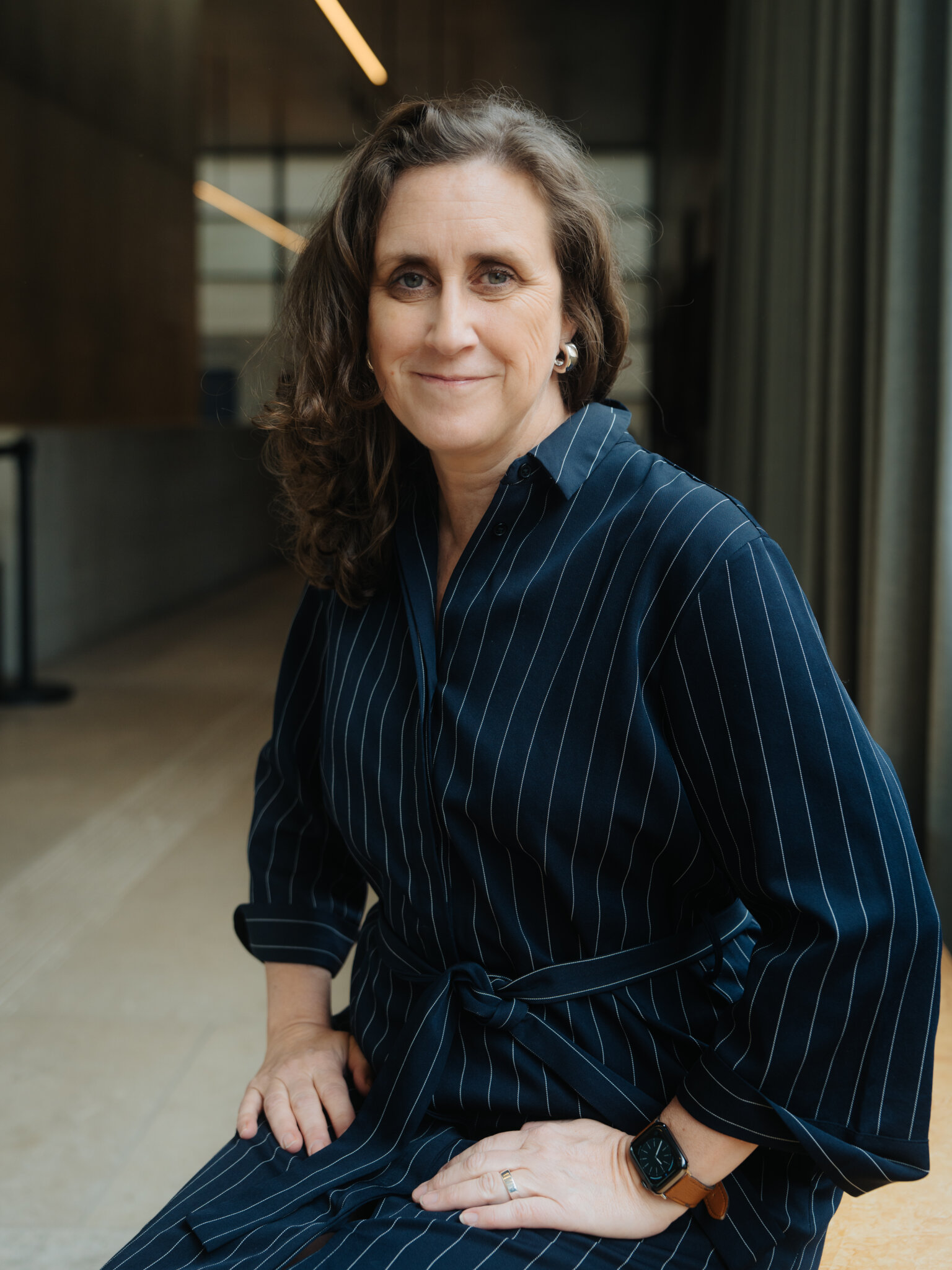
“Only a few projects inspire both joy and trust in the future. The plans for the new Nobel Center at Slussen represent such a project. The architecture is based on two of the oldest inventions made by humans: brick and textile. For me, it is particularly gratifying to see how an international cultural project draws inspiration from Nordic handicraft traditions and from our collections”, says Sanne Houby-Nielsen, Museum Director of the Nordic Museum.
At the Nobel Center, there will be space for exhibitions, programs, and experiences covering everything from black holes and medical advances to literary classics and poverty reduction. The building will also include an auditorium where lectures, scientific symposia, and various cultural events will be held.
“A Nobel house may offer people brand new opportunities to approach science through captivating and engaging stories of discoveries that have fundamentally improved people’s lives. By means of exhibitions, lectures, talks and interactive programmes, the building can become a meeting place where researchers, young people, teachers, politicians and journalists engage in meaningful dialogues. Here, a setting is created to inspire curiosity, broaden perspectives and increase our understanding of the role of research in society,” says Annika Östman Wernerson, President of Karolinska Institutet.
Tomas Tranströmers Nobelprismedalj och diplom överlämnade till Nobelprismuseet
Nobelprismedaljen och diplomet som tilldelades Tomas Tranströmer år 2011 har donerats till Nobelprismuseet. Gåvan belyser arvet efter en av samtidens mest hyllade poeter och kommer att berika upplevelsen för museibesökare samt fungera som en ingång för att berätta om hans liv och verk.
Tomas Tranströmer (1931–2015) var en av vår tids största poeter. Hans dikter genomlyser verkligheten med både skärpa och ömhet. 2011 belönades han med Nobelpriset i litteratur ”för att han i förtätade, genomlysta bilder ger oss ny tillgång till det verkliga”.
Tranströmers Nobelprismedalj och diplom har nu donerats till museet av hans hustru, Monica Tranströmer, i samband med ett publikt samtal på Nobelprismuseet där hon berättade om sin mans livslånga skrivande och poetiska universum.
”Tomas Tranströmers Nobelprismedalj och diplom är fantastiska konstföremål i sig själva. De ger oss också en ny utgångspunkt för att berätta om Tranströmer och hans poesi, som berikat så många läsare i Sverige och utomlands.”
Anna Rastner, museichef Nobelprismuseet
På diplomets vänstra sida finns ett konstverk skapat av konstnären John Stenborg och på högersidan kalligrafi av kalligrafen Annika Rücker. Målningen är kopplad till Tranströmers person och knyter an till hans musikintresse. Den föreställer noter som bildar ett spelbart musikstycke.
”Jag vill ändå säga att Tranströmers diplombild är kanske den av Nobelpristagarnas bilder jag är mest stolt över. Intrikat och enkel på samma gång och spelbar som notbild för enhandskomposition.”
John Stenborg, konstnär
Tranströmer var även en begåvad pianist. Efter en stroke i slutet av livet blev han högersidigt förlamad och kunde därefter endast spela piano med vänsterhanden.
Tranströmer’s medal and diploma presented to the Nobel Prize Museum
The Nobel Prize medal and diploma awarded to Tomas Tranströmer in 2011 have been donated to the Nobel Prize Museum. The gift highlights the legacy of one of the most celebrated poets of our time and will enhance the museum experience for visitors as well as serve as an entry point for telling the story of his life and work.
Tomas Tranströmer (1931–2015) was one of the greatest poets of our time. His poems illuminate reality with both sharpness and tenderness. In 2011, he was awarded the Nobel Prize in Literature “because, through his condensed, translucent images, he gives us fresh access to reality.”
Tranströmer’s Nobel Prize medal and diploma have now been donated to the museum by his wife, Monica Tranströmer, in connection with a public conversation at the Nobel Prize Museum in which she spoke about her husband’s lifelong writing and poetic universe.
“Tomas Tranströmer’s Nobel Prize medal and diploma are magnificent works of art in themselves. They also give us a new starting point for sharing the story of Tranströmer and his poetry, which has enriched so many readers in Sweden and abroad.”
Anna Rastner, museum director, Nobel Prize Museum
On the left side of the diploma is an artwork created by the artist John Stenborg, and on the right side calligraphy by the calligrapher Annika Rücker. The painting is connected to Tranströmer’s personality and reflects his interest in music. It depicts notes that form a playable musical piece.
“I still want to say that Tranströmer’s diploma image is perhaps the one among the Nobel laureates’ images that I am most proud of. Intricate and simple at the same time, and playable as a musical score for a one-handed composition.”
John Stenborg, artist
Tranströmer was also a gifted pianist. After a stroke late in life, he was paralysed on his right side and could thereafter play the piano only with his left hand.
The 2026 Nobel Prize announcements
This year’s Nobel Prize announcements will take place from 5-12 October. All prize announcements will be broadcast live on the official digital channels of the Nobel Prize. More info about terms of use. In-depth information about the prizes will be published at www.nobelprize.org.
The prize-awarding institutions have decided to announce their 2026 prize decisions as follows:
PHYSIOLOGY OR MEDICINE
Monday, 5 October, 11:30 CEST at the earliest The Nobel Assembly at Karolinska Institutet, Wallenbergsalen, Nobel Forum, Nobels väg 1, Solna www.nobelprizemedicine.org [email protected]
PHYSICS
Tuesday, 6 October, 11:45 CEST at the earliest The Royal Swedish Academy of Sciences (Kungl. Vetenskapsakademien), Session Hall, Lilla Frescativägen 4A, Stockholm www.kva.se/pressroom [email protected]
CHEMISTRY
Wednesday, 7 October, 11:45 CEST at the earliest The Royal Swedish Academy of Sciences, Session Hall, Lilla Frescativägen 4A, Stockholm www.kva.se/pressroom [email protected]
Friday, 9 October, 11:00 CEST The Norwegian Nobel Committee, The Norwegian Nobel Institute (Norska Nobelinstitutet), Store Sal, Henrik Ibsens gate 51, Oslo www.nobelpeaceprize.org [email protected]
SVERIGES RIKSBANK PRIZE IN ECONOMIC SCIENCES IN MEMORY OF ALFRED NOBEL
Monday, 12 October, 11:45 CEST at the earliest The Royal Swedish Academy of Sciences, Session Hall, Lilla Frescativägen 4A, Stockholm www.kva.se/pressroom [email protected]
Media wishing to attend the announcements should apply to the respective prize-awarding institution in the early fall.
A home for the unique legacy of Alfred Nobel is taking shape
Today, the Nobel Foundation presents the first design of the Nobel Center project – a public building for science, literature and peace. It will be an international symbol of knowledge, focusing on the Nobel Prize laureates’ stories and groundbreaking achievements. The building is designed by David Chipperfield Architects, and the project is made possible thanks to generous donations from Erling-Persson Foundation and Knut and Alice Wallenberg Foundation.
The new building is to be constructed along Stadsgårdskajen at Slussen in Stockholm, Sweden, thus facing Gamla stan, Skeppsholmen and Djurgården. By 2031, visitors will be able to experience Alfred Nobel’s unique legacy in a completely new way when his handwritten will is to be exhibited permanently for the first time. People from all over the world will also be able to explore exhibitions, attend lectures, engage in dialogue and take part in cultural events covering everything from black holes and medical advances to literary classics and how to combat poverty.
“The new Nobel house will serve as an international symbol of knowledge – warm, welcoming and open to everyone. The efforts of the Nobel Prize laureates show how knowledge may change our world. What is impossible today may become possible tomorrow. Our goal is to make this power available to more people. It will be a house for science, literature and peace, a power hub for what the Nobel Prizes represent and a source of inspiration not only for current visitors but also for future generations,” says Hanna Stjärne, Executive Director of the Nobel Foundation.
Nobel Prize laureates, researchers, students, schoolchildren and visitors from Sweden and the rest of the world will visit the house. The Nobel Center will also serve as a basis for the international interdisciplinary meetings linked to the Nobel Prize that are currently organised around the world.
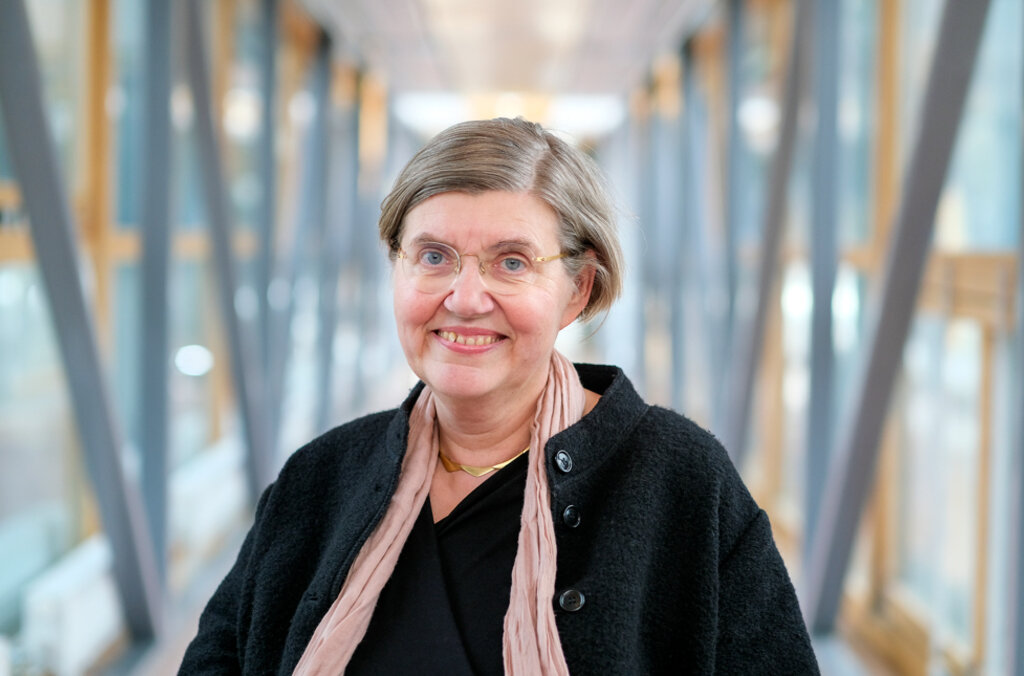
“The new Nobel house will become an important meeting place, a hub in international academia where Sweden, due to the strong appeal of the Nobel Prize, occupies a position at the very centre of the knowledge and science society. This is a house where knowledge is generated, where research is shared and perspectives are challenged, for encounters between Nobel Prize laureates and students, between the foremost experts on current research within the fields of the Nobel Prizes and a curious public,” says Astrid Söderbergh Widding, Chair of the Nobel Foundation.
Construction will begin already next year. The building is designed by David Chipperfield Architects Berlin. It consists of four interconnected volumes that relate to the buildings of Södermalm and the size and height of the buildings in Gamla stan, on the other side of the water. With terraces on the roofs and in front of the entrance, new meeting spots are created in Stockholm with a fantastic view over the waters of Saltsjön and Lake Mälaren. The public space in front of the building continues into the entrance level, open and transparent, with entrances to the north and south as well as a foyer with a shop and restaurant.
The choice to use a wooden frame, reclaimed bricks and other materials has been made to reduce the impact on the climate. The facade of the building is made of brick, a material that has characterised the architecture in Stockholm for centuries. The reused brick offers a sense of permanence and gravitas. The red shade is found in Stockholm’s classic brick buildings, such as City Hall.
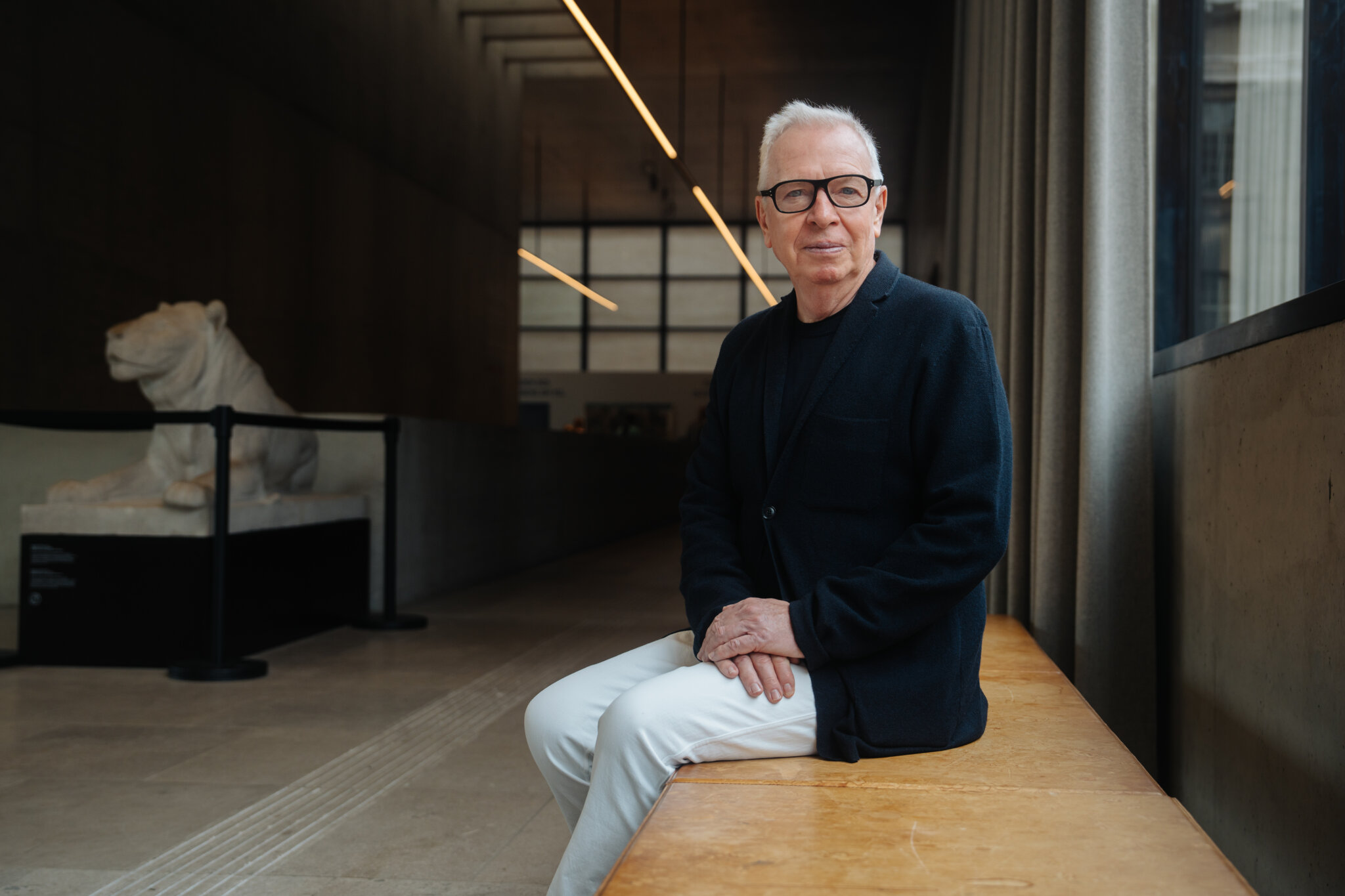
“This project offers the opportunity to create the first dedicated home for the activities surrounding the Nobel Prize. Conceived as open house for science, literature and dialogue, we have sought to design a building that fulfils this responsibility on several scales. Shaped by its prominent location on the Slussen waterfront, it has a distinctively civic presence rooted in its location and daily life of the city, while also reflecting the broader significance of the Nobel Prize. At a time when expertise and informed debate are more vital than ever, our hope is that the Nobel Center will stand as a resilient space of knowledge and exchange,” says Sir David Chipperfield, Founder of David Chipperfield Architects.
The funding is secured
The Nobel Center project is funded by Erling-Persson Foundation and Knut and Alice Wallenberg Foundation. These two foundations donate a total of SEK 2.3 billion, evenly split. These funds will be used to construct the building and create the extensive permanent exhibition focusing on Alfred Nobel, the history of the Nobel Prize and how the laureates’ groundbreaking efforts have shaped our world. The Nobel organisation will cover the remaining funds for the construction. Total cost is estimated of just over SEK 2.5 billion.
“The Nobel Center will serve as an important venue for knowledge, inspiration and new perspectives, not only for people living in Sweden but also internationally. The Nobel Prize enjoys a strong position globally already today and highlights the importance of science, culture and peace efforts when it comes to positive social development. The Nobel Center will make these values available to an even wider audience, while also inspiring and contributing to generating new generations of researchers in Sweden, which is crucial for us as a knowledge nation. The fact that this project is now entering the next phase is very satisfying, and for us at Erling-Persson Foundation, it feels important to, together with Knut and Alice Wallenberg Foundation, continue supporting and contributing to the realisation of this important initiative,” says Stefan Persson, Chair of Erling-Persson Foundation.
“The fact that the funding for the Nobel Center is now secured constitutes an important step for Sweden as a knowledge and research nation. The Nobel Prize represents curiosity, courage and a long-term perspective – values that not only strengthen Swedish research and education but also make our country more attractive to the most talented researchers and students. We look forward to, together with Erling-Persson Foundation, the Nobel Foundation and the City of Stockholm, creating a place in the middle of Stockholm accessible to everyone and capable of inspiring new generations and generating dialogues across borders,” says Peter Wallenberg Jr, Chair of Knut and Alice Wallenberg Foundation.
The new inspiration exhibition, which opens on 15 January at the Nobel Prize Museum in Gamla stan, showcases the Nobel Center project and offers visitors an insight into the work that will be carried out in the coming years. Today is also when the building permit application for the project is submitted to the City of Stockholm. There is already an approved detailed development plan for the site that specifies the framework for how the building is to be designed. Construction is scheduled to start in 2027 and the building will be inaugurated in 2031.
The building will focus on public activities and be open to everyone, all year round.
The Nobel Prize Museum will move to the new building, and the operations at Slussen will be financed by means of self-generated revenues originating from, for example, ticket sales, state and municipal support, as well as through collaborations with sponsors and partners, thus similarly to how the Nobel Prize Museum is currently financed.
The Nobel Prize award ceremony will still take place in Konserthuset Stockholm and the Nobel Prize banquet in City Hall.
David Chipperfield Architects in Berlin is commissioned as the architect for the Nobel Center at Slussen in Stockholm.
The building and permanent exhibition are funded by Erling-Persson Foundation and Knut and Alice Wallenberg Foundation together with the Nobel organisation. The two foundations donate a total of SEK 2.3 billion, evenly split.
Constructing the building, including the new permanent exhibition, is estimated to cost just over SEK 2.5 billion.
The gross area of the building is 13,000 sqm.
Construction starts in 2027 and the building will open in 2031.
The Nobel Center will be built on the property Södermalm 7:87 (Hamnmästaren) along Stadsgårdskajen at Slussen. This property was originally intended for a larger office building, for which there is already an approved detailed development plan. The detailed development plan specifies clear and specific frameworks concerning the shape, height and width of the building.
Quotes about Nobel Center
Here you can find quotes about the Nobel Center project in Stockholm.
Astrid Söderbergh Widding.
“The new Nobel house will become an important meeting place, a hub in international academia where Sweden, due to the strong appeal of the Nobel Prize, occupies a position at the very centre of the knowledge and science society.
This is a house where knowledge is generated, where research is shared and perspectives are challenged, for encounters between Nobel Prize laureates and students, between the foremost experts on current research within the fields of the Nobel Prizes and a curious public.” – Astrid Söderbergh Widding, Chair of the Nobel Foundation
“There is only one city where the most prominent scientists and authors have come for 125 years to be celebrated for their efforts. And it is almost impossible to overemphasise the importance of the Nobel Prize finally being given a fitting home in Stockholm.”
Daniella Waldfogel, CEO of the Stockholm Chamber of Commerce
“One of the things that the Nobel Center will do is allow you to see all these inventions, innovations and philosophies from the past that have now been carried forward to have such a dramatic impact on where we are now. And if you can make that connection from then to now, I think many young people can make the connection from now to the future, which is where they come in.” – David MacMillan, Nobel Prize in Chemistry 2021
“The Nobel Center will serve as an important venue for knowledge, inspiration and new perspectives, not only for people living in Sweden but also internationally. The Nobel Prize enjoys a strong position globally already today and highlights the importance of science, culture and peace efforts when it comes to positive social development.
The Nobel Center will make these values available to an even wider audience, while also inspiring and contributing to generating new generations of researchers in Sweden, which is crucial for us as a knowledge nation. The fact that this project is now entering the next phase is very satisfying, and for us at the Erling-Persson Foundation, it feels important to, together with the Knut and Alice Wallenberg Foundation, continue supporting and contributing to the realisation of this important initiative.”
Stefan Persson, Chair of the Erling-Persson Foundation
“The new Nobel house will serve as an international symbol of knowledge – warm, welcoming and open to everyone. The efforts of the Nobel Prize laureates show how knowledge may change our world. What is impossible today may become possible tomorrow.
Our goal is to make this power available to more people. It will be a house for science, literature and peace, a power hub for what the Nobel Prizes represent and a source of inspiration not only for current visitors but also for future generations.” – Hanna Stjärne, Executive Director of the Nobel Foundation
“The new Slussen is being developed into one of Stockholm’s most vibrant places and the future home of a world-renowned destination featuring stories of discoveries and progress for the greatest benefit to humankind. In collaboration with the Nobel Center, a unique space is being created where visitors, through encounters with science, art, and history, can experience and engage in conversations about human life from past to future.”
Karin Wanngård (S), Finance Commissioner of the City of Stockholm
“This project offers the opportunity to create the first dedicated home for the activities surrounding the Nobel Prize. Conceived as open house for science, literature and dialogue, we have sought to design a building that fulfils this responsibility on several scales.
Shaped by its prominent location on the Slussen waterfront, it has a distinctively civic presence rooted in its location and daily life of the city, while also reflecting the broader significance of the Nobel Prize. At a time when expertise and informed debate are more vital than ever, our hope is that the Nobel Center will stand as a resilient space of knowledge and exchange.” – David Chipperfield, Founder of David Chipperfield Architects
“The fact that the funding for the Nobel Center is now secured constitutes an important step for Sweden as a knowledge and research nation. The Nobel Prize represents curiosity, courage and a long-term perspective – values that not only strengthen Swedish research and education but also make our country more attractive to the most talented researchers and students. We look forward to, together with the Erling-Persson Foundation, the Nobel Foundation and the City of Stockholm, creating a place in the middle of Stockholm accessible to everyone and capable of inspiring new generations and generating dialogues across borders.”
Peter Wallenberg Jr, Chair of the Knut and Alice Wallenberg Foundation
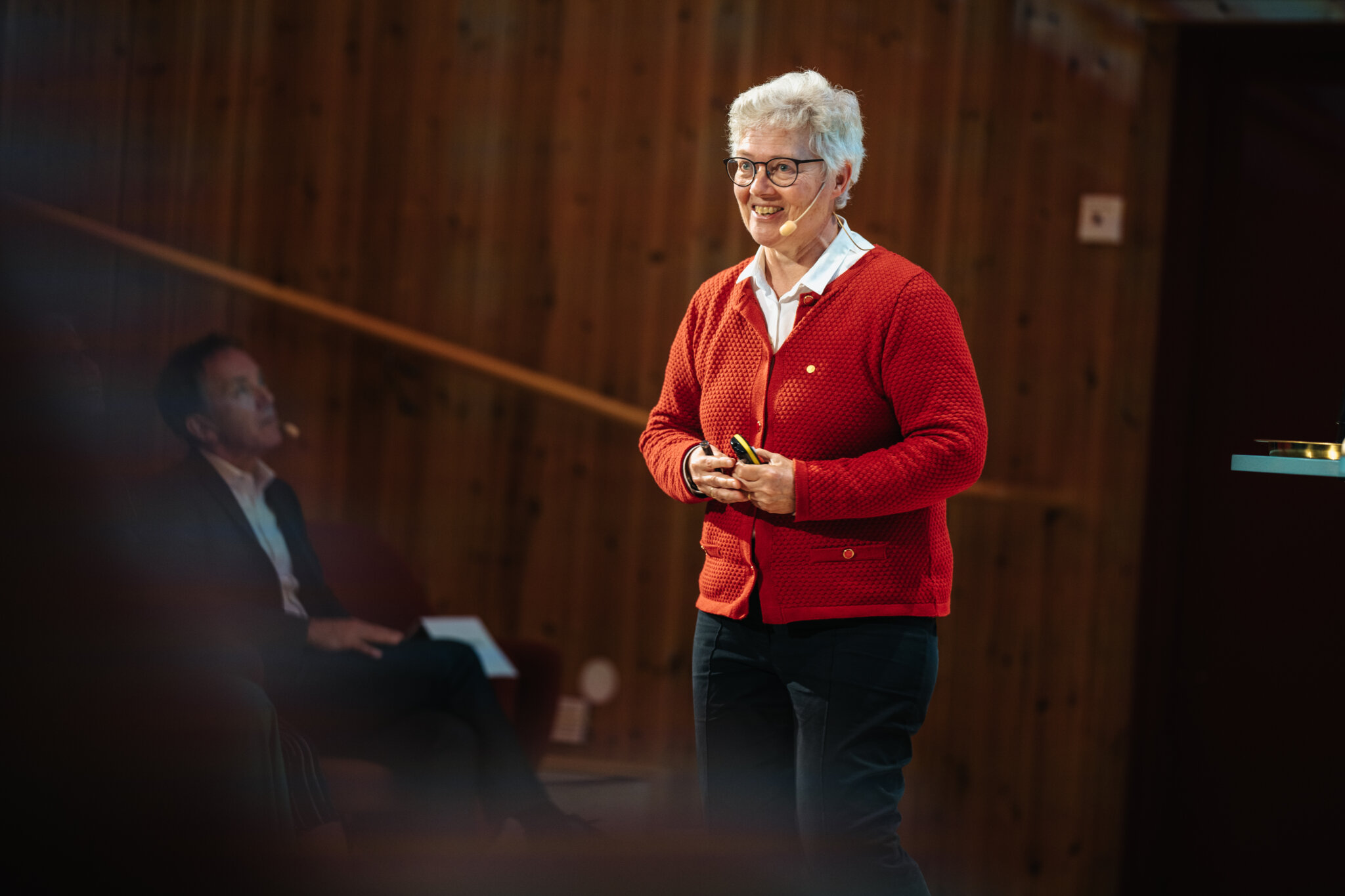
“I think that the new Nobel Center can be a great place to promote contact between scientists and science in general, and the young generation, so in my view, the most important goal of this center is to inspire the new generation in science, literature, and peace.” – Anne L’Huillier, Nobel Prize in Physics 2023
“As a hub for Alfred Nobel’s legacy and the Nobel Prizes, the Nobel house will attract everyone curious about the research and achievements behind the prizes. The Royal Swedish Academy of Sciences looks forward to collaborating with the Nobel Foundation to fill the house with exciting and groundbreaking research and activities that spread knowledge. As researchers we are delighted to share how fascinating the world of research and science truly is.”
Ellen Moons, Secretary General, the Royal Swedish Academy of Sciences
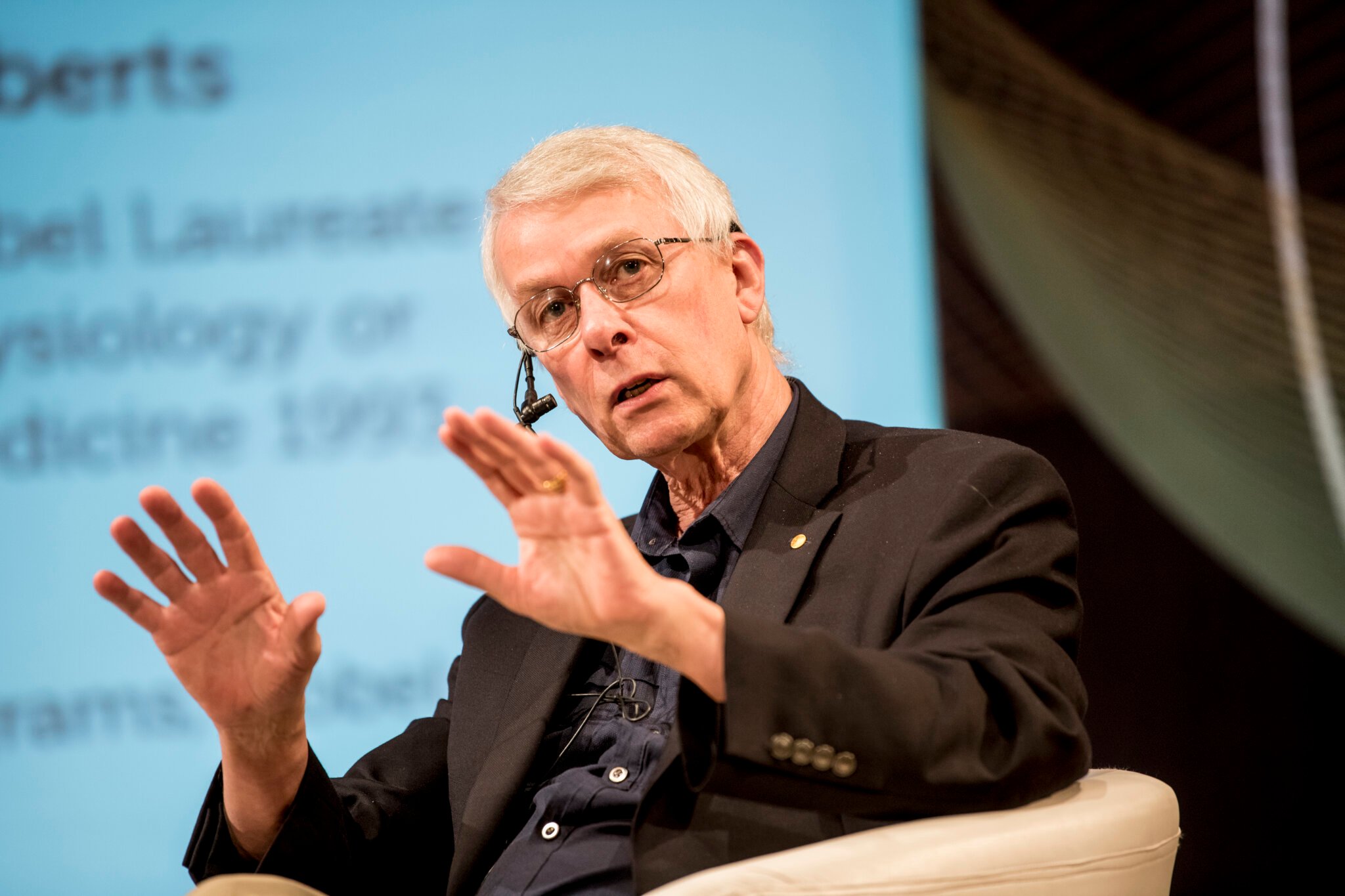
“It’s important to let young people know what it means to be a scientist and how, if you follow through, you can be lucky enough to make major discoveries – and if you’re unbelievably lucky, one of these discoveries may lead to a Nobel Prize.” – Richard Roberts, Nobel Prize in Physiology or Medicine 1993
“As one of the most prominent buildings in the capital, the Nobel Center will constitute an architectural addition of international magnitude. Through David Chipperfield’s signature architecture, contemporary design is fused together with culturally valuable environments in a responsible and obvious manner – a particularly important quality in a city characterised by historical layers.”
“In this building, we will be able to closely explore the achievements of the Nobel Prize laureates and their great significance for how we understand the world, humankind and the development of society.” – Thomas Perlmann, Secretary General of the Nobel Assembly at Karolinska Institutet and the Nobel Committee for Physiology or Medicine
“A Nobel Center can further highlight the importance of groundbreaking research and the benefits it can bring to society. It will also serve as an important meeting point for researchers and visitors from around the world.”
Lotta Edholm, Minister for Upper Secondary School, Higher Education and Research
“Only a few projects inspire both joy and trust in the future. The plans for the new Nobel Center at Slussen represent such a project. The architecture is based on two of the oldest inventions made by humans: brick and textile. For me, it is particularly gratifying to see how an international cultural project draws inspiration from Nordic handicraft traditions and from our collections.” – Sanne Houby-Nielsen, Museum Director of the Nordic Museum
Sanne Houby-Nielsen, Museum Director of the Nordic Museum. Photo: Peter Segemark, Nordiska museet
“A Nobel house may offer people brand new opportunities to approach science through captivating and engaging stories of discoveries that have fundamentally improved people’s lives. By means of exhibitions, lectures, talks and interactive programmes, the building can become a meeting place where researchers, young people, teachers, politicians and journalists engage in meaningful dialogues. Here, a setting is created to inspire curiosity, broaden perspectives and increase our understanding of the role of research in society.”
Annika Östman Wernerson, President of Karolinska Institutet
Jan-Olof Jacke, Director General, Confederation of Swedish Enterprise. Photo: Kate Gabor
“The Nobel Center is an investment in future knowledge and in young people’s curiosity. Research and innovation are crucial for the growth of Swedish industry and for strengthening Sweden’s international competitiveness. By creating a meeting place for research, education and entrepreneurship, the Nobel Center contributes to the ideas and collaborations that shape the future.” – Jan-Olof Jacke, Director General, Confederation of Swedish Enterprise
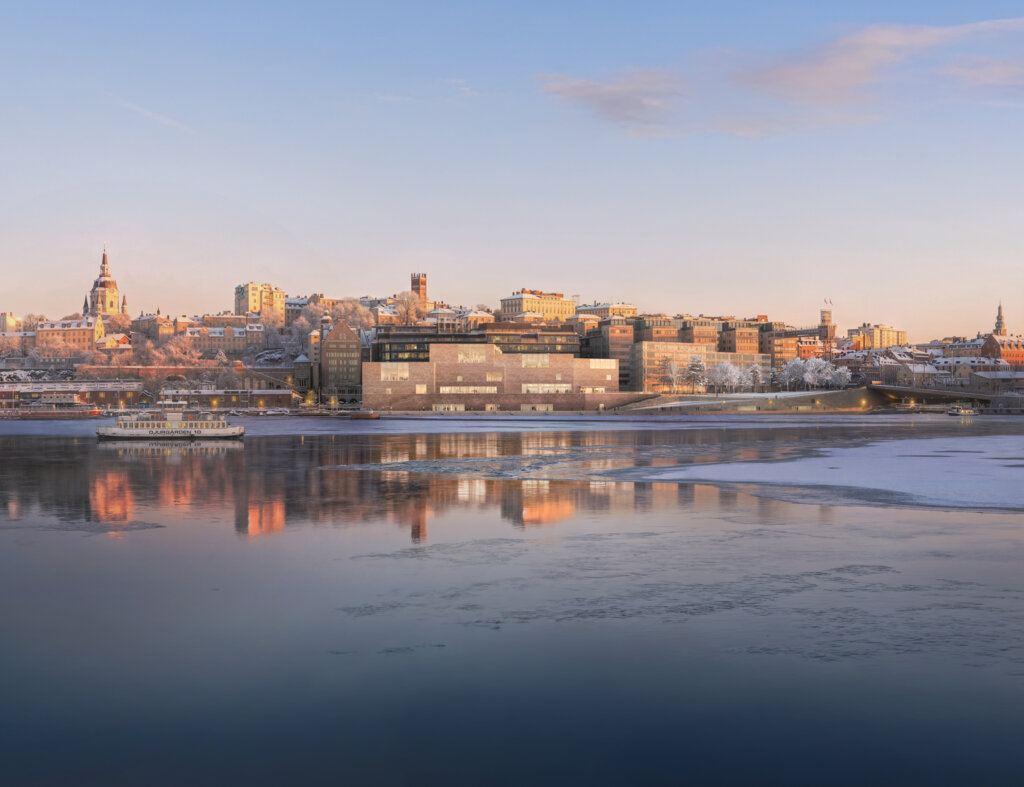
Panoramic view from the north. The Nobel Center offers a new landmark on the waterfront in the Swedish capital. An international symbol of knowledge and a public house for science, literature and peace. The building is located along Stadsgårdskajen and the future museum promenade by the waterfront, easily accessible for everyone by public transport, on foot, by bicycle or by boat.
View from the water along the quay. The Nobel Center consists of four interconnected volumes that relate to the buildings of Södermalm and the size and height of the buildings in Gamla stan, on the other side of the water. The choice to use a wooden frame and reclaimed bricks reduces the impact on the environment. Bricks have characterised the architecture of Stockholm for centuries. The red shade is found in Stockholm’s classic brick buildings, such as City Hall.
“The new Nobel house will serve as an international symbol of knowledge – warm, welcoming and open to everyone. The efforts of the Nobel Prize laureates show how knowledge may change our world. What is impossible today may become possible tomorrow.
Our goal is to make this power available to more people. It will be a house for science, literature and peace, a power hub for what the Nobel Prizes represent and a source of inspiration not only for current visitors but also for future generations.”
Hanna Stjärne, Executive Director of the Nobel Foundation
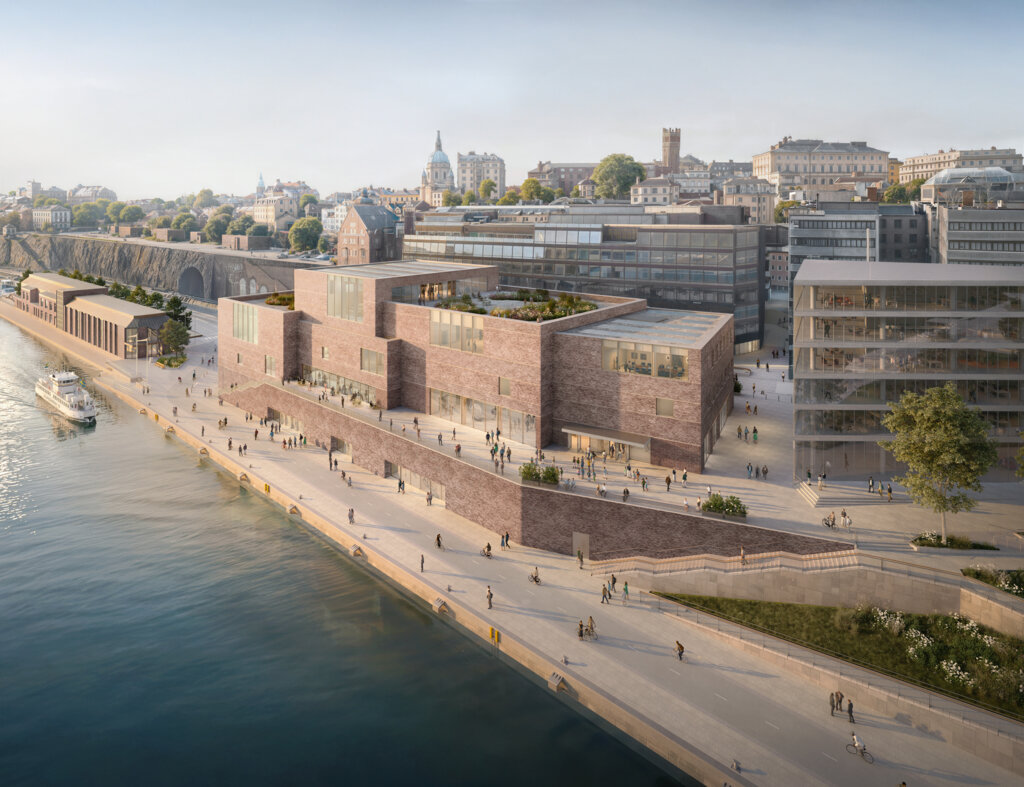
Aerial view along the waterfront. The terrace in front of the entrance and the open roof terraces will become new meeting spots in Stockholm with an amazing view of both the Baltic Sea and Lake Mälaren. In summertime, the restaurant opens up to the terrace and the water. The building stands firmly on a base connected to the park, which creates a new promenade from Slussen.
View from the water along the quay. The Nobel Center consists of four interconnected volumes that relate to the buildings of Södermalm and the size and height of the buildings in Gamla stan, on the other side of the water. The choice to use a wooden frame and reclaimed bricks reduces the impact on the environment. Bricks have characterised the architecture of Stockholm for centuries. The red shade is found in Stockholm’s classic brick buildings, such as City Hall.
Panoramic view from the north. The Nobel Center offers a new landmark on the waterfront in the Swedish capital. An international symbol of knowledge and a public house for science, literature and peace. The building is located along Stadsgårdskajen and the future museum promenade by the waterfront, easily accessible for everyone by public transport, on foot, by bicycle or by boat.
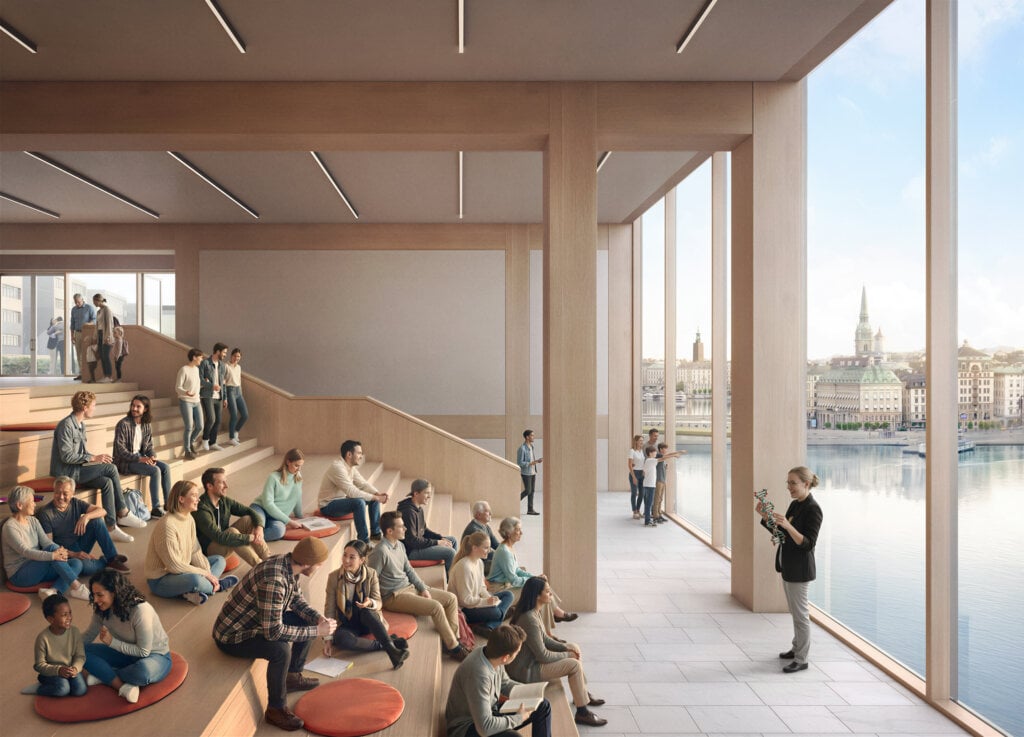
Upper level with framed views towards the archipelago and the city. The building will focus on public activities and be open to everyone, all year round. People from all over the world can explore exhibitions, listen to lectures, engage in dialogue, and take part in cultural events on everything from black holes and medical advancements to literary classics and poverty reduction.
Here you can find images of the Nobel Center project.
Upper level with framed views towards the archipelago and the city. The building will focus on public activities and be open to everyone, all year round. People from all over the world can explore exhibitions, listen to lectures, engage in dialogue, and take part in cultural events on everything from black holes and medical advancements to literary classics and poverty reduction.
“I think that the new Nobel Center can be a great place to promote contact between scientists and science in general, and the young generation, so in my view, the most important goal of this center is to inspire the new generation in science, literature, and peace.”
Anne L’Huillier, Nobel Prize laureate in physics 2023
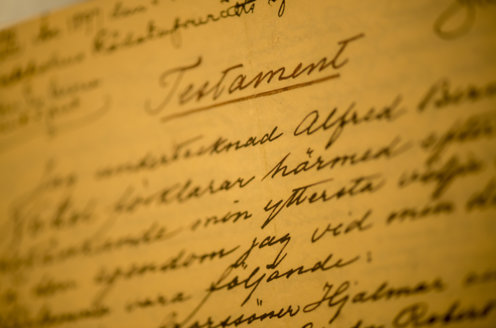
By 2031, visitors at the new Nobel Center will be able to experience Alfred Nobel’s unique legacy in a completely new way when his handwritten will is to be exhibited permanently for the first time. Here you can watch images and read the full text of the will.
The new Nobel Center is conceived as an open, civic institution dedicated to the values of the Nobel Prize. Discover more about the architects’ vision and the ideas behind the building’s design.
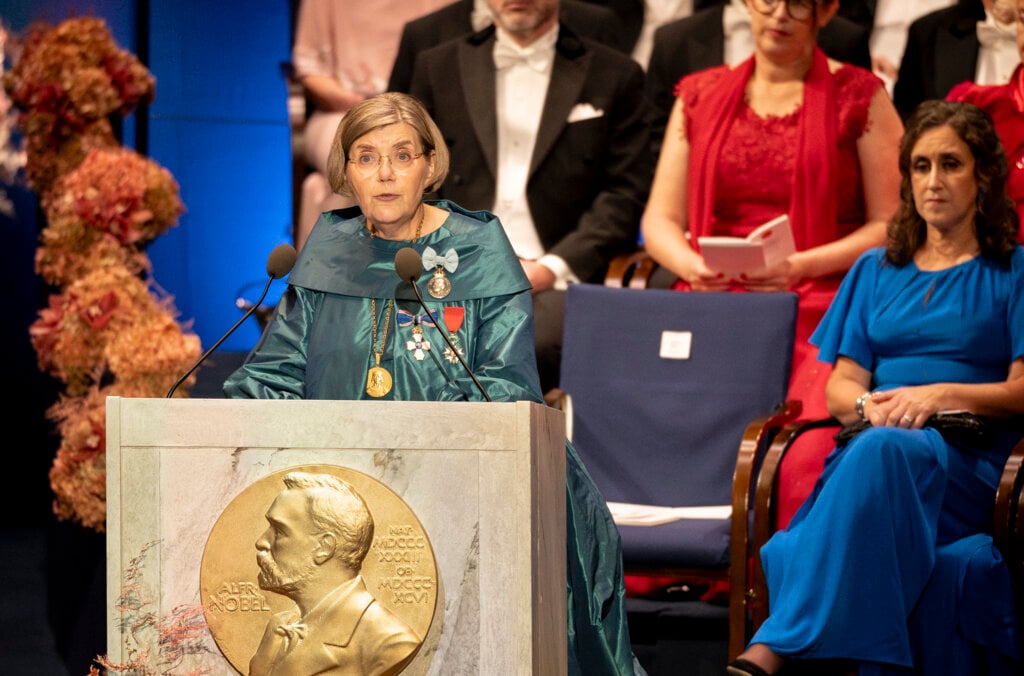
Speech by Professor Astrid Söderbergh Widding, Chair of the Board of the Nobel Foundation
Your Majesties, Your Royal Highnesses, Esteemed Nobel Prize Laureates, Excellencies, Ladies and Gentlemen,
On behalf of the Nobel Foundation, it is my great honour and pleasure to warmly welcome you all to the 2025 Nobel Prize award ceremony. In particular, I wish to welcome the Nobel Prize laureates, their families and friends.
As we gather here in Stockholm for the festivities to celebrate this year’s laureates, it is against a dark backdrop in the world at large. With its rapid, unpredictable, paradoxical and tangled developments, it may seem hard to inspire trust and confidence in the future. In this world, Alfred Nobel’s visionary legacy is a forceful reminder of the transformative powers of science, literature and peace.
Science is a lingua franca for humankind in exploring and expanding the frontiers of human knowledge.
It is international in nature, and it creates a scientific community across borders, values that extend beyond the limits of science itself. This is particularly important to emphasise in times of division, polarisation and conflict. The prizes honour Nobel’s principle that “no consideration be given to nationality but that the prize be awarded to the worthiest person.”
This year, the physics prize is awarded for experimentally establishing macroscopic quantum mechanical tunnelling in superconducting systems, leading towards technology for quantum computers; the chemistry prize for the development of stable, extremely porous, materials, materials that can be tailormade to capture carbon dioxide, store hydrogen or deliver pharmaceuticals in the body; and the prize in physiology or medicine for the discovery of a crucial complementary mechanism that prevents the immune system from attacking healthy organs, thus raising hopes for treatments of autoimmune diseases and new cancer therapies. They all demonstrate how fundamental research, awarded for the greatest benefit of humankind, can also lead to groundbreaking applications.
And the prize in economic sciences in memory of Alfred Nobel, for analysing and modelling conditions for sustained growth, lays bare the importance of a scientific understanding of technological breakthroughs and how inventions lead to old companies losing out to new ones; that is, the role of creative destruction.
The Nobel Peace Prize, awarded today in Oslo, is dedicated to the struggle for democracy, which is now threatened in so many ways across the globe.
Last, but definitely not least, the prize in literature is awarded to an authorship where melancholy and apocalypse seem to dominate the picture, but where the force of art and creation, unfathomable as it is, may still transcend the dark and violent powers.
As the world is at its darkest here in the Northern hemisphere, the Nobel lights illuminate not only the city, but also the world. Through knowledge, integrity and excellence, through creativity and inspiration, the laureates offer hope. They remind us that it is possible, through different paths, to address and come to terms with the many global challenges we face today. But their work also reminds us of our responsibility and the possibilities that lie within our reach. We must not just be passive spectators, but active contributors in defending the freedom of science and literature and the strive for peace to transform the world into a better place for humankind.