Ferenc Krausz
Facts
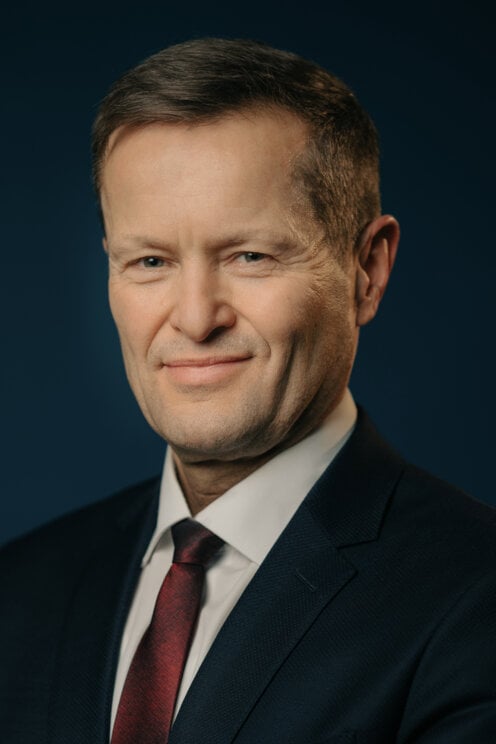
© Nobel Prize Outreach. Photo: Clément Morin
Ferenc Krausz
Nobel Prize in Physics 2023
Born: 17 May 1962, Mór, Hungary
Affiliation at the time of the award: Max Planck Institute of Quantum Optics, Garching, Germany; Ludwig-Maximilians-Universität München, Munich, Germany
Prize motivation: “for experimental methods that generate attosecond pulses of light for the study of electron dynamics in matter”
Prize share: 1/3
Work
Electronic motions initiate processes that create and maintain life, and are behind the exchange of energy between light and matter. These are arguably the most important motions for human life, evolving in hundreds of attoseconds. Attosecond pulses allow us to capture them inside atoms, molecules and solids. At the turn of the millennium, Ferenc Krausz and his team – in a series of experiments – generated and measured light pulses shorter than one femtosecond, controlled and measured the electric field oscillations of visible light, and used these tools for real-time observation of fundamental electron phenomena, predicted in the last century. These capabilities will be – among others – instrumental in advancing electronics and medical diagnostics.
Nobel Prizes and laureates
Six prizes were awarded for achievements that have conferred the greatest benefit to humankind. The 14 laureates' work and discoveries range from quantum tunnelling to promoting democratic rights.
See them all presented here.

