The physics behind IT


|
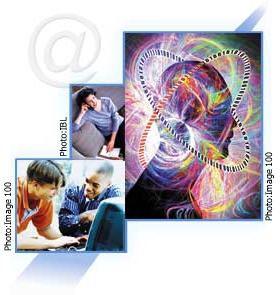
Information technology has a profound influence on our entire society. Using fibreoptics and wireless communication, information flows throughout the global network, Internet. Computers at home, in school, and at work allow us to access this information and use it for different purposes. This has all been made possible through scientific and technical developments originating largely from fundamental inventions in physics. It is for part of this basic work that Zhores I. Alferov, Herbert Kroemer and Jack S. Kilby have been rewarded with the Nobel Prize in Physics. |
 |
|||
|
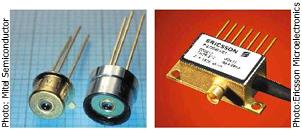
Laser diodes are used in fibreoptic communication networks and for optical data storage (CD, DVD). Optoelectronics is also used in laser printers and bar code readers as well as in indicators and displays in traffic lights, cars, etc. and for many other things. |
 |
|||
|
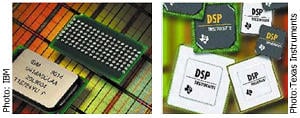
Integrated circuits are part of our daily life. They are used in all kinds of electronic product such as computers, cellular phones, video games, camcorders, radios, … You name it! |
 |
|||
|
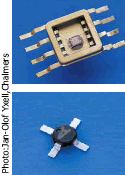
High-speed transistors and microwave integrated circuits are used in cellular phone and satellite systems for wireless communication. |
|
|

Nobel Prizes and laureates
Six prizes were awarded for achievements that have conferred the greatest benefit to humankind. The 14 laureates' work and discoveries range from quantum tunnelling to promoting democratic rights.
See them all presented here.